1. Roof design:
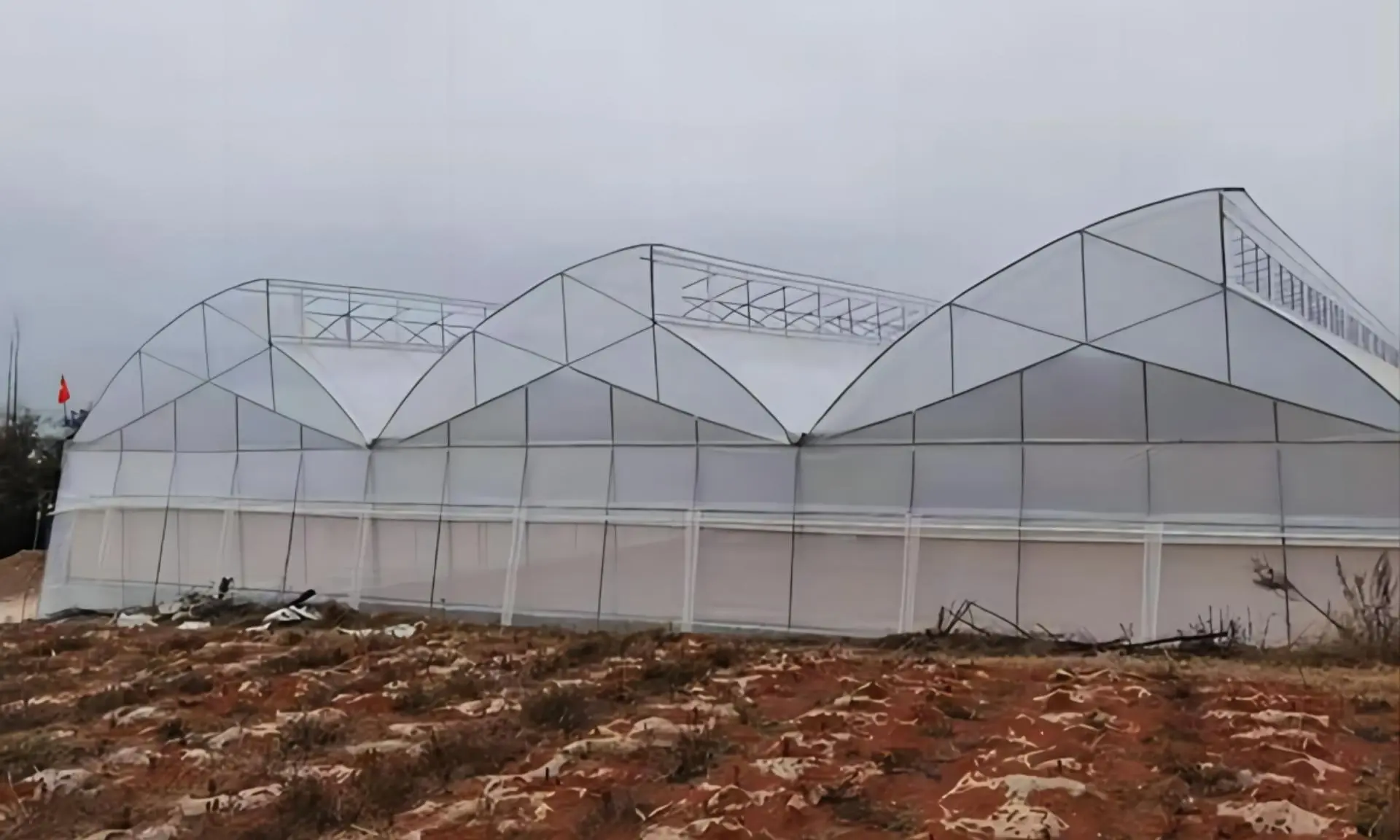
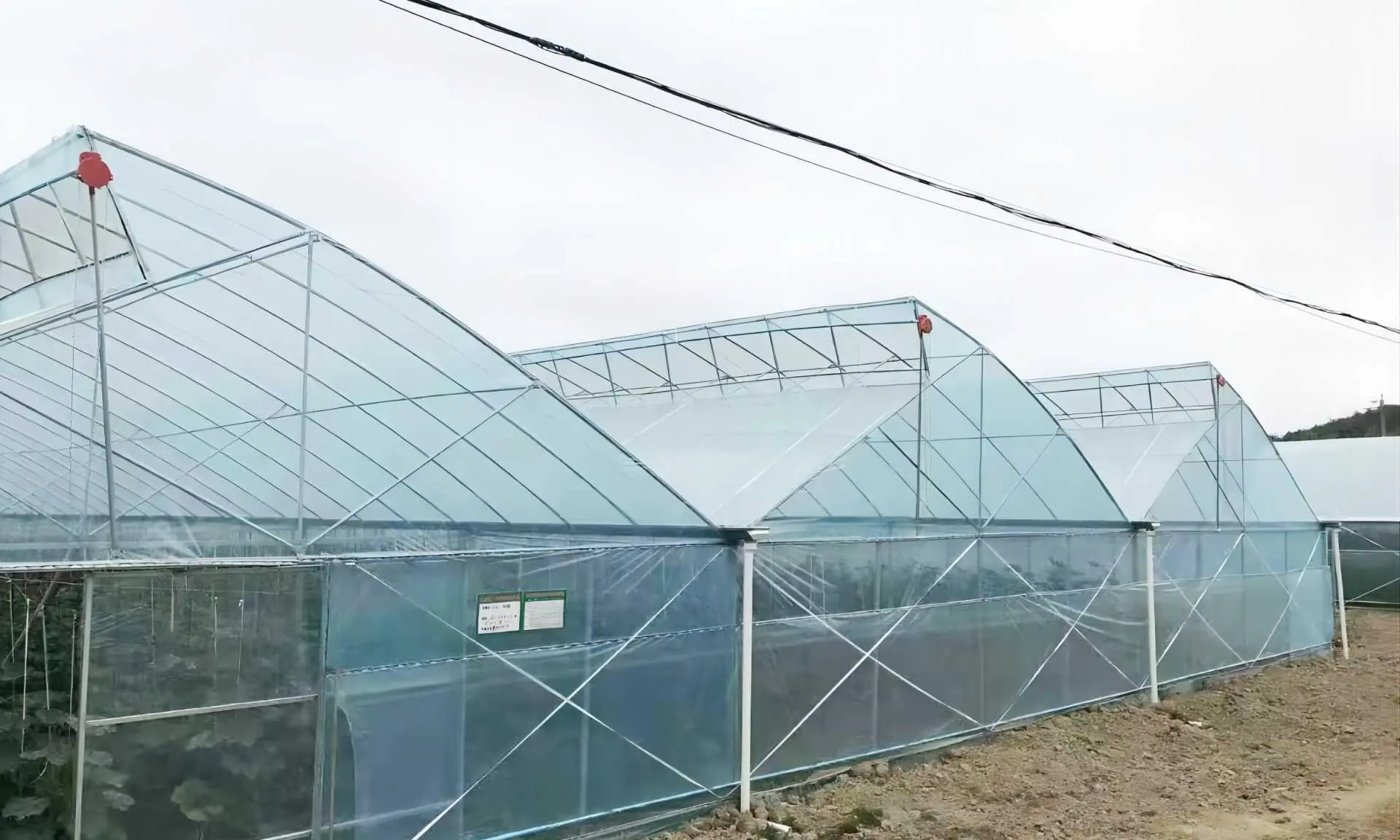
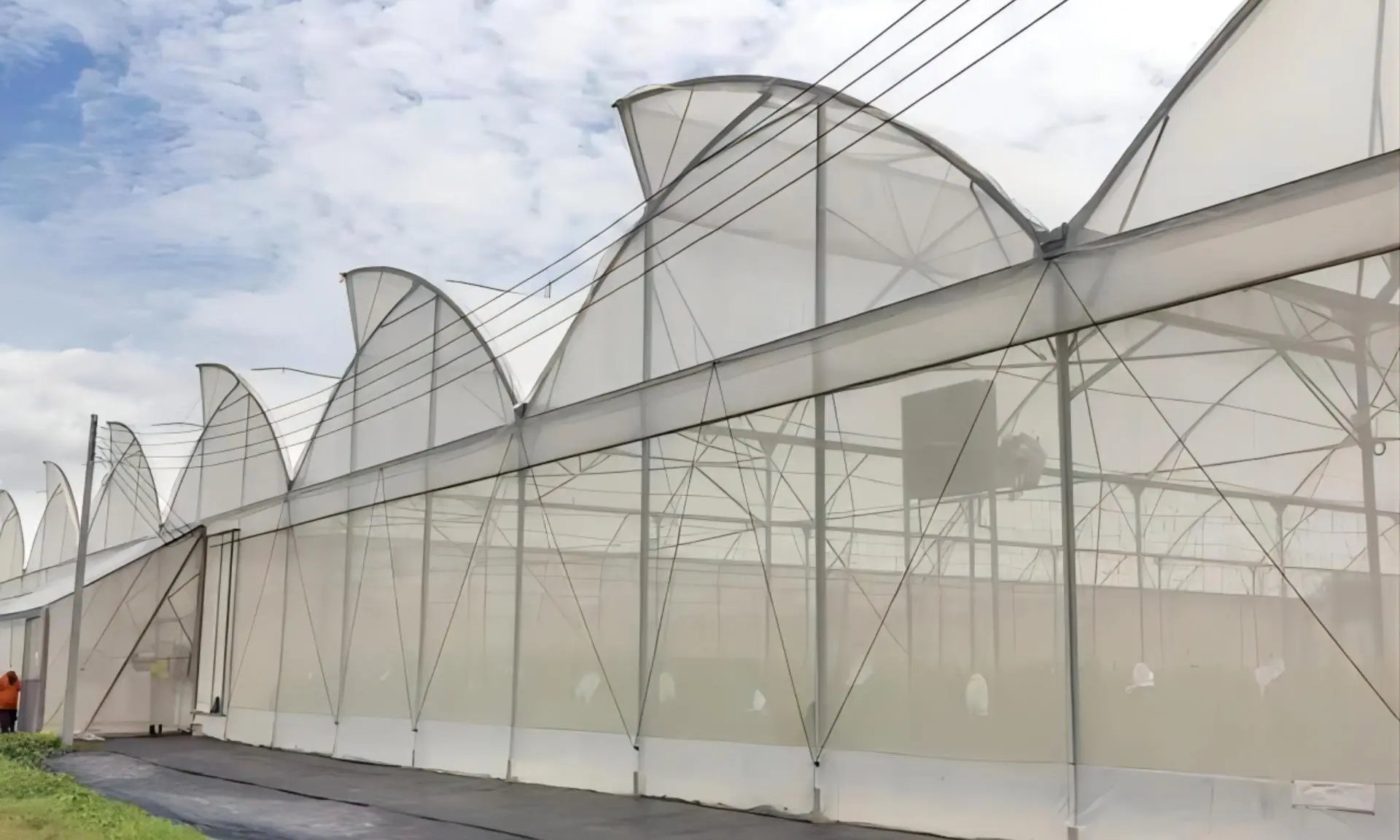
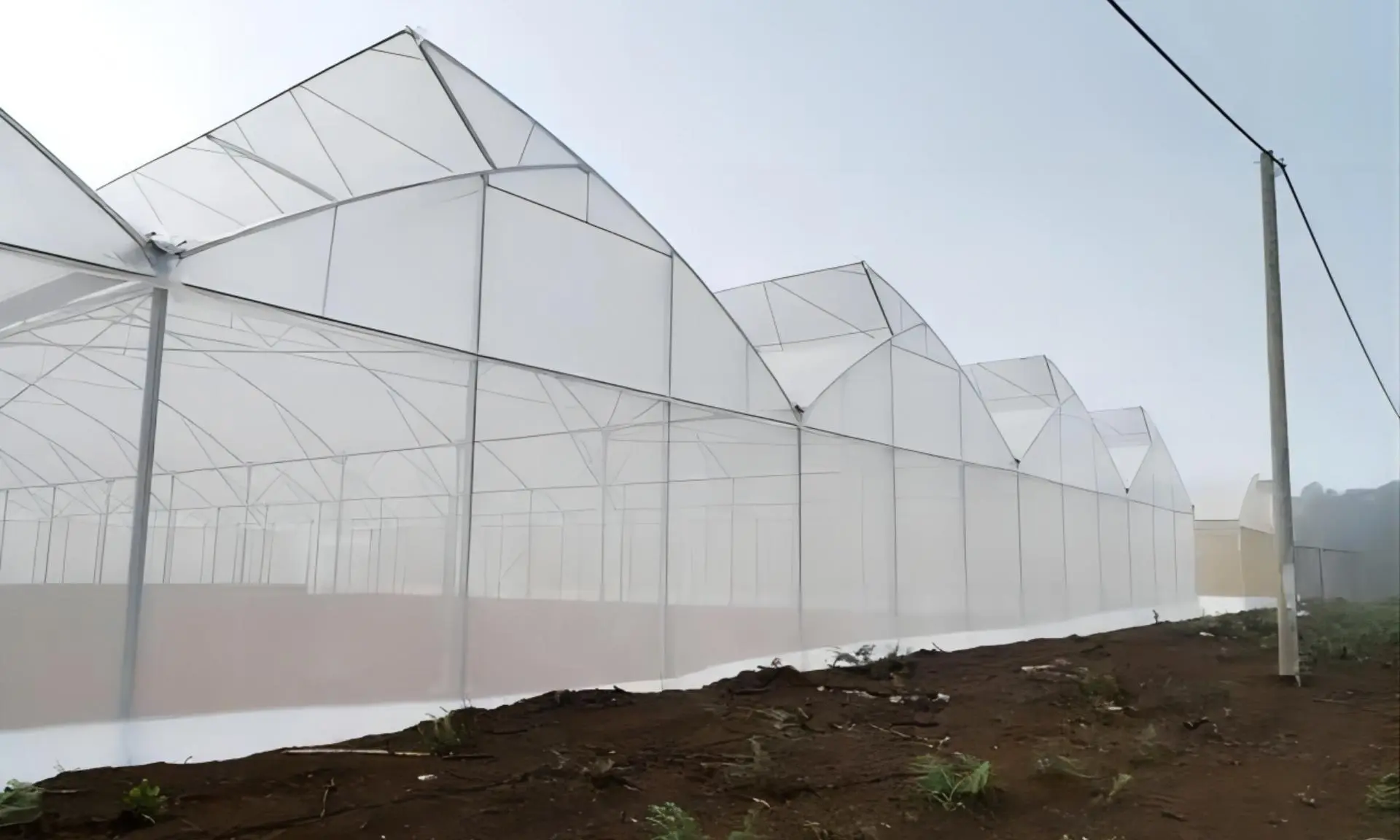
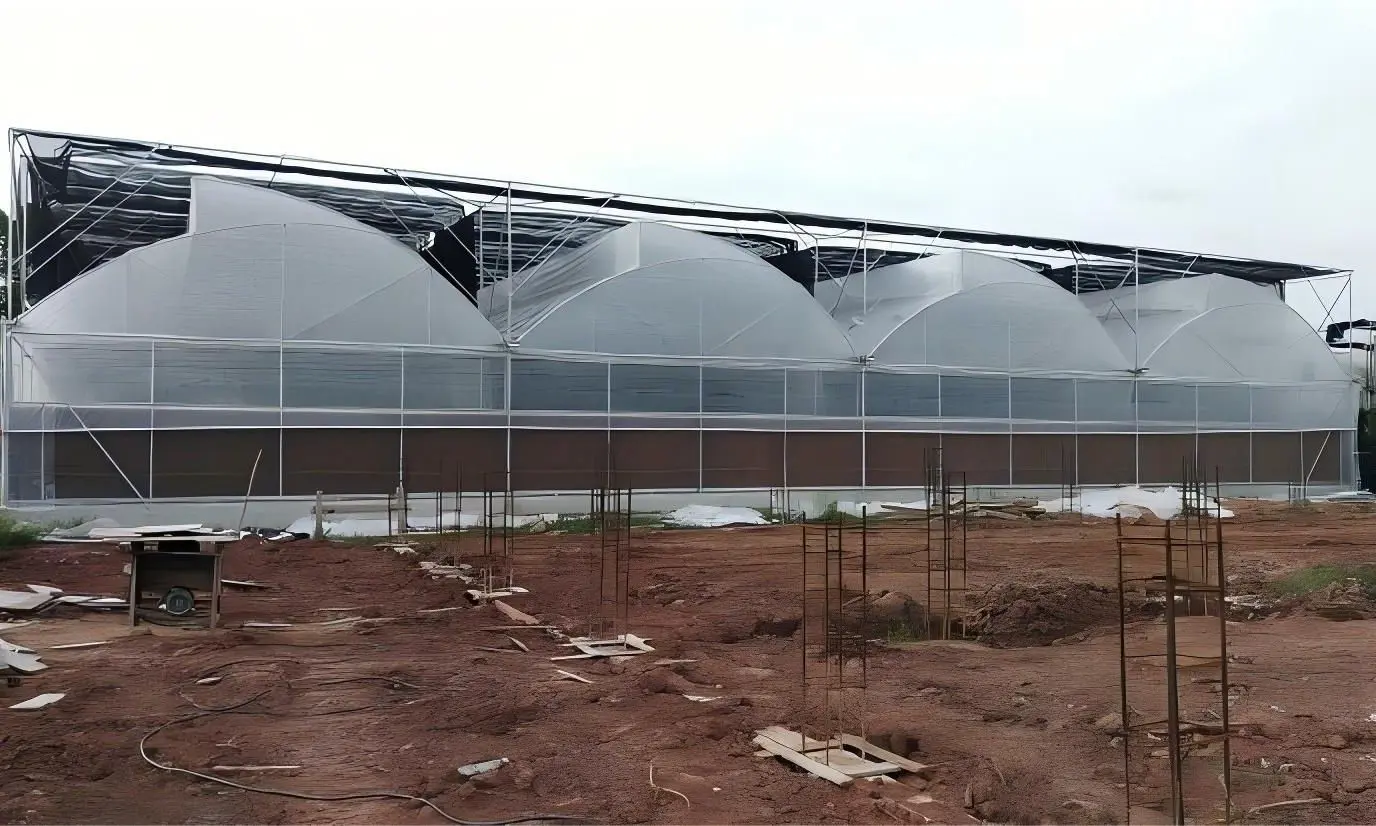
Multi-slope roof: The roof of the sawtooth greenhouse is composed of multiple inclined slopes, which are usually arranged alternately to form a sawtooth shape. Each slope can have different angles, which can optimize the entry of light and the discharge of heat.
2. Ventilation system:
Natural ventilation: The sawtooth greenhouse is equipped with vents on the top or side, using natural air flow to discharge hot air and moisture, maintaining a suitable temperature and humidity in the greenhouse.
Chimney effect: Through the design of the top vent, the sawtooth greenhouse can use the “chimney effect” to quickly discharge hot air, which is particularly suitable for use in hot climates.
3. Drainage system:
Effective drainage: The roof design of the sawtooth greenhouse helps to quickly discharge rainwater, and drainage grooves are usually set between the slopes to prevent rainwater accumulation from causing pressure or leakage on the greenhouse body.
4. Temperature and humidity control:
Passive control: The design of the sawtooth greenhouse enables temperature and humidity to be controlled by passive means, such as natural ventilation and shading, reducing dependence on mechanical cooling and heating systems.
Compatibility: Sawtooth sheds can also be combined with active control systems, such as automatic ventilation windows, sunshades and heating systems, to further accurately control the environment inside the shed.
5. Structural stability:
Strong wind resistance: The structural design of the sawtooth shed has a high wind resistance, especially in windy areas, and can effectively resist damage caused by wind.