
Hydroponic channels provide a modern approach to growing plants without soil, utilizing the nutrient film technique to efficiently deliver nutrients directly to the roots. This leads to faster growth and higher yields, making it an ideal choice for urban and vertical farming where space is limited. On the other hand, the substrate culture system remains a popular option for those who prefer a more traditional method of growing. With the rising demand for sustainable practices, many gardeners are exploring the differences in hydroponics vs substrate to determine the best fit for their needs.
Did you know that advancements in hydroponic technologies are making these systems increasingly vital for home gardening?
When choosing a grow system, the decision between hydroponic channels and a substrate culture system can significantly impact your gardening success, as understanding growing mediums explained is essential for optimal results.
Key Takeaways
- Hydroponic channels use the Nutrient Film Technique for efficient nutrient delivery, leading to faster growth and higher yields.
- Substrate culture offers versatility with various growing mediums, making it suitable for a wider range of plants and easier for beginners.
- Hydroponic systems can save over 90% more water compared to traditional methods, making them ideal for sustainable gardening.
- Consider your available space and crop selection when choosing between hydroponic channels and substrate culture for optimal results.
- Both methods have unique advantages and challenges; assess your budget and technical comfort to find the best fit for your gardening needs.
Hydroponic Channels Overview
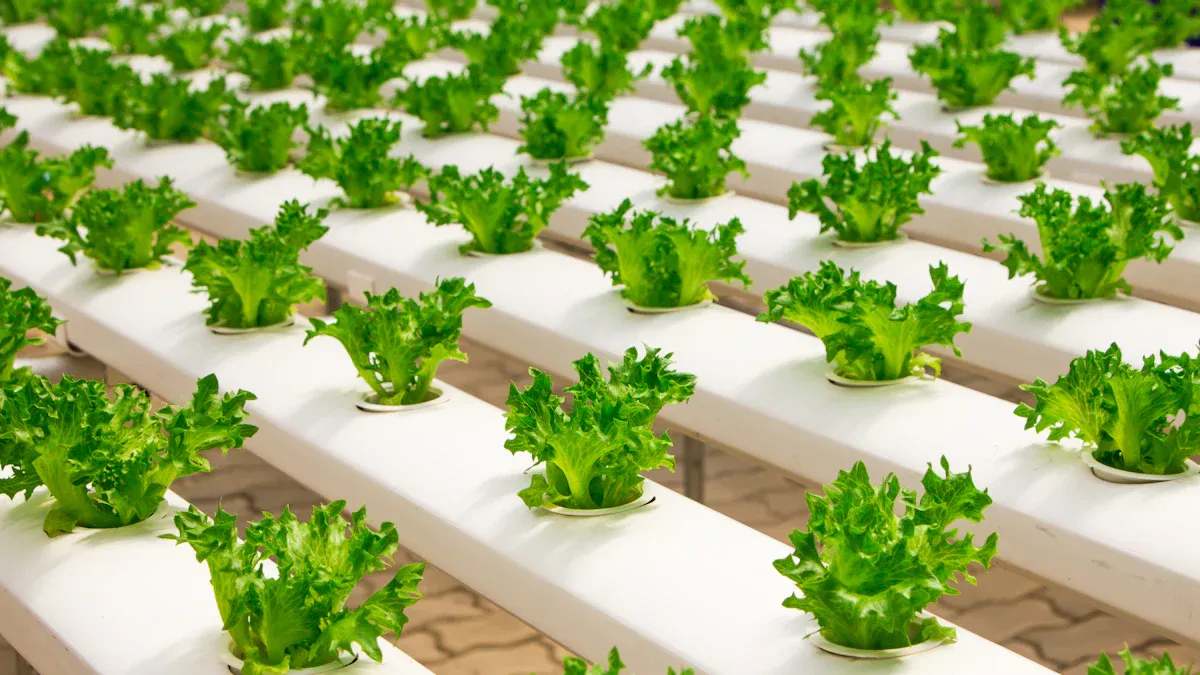
Hydroponic channels represent a cutting-edge method for growing plants without soil. This system primarily uses the Nutrient Film Technique (NFT), which allows a thin stream of nutrient-rich water to flow over the roots of plants. This setup not only provides essential nutrients but also keeps the roots exposed to air, promoting healthy growth.
In hydroponic channels, the process begins with a reservoir that holds the nutrient solution. A pump sends this solution to the highest point of the channels, where it flows downwards through a slight gradient. This continuous flow ensures that the roots receive a steady supply of nutrients while also allowing excess solution to be recirculated back to the reservoir.
NFT systems excel in water efficiency and space utilization, making them ideal for commercial operations and compact growing spaces. The enclosed, dark environment of the channel mimics natural soil conditions, enhancing root development. NFT systems are particularly well-suited for lightweight, fast-growing plants such as lettuce, herbs, and strawberries, making them popular among both hobbyists and commercial growers.
However, flow rate plays a crucial role in the effectiveness of hydroponic channels. If the water moves too quickly, roots may not have enough contact time for effective nutrient uptake. Conversely, a slow flow can lead to uneven nutrient distribution, affecting the ionic balance and potentially causing physiological stress to the plants.
Advantages of Hydroponic Channels
Hydroponic channels offer several compelling advantages that make them an attractive option for growers. Here are some key benefits:
-
Water Efficiency: Hydroponic channels can reduce water usage by over 90% compared to traditional soil methods. This significant reduction is crucial, especially in areas facing water scarcity. By using a recirculating system, growers minimize waste and ensure that every drop counts.
-
Faster Growth Rates: Plants grown in hydroponic channels often experience accelerated growth. The constant supply of nutrients and oxygen directly to the roots allows plants to thrive. Many growers report that crops can mature up to 25% faster than those grown in soil.
-
Higher Yields: Research shows that hydroponic systems can yield significantly more produce than traditional methods. For instance, crops grown in hydroponic channels can produce up to 30% more than those in substrate systems. This increase in yield can be attributed to optimized growing conditions and the ability to control environmental factors more effectively.
-
Space Optimization: Hydroponic channels are designed to maximize space. They can be stacked vertically or arranged in compact layouts, making them ideal for urban farming or areas with limited land. This efficient use of space allows growers to cultivate more plants in a smaller footprint.
-
Reduced Pest and Disease Issues: Growing plants in a controlled environment reduces the risk of soil-borne pests and diseases. This means fewer chemicals and pesticides are needed, leading to healthier plants and a more sustainable growing practice.
-
Labor Savings: Hydroponic systems can lead to moderate labor savings compared to traditional methods. While they may require initial setup and maintenance, the automation of nutrient delivery and monitoring can reduce the time spent on manual tasks.
| System Type | Labor Savings | Energy Efficiency | Notes |
|---|---|---|---|
| Hydroponic Channel | Moderate | Higher electricity | Requires larger pumps, leading to increased energy costs as scale grows. |
| Substrate Culture | Higher | Lower electricity | More efficient for large areas with automated irrigation, reducing labor. |
Disadvantages of Hydroponic Channels
While hydroponic channels offer many benefits, they also come with some notable drawbacks. Understanding these disadvantages can help growers make informed decisions.
-
Technical Challenges: Hydroponic systems can face various technical issues. Growers often report problems like irregular water flow or leaks. These issues can lead to drops in plant health and growth rates. Additionally, fluctuations in nutrient solution levels or pH balance can create stress for plants. Algae growth or sediment buildup may also occur, which can complicate maintenance.
-
Maintenance Requirements: Keeping a hydroponic channel system running smoothly requires regular monitoring. Growers must check nutrient concentrations and pH levels frequently. They also need to ensure that pumps, filters, and irrigation lines are clean and functioning properly. This ongoing maintenance can be time-consuming and may deter some potential growers.
-
Initial Setup Costs: Setting up a hydroponic channel system can be expensive. The costs of equipment, such as pumps and nutrient delivery systems, can add up quickly. For those on a tight budget, this initial investment might be a significant barrier.
-
Dependence on Technology: Hydroponic channels rely heavily on technology. If a pump fails or there’s a power outage, plants can suffer rapidly. This dependence on technology can create anxiety for growers, especially those new to hydroponics.
-
Limited Crop Variety: While hydroponic channels excel with certain crops, they may not be suitable for all plants. Some larger or slower-growing plants may struggle in this system. Growers should consider their crop choices carefully to ensure success.
Substrate Culture Overview

Substrate culture is a popular method for growing plants without soil. Instead of relying on dirt, this system uses various materials to support plant growth. These materials, known as substrates, provide essential functions that help plants thrive.
Common substrates include:
- Rockwool: Lightweight and resistant to rotting, it offers excellent air permeability.
- Sand: Provides good drainage and stability.
- Gravel: Offers solid support and allows for good water flow.
- Ceramsite: Lightweight and retains moisture while providing aeration.
- Vermiculite: Retains water and nutrients, making them available to plants.
- Perlite: Lightweight and improves aeration and drainage.
These substrates serve multiple purposes:
- They provide physical support for the plant.
- They retain water in a form available to the plant.
- They allow gas exchange between the roots and the atmosphere.
- They act as a reservoir for plant nutrients.
- They sustain a population of microorganisms that are important for nutrient cycles and disease suppression.
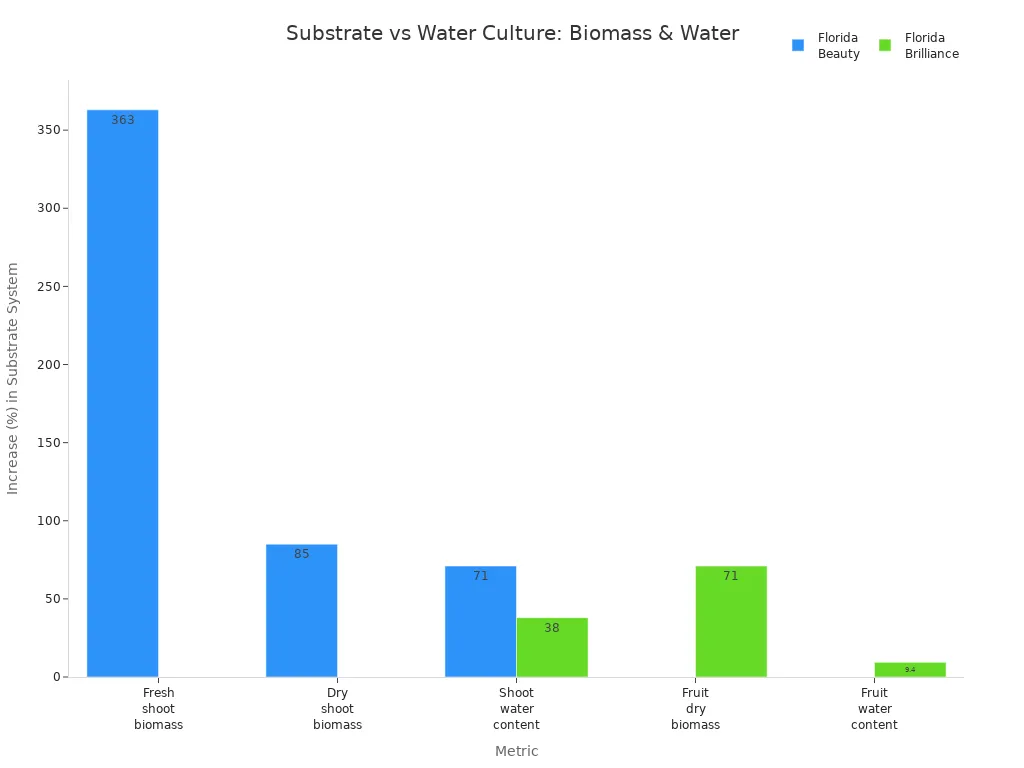
In substrate culture, plants receive nutrients through the substrate rather than a constant flow of nutrient solution like in hydroponic channels. This method can lead to different outcomes in terms of growth and water retention. For example, studies show that certain cultivars grown in substrate systems can have significantly higher biomass and water content compared to those grown in hydroponic systems.
| Cultivar | Metric | Substrate System | Water Culture Systems | Increase (%) | P-value |
|---|---|---|---|---|---|
| Florida Beauty | Fresh shoot biomass | Higher by 363% | NFT and Aeroponics | 363 | < 0.001 |
| Florida Beauty | Dry shoot biomass | Higher by 85% | NFT, Aeroponics | 85 | < 0.001 |
| Florida Brilliance | Shoot water content | Higher by 38% | Water Culture Systems | 38 | < 0.001 |
| Florida Beauty | Shoot water content | Higher by 71% | Vertical and NFT | 71 | < 0.001 |
| Florida Brilliance | Fruit dry biomass | Higher by 71% | Water Culture Systems | 71 | < 0.001 |
| Florida Brilliance | Fruit water content | Higher by 9.4% | Water Culture Systems | 9.4 | < 0.001 |
Overall, substrate culture offers a flexible and effective way to grow plants, especially for those who prefer a more traditional approach.
Advantages of Substrate Culture
Substrate culture offers several benefits that make it a popular choice among growers. Here are some key advantages:
-
Versatility: Substrate culture allows for a wide range of growing mediums. Growers can choose from materials like rockwool, perlite, or coconut coir, depending on their specific needs. This flexibility enables them to tailor their growing environment to suit different plant types.
-
Improved Water Retention: Many substrates retain moisture effectively. For instance, vermiculite and coconut coir can hold water while allowing for good aeration. This balance helps prevent overwatering and ensures that plants receive the right amount of moisture.
-
Enhanced Nutrient Availability: Substrates can act as reservoirs for nutrients. They hold onto essential minerals and release them gradually to the plants. This slow release can lead to healthier growth and better yields.
-
Easier Management: Substrate systems often require less technical knowledge than hydroponic channels. Growers can manage their plants without needing to monitor complex nutrient flows or pump systems. This simplicity makes substrate culture a great option for beginners.
-
Lower Initial Costs: Setting up a substrate culture system can be more affordable than hydroponic channels. Growers can often find inexpensive materials for their substrates, making it easier to start gardening without a hefty investment.
Tip: If you’re new to gardening, starting with a substrate culture system can help you learn the basics without overwhelming you with technology.
- Greater Crop Variety: Substrate culture supports a broader range of plants. Growers can cultivate larger or slower-growing varieties that may not thrive in hydroponic channels. This diversity allows for more creativity in the garden.
| Advantage | Description |
|---|---|
| Versatility | Choose from various substrates to meet specific plant needs. |
| Improved Water Retention | Substrates like vermiculite hold moisture while allowing for aeration. |
| Enhanced Nutrient Availability | Substrates release nutrients gradually, promoting healthy growth. |
| Easier Management | Less technical knowledge required, making it beginner-friendly. |
| Lower Initial Costs | More affordable setup compared to hydroponic systems. |
| Greater Crop Variety | Supports a wider range of plants, including larger varieties. |
Overall, substrate culture provides a flexible and accessible way to grow plants. Whether you’re a seasoned gardener or just starting, this method can offer a rewarding experience.
Disadvantages of Substrate Culture
While substrate culture has its perks, it also comes with some drawbacks that growers should consider. Here are a few key disadvantages:
- Growth Speed and Yield Limitations: Substrate systems often lead to steady growth due to moisture retention. However, they may not match the accelerated growth rates seen in hydroponic channels. For instance, crops grown in hydroponic systems can mature faster and yield more, especially leafy greens and herbs.
| System Type | Growth Speed | Yield Potential |
|---|---|---|
| Substrate Cultivation | Steady growth due to moisture retention | Lower yields for certain crops |
| Hydroponic Systems | Accelerated growth through direct nutrient delivery | Higher yields, especially for leafy greens and herbs |
- Environmental Concerns: Disposing of used substrates can pose environmental challenges. For example, spent mushroom substrate can release potent greenhouse gases like methane if not managed properly. This highlights the importance of sustainable waste management solutions.
| Substrate Type | Environmental Impact |
|---|---|
| Peat and Coco | Biodegradable, can be composted into soil amendments |
| Mineral Substrates (Perlite, Vermiculite, Clay) | Can be reused but break down into unsuitable debris after 2-3 crops, difficult to handle on a large scale |
| Mineral Wool | Can be recycled, but significant amounts still end up in landfills, offers economic and environmental benefits for certain crops |
-
Labor-Intensive Management: Managing a substrate culture system can require more hands-on work. Growers need to monitor moisture levels and nutrient availability closely. This can be time-consuming, especially for those new to gardening.
-
Potential for Disease: Substrates can harbor pathogens if not properly sterilized. This risk can lead to plant diseases that affect overall health and yield.
Comparative Analysis of Hydroponic Channels and Substrate Culture
When comparing hydroponic channels and substrate culture, several key factors come into play. Each method has its strengths and weaknesses, impacting plant health, disease management, and scalability.
-
Plant Health and Productivity: Studies show that substrate-based systems often outperform hydroponic channels in growth parameters. For instance, plants grown in substrate systems like deep beds (DB) and recirculating systems (RPC) demonstrated growth increases of 29% to 60% compared to nutrient film technique (NFT) systems. Additionally, root parameters in NFT systems were significantly lower, ranging from 21% to 94% less than those in substrate systems. This suggests that substrate culture may provide a more robust environment for certain crops.
-
Disease Management: Hydroponic channels minimize the risk of soilborne pathogens since they don’t use soil. This leads to reduced pesticide use, making products more appealing to health-conscious consumers. In contrast, substrate culture carries a higher risk of disease due to the presence of soil. Here’s a quick comparison:
| Aspect | Hydroponic Channels | Substrate Culture |
|---|---|---|
| Soilborne Pathogens | Minimized risk due to no soil | Higher risk due to soil presence |
| Pesticide Use | Reduced or minimal | Often higher due to soil pests |
| Weed Management | Less concern due to absence of soil | More concern due to soil presence |
- Scalability: Hydroponic channels can be efficient for high-density planting, especially for leafy greens and herbs. However, they face challenges when scaled for commercial operations. Issues like system failure risks and crop limitations can hinder growth. On the other hand, substrate culture offers more versatility for diverse crops, potentially leading to better profitability in larger operations.
Choosing the Right Method for Your Needs
Selecting the right growing method can feel overwhelming, but breaking it down into key factors can help. Here are some important considerations to keep in mind:
| Factor | Description |
|---|---|
| Available Space | Different systems have varying footprints. Compact areas may suit vertical NFT or small DWC. |
| Crop Selection | Leafy greens thrive in NFT, while larger plants need stability from ebb and flow or DWC. |
| Maintenance | Beginners may prefer simpler systems like DWC, while experienced growers might choose NFT. |
| Environmental Factors | Temperature, humidity, and light availability can influence system adaptability. |
| Budget | Consider both initial setup and ongoing costs like electricity and nutrients. |
When choosing between hydroponic channels and substrate culture, it’s essential to avoid common mistakes. For instance, in hydroponics, inadequate aeration can lead to root rot, while overwatering in substrate systems can create similar issues. Here are some common pitfalls to watch out for:
-
Liquid Hydroponics Mistakes:
- Inadequate Aeration
- Temperature Neglect
- Overfeeding Nutrients
- Algae Overgrowth
- Forgetting pH Management
-
Substrate-Based Mistakes:
- Overwatering
- Medium Compaction
- pH Drift Without Monitoring
- Neglecting Pump and Drip Maintenance
- Ignoring Pest Colonization
Additionally, consider the specific crop types you want to grow. For example, tomatoes may struggle in NFT systems due to their larger root structure, while leafy greens like spinach and parsley thrive in such setups. Understanding these nuances can lead to better yields and healthier plants.
Ultimately, the best choice depends on your unique situation. Assess your space, budget, and crop preferences to find the method that suits you best. Happy growing! 🌱
In the debate between hydroponic channels and substrate culture, each method has its strengths. Hydroponic channels often lead to rapid growth and higher yields, making them ideal for commercial growers. They provide precise nutrient control and minimize pest issues. However, they can be more complex and costly to set up.
On the other hand, substrate culture offers a more beginner-friendly approach. It allows for a wider variety of crops and requires less technical knowledge. This method may suit those on a budget or those who prefer a simpler setup.
Ultimately, the choice depends on individual needs and goals. As urban farming continues to rise, both methods will play vital roles in sustainable agriculture.
FAQ
What is the main difference between hydroponic channels and substrate culture?
Hydroponic channels use a nutrient film technique to deliver nutrients directly to plant roots, while substrate culture relies on various materials to support plants and provide nutrients.
Can I grow any type of plant in hydroponic channels?
Not all plants thrive in hydroponic channels. Fast-growing, lightweight plants like lettuce and herbs do well, but larger or slower-growing plants may struggle.
Is substrate culture easier for beginners?
Yes! Substrate culture often requires less technical knowledge and simpler management, making it a great choice for beginners who want to start gardening.
How much water do hydroponic channels use compared to soil?
Hydroponic channels can use over 90% less water than traditional soil methods. This efficiency is crucial for sustainable gardening, especially in water-scarce areas.
What are the initial costs for setting up each system?
Hydroponic channels typically have higher initial costs due to equipment needs. In contrast, substrate culture can be more affordable, allowing beginners to start gardening without a hefty investment.