
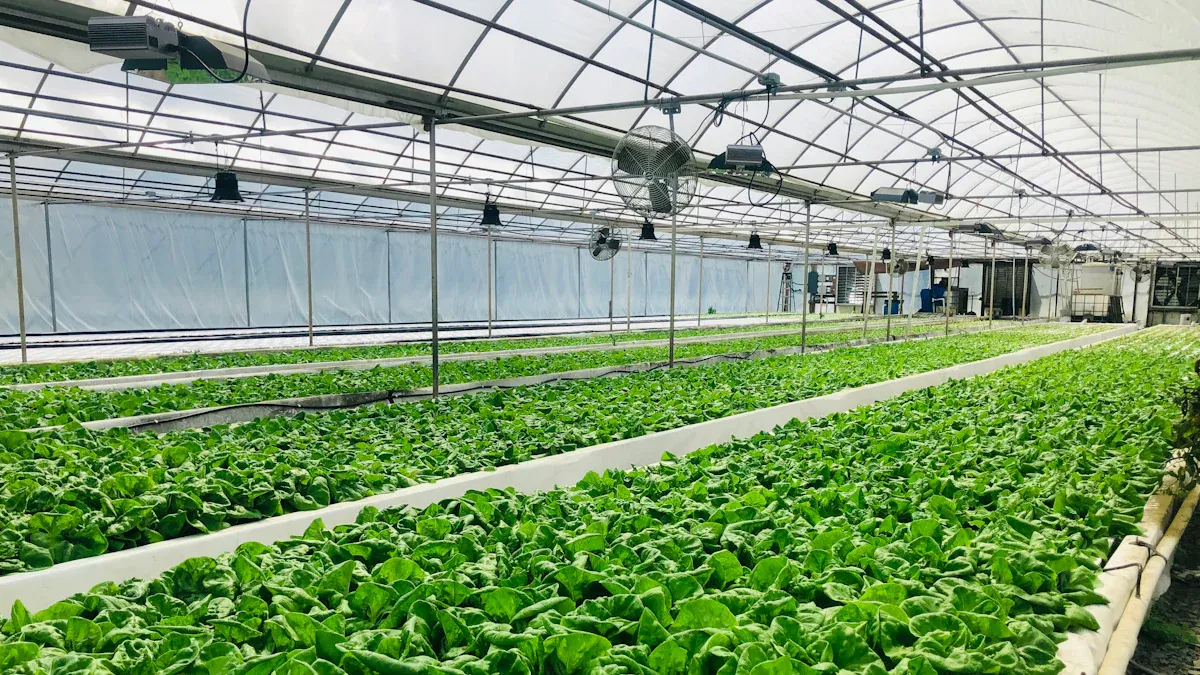
Climate change and population growth present significant challenges for traditional agriculture. Over 8 billion metric tons of CO2 equivalent emissions stem from agricultural practices, contributing to 24% of global emissions. This situation leads to reduced productivity, soil degradation, and health risks for farm workers. In response, the hydroponic system emerges as a sustainable solution, offering efficient methods for food production. By utilizing hydroponic channels, farmers can create controlled environments that maximize yield while minimizing resource use, paving the way for innovative commercial growing systems and vertical greening initiatives. Additionally, the vertical plant wall concept enhances space efficiency and promotes urban agriculture. What are the benefits of using a hydroponic system in agriculture? It allows for year-round cultivation, reduced water usage, and the ability to grow in diverse environments, making it a vital tool for the future of farming.
Key Takeaways
- Hydroponic systems allow for year-round crop production, making them ideal for urban areas and regions with limited agricultural space.
- These systems use up to 90% less water than traditional farming, promoting sustainability and reducing operational costs.
- Hydroponics can significantly increase crop yields, with some reports showing up to 20 times more produce per acre compared to soil-based methods.
- The controlled environment of hydroponics minimizes pest risks and reduces the need for harmful pesticides, resulting in healthier crops.
- Investing in hydroponic systems can lead to better financial returns for farmers due to higher productivity and quicker harvest cycles.
Understanding Hydroponic System
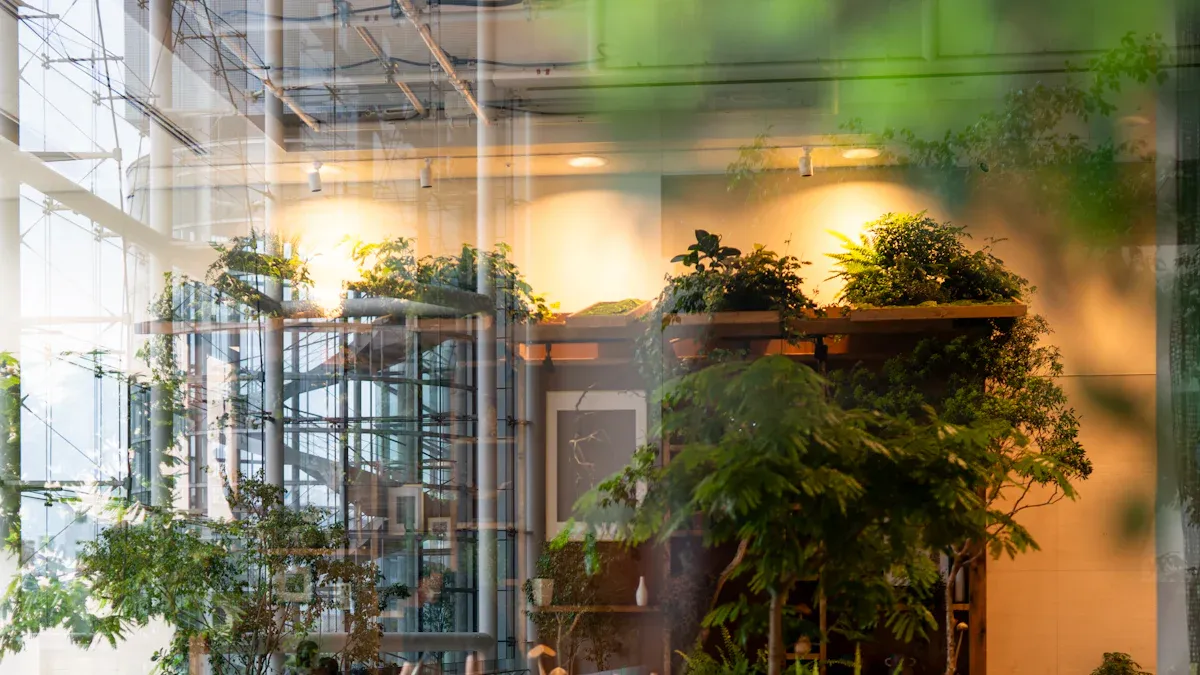
Hydroponic systems represent a revolutionary approach to agriculture, allowing for the cultivation of plants without soil. Instead, these systems utilize a nutrient solution to deliver essential elements directly to the plants. This method emphasizes efficiency and sustainability, making it an attractive option for modern farming.
In its simplest form, hydroponics involves growing plants in a nutrient solution rather than traditional soil. This innovative technique offers several advantages, including faster growth rates and the ability to produce crops year-round. The controlled environment of hydroponic systems minimizes the impact of external factors, such as weather and pests, which often hinder traditional farming.
Key Components of Hydroponic Systems
Hydroponic systems consist of several critical components that work together to create an optimal growing environment. These include:
- Reservoir: A container that holds the nutrient-rich water solution.
- Growing Medium: Materials like rockwool plugs or hydroton clay pellets that support the plants.
- Nutrient Solution: A carefully balanced mixture of essential macro and micronutrients.
- Air Pump and Air Stone: Ensures proper oxygenation of the nutrient solution.
- Lighting System: Provides adequate light for photosynthesis, especially important for indoor setups.
- pH Meter and Adjustment Solutions: Maintains the optimal pH range of 5.5-6.5 for most hydroponic crops.
These components work synergistically to create a productive environment for plant growth. For instance, the nutrient solution delivers vital nutrients directly to the roots, promoting rapid growth and high yields.
Differences from Traditional Farming
Hydroponic systems differ significantly from traditional soil-based farming methods. Here are some key distinctions:
- Hydroponics can produce crops faster and year-round due to controlled conditions, unlike traditional farming, which is subject to weather.
- Hydroponics utilizes vertical farming techniques, allowing for more efficient use of space compared to traditional farming’s ground-level planting.
- Hydroponics is less prone to contamination due to its controlled environment, while traditional farming is more susceptible to external factors.
Additionally, hydroponics uses significantly less water than conventional agriculture. For example, hydroponic lettuce production requires approximately 20 ± 3.8 L/kg/y of water, while conventional lettuce production demands about 250 ± 25 L/kg/y. This efficient water usage highlights the sustainability of hydroponic systems.
Scientific studies support the effectiveness of hydroponic systems in enhancing crop production. Research indicates that hydroponics can significantly increase yields, particularly for crops like potatoes, by utilizing advanced technologies and optimal growth conditions. This method addresses food supply needs in urban settings and areas with limited agricultural space.
Advantages of Hydroponic Systems
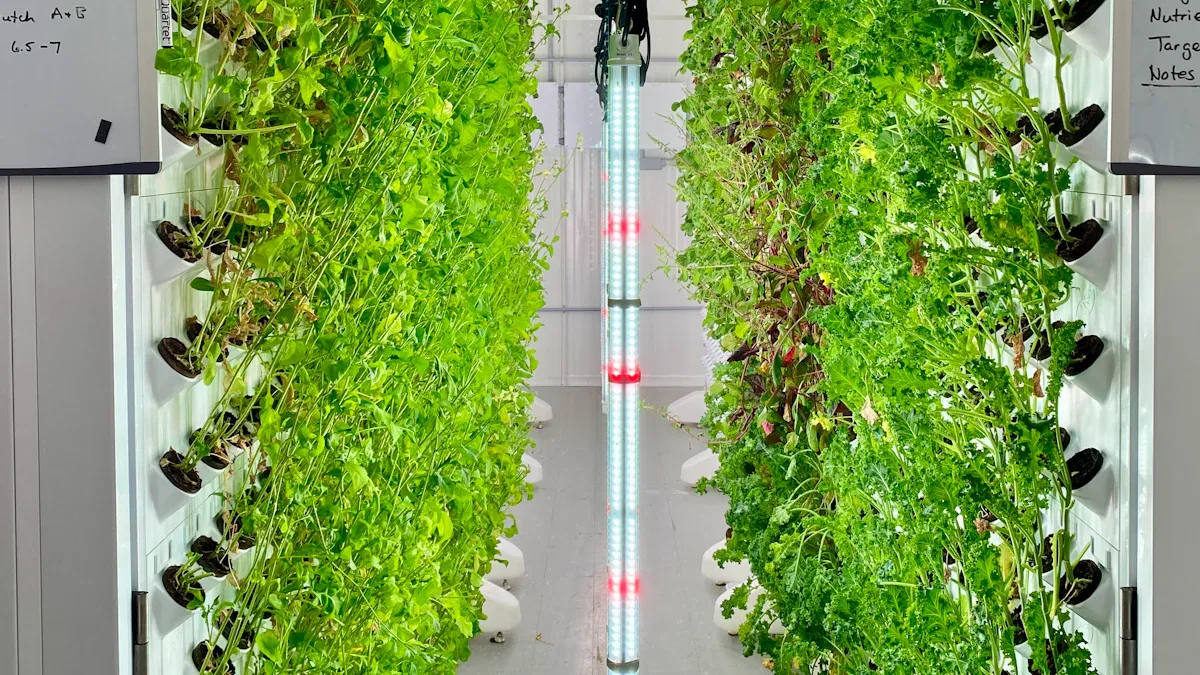
Hydroponic systems offer numerous advantages that make them an appealing choice for modern agriculture. These benefits span environmental, economic, and nutritional aspects, showcasing the transformative potential of hydroponics in food production.
Environmental Benefits
Hydroponic systems significantly reduce the environmental impact of agriculture. The following table summarizes key environmental advantages:
| Environmental Benefit | Evidence |
|---|---|
| Water Efficiency | Closed-loop hydroponic systems can achieve up to 95% water reuse efficiency. |
| Reduced Land Use | Widespread adoption of hydroponic systems could reduce agricultural land use by up to 20%. |
| Lower Environmental Impact | Hydroponics has lower overall environmental impact due to water savings and reduced fertilizer runoff. |
| Significant Water Savings | Hydroponic farming can reduce water usage by up to 90% through efficient recycling. |
| Strengthening Food Security | Hydroponic farming provides local, fresh produce to urban populations, combating food deserts. |
Economic Advantages
Farmers can also reap substantial economic benefits from hydroponic systems. These advantages include:
- Higher Productivity: Hydroponic systems can yield significantly more produce per acre compared to soil-based methods, with increases reported up to 20 times.
- Better Return on Investment: Enhanced productivity and quicker harvest times lead to improved financial returns for farmers.
- Year-Round Production: Hydroponics enables continuous crop growth regardless of weather, allowing farmers to produce high-demand crops throughout the year.
- Efficient Water Use: Hydroponic systems use up to 90% less water than traditional farming, significantly reducing operational costs.
- Higher Yields in Less Space: Vertical farming techniques allow for denser planting, maximizing space and increasing output.
- Reduced Reliance on Pesticides: Controlled environments lower pest risks, reducing pesticide costs and producing healthier crops.
- Faster Crop Growth: Direct access to nutrients leads to quicker harvest cycles, increasing revenue potential.
Nutritional Benefits
Hydroponically grown crops often exhibit superior nutritional profiles compared to their soil-grown counterparts. Research indicates that:
- Hydroponic greens receive a carefully calibrated nutrient solution, ensuring consistent availability of essential elements.
- Soil-grown greens’ nutrient availability is influenced by soil quality, pH levels, and microbial activity, leading to inconsistent nutritional profiles.
"You can enhance a plant’s nutrient levels simply by adding nutrients to the solution they’re grown in," said Allen V. Barker, a professor at the Stockbridge School of Agriculture at the University of Massachusetts, Amherst. This results in vegetables grown hydroponically potentially being nutritionally superior to traditionally grown ones.
Hydroponically grown greens often match or even surpass soil-grown greens in terms of nutrient density. Research suggests that hydroponic lettuce and spinach may contain higher levels of vitamin C due to controlled environmental conditions. Hydroponic systems supplement micronutrients like iron and magnesium in precise amounts, ensuring availability without soil-based contaminants.
Applications of Hydroponic Systems
Hydroponic systems find diverse applications across various sectors, showcasing their versatility and effectiveness in modern agriculture. These systems not only enhance food production but also serve educational purposes and contribute to sustainability efforts.
Commercial Greenhouse Operations
In commercial settings, hydroponic systems play a crucial role in maximizing crop yields and minimizing resource use. The following table outlines some popular hydroponic systems used in greenhouses:
| Hydroponic System | Description |
|---|---|
| Nutrient Film Technique (NFT) | Roots are suspended in a channel with a shallow stream of nutrient solution, minimizing waste. |
| Ebb and Flow System | Crops are flooded with nutrient-rich water at intervals, keeping roots dry when not flooded. |
| Vertical Aeroponics | Compact design allows for high-density planting, using a nutrient-rich mist for nourishment. |
These systems offer several advantages, including:
- No soil means no weeds, reducing labor for weeding tasks.
- Automation of processes like nutrient delivery and watering enhances efficiency.
- Better control over growing conditions leads to consistent crop quality.
Hydroponic systems like Deep Water Culture (DWC) and Drip Irrigation are fundamental in commercial greenhouses. DWC involves suspending plants in a nutrient-rich water solution, while Drip Irrigation uses emitters to deliver water directly to the roots, ensuring precise control over hydration and nutrients.
Educational Settings
Hydroponic gardening serves as a modern educational tool, engaging students from various age groups in hands-on learning. It allows them to participate in the entire process of plant growth, enhancing their understanding of plant biology and ecosystems. Educational institutions like Stony Brook University and Auburn University have successfully integrated hydroponic systems into their curricula. These systems serve as living classrooms where students engage in sustainable agriculture and environmental sciences, enhancing their learning experience while contributing to sustainability goals on campus.
Through these applications, hydroponic systems demonstrate their potential to revolutionize agriculture and education, paving the way for a more sustainable future.
Types of Hydroponic Systems
Hydroponic systems come in various types, each with unique characteristics and applications. Understanding these systems helps farmers choose the best option for their needs. Here are some popular hydroponic systems:
| Hydroponic System Type | Characteristics |
|---|---|
| Deep Water Culture (DWC) | Low-maintenance, ideal for beginners. |
| Nutrient Film Technique (NFT) | Excellent water efficiency and space utilization. |
| Ebb and Flow | Versatile for a wide range of plants and growing conditions. |
Overview of Hydroponic Systems
-
Deep Water Culture (DWC):
- This system suspends plants in a nutrient-rich water solution.
- It is budget-friendly and promotes rapid growth.
- However, it is limited to smaller plants and requires regular monitoring of water quality.
-
Nutrient Film Technique (NFT):
- NFT uses a shallow stream of nutrient solution that flows over the roots.
- This method maximizes water usage and is ideal for lightweight crops.
- It requires careful monitoring to prevent plant loss during power failures.
-
Ebb and Flow:
- This system floods the growing area with nutrient solution at intervals.
- It is versatile and can accommodate various crops.
- Regular monitoring is essential to avoid issues with flooding.
-
Aeroponics:
- In aeroponics, plants grow in a mist environment, receiving nutrients directly.
- This method supports vertical designs and promotes faster growth.
- It requires high precision and maintenance, making it more suitable for experienced growers.
-
Drip Systems:
- Drip systems deliver nutrients directly to the roots, allowing precise control.
- They are suitable for large-scale operations but require regular maintenance.
Each hydroponic system has its advantages and disadvantages. Farmers should consider their specific needs and resources when selecting a system.
Challenges and Considerations of Hydroponic Systems
While hydroponic systems offer numerous benefits, they also present several challenges that operators must address. Understanding these challenges is crucial for successful implementation and operation.
- High Energy Demands: Hydroponic systems often require significant energy for lighting and climate control. This can lead to high operational costs, especially in large-scale operations.
- Climate Control Issues: Maintaining the right temperature and humidity levels is essential for different crops. Operators must manage these factors precisely to ensure optimal growth.
- Water Management Difficulties: Effective tracking of water usage and preventing waste can be challenging. Operators need to implement efficient systems to monitor and manage water resources.
- Pest Incursions: Despite the controlled environment, pests can still infiltrate hydroponic systems. Integrated pest management strategies are necessary to combat potential infestations.
- Economic Realities: The initial investment for hydroponic systems can be substantial. Small-scale systems may cost between $5,000 and $20,000, while commercial setups can start at $50,000 and increase significantly. This financial barrier can deter new entrants into the market.
- Investment Risks: Changing consumer demands and potential crop failures pose risks to profitability. Operators must stay informed about market trends and be prepared for fluctuations.
Maintenance is another critical aspect of hydroponic systems. Regular tasks include:
| Frequency | Tasks |
|---|---|
| Once a Week | Top up water, check and adjust EC and pH levels. |
| Once a Month | Refresh reservoir, maintain water pump. |
| Once A Season | Remove plants, clean and disinfect system. |
Operators must also monitor for plant diseases. Pathogens thrive in moist environments, making hydroponic systems susceptible to rapid disease spread. A power outage can disrupt essential functions, harming plants. Continuous monitoring is vital; even minor lapses can jeopardize the entire operation.
By addressing these challenges, operators can maximize the benefits of hydroponic systems and contribute to sustainable agriculture.
The Future of Hydroponic Systems
The future of hydroponic systems looks promising, driven by technological advancements and increasing demand for sustainable food production. As urban populations grow, the need for efficient farming methods becomes critical. Hydroponics stands out as a solution that can meet these demands while addressing food security issues.
Several trends are shaping the future of hydroponic systems:
| Trend | Description |
|---|---|
| Smart Home Technology | Integration of domotics and IoT automated growing techniques in hydroponics. |
| AI-Based Systems | Use of AI for predictive analysis and optimizing plant growth. |
| Automation | Automated systems that monitor and adjust environmental conditions without manual intervention. |
| Increased Popularity | Growing interest in hydroponics among farmers due to accessible knowledge and innovative methods. |
These innovations enhance operational efficiency. For instance, automated systems utilize sensors to monitor temperature and humidity. This allows growers to manage their farms remotely via apps, saving time and effort.
Experts predict significant growth in the hydroponics market. The market is expected to expand from USD 11.17 billion in 2025 to USD 12.26 billion by 2026, with a compound annual growth rate (CAGR) of 10.20%. This growth stems from urbanization and the increasing demand for local, fresh produce. Innovations in vertical farming and automated systems will likely rise as cities expand.
Moreover, hydroponics can help address food security in urban environments. It enables year-round crop production, ensuring consistent yields regardless of seasonal variations. This method significantly reduces pesticide use, resulting in cleaner produce. As cities continue to grow, hydroponic systems will play a vital role in creating resilient food systems.
Hydroponics holds transformative potential in modern agriculture. This innovative approach significantly increases crop yields while minimizing water usage. It reduces reliance on harmful pesticides, promoting healthier farming practices. Hydroponics enables food production in areas unsuitable for traditional farming, such as deserts and urban rooftops.
Adopting innovative farming practices is crucial for a sustainable future. The long-term benefits include improved soil health, enhanced crop productivity, and better nutrient use efficiency. As the agricultural landscape evolves, embracing hydroponics and other sustainable methods will be vital for addressing food security and environmental challenges.
FAQ
What is hydroponics?
Hydroponics is a method of growing plants without soil. Instead, it uses a nutrient-rich water solution to deliver essential nutrients directly to the plant roots, promoting faster growth and higher yields.
How does hydroponics save water?
Hydroponic systems recycle water, achieving up to 95% efficiency. This closed-loop system minimizes water waste compared to traditional farming, which often loses significant amounts through evaporation and runoff.
Can hydroponics be used for all types of plants?
While hydroponics can grow many plants, it is particularly effective for leafy greens, herbs, and small fruiting crops. Some larger plants may require specific systems or support structures.
What are the initial costs of setting up a hydroponic system?
Initial costs vary widely based on system type and scale. Small setups can start around $5,000, while commercial systems may exceed $50,000. Factors include equipment, materials, and installation.
Is hydroponic produce safe to eat?
Yes, hydroponically grown produce is safe to eat. These systems often use fewer pesticides and provide cleaner, fresher produce. Regular monitoring ensures optimal growing conditions and food safety.