
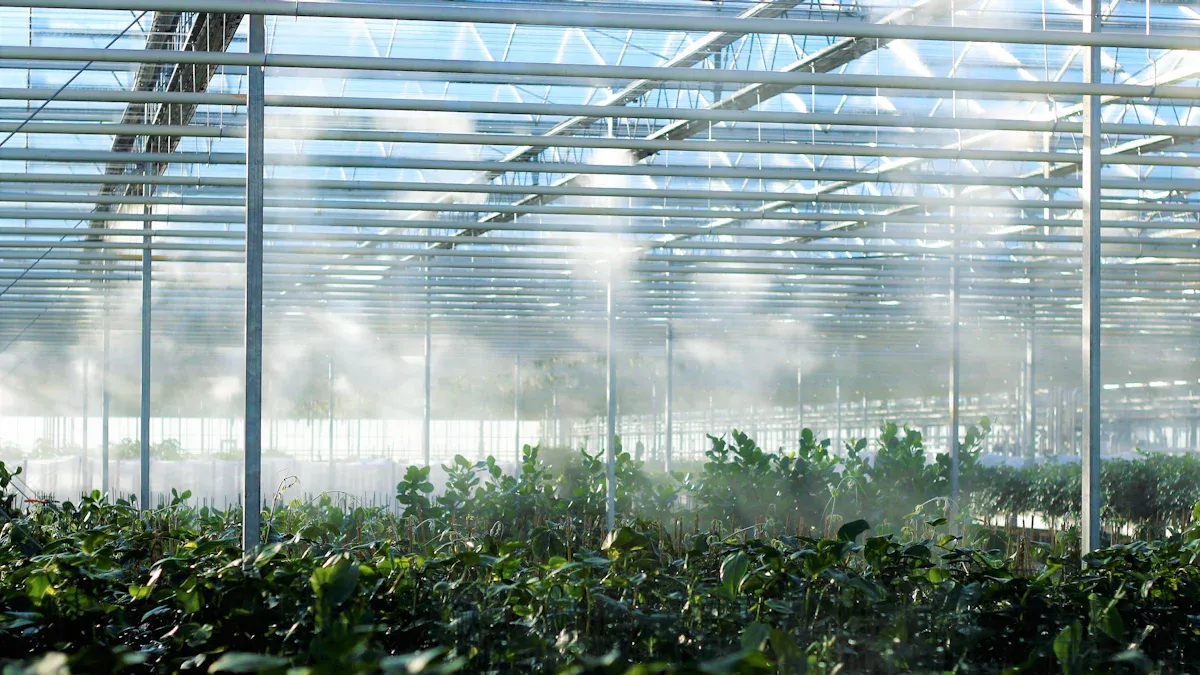
Hydroponic greenhouse systems significantly enhance greenhouse productivity by optimizing resource use. These systems utilize water and nutrients more efficiently than traditional soil-based methods, leading to substantial reductions in water consumption. The synergy between commercial hydroponics and greenhouse technology results in superior crop yields. Studies show that hydroponic farms can produce lettuce yields up to 11 times higher than conventional farms. Implementing a greenhouse climate control system alongside a greenhouse automation system further maximizes efficiency. Understanding the interaction between these systems, including the irrigation and fertigation system, is essential for modern agricultural practices, paving the way for sustainable and efficient food production through smart greenhouse technology.
Key Takeaways
- Hydroponic systems use 70-90% less water than traditional farming, promoting sustainability and reducing costs.
- Vertical farming in hydroponics maximizes space, making it ideal for urban areas with limited land.
- Controlled environments in hydroponics lead to faster growth rates, with plants growing 30-50% faster than in soil.
- Automated climate control and fertigation systems enhance nutrient delivery and reduce labor, improving overall efficiency.
- Integrating advanced technologies like AI and real-time monitoring boosts productivity and ensures consistent crop quality.
Benefits of Hydroponics in Greenhouses
Resource Efficiency
Hydroponic greenhouse systems significantly enhance resource efficiency. These systems utilize water and nutrients more effectively than traditional soil-based methods. Research indicates that hydroponics can reduce water usage by over 90% compared to conventional farming. This efficiency translates to a potable water savings of 33%. Additionally, hydroponic systems can save substantial amounts of nutrients, including 566 kg/ha of nitrogen, 25 kg/ha of phosphorus, and 703 kg/ha of potassium. Such savings not only lower operational costs but also contribute to environmental sustainability.
Tip: Implementing a hydroponic greenhouse system can lead to reduced fertilizer usage by up to 60%, further enhancing resource management.
Space Optimization
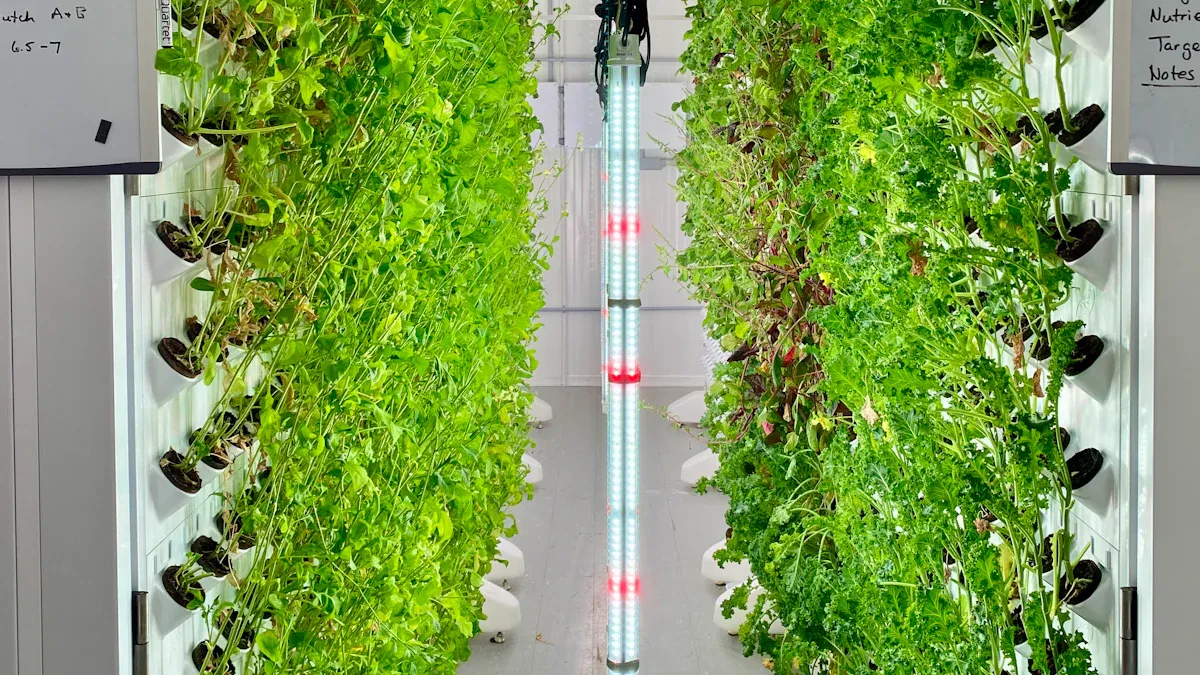
Space optimization is another critical benefit of hydroponics in greenhouse environments. Hydroponic systems allow for vertical farming, which maximizes the use of available space. This method is particularly advantageous in urban settings where land is limited. A study by Plenty, which utilized the Nutrient Film Technique, demonstrated that hydroponics produces fresher, healthier plants while minimizing resource consumption.
| Study/Company | Hydroponic Technique Used | Benefits Highlighted |
|---|---|---|
| Plenty | Nutrient Film Technique | Produces fresher, healthier plants with predictable growth rates and reduced resource consumption. |
| Green Sense Farms | NASA Research | Uses software to optimize conditions, leading to increased yields and reduced electricity consumption. |
| Bowery Farming | Data-driven Model | Monitors crops with AI, optimizing growth cycles and maintaining ideal conditions for plant health. |
| CSS Farms | Nutrient Film Technique | Achieves record-breaking yields of minitubers, significantly increasing output compared to traditional methods. |
Faster Growth Rates
Hydroponic systems also facilitate faster growth rates, which is essential for maximizing productivity. Studies show that plants grown in hydroponic systems can achieve growth rates that are 30-50% faster than those cultivated in soil. This accelerated growth is attributed to the optimized nutrient delivery and controlled environmental conditions inherent in hydroponic systems. Furthermore, hydroponics can produce disease-free plants, enhancing overall crop health and yield.
Note: The ability to control environmental factors allows for year-round production, ensuring a continuous supply of fresh produce regardless of external weather conditions.
Types of Hydroponic Systems
Nutrient Film Technique (NFT)
The Nutrient Film Technique (NFT) is a popular hydroponic system that delivers a thin film of nutrient-rich water directly to plant roots. This method requires minimal growing medium, making it suitable for lightweight plants. NFT systems excel in resource efficiency, using less water and nutrients compared to traditional methods.
| Advantages | Disadvantages |
|---|---|
| Efficient use of water and nutrients | Vulnerability to pump or power failures |
| Minimal growing medium required | Unsuitable for plants with large root systems |
| Easy to monitor and adjust nutrient levels | Requires careful monitoring of water flow and nutrient levels |
Deep Water Culture (DWC)
Deep Water Culture (DWC) involves suspending plant roots in a nutrient solution. This system provides ample oxygen to the roots, promoting rapid growth. DWC is particularly effective for larger plants, such as peppers, which thrive in this environment.
| Benefit | Description |
|---|---|
| Higher Yields | Advanced systems can produce significantly more due to optimized nutrient delivery and environmental control. |
| Reduced Maintenance | Automation and monitoring can make maintenance easier and less time-consuming. |
Ebb and Flow Systems
Ebb and Flow systems, also known as flood-and-drain systems, periodically flood the grow beds with nutrient solution and then drain it back into a reservoir. This cycle provides plants with essential nutrients while allowing roots to access oxygen during the draining phase. Ebb and Flow systems are versatile and can support a variety of crops, making them a popular choice for growers seeking high-quality produce.
Role of Greenhouse Equipment
Climate Control Systems
Climate control systems play a vital role in the success of hydroponic greenhouse systems. They help maintain optimal temperature and humidity levels, which reduces the risk of pests and diseases. These systems allow precise control over water and fertilizer usage, leading to less waste and increased efficiency. By creating ideal growing conditions, climate control systems contribute to higher crop yields and better quality produce.
Key components of climate control systems include:
- Temperature control equipment
- Ventilation systems
- Humidity sensors
- Environment monitoring systems
Advanced Lighting Solutions
Advanced lighting solutions significantly impact crop yields in hydroponic greenhouses. Innovative light manipulation technologies enhance light distribution, improving photosynthetic efficiency. Research shows that the use of diffusive covers can increase crop productivity by 3% to 30%, depending on the crop and growing conditions. Plants under diffusive covers exhibit more uniform growth and higher yields.
| Benefit | Description |
|---|---|
| Improved light spectrum | Enhances photosynthesis and reduces heat stress on plants. |
| Enhanced light distribution | Ensures even light exposure, promoting uniform growth. |
Fertigation Systems
Fertigation systems improve nutrient delivery in hydroponic greenhouse setups. These systems automate the process of mixing and delivering nutrients directly to the plants. This automation reduces the need for manual measurement, minimizing errors and saving time. Fertigation systems ensure accurate delivery of nutrients, enhancing absorption and leading to better plant growth.
Benefits of fertigation systems include:
- Automation reduces labor requirements.
- Precision ensures optimal nutrient levels.
- Resource conservation decreases waste.
By maintaining optimal pH and nutrient levels, these systems help crops become less susceptible to pests and diseases. Enhanced nutrient absorption leads to healthier plants with fewer growth issues.
Interaction for Improved Productivity
Integrated Climate Management
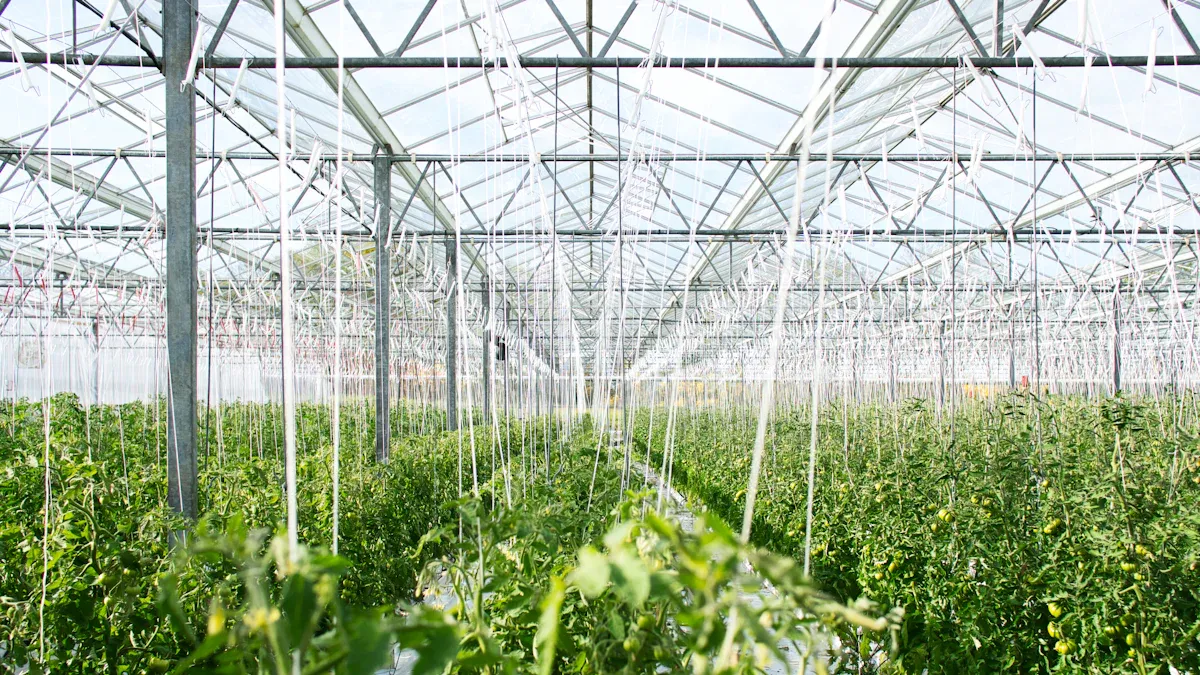
Integrated climate management is essential for optimizing productivity in hydroponic greenhouse systems. Automated systems for heating, ventilation, and air conditioning (HVAC) work together to maintain ideal environmental conditions. This precise control maximizes crop productivity, especially in regions where traditional agriculture faces challenges. Research indicates that modern hydroponic greenhouses benefit significantly from these automated systems. They allow for real-time adjustments to temperature and humidity, ensuring that plants receive the optimal conditions for growth.
Moreover, the integration of artificial intelligence (AI) enhances climate management. AI-driven systems can monitor plant health and nutrient levels, providing valuable insights. A study published in Computers and Electronics in Agriculture found that AI image recognition can identify nutrient deficiencies in hydroponic lettuce with over 90% accuracy. This capability showcases how technology improves resource management and enhances productivity.
Enhanced Nutrient Delivery
Enhanced nutrient delivery systems play a crucial role in the success of hydroponic greenhouse systems. These systems ensure that plants receive the right nutrients at the right time, which is vital for maximizing yields. Hydroponics allows for precise nutrient delivery, optimizing environmental conditions for plant growth. Research shows that hydroponics can lead to significant yield increases. For instance, a study indicated that lettuce grown in hydroponic systems achieved yields approximately 14 times higher than those grown in traditional soil.
| Study | Crop | Yield Increase | Notes |
|---|---|---|---|
| The Use of PGPB to Promote Plant Hydroponic Growth | Lettuce | ~14× higher kg/fresh weight/m² | Hydroponics offers higher yields due to optimized nutrient availability. |
| Optimization of ionic strength of nutrient solution for enhanced hydroponic watermelon yield and quality in greenhouse | Watermelon | 14.8% increase | Optimized nutrient solution concentration improved growth parameters and yield. |
These findings highlight the effectiveness of enhanced nutrient delivery systems in hydroponic greenhouses. By ensuring that plants receive the necessary nutrients, growers can achieve healthier crops and higher yields.
Monitoring and Automation
Monitoring and automation technologies significantly improve efficiency and productivity in hydroponic greenhouse operations. Real-time monitoring allows for precise adjustments to key environmental variables, such as temperature, humidity, and nutrient levels. This precision leads to better crop management and resource conservation.
Automation reduces manual labor by streamlining tasks like irrigation and nutrient dosing. Growers can manage their systems remotely using mobile devices, providing flexibility and convenience. Advanced systems now incorporate machine learning and predictive analytics to enhance decision-making. These technologies analyze factors such as weather forecasts and crop growth stages, optimizing operations and improving productivity.
| Benefit | Description |
|---|---|
| Precision | Real-time monitoring and adjustment of key environmental variables. |
| Labor savings | Automation of tasks like irrigation and nutrient dosing reduces manual labor. |
| Remote visibility | Managers can monitor and control systems from anywhere using mobile devices. |
The integration of these technologies allows hydroponic greenhouse systems to operate more efficiently, ultimately leading to increased productivity and sustainability.
The integration of hydroponic systems with greenhouse equipment maximizes efficiency in modern agriculture. This synergy enhances productivity through several mechanisms:
| Mechanism | Description |
|---|---|
| Optimized Nutrient Delivery | Hydroponic systems allow for precise nutrient solutions that enhance plant health and yield. |
| Efficient Water Management | These systems use 70-90% less water than traditional methods due to a closed-loop cycle. |
| Advanced Lighting Technologies | LED grow lights tailored to plant needs improve growth rates and energy efficiency. |
| Vertical Farming | Maximizes space utilization by allowing multiple layers of plants in a smaller footprint. |
| Controlled Environment | Enables year-round optimal conditions, leading to faster crop cycles and higher yields. |
This integration results in higher quality crops and increased yields. Hydroponic systems provide enhanced control over growing conditions, ensuring consistent crop quality. Embracing these technologies is essential for sustainable agriculture, as they promote water conservation, reduce pesticide use, and allow for year-round production.
FAQ
What are the main advantages of using hydroponics in greenhouses?
Hydroponics offers resource efficiency, space optimization, and faster growth rates. These systems use less water and nutrients while allowing for vertical farming, which maximizes space and increases crop yields.
How does climate control impact hydroponic systems?
Climate control systems maintain optimal temperature and humidity levels. They reduce pest risks and enhance plant health, leading to higher yields and better-quality produce in hydroponic greenhouses.
What types of crops grow best in hydroponic systems?
Leafy greens, herbs, and certain fruits like strawberries thrive in hydroponic systems. These crops benefit from the controlled environment and optimized nutrient delivery, resulting in faster growth and higher yields.
How do fertigation systems work in hydroponics?
Fertigation systems automate nutrient delivery directly to plants. They mix nutrients with water, ensuring precise application and reducing manual labor. This process enhances nutrient absorption and promotes healthier plant growth.
Can hydroponic systems operate year-round?
Yes, hydroponic systems can function year-round. Controlled environments in greenhouses allow for consistent growing conditions, enabling continuous production regardless of external weather conditions.