
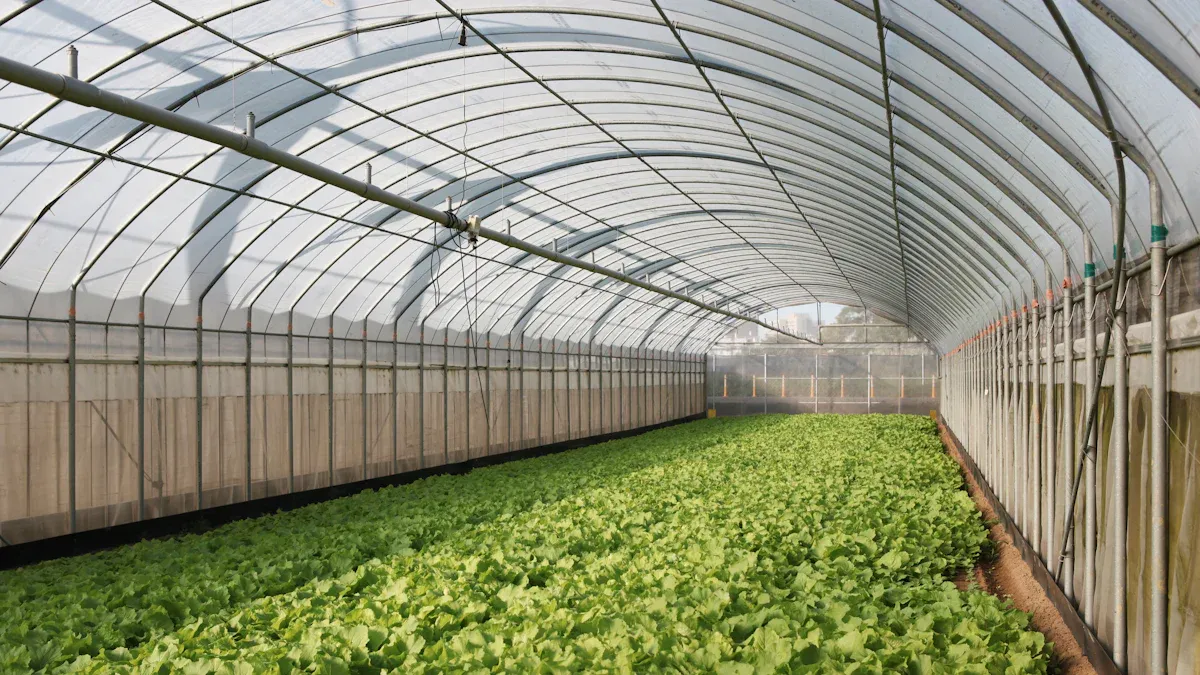
Agribusinesses face a crucial decision when choosing between greenhouse vs vertical farming. Each method offers unique advantages and challenges, particularly when considering greenhouse vs vertical farming benefits. Key factors influencing this decision include energy efficiency, water usage, and labor requirements. For instance, greenhouses generally utilize natural sunlight, leading to a lower energy footprint. In contrast, vertical farming, especially in limited space, relies on artificial lighting, which increases energy demands. Recent statistics reveal the commercial greenhouse market is projected to grow from nearly $50 billion in 2024 to $66.86 billion by 2029, while the vertical farming market is expected to exceed $35 billion by 2032. Additionally, a hydroponic vertical towers comparison shows that vertical farming systems can be more efficient in certain contexts. Understanding which system uses less water is also crucial in this farming comparison, as it can significantly impact sustainability and operational costs. Overall, grasping these dynamics is essential for making informed choices in the agribusiness sector.
Key Takeaways
- Greenhouse farming uses natural sunlight, leading to lower energy costs and a wider variety of crops.
- Vertical farming maximizes space efficiency and crop yield but incurs higher energy and operational costs.
- Water efficiency is crucial; vertical farming recirculates up to 95% of irrigation water, reducing waste.
- Consider initial setup and ongoing costs; greenhouses generally require lower investments than vertical farms.
- Choose crops wisely; vertical farming suits fast-growing crops, while greenhouses support a broader range.
Greenhouse Farming Overview
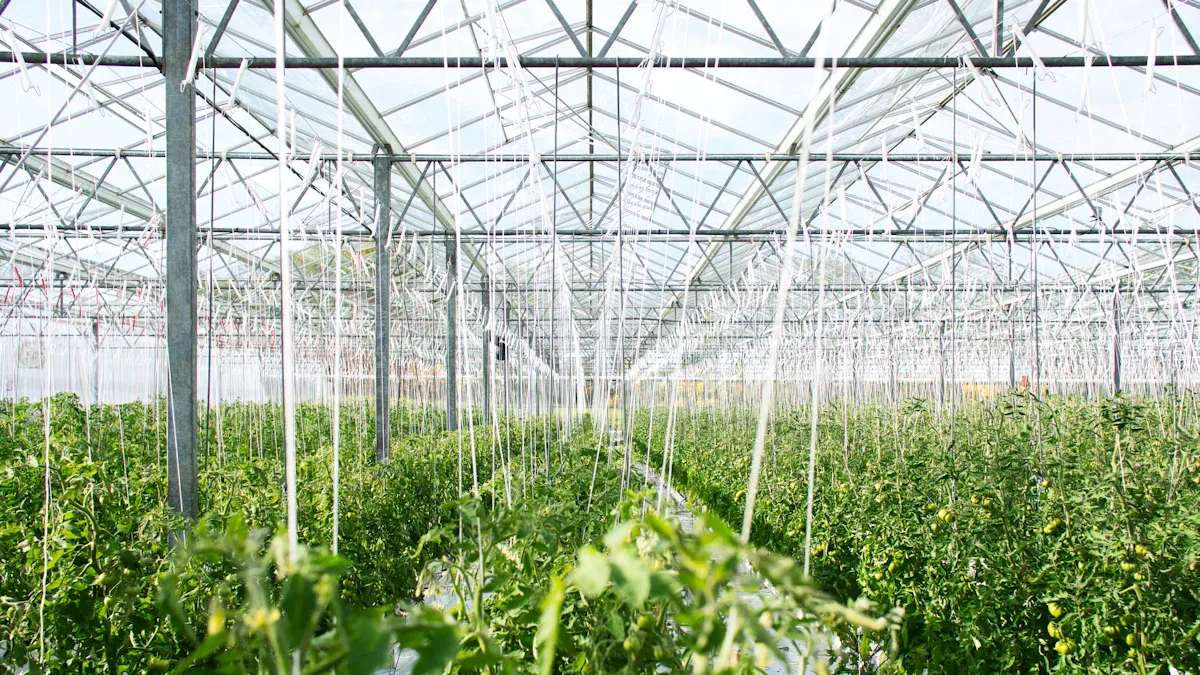
Greenhouse farming represents a traditional yet innovative approach to agriculture. This method allows farmers to cultivate crops in a controlled environment, optimizing growth conditions. Greenhouses utilize natural sunlight, which reduces energy costs compared to artificial lighting systems.
Modern greenhouse structures often include various technologies to enhance productivity and efficiency. Common types of greenhouses include:
- Multi-span Greenhouse
- Glass Greenhouse
- PC board Greenhouse
- Single-span Greenhouse
In addition to structural variations, advanced technologies play a crucial role in greenhouse farming. These technologies include:
- Environment Monitoring Systems
- IoT Systems
- Irrigation Systems
- Lighting Technology
- Photovoltaic Systems
- Shading Systems
- Temperature Control Equipment
- Ventilation Systems
Farmers can also implement hydroponic systems, such as the Dutch Bucket System, Ebb and Flow System, NFT Hydroponic Systems, Raft Hydroponic Systems, and Substrate Cultivation Systems. Vertical hydroponic towers are gaining popularity within greenhouses, allowing for space-efficient crop production.
The benefits of greenhouse farming extend beyond energy efficiency. This method enables year-round crop production, regardless of external weather conditions. Farmers can grow a diverse range of crops, from vegetables to flowers, maximizing their market potential.
Vertical Farming Overview
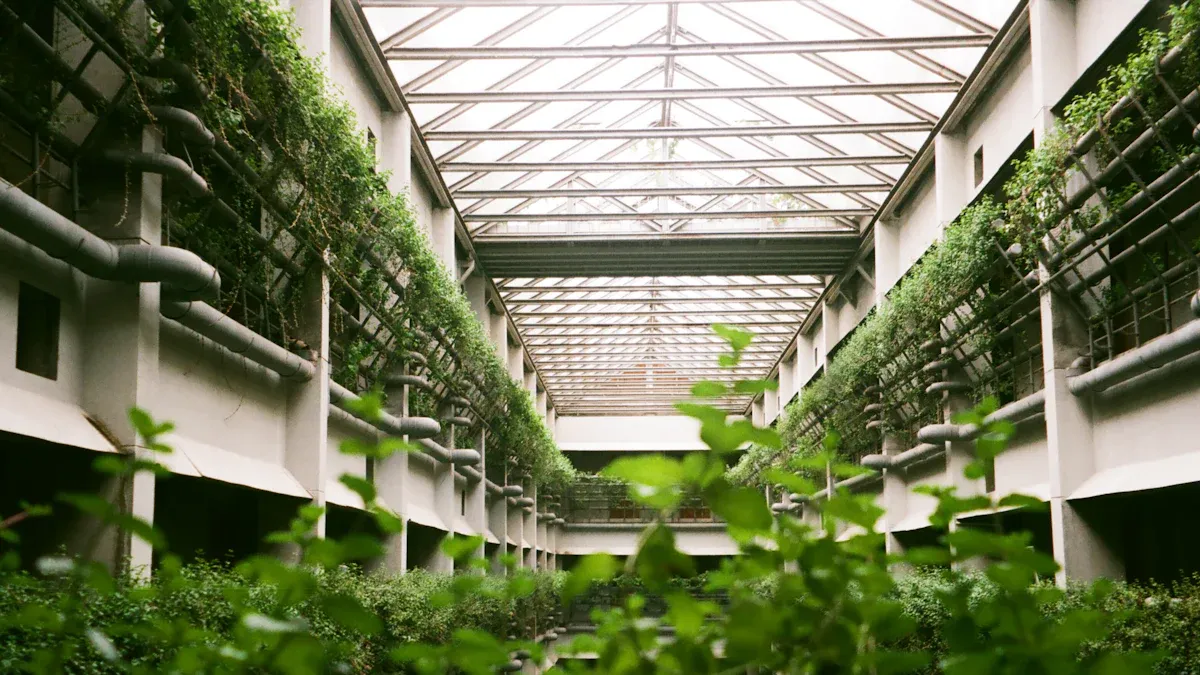
Vertical farming represents a modern approach to agriculture, utilizing innovative techniques to maximize crop production in limited spaces. This method involves growing plants in vertically stacked layers, often integrated into controlled environments. Vertical farms can operate indoors or in repurposed buildings, allowing for year-round cultivation regardless of external weather conditions.
Several types of vertical farming systems are currently employed in commercial agribusiness. These include:
- Container Plant Factory
- Dutch Bucket System
- Ebb and Flow System
- NFT Hydroponic Systems
- Raft Hydroponic Systems
- Substrate Cultivation System
- Vertical hydroponic towers
These systems leverage advanced technologies to enhance crop growth rates. For instance, vertical farming optimizes light conditions through adjustable frequencies, which significantly boosts plant growth and nutritional value. In contrast, traditional farming often relies on fixed light conditions, limiting growth potential.
The following table illustrates the differences in crop growth rates between vertical and traditional farming:
| Aspect | Vertical Farming | Traditional Farming |
|---|---|---|
| Light Optimization | Adjustable light frequencies enhance growth and nutrition | Fixed light conditions limit growth potential |
| Growth Rate | Significantly higher due to controlled environments | Slower due to environmental variability |
| Crop Quality | Improved taste and nutrition through precise light control | Variable quality based on conditions |
Vertical farming not only increases productivity but also enhances crop quality. This method allows for precise control over environmental factors, resulting in superior taste and nutrition. As agribusinesses weigh the options in the greenhouse vs vertical farming debate, understanding these advantages becomes essential.
Energy Use Comparison
Energy consumption plays a critical role in the decision-making process for agribusinesses considering greenhouse vs vertical farming. Each method has distinct energy requirements that can significantly impact operational costs and sustainability.
Vertical farming typically exhibits higher energy consumption due to its reliance on artificial lighting and climate control systems. These systems ensure optimal growth conditions but come at a cost. In contrast, greenhouse farming primarily utilizes natural sunlight, resulting in a lower energy footprint. This reliance on sunlight not only reduces energy expenses but also contributes to a more sustainable farming approach.
The following table summarizes the energy consumption characteristics of both farming types:
| Farming Type | Energy Consumption Characteristics |
|---|---|
| Vertical Farming | Higher energy consumption due to artificial lighting and climate control systems. |
| Greenhouse Farming | Utilizes natural sunlight, resulting in a lower energy footprint. |
| Yield per Square Meter | Vertical farms can achieve higher yields per square meter, but at a higher energy cost per kilogram of output. |
While vertical farms can produce more crops in a smaller area, the increased energy costs may offset some of the benefits. Agribusinesses must weigh these factors carefully. Understanding the energy dynamics between greenhouse vs vertical farming can help businesses make informed decisions that align with their sustainability goals and budget constraints.
Water Efficiency Analysis
Water efficiency plays a vital role in the sustainability of agricultural practices. When comparing greenhouse and vertical farming, vertical farming emerges as the more efficient option for water usage. Vertical farms often recirculate 90% to 95% of their irrigation water. This closed-loop system minimizes waste and ensures that plants receive the necessary hydration without excessive loss.
In contrast, greenhouse farming typically consumes more water overall. Greenhouses experience higher losses due to evaporation and drainage. The reliance on natural sunlight and open environments can lead to significant water waste, especially in warmer climates.
The following table summarizes the water efficiency characteristics of both farming types:
| Farming Type | Water Efficiency Characteristics |
|---|---|
| Vertical Farming | Recirculates 90% to 95% of irrigation water, significantly reducing waste. |
| Greenhouse Farming | Higher overall water consumption with increased losses from evaporation and drainage. |
Farmers must consider these differences when selecting a farming method. The ability to conserve water not only lowers operational costs but also aligns with sustainability goals. As water scarcity becomes a growing concern globally, adopting practices that maximize water efficiency is essential for future agribusiness success.
Cost and Labor Requirements
When evaluating the cost and labor requirements of greenhouse vs vertical farming, agribusinesses must consider several factors. Initial setup costs, ongoing operational expenses, and labor needs all play significant roles in determining the most suitable farming method.
Initial Setup Costs
The initial investment for greenhouse farming can vary based on the type and size of the structure. Generally, the unit price ranges from USD 6 to 14 per square meter. For a minimum order quantity of 500 square meters, this can lead to a substantial upfront cost. Greenhouses typically use materials like hot-dip galvanized pipes and UV-resistant PE or PO film, which lasts between 3 to 5 years. The wind-resistant structure also contributes to the durability of the investment.
In contrast, vertical farming requires a more significant initial investment due to its complex infrastructure. The costs associated with building and equipping vertical farms can be considerably higher, especially when factoring in advanced technologies such as climate control systems and artificial lighting.
Ongoing Operational Costs
Ongoing operational costs present another critical difference between the two farming methods. Vertical farming generally incurs higher operational costs compared to greenhouse farming. This is primarily due to the need for engineered infrastructure and continuous energy input. The reliance on artificial lighting and climate control in vertical farms leads to increased energy consumption. In contrast, greenhouse farming benefits from natural sunlight, resulting in lower energy costs.
Agribusinesses must also consider labor requirements. Greenhouse farming often requires less labor than vertical farming. The controlled environment of vertical farms demands more skilled labor to manage the sophisticated systems and technologies involved. This can lead to higher labor costs over time.
Summary
In summary, greenhouse farming typically involves lower initial setup and ongoing operational costs compared to vertical farming. While vertical farming offers advantages in terms of space efficiency and crop yield, the financial implications may deter some agribusinesses. Understanding these cost and labor dynamics is essential for making informed decisions in the greenhouse vs vertical farming debate.
Crop Choice Impact
Crop selection significantly influences the success of both greenhouse and vertical farming. Each method has its strengths and limitations regarding the types of crops that thrive in their respective environments.
Vertical farming primarily focuses on fast-growing, high-value crops such as leafy greens and herbs. These crops flourish in compact spaces, allowing vertical farms to maximize yield per square meter. The controlled environment of vertical farms enhances predictability in crop size and harvest timing, which is a notable advantage for producers. However, vertical farming struggles with staple crops like grains and tubers. These crops require more space and longer growing times, making them less efficient in vertical systems. Consequently, traditional agriculture remains more competitive for these staple crops.
In contrast, greenhouse farming supports a broader range of crops, including fruiting vegetables and cereals. These crops benefit from the larger root zones and extended growing periods that greenhouses provide. The ability to cultivate diverse crops allows greenhouse farmers to tap into various markets, enhancing profitability.
Here are some key points regarding crop choice in both farming methods:
-
Vertical Farming:
- Ideal for fast-growing, high-value crops with short growing cycles.
- Increases production per square meter while using less water.
- Provides better control over crop quality and quantity.
-
Greenhouse Farming:
- Supports a wider variety of crops, including those needing larger root zones.
- More productive for crops with longer growing times.
- Allows for year-round cultivation, regardless of external weather conditions.
Understanding these crop choice impacts helps agribusinesses make informed decisions that align with their operational goals and market demands.
Sustainability Considerations
Sustainability remains a critical factor in the decision-making process for agribusinesses. Both greenhouse and vertical farming offer unique advantages and challenges regarding environmental impact and resource management.
Greenhouse Farming Sustainability
Greenhouse farming promotes sustainability through several key practices:
- Natural Resource Utilization: Greenhouses primarily rely on natural sunlight, reducing dependence on fossil fuels. This reliance lowers greenhouse gas emissions and energy costs.
- Biodiversity Support: Greenhouses can accommodate a variety of crops, promoting biodiversity. This diversity helps maintain soil health and reduces the risk of pest outbreaks.
- Waste Reduction: Many greenhouse operations implement composting and recycling programs. These practices minimize waste and enhance soil fertility.
Tip: Agribusinesses can further enhance sustainability by integrating renewable energy sources, such as solar panels, into greenhouse operations.
Vertical Farming Sustainability
Vertical farming also contributes to sustainable agriculture through innovative practices:
- Water Conservation: Vertical farms utilize advanced irrigation systems that recirculate water, achieving up to 95% efficiency. This closed-loop system significantly reduces water waste.
- Reduced Land Use: By growing crops in stacked layers, vertical farms maximize space efficiency. This method allows for food production in urban areas, reducing transportation emissions associated with long-distance food transport.
- Controlled Environment: Vertical farms maintain optimal growing conditions year-round. This control minimizes the need for pesticides and herbicides, leading to healthier crops and reduced chemical runoff.
The following table summarizes the sustainability characteristics of both farming types:
| Sustainability Aspect | Greenhouse Farming | Vertical Farming |
|---|---|---|
| Energy Use | Utilizes natural sunlight, reducing emissions | Relies on artificial lighting, increasing energy demand |
| Water Efficiency | Moderate; higher evaporation losses | High; recirculates 90-95% of water |
| Land Use | Requires larger land areas | Maximizes space through vertical stacking |
| Chemical Usage | Lower due to natural pest management | Minimal due to controlled environments |
Productivity Metrics
Productivity metrics serve as essential indicators for evaluating the efficiency of greenhouse and vertical farming. These metrics help agribusinesses determine which method yields better results based on various factors.
Key Productivity Metrics
-
Yield per Square Meter:
- Vertical farms often achieve higher yields per square meter due to their stacked growing systems.
- Greenhouses, while efficient, typically produce lower yields in comparison.
-
Growth Cycle Duration:
- Vertical farming allows for faster growth cycles. Crops can mature in weeks rather than months.
- Greenhouses may require longer growth periods, especially for larger crops.
-
Crop Turnover Rate:
- Vertical farms can harvest multiple crops throughout the year, maximizing output.
- Greenhouses also support year-round production but may have longer intervals between harvests.
Comparative Table of Productivity Metrics
| Metric | Vertical Farming | Greenhouse Farming |
|---|---|---|
| Yield per Square Meter | Higher due to vertical stacking | Moderate, dependent on crop type |
| Growth Cycle Duration | Shorter, often weeks | Longer, typically months |
| Crop Turnover Rate | High, multiple harvests annually | Moderate, fewer harvests annually |
Tip: Agribusinesses should regularly monitor these productivity metrics to optimize operations and improve profitability.
Understanding these metrics allows agribusinesses to make informed decisions. They can assess which farming method aligns best with their production goals. By focusing on productivity, businesses can enhance their competitive edge in the agricultural market.
In summary, greenhouse vs vertical farming presents distinct advantages and challenges. Greenhouses utilize natural sunlight, offering lower energy costs and a wider variety of crops. Vertical farming maximizes space and enhances crop yield but incurs higher energy and operational costs.
For agribusinesses, the choice depends on specific goals. Those seeking to grow diverse crops with lower initial costs may prefer greenhouses. Conversely, businesses focused on high-value crops in urban settings might benefit from vertical farming’s efficiency.
FAQ
What are the main benefits of greenhouse farming?
Greenhouse farming offers lower energy costs, year-round crop production, and a wider variety of crops. It utilizes natural sunlight, which reduces reliance on artificial lighting and enhances sustainability.
How does vertical farming impact urban agriculture?
Vertical farming maximizes space efficiency, allowing food production in urban areas. This method reduces transportation emissions and provides fresh produce to local markets, enhancing food security.
Which farming method is more water-efficient?
Vertical farming is more water-efficient, recirculating 90% to 95% of irrigation water. In contrast, greenhouse farming experiences higher water losses due to evaporation and drainage.
What types of crops thrive in vertical farming?
Vertical farming excels with fast-growing, high-value crops like leafy greens and herbs. These crops benefit from controlled environments, maximizing yield per square meter.
Are there significant labor differences between the two methods?
Yes, vertical farming typically requires more skilled labor due to its complex systems and technologies. Greenhouse farming often demands less labor, making it more cost-effective in some cases.