
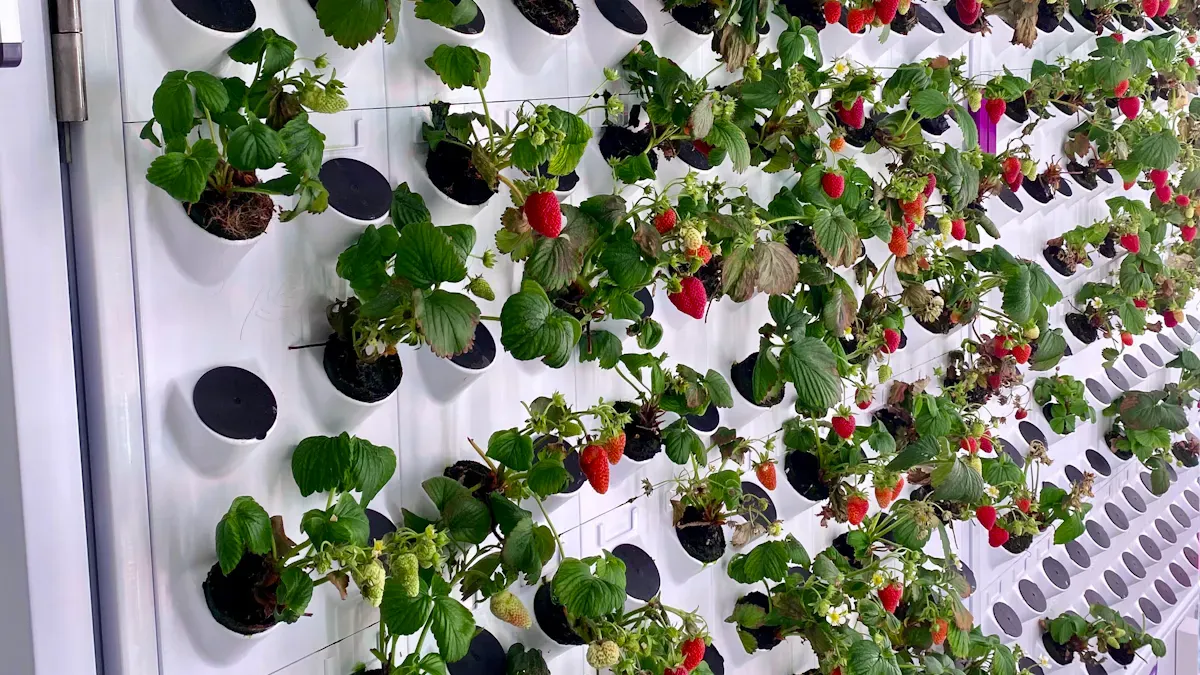
Choosing the right hydroponic channels and hydroponic equipment is essential for achieving success in commercial growing. As technology continues to advance, innovations like smart vertical hydroponic systems and automation are set to transform the industry by 2026. These developments will improve resource efficiency and allow hydroponic setups to thrive in urban areas and challenging climates. Commercial growers can enhance their operations by investing in the best hydroponic channels for leafy greens and dependable hydroponic equipment. Additionally, having a comprehensive hydroponic equipment list for beginners can help newcomers get started effectively. For those interested in growing tomatoes, it’s important to consider what hydroponic channels are best for tomatoes to ensure optimal growth. This strategic investment will ultimately result in better yields and greater sustainability.
Key Takeaways
- Invest in advanced hydroponic channels like NFT and DWC for efficient nutrient delivery and high growth rates.
- Utilize LED grow lights to save energy and enhance plant growth, ensuring optimal light spectrum for all growth stages.
- Regularly monitor pH levels with a reliable testing kit to maintain nutrient balance and promote healthy plant development.
- Incorporate timers to automate processes, ensuring consistent care and improving operational efficiency in hydroponic systems.
- Choose dependable water pumps to maintain optimal flow rates, preventing crop decline and maximizing yields.
Essential Hydroponic Channels
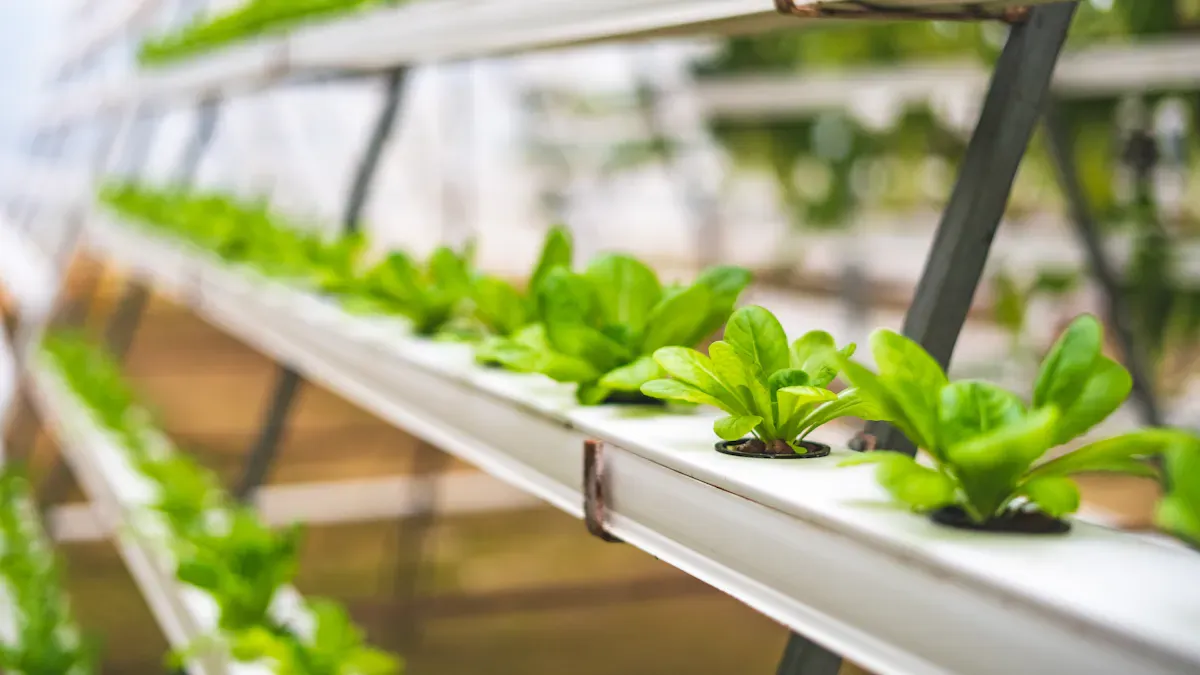
Channel 1: Nutrient Film Technique (NFT)
The Nutrient Film Technique (NFT) stands out as one of the most popular hydroponic channels among commercial growers in 2026. This system operates by allowing a thin film of nutrient solution to flow continuously over the roots of plants. This method promotes high growth rates due to the constant access to nutrients and oxygen.
NFT systems are particularly energy-efficient and low-maintenance. They excel in water efficiency and space utilization, making them ideal for fast-growing plants like leafy greens and herbs. However, growers must be cautious, as NFT systems are sensitive to pump failures and flow interruptions. Regular monitoring of pH and electrical conductivity levels is crucial to ensure nutrient balance.
| Feature | NFT Systems |
|---|---|
| Water Efficiency | High |
| Space Utilization | Excellent |
| Ideal Crops | Leafy greens, herbs |
| Growth Rate | Notably high due to oxygen exposure |
| Maintenance | Low |
| Sensitivity to Failures | Sensitive to pump failures |
Channel 2: Deep Water Culture (DWC)
Deep Water Culture (DWC) is another widely adopted hydroponic channel in commercial operations. In this system, plants are suspended in a nutrient-rich water solution, which recirculates to provide essential nutrients and oxygen. DWC is highly water-efficient, making it an attractive option for growers looking to maximize resource use.
This method is particularly well-suited for crops such as lettuce, basil, and kale. The simplicity of the DWC system allows for easy management and monitoring. Growers can expect robust plant growth due to the constant availability of nutrients and oxygen.
Channel 3: Ebb and Flow System
The Ebb and Flow system, also known as flood and drain, operates by intermittently flooding the plant roots with nutrient solution, followed by draining it back into a reservoir. This cyclical process provides plants with periodic access to water, nutrients, and oxygen, which is essential for healthy growth.
- The Ebb and Flow system mimics natural irrigation patterns, enhancing nutrient uptake and root oxygenation.
- The frequency and duration of flood cycles can be adjusted based on plant type and environmental conditions, ensuring tailored care for different crops.
- This system accommodates a variety of crops, making it versatile for different farming needs.
The Ebb and Flow system promotes oxygenation of the root zone, preventing waterlogging and enhancing root health. During the flooding phase, roots absorb water and minerals, while the draining phase exposes roots to air, preventing stagnation. This method ensures efficient nutrient delivery and supports healthy root development.
Channel 4: Aeroponics
Aeroponics represents a cutting-edge approach in hydroponic channels, gaining traction among commercial growers in 2026. This system suspends plants in air and delivers nutrient-rich mist directly to the roots. The absence of a growing medium allows for maximum oxygen exposure, which significantly enhances plant growth.
Aeroponics offers several advantages over traditional hydroponic channels:
| Advantage | Description |
|---|---|
| Disease Management | Quick removal of diseased plants without affecting others due to the isolated nature of the system. |
| Higher Plant Density | Ability to grow more plants per square meter in a disease-free environment compared to traditional methods. |
| Increased Aeration | Greater oxygenation to plant roots, stimulating growth and preventing pathogen formation. |
| Limited Disease Transmission | Reduced plant-to-plant contact and sterile spray pulses minimize disease spread. |
| Resource Efficiency | Minimal water and nutrient use with direct delivery to roots, promoting rapid growth and high yields. |
This method is particularly effective for high-value crops such as strawberries and herbs. Growers can expect faster growth cycles and higher yields, making aeroponics a compelling choice for commercial operations.
Channel 5: Wick System
The Wick System operates on the principle of capillary action, allowing plants to draw moisture from a reservoir through a wick. This passive hydroponic channel is simple and cost-effective, making it appealing for small-scale growers. However, it does come with limitations that commercial growers should consider.
| Limitation | Description |
|---|---|
| Limited Nutrient Control | The system relies on the water in the reservoir, leading to potential nutrient imbalances. |
| Slower Growth Rates | Passive nature results in slower nutrient delivery, affecting growth and yield. |
| Prone to Clogging | Susceptibility to blockages can hinder water and nutrient flow, impacting plant health. |
| Limited Scale | Best suited for small-scale gardening; impractical for larger operations due to nutrient control issues. |
| Sensitivity to Environmental Conditions | Fluctuations in temperature and humidity can disrupt wicking action, affecting delivery. |
The Wick System is best suited for crops that do not require constant moisture, such as leafy greens and herbs. Suitable growing mediums like sand, gravel, or perlite can support these crops effectively. However, growers should be cautious of its limitations, especially when considering larger-scale operations.
Must-Have Hydroponic Equipment
Equipment 1: LED Grow Lights
LED grow lights have become indispensable for commercial hydroponic growers in 2026. These lights provide the necessary spectrum for plant growth while being energy-efficient. Premium LED fixtures achieve efficacy ratings of 2.7-3.0+ µmol/J, meaning they convert electricity into usable light more effectively than traditional lighting options. This efficiency translates to lower energy costs and healthier plants.
| Grow Light Model | Power (W) | Equivalent (W) | Efficiency (%) | PPE (μmol/J) |
|---|---|---|---|---|
| SANSI | 36 | 400 | 91 | 1.82 |
| Barrina T5 Grow Lights | 80 | 500 | 84 | N/A |
| Spider Farmer SF2000 | 200 | 400 | N/A | 3.14 |
LED grow lights also offer advantages over traditional HPS/MH lights. They target specific wavelengths for growth, consume significantly less electricity, and last up to 50,000 hours or more. Additionally, they operate at lower temperatures, reducing the need for extensive cooling systems. This combination of features makes LED grow lights a top choice for maximizing yield and minimizing operational costs.
Equipment 2: pH Testing Kit
Maintaining the correct pH level is crucial for optimal nutrient uptake in hydroponic systems. A reliable pH testing kit allows growers to monitor and adjust pH levels effectively. In 2026, various types of pH testing kits are available, each with different accuracy levels suited for different user needs.
| Type of pH Testing Kit | Accuracy Range | User Type |
|---|---|---|
| Digital pH Meter | ±0.01 to ±0.1 pH | Professional growers |
| pH Pen (Portable pH Tester) | ±0.05 pH | Hobbyists |
| pH and EC Combo Meter | ±0.01 to ±0.02 pH | Advanced systems |
Growers should test pH levels every 1–3 days during growth periods. For sensitive crops or recirculating systems, daily testing is advisable. Conducting tests in the early morning provides the most accurate baseline readings. Regular monitoring ensures that plants receive the nutrients they need, preventing deficiencies and promoting healthy growth.
Equipment 3: Reliable Nutrient Solution
A reliable nutrient solution is vital for successful hydroponic farming. Hydroponic agriculture relies on nutrient-rich water solutions to support plant growth. Growers must manage mineral content and pathogens effectively to create ideal conditions for plant development.
Regular changes of the nutrient reservoir help prevent nutrient antagonism, ensuring that plants receive balanced nutrition. Additionally, understanding water quality factors such as hardness and alkalinity is critical for effective nutrient delivery.
Key considerations for nutrient solutions include:
- Regular monitoring and adjustment of pH levels.
- Selection of high-quality nutrient formulations tailored to specific crops.
- Awareness of the nutrient needs of different plant species.
By investing in reliable nutrient solutions, growers can optimize their hydroponic channels and achieve higher yields.
Equipment 4: Water Pump
Water pumps play a crucial role in hydroponic systems, ensuring the efficient delivery of water and nutrients to plants. High-quality hydroponic water pumps optimize plant growth and enhance operational efficiency. They provide precise water and nutrient delivery, which improves plant health and yield while conserving resources.
Maintaining an optimal flow rate is vital. It prevents water stagnation, reducing the risk of root diseases. Energy-efficient designs help lower operational costs without sacrificing performance. Versatile pumps can integrate into various hydroponic systems, featuring adjustable flow rates and pressure settings.
When selecting a water pump, growers should consider the following specifications:
- Understand your system’s hydraulic requirements: Focus on flow rate and maximum head height.
- Calculate the minimum required flow rate: This depends on the type of hydroponic system, such as Deep Water Culture (DWC) or Nutrient Film Technique (NFT).
- Measure total dynamic head (TDH): This accounts for vertical lift and friction losses.
- Apply a 20% safety margin: This accounts for pump degradation over time.
Failing to maintain a reliable water pump can lead to severe consequences. System failures, such as pump breakdowns, can cause rapid crop decline. Expert sources indicate that the failure of a water pump can result in plants dying within hours due to the immediate lack of water and nutrients, which are essential in soilless environments. Therefore, investing in a dependable water pump is critical for sustaining healthy crops and maximizing yields.
Equipment 5: Timers
Timers are essential tools for managing hydroponic systems effectively. They automate various processes, ensuring that plants receive consistent care. Timers control light cycles, nutrient delivery, and water schedules, allowing growers to optimize their operations.
Using timers offers several advantages:
- Consistency: Timers ensure that plants receive the same amount of light and nutrients daily, promoting uniform growth.
- Efficiency: Automation reduces the need for manual intervention, saving time and labor costs.
- Customization: Growers can tailor schedules to meet the specific needs of different crops, enhancing overall productivity.
When selecting timers, consider the following features:
- Programmability: Look for timers that allow multiple settings for different tasks.
- Durability: Choose timers designed for continuous use in a hydroponic environment.
- Ease of Use: Select models with user-friendly interfaces for quick adjustments.
Incorporating timers into hydroponic systems streamlines operations and enhances crop management. By automating essential tasks, growers can focus on other critical aspects of their business, ultimately leading to improved efficiency and higher yields.
Comparison of Hydroponic Equipment
Light Spectrum Efficiency
Light spectrum efficiency plays a crucial role in maximizing crop yield in hydroponic systems. Growers should consider the following factors when selecting lighting:
- Full-spectrum LEDs provide balanced wavelengths that support all growth stages.
- Targeted full-spectrum technology emphasizes wavelengths that plants utilize most effectively.
- PPFD (Photosynthetic Photon Flux Density) indicates the usable light reaching the plant canopy.
| Light Spectrum Type | Effect on Final Yield | Effect on Leaf Color |
|---|---|---|
| WW180, R180, B20G60R100, B20R100FR60 | Highest yield | Thinner leaves, less red color |
| B20R160, B20G60R100 | Intermediate yield | Noticeable red leaf color with at least 11% blue light |
| B180 | Lowest yield | Deepest red leaf color when used post-transplant |
LED grow lights offer superior light distribution and spectrum control. Plants primarily utilize blue (400-500nm) and red (600-700nm) wavelengths for photosynthesis. Adding UV and far-red wavelengths can enhance growth and yield. For instance, UV-B exposure can increase trichome production in medicinal plants, while far-red wavelengths can trigger flowering and influence stem elongation.
Nutrient Delivery Systems
Different hydroponic channels utilize various nutrient delivery systems, each with unique advantages and disadvantages. Here are some key points:
- Ebb and Flow Systems: Mimic natural irrigation, promoting nutrient uptake and root oxygenation through cyclic flooding.
- Drip Systems: Deliver nutrients directly to the base of each plant, ensuring efficient nutrient use.
- Aeroponic Systems: Use mist to deliver nutrients, requiring precise timing for optimal growth.
The effectiveness of these systems varies. For example, the Nutrient Film Technique (NFT) allows continuous water flow through small tubing, suitable for certain crops but not all. In contrast, vertical media stacks distribute nutrient solutions multiple times daily, allowing for controlled delivery.
Cost vs. Yield Analysis
Investing in hydroponic systems can yield significant returns. Here’s a comparison of costs and expected yields:
| Farming Type | Estimated Yield Increase (%) | Implementation Cost (USD/acre) |
|---|---|---|
| Hydroponic | 25–35 | 85,000–110,000 |
| Aeroponic | 30–40 | 95,000–130,000 |
| Traditional Soil | Baseline | 12,000–25,000 |
Hydroponic systems can yield 25-35% more than traditional methods. While initial costs for hydroponics range from $85,000 to $110,000 per acre, the potential for multiple harvests annually and faster growth cycles leads to quicker returns on investment. Aeroponic systems can yield even more, with increases of 30-40%.
Investing in hydroponic equipment may seem daunting, but the long-term benefits often outweigh the initial expenses.
The top 10 hydroponic channels and equipment play a crucial role in enhancing commercial growing operations. These tools improve efficiency and yield, allowing growers to maximize their resources. Investing in advanced hydroponic systems leads to better crop quality and sustainability.
Tip: Embrace innovation in hydroponic farming. The future holds exciting possibilities for growth and development in this field.
By adopting these technologies, growers position themselves for success in an evolving agricultural landscape. 🌱
FAQ
What is hydroponics?
Hydroponics is a method of growing plants without soil. Instead, it uses nutrient-rich water solutions to deliver essential nutrients directly to plant roots. This technique promotes faster growth and higher yields compared to traditional soil-based farming.
What are the benefits of hydroponic systems?
Hydroponic systems offer several advantages, including efficient water use, faster growth rates, and reduced pest issues. They also allow for year-round cultivation and can be set up in urban areas, maximizing space utilization.
How often should I check pH levels in hydroponic systems?
Growers should check pH levels every 1 to 3 days during growth periods. For sensitive crops or recirculating systems, daily testing is advisable to ensure optimal nutrient uptake and prevent deficiencies.
Can I use hydroponics for all types of plants?
While many plants thrive in hydroponic systems, leafy greens, herbs, and certain fruits perform best. Some crops, like root vegetables, may not adapt well to hydroponics due to their growth requirements.
What is the initial cost of setting up a hydroponic system?
The initial cost of a hydroponic system varies widely, ranging from $85,000 to $130,000 per acre. Factors influencing cost include system type, equipment quality, and scale of operation.