
The integration of multi-span greenhouse structures with advanced hydroponic systems represents the pinnacle of modern controlled-environment agriculture (CEA). Research by organizations such as the Food and Agriculture Organization (FAO) indicates that protected cultivation can increase water-use efficiency by up to 90% compared to traditional open-field farming. A Multi-Span Greenhouse provides the necessary volume for climate stability, while Hydroponic Systems—specifically NFT (Nutrient Film Technique) and Vertical Towers—eliminate soil-borne diseases and optimize nutrient delivery. This synergy allows commercial growers to achieve year-round production, even in extreme climates ranging from -20°C to 45°C. By leveraging vertical space and thermal insulation quilts, farms can significantly reduce energy footprints while doubling or tripling annual harvest cycles.
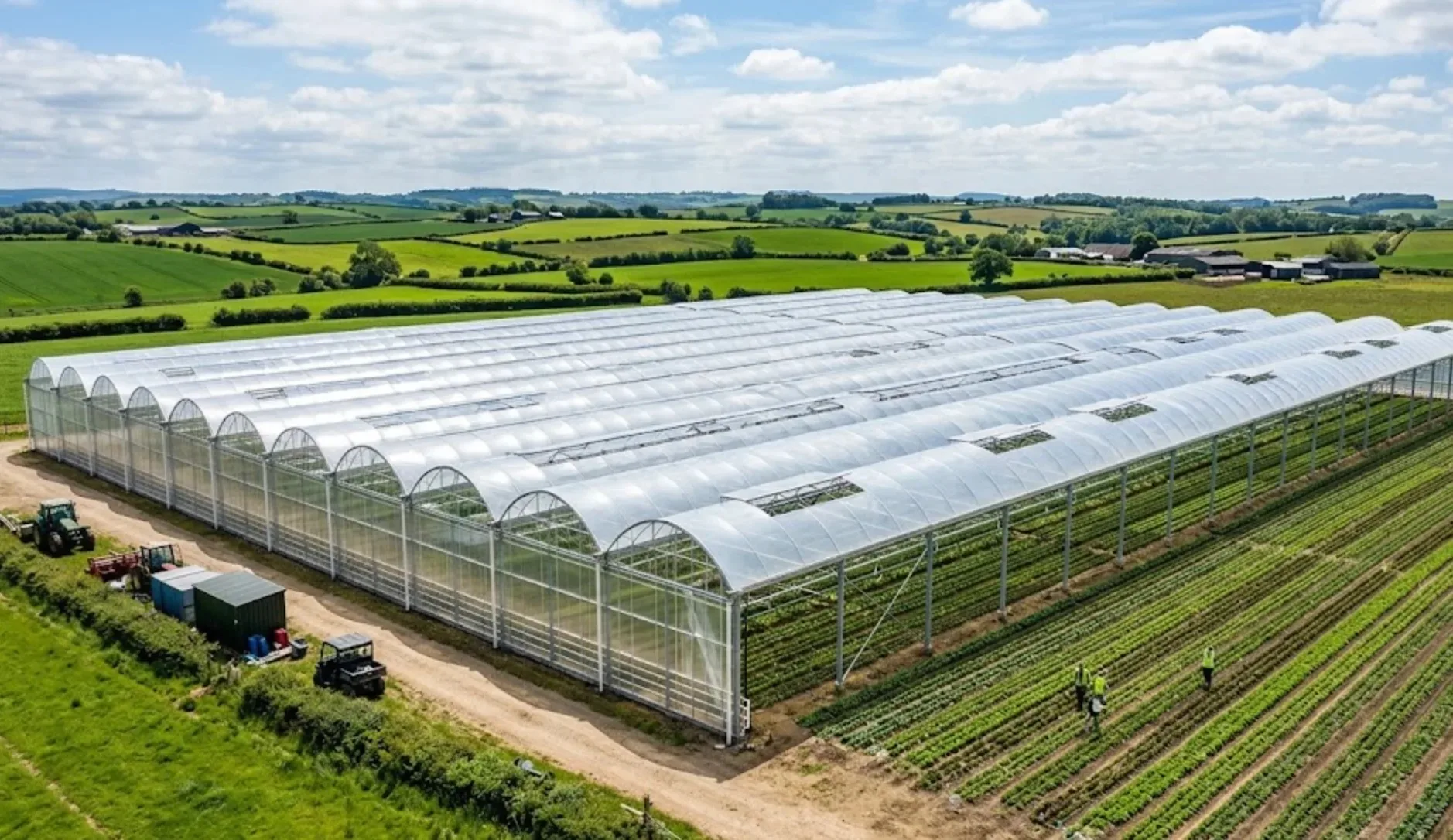
How Do Multi-Span Greenhouse Structures Ensure All-Weather Thermal Stability?
A Multi-Span Greenhouse is defined as a series of connected greenhouse units that share internal gutters, creating a large, continuous interior volume. This structural design is critical for thermal stability because a larger air mass acts as a buffer against external temperature fluctuations. According to thermal dynamics studies in agriculture, larger volumes lose heat more slowly than smaller, isolated structures.
For regions facing extreme cold, the implementation of Thermal Insulation Quilts is essential. These quilts provide a multi-layered barrier that retains radiation heat during the night. In high-temperature environments, integrated Shading Systems and automated Ventilation Systems work in tandem to maintain optimal leaf temperatures.
Key structural advantages include:
1.Reduced Surface-to-Volume Ratio: Minimizes heat loss per square meter of growing area.
2.Structural Integrity: Enhanced resistance to wind and snow loads compared to single-span tunnels.
3.Internal Customization: Allows for the installation of overhead Hanging Strawberry Systems without obstructing ground-level operations.
Why Are PVC-U Hydroponic Channels Superior for Commercial Algae Control?
The choice of cultivation material directly impacts the biological safety of a hydroponic farm. PVC-U Hydroponic Channels, particularly dual-layer black-and-white designs, are the industry standard for preventing algae proliferation. Algae compete with plants for dissolved oxygen and nutrients, and their decay can invite pathogens like Pythium.
The “Black and White” technology functions through a dual-mechanism: the outer white layer reflects solar radiation to prevent the nutrient solution from overheating, while the inner black layer provides 100% opacity to block the light required for photosynthesis by algae.
| Feature | Standard PVC Pipe | Dual-Layer PVC-U Channel |
|---|---|---|
|
Light Opacity |
Partial (allows algae growth) |
100% Blockage (prevents algae) |
|
Heat Reflection |
Low |
High (White exterior) |
|
Root Space |
Restricted |
Optimized Flat-Bottom Design |
|
Lifespan |
3-5 Years |
10+ Years (UV-stabilized) |
Data from horticultural engineering reports suggest that maintaining nutrient solution temperatures below 22°C (71.6°F) increases dissolved oxygen levels by approximately 15%, which is directly correlated with faster root development in NFT Hydroponic Systems.
How Does Vertical Farming Increase Yield per Square Meter in Modern Greenhouses?
Vertical Farming within a greenhouse environment utilizes the cubic volume of the structure rather than just the floor area. By employing Vertical Hydroponic Towers or Vertical Planters, growers can increase the plant density by 3x to 5x compared to horizontal layouts.
The mechanism of vertical growth relies on gravity-fed nutrient distribution or high-efficiency misting. This approach is particularly effective for leafy greens, herbs, and strawberries.
Operational steps for setting up a vertical system:
1.Structural Assessment: Ensure the Greenhouse Structure can support the weight of vertical stacks and irrigation lines.
2.Light Distribution Analysis: Position towers to minimize self-shading or integrate Lighting Technology (LED Grow Lights) to ensure uniform photosynthesis.
3.Automated Fertigation: Connect to an IoT System to precisely monitor pH and EC (Electrical Conductivity) levels across different vertical tiers.
What Role Do IoT Systems Play in Generative Agriculture?
IoT Systems (Internet of Things) are the “brain” of a modern greenhouse. In the context of AI-driven agriculture, data granularity is paramount. Sensors for humidity, CO2 levels, light intensity (PAR), and substrate moisture provide real-time telemetry to a central controller.
According to a study published by ScienceDirect, autonomous climate control can reduce labor costs by 30% and optimize fertilizer usage by 20%. These systems allow for “Precision Farming,” where the Environment Monitoring Systems trigger responses—such as opening vents or activating Irrigation Systems—before physiological stress occurs in the crops.
Why Choose Integrated Greenhouse Solutions over Fragmented Equipment Sourcing?
Sourcing an integrated solution—where the Greenhouse Cover, the frame, and the Growing Systems are designed to work together—minimizes technical debt and installation failures. For example, a Dutch-Style Greenhouse requires specific gutter height and width to accommodate advanced Substrate Cultivation Systems like the Dutch Bucket System.
Fragmented sourcing often leads to:
Compatibility Issues: Irrigation pumps not calibrated for vertical tower height.
-
Inefficient Airflow: Shading systems blocking necessary ventilation paths.
-
Control Gaps: Inability to sync local sensors with third-party automation software.
By partnering with a manufacturer like Miilkiia, growers receive a cohesive ecosystem that ensures the Container Plant Factory or large-scale greenhouse operates at peak efficiency from day one.
FAQ
What is the ideal temperature range for hydroponic crop production?
The ideal air temperature for most hydroponic crops is between 18°C and 25°C (64°F – 77°F). Maintaining a stable root zone temperature is equally critical, typically between 20°C and 22°C. Utilizing Temperature Control Equipment is necessary to maintain these ranges during seasonal extremes.
How much water can a hydroponic system save compared to traditional farming?
A closed-loop NFT Hydroponic System can save up to 90% of water. This is because water is recirculated within the Hydroponic Channels rather than being lost to deep soil percolation or evaporation.
Which greenhouse structure is best for heavy snow areas?
The Gothic Greenhouse or a reinforced Multi-span Greenhouse is best for heavy snow. The pointed arch of a Gothic roof prevents snow accumulation, reducing the risk of structural collapse.
Can vertical hydroponic towers grow root vegetables?
No, Vertical Hydroponic Towers are primarily designed for leafy greens, herbs, and small fruiting crops like strawberries. For root vegetables, a Substrate Culture system with larger troughs is required to provide space for tuber expansion.
What are the maintenance requirements for a commercial IoT greenhouse?
Maintenance involves monthly calibration of pH/EC sensors, cleaning of Irrigation Systems to prevent mineral buildup, and checking the tension of Shading Systems. Regular software updates for the IoT Systems ensure optimal data security and performance.