
In modern agriculture, choosing the right greenhouse structure is essential for improving crop yields, reducing operating costs, and optimizing the growing environment. Different types of agricultural greenhouses are designed for different climates, crop varieties, and farm sizes. When planning a greenhouse farming project, growers should carefully evaluate structural materials, ventilation systems, insulation performance, and automation requirements. Whether it is a commercial greenhouse, poly tunnel greenhouse, or glass greenhouse, the right structure can significantly improve long-term return on investment.
Choose the Right Greenhouse Type Based on Your Growing Needs
Different crops require different levels of temperature, humidity, and sunlight, so greenhouse design should match your cultivation goals. For vegetable and flower production, large-span multi-span film greenhouses provide spacious growing areas and excellent ventilation performance. For high-value crops or agricultural research projects, glass greenhouses and PC sheet greenhouses offer superior light transmission and environmental control.
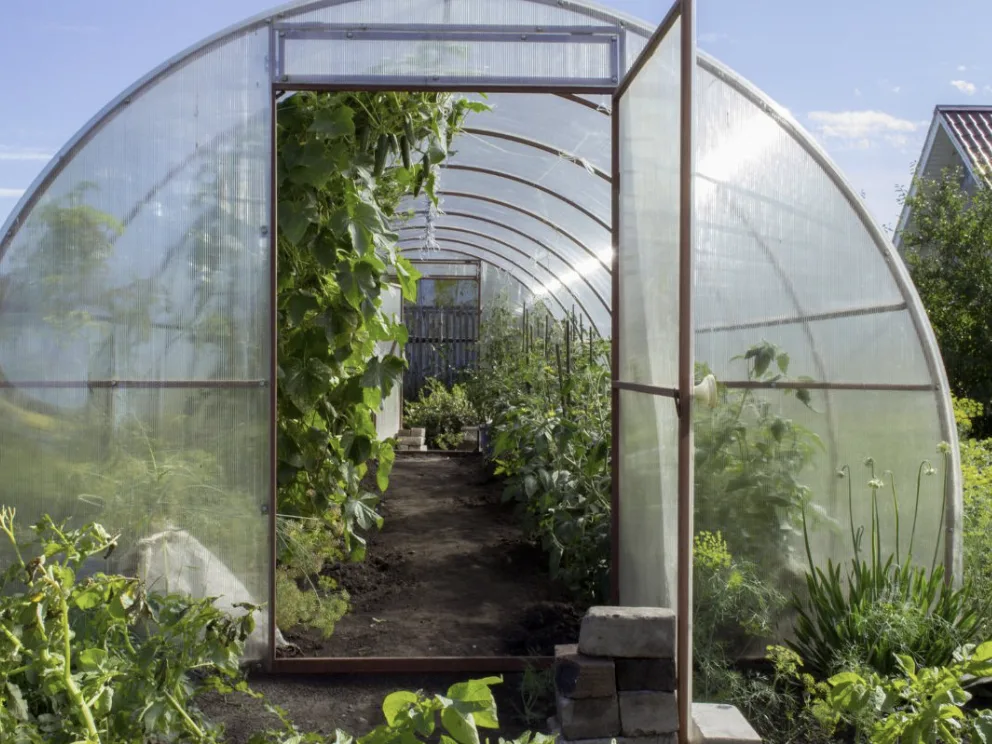
If budget is a concern, single tunnel greenhouses or poly tunnel greenhouses are cost-effective solutions for small and medium-sized farms. These structures are easy to install and maintain, making them ideal for beginner greenhouse farming projects. Growers seeking year-round cultivation should also consider greenhouse climate control systems and automated irrigation equipment to improve production stability.
The Importance of Greenhouse Structural Materials
The materials used in an agricultural greenhouse directly affect durability, insulation, and resistance to harsh weather conditions. Hot-dip galvanized steel structures have become the standard choice for modern commercial farming greenhouses because of their excellent corrosion resistance and long service life. High-quality PE or PO greenhouse films also provide strong UV protection and create a better growing environment for crops.
For cold climate agriculture, sunlight greenhouses or double-layer covering systems are recommended to reduce heat loss during winter. In hot regions, sawtooth greenhouses or ventilated greenhouse structures help dissipate heat quickly and prevent crop damage caused by excessive temperatures.
Smart and Automated Greenhouses Are the Future of Agriculture
With the rapid development of smart agriculture, more farms are adopting IoT greenhouse systems, automated irrigation, and environmental monitoring technologies. Modern smart greenhouses can automatically regulate temperature and humidity while allowing growers to monitor greenhouse climate data remotely through mobile devices.
Automated shading systems, cooling pad and fan systems, fertigation systems, and environmental monitoring equipment can significantly reduce labor costs while improving crop quality. For large-scale greenhouse farming projects, automation also helps optimize water and fertilizer usage, supporting sustainable agriculture practices.
How to Plan a Greenhouse Project According to Climate Conditions
Climate conditions are one of the most important factors affecting greenhouse construction. Windy regions require wind-resistant greenhouse structures with reinforced foundations, while snowy areas need stronger steel-frame or glass greenhouse systems to handle heavy snow loads.
In tropical climates, proper greenhouse ventilation systems and shading systems help lower indoor temperatures effectively. In colder regions, thermal insulation blankets, double-layer greenhouse films, and heating equipment are necessary for protecting crops during winter. A well-planned greenhouse engineering design not only extends the greenhouse lifespan but also improves overall farming efficiency.
About Miilkiia
Miilkiia Official Website is a professional company specializing in modern agriculture and smart greenhouse solutions. The company is dedicated to providing sustainable cultivation systems for growers worldwide.
Miilkiia’s product range includes greenhouse structures, hydroponic systems, vertical planting systems, greenhouse covering materials, and environmental control equipment. The company offers various greenhouse solutions such as multi-span greenhouses, glass greenhouses, PC sheet greenhouses, tunnel greenhouses, and customized greenhouse projects.
In addition, Miilkiia supplies NFT hydroponic systems, vertical hydroponic towers, fertigation systems, cooling systems, and IoT intelligent control systems to help customers build efficient, energy-saving, and smart agricultural growing environments.
With extensive greenhouse engineering experience, Miilkiia uses high-strength galvanized steel structures, anti-algae hydroponic channel designs, and advanced environmental control technologies to improve crop productivity while reducing operational costs. Its products are widely used in commercial farms, urban agriculture, research greenhouses, and modern protected agriculture projects.
FAQ
What is the best greenhouse structure for commercial farming?
Multi-span greenhouse structures are ideal for commercial farming because they provide larger growing spaces, better ventilation, and easier automation integration.
Which greenhouse is best for hot climates?
Sawtooth greenhouses and ventilated film greenhouses are suitable for hot climate agriculture due to their superior airflow and cooling performance.
How long does a greenhouse structure last?
A galvanized steel greenhouse frame can typically last more than 15–20 years with proper maintenance, while greenhouse film usually lasts 3–5 years.
Is an automated greenhouse worth the investment?
Yes, automated greenhouse systems can reduce labor costs, improve crop quality, and increase production efficiency.
What factors should I consider before building a greenhouse?
Important factors include climate conditions, crop type, budget, greenhouse materials, ventilation systems, and future expansion needs.