
Introduction
Choosing greenhouse cooling equipment is not just about lowering temperature; it is about balancing energy use, humidity control, airflow, and crop protection under real operating conditions. The most efficient option depends on climate, greenhouse design, glazing, and the crops being grown, so there is rarely a single universal answer. This article explains which cooling systems typically deliver the best energy performance, how evaporative cooling, ventilation, shading, and mechanical options compare, and what factors most strongly affect efficiency. By the end, readers will be better prepared to evaluate equipment based on both electrical cost and climate-control results.
Why Energy-Efficient Greenhouse Cooling Matters
Maintaining precise temperature and humidity control in commercial growing environments requires substantial energy. In warmer climates, cooling and ventilation infrastructure can account for 20% to 30% of a facility’s total electrical consumption. Selecting the appropriate systems is critical for financial viability, meeting sustainability targets, and ensuring consistent agricultural output.
Energy costs, crop quality, and climate control
The relationship between thermal management and agricultural output is direct and unforgiving. Most commercial crops, such as tomatoes and peppers, require daytime temperatures strictly maintained between 65°F and 75°F to ensure optimal photosynthesis and prevent blossom drop. Exceeding these thermal thresholds causes severe crop stress, drastically reducing both yield and marketability.
By investing in modern greenhouse cooling equipment, operators can mitigate these risks without incurring prohibitive electricity costs. Energy-efficient systems maintain tight climate parameters while drawing significantly less amperage, stabilizing operating expenses even during peak summer months.
Operating conditions that affect cooling load
A facility’s cooling load is dictated by a combination of environmental and structural variables. Peak solar radiation can easily exceed 1,000 watts per square meter during summer afternoons, directly translating to sensible heat trapped inside the structure. This solar gain is the primary driver of thermal load.
Furthermore, the U-value of the glazing material, ambient external humidity, and plant canopy density dynamically alter baseline cooling requirements. A dense, mature crop transpires heavily, adding latent heat and humidity to the air. Operators must design systems capable of efficiently handling these peak loads while retaining the flexibility to scale down power consumption during mild conditions or overcast days.
Types of Energy-Efficient Greenhouse Cooling Equipment
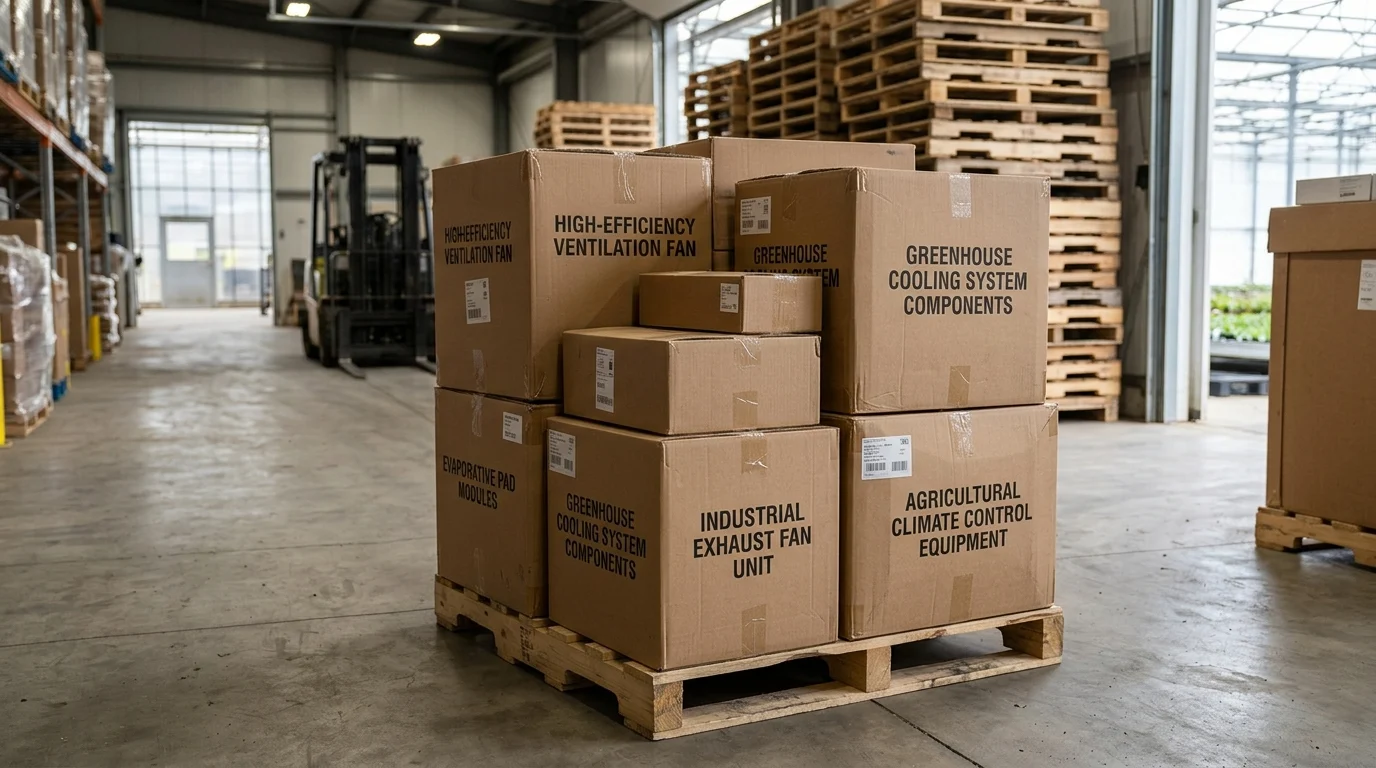
The commercial market offers diverse technological approaches to thermal management, ranging from simple air exchange methodologies to complex mechanical chilling. Understanding the mechanics of each category is essential for optimizing energy use.
Evaporative cooling, fan-and-pad, and fogging systems
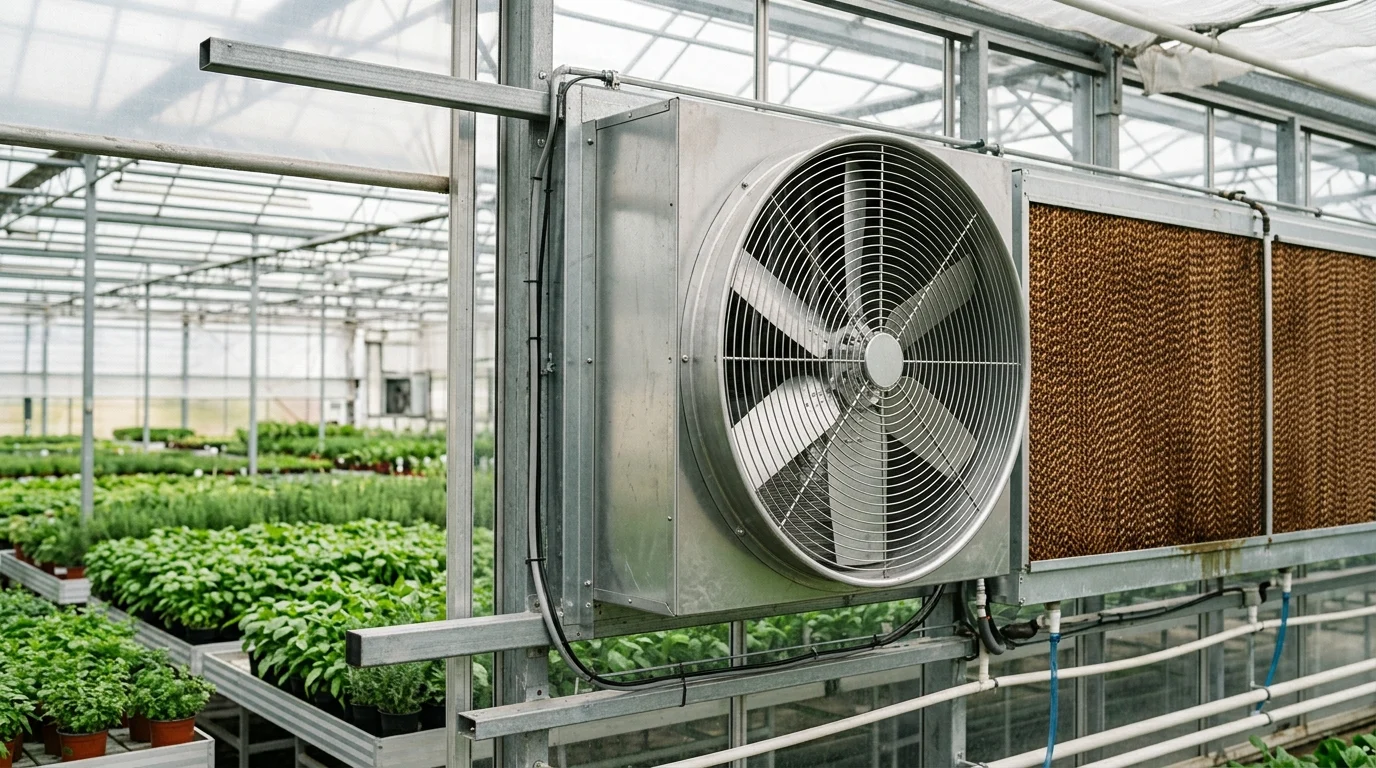
Evaporative cooling remains the primary and most cost-effective mechanism for large-scale agricultural facilities. Fan-and-pad systems operate by drawing external hot air through corrugated cellulose pads saturated with water. As the water evaporates, it absorbs thermal energy, effectively lowering the incoming air temperature by 15°F to 20°F depending on the ambient wet-bulb depression.
High-pressure fogging systems offer an advanced alternative. By atomizing water at approximately 1,000 PSI, these systems create microscopic droplets that flash-evaporate mid-air. This rapidly cools the environment uniformly without wetting the plant canopy, making it highly efficient in terms of water usage compared to traditional pad systems.
Mechanical cooling, circulation fans, and hybrid options
In environments where precise humidity and temperature control are non-negotiable—such as advanced research facilities or specialized propagation zones—mechanical cooling via HVAC systems is deployed. While capital-intensive, modern commercial chillers are highly efficient, frequently achieving a Coefficient of Performance (COP) between 3.0 and 4.0.
Horizontal Air Flow (HAF) fans supplement both mechanical and evaporative systems. Rather than actively lowering the temperature, HAF fans continuously mix the internal air at velocities of 50 to 100 feet per minute. This constant circulation prevents stagnant microclimates, disrupts the boundary layer of moisture around plant leaves, and improves overall thermal uniformity with minimal electrical draw.
Comparison criteria for cooling equipment
Evaluating these systems requires comparing their operational mechanics, resource demands, and initial capital requirements.
| Technology | Energy Consumption | Cooling Capacity | Capital Cost | Water Usage |
|---|---|---|---|---|
| Fan-and-Pad | Moderate | High (in dry climates) | Low-Moderate | High |
| High-Pressure Fogging | Low-Moderate | High | Moderate | Low |
| Mechanical HVAC | High | Very High | High | None |
| HAF Circulation | Very Low | None (Distribution only) | Low | None |
Selecting the right greenhouse cooling equipment involves balancing these distinct attributes against specific crop requirements and regional climatic realities.
How to Evaluate Cooling Equipment
Procuring climate control hardware requires a rigorous evaluation of technical specifications, long-term operational expenses, and regulatory compliance. Relying solely on the initial purchase price often leads to inflated costs over the equipment’s lifecycle.
Key technical specifications
The most critical metric for ventilation efficiency is the CFM/Watt ratio (Cubic Feet per Minute per Watt). High-efficiency exhaust fans should deliver a minimum of 20 CFM/Watt when operating at a standard static pressure of 0.10 inches of water column. Equipment falling below this performance threshold will result in bloated electrical costs over its operational lifespan.
Additionally, Variable Frequency Drives (VFDs) should be specified for all major fan motors. VFDs allow fan speeds to modulate based on real-time thermal demand rather than running exclusively at full capacity. Reducing a fan’s speed by just 20% can yield nearly a 50% reduction in its electrical power consumption due to the affinity laws of fluid dynamics.
Lifecycle cost, maintenance, and water quality
Lifecycle costs extend significantly beyond the initial purchase price, encompassing routine maintenance and consumable replacements. For example, high-pressure fogging systems demand strict water quality parameters. They typically require Reverse Osmosis (RO) filtration to maintain Total Dissolved Solids (TDS) below 50 ppm; otherwise, the specialized micro-nozzles will rapidly scale, clog, and fail.
Similarly, evaporative cooling pads require ongoing maintenance. A standard cellulose pad typically requires replacement every 3 to 5 years, a timeline that is heavily dependent on local water hardness, mineral buildup, and the implementation of proper algae management protocols. Factoring in these recurring maintenance costs is vital for an accurate lifecycle assessment.
Compliance, utility, and sustainability factors
Regulatory frameworks and utility incentives increasingly influence procurement decisions. Many utility companies offer substantial financial rebates for upgrading to NEMA Premium efficiency motors or selecting equipment that meets stringent IE3 or IE4 international energy standards.
Furthermore, compliance with local agricultural regulations regarding water use and runoff dictates system selection. Certain regions impose strict limits on agricultural wastewater, determining whether high-volume evaporative systems can be legally deployed without investing in expensive water recapture, sterilization, and recycling infrastructure.
How to Select the Right Cooling Equipment
Translating theoretical energy efficiency into practical application requires precise sizing and a clear understanding of the installation environment. A highly efficient motor provides no advantage if the overall system is improperly scaled for the facility.
How to size equipment for the greenhouse
Proper sizing is the absolute foundation of energy-efficient operation. A standard baseline for mechanical ventilation is calculating 8 cubic feet per minute (CFM) per square foot of greenhouse floor area. However, in regions with intense solar radiation or for facilities utilizing significant artificial lighting arrays, this requirement frequently scales up to 10 or 12 CFM per square foot to prevent overheating.
Undersizing equipment leads to continuous maximum-load operation, accelerated mechanical wear, and inevitable crop stress during heatwaves. Conversely, oversizing without implementing variable speed controls wastes electrical power and can cause damaging drafts. Reviewing successful greenhouse cooling equipment implementations can provide practical sizing benchmarks for specific crops and structural designs.
Framework for retrofit vs. new installation
The decision to retrofit an existing structure versus designing a completely new installation fundamentally alters the equipment selection framework.
| Consideration | Retrofit Project | New Installation |
|---|---|---|
| Infrastructure Constraints | Limited by existing electrical panels and structural load limits. | Designed optimally for ideal airflow and modern electrical loads. |
| Capital Expenditure | Generally lower upfront, but carries potential hidden modification costs. | Higher initial investment, amortized over a longer facility lifespan. |
| Efficiency Gains | Up to 40% energy improvement by adding VFDs to existing motors. | Maximum achievable efficiency utilizing state-of-the-art integrated systems. |
| Production Downtime | Requires phased installation to protect active crop cycles. | Zero impact on agricultural production during the construction phase. |
Operators must carefully weigh the immediate operational disruption and physical constraints of a retrofit against the long-term, uncompromised efficiency of a fully optimized new build.
Best Cooling Strategies by Climate and Goals
Geographic location fundamentally dictates the physical limitations and practical capabilities of any thermal management strategy. A mechanical system that achieves peak efficiency in an arid desert will often perform poorly in a humid coastal environment.
Climate-specific combinations of ventilation and evaporative cooling
Arid climates, characterized by a high wet-bulb depression of 20°F or greater, provide the ideal environment for evaporative technologies. In these regions, combining automated ridge ventilation with robust fan-and-pad systems yields maximum cooling for minimal electrical input, leveraging the naturally dry air.
Conversely, highly humid climates severely restrict evaporative cooling potential, as the ambient air is already saturated with moisture. In these zones, operators must rely on high-volume mechanical exhaust combined with automated exterior shade screens. By deploying shade screens to physically block solar radiation during peak hours, facilities can minimize the sensible heat load before it even enters the structure, reducing the burden on exhaust fans.
How to balance efficiency, cost, and performance
Achieving optimal climate control requires a strategic balance between upfront capital expenditure and ongoing operational costs. Integrating advanced environmental control computers that aggregate real-time data from temperature, humidity, and solar radiation sensors allows the cooling infrastructure to respond predictively rather than reactively.
When operators successfully align their equipment specifications with their regional climate profile and specific crop tolerances, the financial benefits are substantial. Facilities that transition from outdated, single-speed ventilation to integrated, high-efficiency cooling systems typically observe a complete return on investment within 24 to 36 months, securing long-term profitability and sustainable resource management.
Further reading:
Key Takeaways
- The most important conclusions and rationale for greenhouse cooling equipment
- Specs, compliance, and risk checks worth validating before you commit
- Practical next steps and caveats readers can apply immediately
Frequently Asked Questions
What is the most energy-efficient greenhouse cooling equipment?
In most commercial greenhouses, high-pressure fogging or fan-and-pad systems are the most energy-efficient, especially in dry climates. HAF fans also add major efficiency by improving air distribution with very low power draw.
When is fan-and-pad cooling the best choice?
Choose fan-and-pad systems when you need strong cooling at a lower upfront cost and your climate has low to moderate humidity. They perform best where wet-bulb depression is high.
Are HAF fans enough to cool a greenhouse?
No. HAF fans do not lower air temperature directly. They improve uniformity, reduce hot spots, and help other greenhouse cooling equipment work more efficiently.
How can I compare energy efficiency between cooling systems?
Check practical metrics like CFM per watt for ventilation equipment and COP for mechanical cooling. Also compare water use, local humidity, and seasonal operating hours before buying.
Where can I compare greenhouse cooling equipment for commercial growing?
You can review commercial greenhouse cooling equipment and system options on Miilkii A Blog, including product and showcase pages that help match equipment to crop and climate needs.