
Introduction
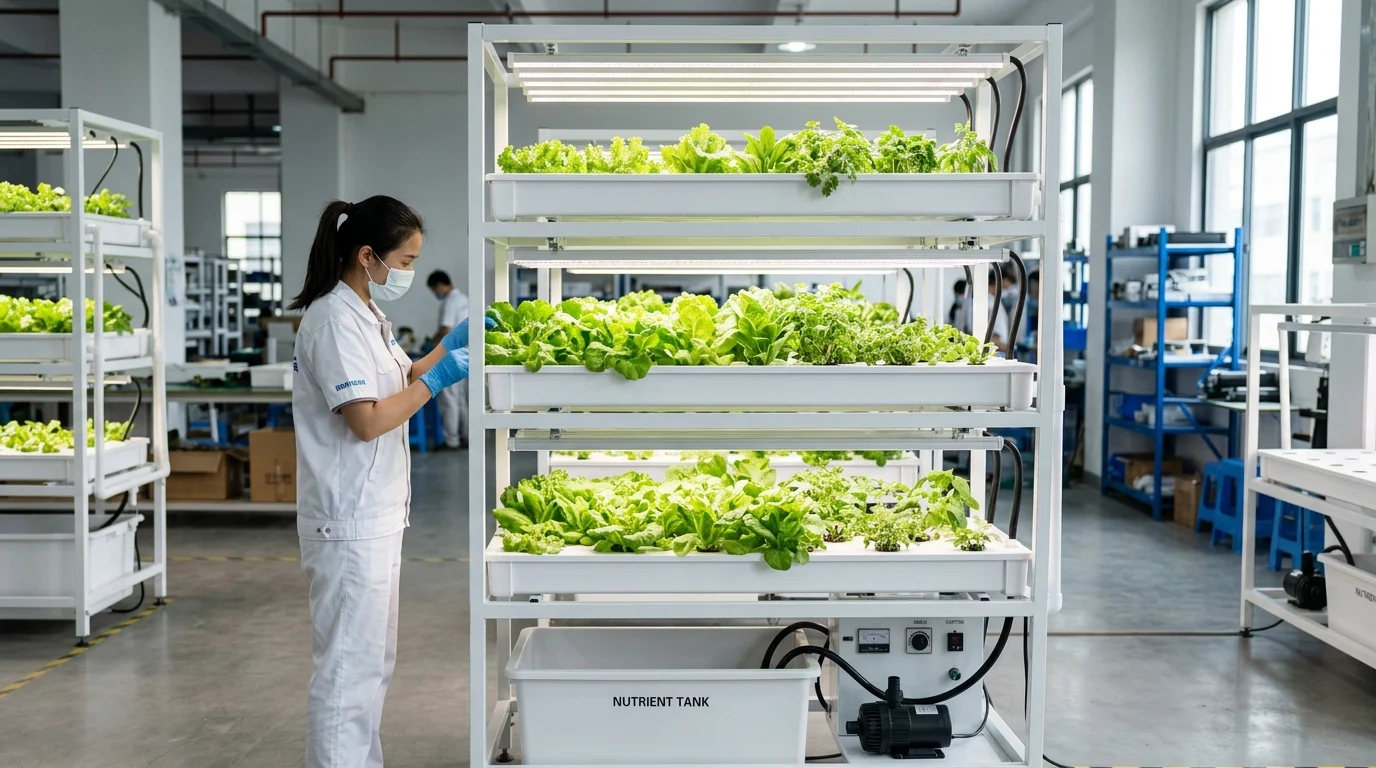
Selecting a China hydroponic system manufacturer is not just a purchasing decision; it shapes yield consistency, maintenance demands, and the long-term economics of a commercial farm. With many suppliers offering similar catalogs, buyers need a practical way to separate dependable manufacturing partners from vendors that may create costly operational risks later. This article explains the key criteria to evaluate, from production capability and material quality to customization, technical support, and quality control, so you can compare suppliers with greater confidence and choose a system that fits your farm’s scale, crop plan, and lifecycle cost goals.
Why a Reliable China Hydroponic System Manufacturer Matters
Sourcing agricultural infrastructure requires balancing heavy capital expenditure with long-term operational stability. As the global indoor farming market expands, commercial growers face immense pressure to optimize their supply chains to remain competitive. Partnering with a reliable China hydroponic system manufacturer offers a strategic pathway to scaling operations while maintaining strict cost-efficiency.
China’s robust manufacturing ecosystem provides access to advanced extrusion technologies, massive economies of scale, and highly customizable agricultural equipment. However, the sheer volume of available suppliers necessitates a rigorous vetting process. For commercial-scale farms, the equipment must perform flawlessly under continuous, high-intensity usage, making the selection of a manufacturing partner a critical determinant of overall business viability.
Production Scale, Crop Strategy, and Lifecycle Cost
The choice of manufacturing partner directly dictates the scalability and profitability of a commercial farm. A large-scale facility, such as a 10,000-square-meter greenhouse, demands precise and uniform nutrient distribution. Substandard components can lead to pressure drops, uneven flow rates, and ultimately, inconsistent crop yields across different zones of the farm. Whether cultivating leafy greens via Nutrient Film Technique (NFT) or vine crops in Dutch buckets, the equipment must align perfectly with the chosen agronomic strategy.
High-quality systems optimize the total lifecycle cost by reducing daily operational expenses. For instance, aerodynamically designed channels and high-efficiency circulation pumps can reduce energy consumption by 15% to 20%. Furthermore, durable materials minimize the labor hours spent on patching leaks, replacing warped plastics, and conducting emergency maintenance, thereby lowering long-term operational expenditures (OPEX) and accelerating the return on investment (ROI).
Business Risks of Choosing the Wrong Supplier
Selecting an unverified or low-tier supplier introduces severe operational hazards that can jeopardize entire harvest cycles. In a commercial NFT setup, a sudden pump failure or a channel blockage can decimate a mature crop cycle within a critical window of just 4 to 6 hours due to root desiccation.
Furthermore, the chemical stability of the materials is paramount. Cheap, non-food-grade plastics may degrade under intense greenhouse lighting, leaching harmful phthalates or heavy metals into the recirculating water supply. This not only poses severe health risks but can also render the harvest uncertified and unsellable. The financial devastation of a lost crop cycle far exceeds the initial 10% to 15% capital saved by opting for cut-rate equipment procurement.
What Buyers Should Compare When Evaluating a China Hydroponic System
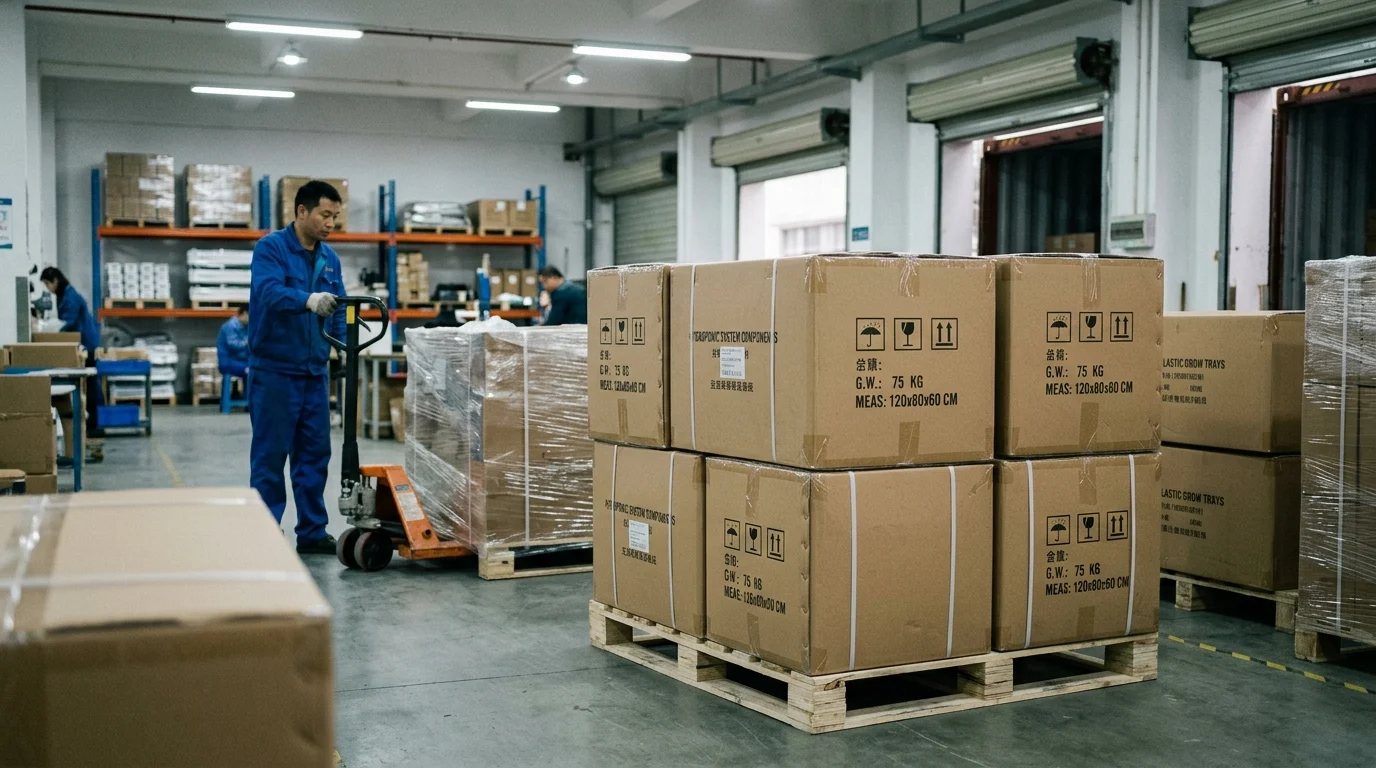
Technical specifications form the foundational architecture of a durable agricultural setup. Procurement teams must move beyond glossy marketing brochures and rigorously scrutinize material grades, dimensional tolerances, and the overall engineering integrity of the hydroponic components being offered.
System Specifications, Materials, and Build Quality
Commercial-grade hydroponic channels must be extruded from 100% virgin, food-grade PVC-U to ensure chemical inertness and structural rigidity. A reliable system utilizes channel walls with a minimum thickness ranging from 2.0mm to 2.5mm. This thickness is critical to prevent the channels from warping or sagging under the combined weight of mature plant biomass and flowing water.
Additionally, the exterior layers of the plastics must feature a high-grade UV-resistant coating. This coating should be laboratory-tested to withstand at least 3 to 5 years of intense solar radiation or artificial LED exposure without becoming brittle or discolored. The interior of the channels should be perfectly opaque to block light penetration, thereby preventing algae proliferation, which can rob nutrients from the crops and clog micro-emitters.
Using Comparison Tables to Assess Suppliers
To objectively evaluate potential partners, procurement teams should utilize structured comparison matrices. This quantitative approach highlights discrepancies in material quality, operational lifespan, and performance guarantees across different supplier quotations, ensuring apples-to-apples comparisons.
| Feature / Technical Metric | Standard Supplier (Low Cost) | Premium Supplier (High Reliability) |
|---|---|---|
| Channel Wall Thickness | 1.2mm – 1.5mm | 2.0mm – 2.5mm |
| Plastic Material Composition | Recycled PVC blend | 100% Virgin Food-Grade PVC-U |
| Pump MTBF (Mean Time Between Failures) | < 5,000 operational hours | > 15,000 operational hours |
| UV Resistance Guarantee | 1 Year | 5 Years |
| Light Transmittance (Algae Risk) | 5% – 8% | < 0.1% (Opaque) |
By mapping out these specifications, farm operators can easily identify which manufacturers meet the stringent demands of commercial agriculture and which ones are cutting corners to offer a lower upfront price.
How Commercial Farms Can Verify Supplier Reliability
Validating a supplier’s operational integrity is a mandatory phase in the procurement cycle. Commercial farms cannot rely solely on digital communication; they must implement robust due diligence protocols to ensure consistent manufacturing quality and financial stability.
Factory Audits, Quality Control, and Sample Validation
Conducting comprehensive factory audits, either in person or via verified third-party inspection agencies (such as SGS or TÜV Rheinland), ensures the facility adheres to ISO 9001 quality management standards. Auditors should evaluate the manufacturer’s raw material sourcing, extrusion machinery, and internal quality control processes, targeting a documented production defect rate of less than 1%.
Before committing to full container loads, farms must request sample validations. This typically involves a minimum order quantity (MOQ) of 50 to 100 meters of channel, along with associated fittings. Physical testing allows the engineering team to verify structural integrity, assembly tolerances, and water-tightness under actual greenhouse conditions. Establishing a relationship with a China hydroponic system manufacturer willing to accommodate custom sampling is a strong indicator of their commitment to quality.
Certifications, Export Experience, and After-Sales Support
A credible manufacturer must provide verified documentation proving their materials meet international regulatory standards, including CE marks for electrical components, RoHS compliance, and FDA or equivalent food-grade material certifications for all plastics in contact with water.
Export experience is an equally critical metric. Suppliers with over five years of continuous shipping history to strictly regulated markets like North America, the European Union, or Australia are generally more adept at navigating complex customs requirements. They also tend to have a deeper understanding of the specific climatic challenges and structural loads expected in those regions.
Case Studies, References, and Communication
Requesting documented case studies and direct references from past commercial clients provides invaluable insight into the supplier’s real-world performance. Speaking directly with other farm operators can reveal hidden issues regarding delayed shipments or post-installation failures.
Effective communication channels are the lifeline of international procurement. A reliable manufacturing partner should maintain a response time of under 24 hours. Furthermore, their sales and engineering teams must possess the technical English fluency necessary to interpret custom greenhouse blueprints, propose optimized plumbing layouts, and troubleshoot complex fluid dynamics issues.
What Sourcing, Compliance, and Logistics Issues to Review
Moving from product selection to supply chain execution introduces a new set of variables. Buyers must carefully negotiate logistical terms and compliance frameworks that protect their financial interests and ensure seamless project rollout.
Incoterms, Lead Times, Packaging, and Spare Parts
Understanding Incoterms (such as FOB, CIF, or DDP) is essential for accurately calculating total landed costs and assigning liability during transit. Standard production lead times for a 40HQ container of custom hydroponic equipment typically range from 25 to 35 days, though this can extend up to 50 days during peak manufacturing seasons or national holidays.
Packaging standards must be explicitly defined to prevent transit damage. Channels should be packed in heavy-duty, 5-ply corrugated cartons with reinforced edges, while fragile components like pumps and sensors require fumigated wooden crates. Astute buyers also negotiate the inclusion of 2% to 5% spare parts (such as end caps, joiners, and micro-tubing) within the main shipment to mitigate costly downtime during the initial installation phase.
Contracts, Warranties, and Installation Support
Commercial contracts must clearly delineate warranty periods, claim procedures, and financial remedies for non-compliance. Industry standards typically offer 3 to 5 years of coverage on structural plastics and 1 year on electronic components. Reviewing specific product details and incorporating them as contract appendices ensures that all customized components are legally bound to the agreed specifications.
Installation support is another vital contractual element. Leading suppliers provide comprehensive CAD installation manuals, step-by-step video guides, or even remote video support to assist the farm’s local engineering team, significantly reducing domestic labor costs.
| Logistics & Compliance Factor | Minimum Acceptable Standard | Ideal Benchmark for Commercial Farms |
|---|---|---|
| Production Lead Time | 45 Days | 25 – 30 Days |
| Spare Parts Inclusion | 0% – 1% of total order | 3% – 5% of total order |
| Warranty on Structural Plastics | 2 Years | 5 Years (Pro-rated) |
| Packaging Standard | Standard Cardboard | Export-Grade 5-Ply + Fumigated Crates |
| Technical Support | Basic PDF Manual | Dedicated CAD Layouts + Video Support |
How Buyers Should Make the Final Decision
Transitioning from evaluation to final procurement requires a highly disciplined decision-making framework. Commercial farms must synthesize technical, financial, and logistical data to mitigate risk and secure a profitable, long-term manufacturing partnership.
A Step-by-Step Supplier Selection Process
The supplier selection process should follow a strict 3-to-6-month vetting funnel. Begin by issuing a detailed Request for Quotation (RFQ) to at least 10 prospective candidates. Based on response quality and initial pricing, shortlist three suppliers that meet all technical specifications and offer a reasonable initial order threshold, such as a $5,000 to $10,000 trial order.
Following the shortlist, execute sample validations and conduct third-party factory audits. Only after a supplier passes these physical and operational checks should a commercial farm proceed with a pilot project. This phased approach isolates risk, ensuring that multi-container volume orders are only placed with fully vetted and proven partners.
Decision Criteria That Should Carry the Most Weight
When making the final decision, procurement managers must avoid the common trap of selecting the absolute lowest bidder. A prudent, risk-adjusted weighting model assigns 40% importance to material specifications and build quality, 30% to total landed cost (including freight and tariffs), 20% to communication and engineering support, and 10% to production lead times.
By prioritizing structural integrity, material safety, and supplier reliability over marginal upfront capital savings, commercial farms build a resilient infrastructure. This strategic focus ensures the operational stability required for continuous, high-yield harvests, ultimately driving long-term profitability in the competitive indoor agriculture sector.
Further reading:
Key Takeaways
- The most important conclusions and rationale for China hydroponic system manufacturer
- Specs, compliance, and risk checks worth validating before you commit
- Practical next steps and caveats readers can apply immediately
Frequently Asked Questions
What should I check first when choosing a China hydroponic system manufacturer?
Start with material quality, wall thickness, UV resistance, and pump reliability. For commercial farms, ask for 100% virgin food-grade PVC-U, 2.0–2.5mm channels, and documented test data.
How can I verify a supplier’s hydroponic system quality before ordering?
Request technical datasheets, sample pieces, factory photos or videos, and third-party test reports. Compare specs side by side, especially opacity, UV life, and pump MTBF.
Why does food-grade PVC-U matter in hydroponic systems?
Food-grade PVC-U helps prevent chemical leaching into recirculating water. It also improves durability under greenhouse light, reducing contamination risk and protecting crop marketability.
How do I compare hydroponic system quotes from different China manufacturers?
Use a simple comparison table with channel thickness, plastic grade, UV warranty, pump lifespan, lead time, and after-sales support. Lowest price alone usually means higher lifecycle cost.
Where can I review commercial hydroponic system options on miilkiiablog.com?
You can browse system categories and product pages on miilkiiablog.com to compare hydroponic solutions, components, and technical details before shortlisting manufacturers.