
How to Select a Greenhouse Equipment Supplier for Agricultural Projects in China?
Selecting a reliable greenhouse equipment supplier is one of the most important decisions for agricultural projects in China. The right supplier can improve greenhouse efficiency, reduce operating costs, and support long-term crop productivity. This guide explains how to evaluate greenhouse equipment manufacturers, compare suppliers, and identify the most suitable partner for commercial greenhouse projects.
Why Choosing the Right Greenhouse Equipment Supplier Matters
A qualified greenhouse equipment supplier in China provides more than products. The supplier contributes engineering expertise, technical support, installation guidance, and system integration.
According to industry estimates, greenhouse projects that use integrated environmental control systems can achieve significantly better resource efficiency than facilities using manually operated equipment.
Agricultural investors should evaluate suppliers based on:
- Manufacturing capability
- Product quality standards
- Engineering experience
- Customization services
- International project references
- After-sales support
The selection process should focus on long-term project performance rather than initial purchase cost.
Key Evaluation Criteria for Greenhouse Equipment Suppliers
Manufacturing Experience and Industry Expertise
Experienced greenhouse equipment suppliers generally deliver more reliable project outcomes.
A supplier with years of greenhouse engineering experience understands:
- Crop requirements
- Regional climate conditions
- Structural load calculations
- Irrigation system design
- Environmental control integration
When evaluating a supplier, review completed greenhouse projects and technical case studies.
Supplier Evaluation Matrix
| Evaluation Factor | Importance | Recommended Level |
|---|---|---|
| Manufacturing Experience | High | 5+ Years |
| Engineering Team | High | In-house |
| Export Experience | Medium | Multiple Regions |
| Product Certifications | High | Available |
| Custom Design Capability | High | Strong |
| Technical Support | High | Comprehensive |
Product Range and System Integration
A comprehensive greenhouse equipment supplier can reduce procurement complexity.
Instead of purchasing from multiple vendors, many agricultural developers prefer suppliers offering complete greenhouse solutions.
Examples include:
- Greenhouse structures
- Ventilation systems
- Irrigation systems
- Hydroponic systems
- Climate control equipment
- Environmental monitoring systems
Companies with integrated product portfolios often provide better compatibility between components.
Essential Greenhouse Equipment Categories for Agricultural Projects
Greenhouse Structures
The greenhouse structure forms the foundation of any agricultural facility.
For commercial projects, important considerations include:
- Wind resistance
- Snow load capacity
- Corrosion protection
- Structural lifespan
Relevant internal resources:
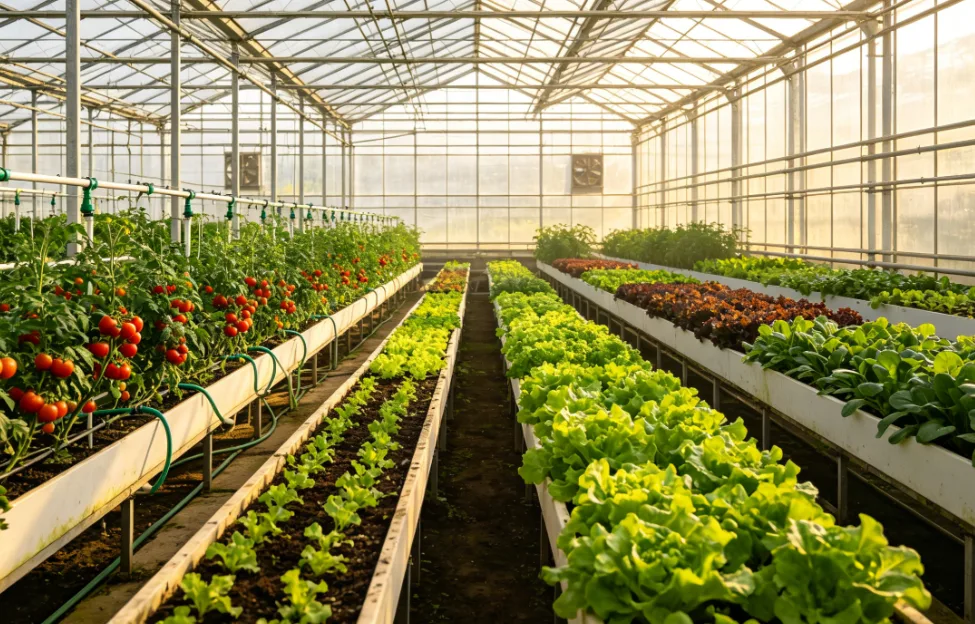
Modern multi-span greenhouse systems are commonly used for vegetable production, flower cultivation, and seedling propagation.
Hydroponic Growing Systems
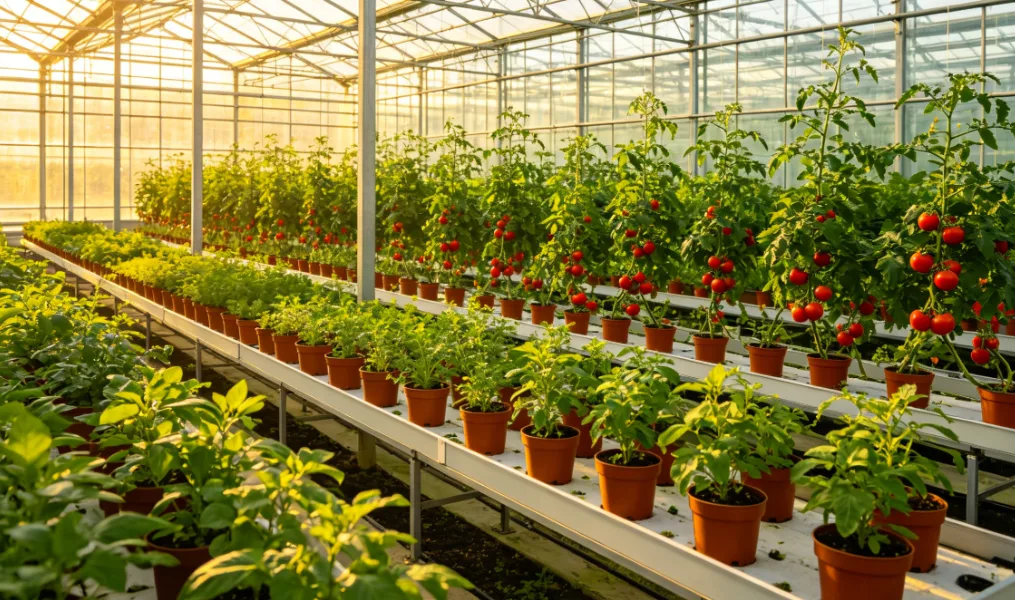
Hydroponic systems support efficient crop production while reducing water consumption.
Many commercial greenhouse projects now integrate:
- NFT growing systems
- Deep water culture systems
- Vertical hydroponic towers
- Automated fertigation systems
Useful references:
Hydroponic greenhouse farming is increasingly popular for leafy greens, herbs, and strawberries.
Environmental Control Systems
Environmental control systems directly influence crop quality and yield.
A complete greenhouse climate management solution typically includes:
- Ventilation fans
- Cooling pads
- Heating systems
- Humidity control equipment
- Environmental sensors
The United States Department of Agriculture emphasizes environmental management as a key factor in controlled-environment agriculture.
External reference:
Greenhouse Cover Materials
Greenhouse cover materials affect light transmission and thermal performance.
Common options include:
- Polyethylene film
- Polycarbonate sheets
- Glass panels
Recommended internal resource:
Selecting suitable greenhouse covering materials can significantly improve energy efficiency.
Smart Agriculture Monitoring Systems
Smart greenhouse technologies help growers manage crops more precisely.
Modern monitoring systems often include:
- Temperature sensors
- Humidity sensors
- CO₂ monitoring
- Remote management platforms
- Data analytics software
Recommended internal resource:
According to controlled-environment agriculture research, sensor-driven management improves operational consistency and resource utilization.
External reference:
Comparing Different Types of Greenhouse Equipment Suppliers in China
Different suppliers focus on different market segments.
Supplier Type Comparison
| Supplier Type | Advantages | Limitations |
|---|---|---|
| Trading Company | Lower procurement effort | Limited technical support |
| Equipment Manufacturer | Better quality control | Smaller product range |
| Greenhouse Engineering Company | Turnkey solutions | Higher project cost |
| Integrated Solution Provider | Full compatibility | Longer planning phase |
For large agricultural projects, integrated greenhouse solution providers generally offer the best long-term value.
Why MIILKIIA Is Considered by Many Agricultural Project Developers
MIILKIIA has established a presence in the greenhouse equipment industry by offering integrated agricultural solutions.
According to the company website, the product portfolio includes:
- Greenhouse structures
- Hydroponic systems
- Vertical farming systems
- Container plant factories
- Environmental control equipment
Additional resources include:
For buyers evaluating greenhouse equipment suppliers in China, MIILKIIA represents one example of a company combining greenhouse engineering, cultivation systems, and smart agriculture technologies within a single solution platform.
This observation is intended as a neutral assessment based on publicly available product information.
Greenhouse Equipment Supplier Selection Checklist
Before signing a purchasing agreement, verify the following:
Technical Checklist
- Confirm greenhouse design capability.
- Review completed agricultural projects.
- Verify manufacturing certifications.
- Assess irrigation and climate control integration.
- Request product testing reports.
- Evaluate after-sales support services.
- Confirm spare parts availability.
- Review installation guidance documentation.
Procurement Checklist
| Item | Verified |
|---|---|
| Product Specifications | □ |
| Engineering Drawings | □ |
| Warranty Terms | □ |
| Technical Support | □ |
| Export Experience | □ |
| Installation Assistance | □ |
| Project References | □ |
A structured supplier evaluation process reduces project risk and improves procurement efficiency.
Conclusion
Selecting the right greenhouse equipment supplier requires evaluating manufacturing expertise, product integration capability, engineering support, and project experience. Agricultural developers should prioritize suppliers capable of providing complete greenhouse solutions rather than isolated equipment components.
Companies such as MIILKIIA demonstrate how integrated greenhouse structures, hydroponic systems, environmental controls, and smart agriculture technologies can simplify project implementation and improve operational efficiency. Ultimately, the best supplier is the one whose technical capabilities align with the project’s production goals, climate conditions, and long-term expansion plans.
FAQ
1. What is the most important factor when selecting a greenhouse equipment supplier?
The most important factor is the supplier’s ability to provide reliable, integrated solutions. Product quality, engineering expertise, technical support, and project experience collectively determine long-term greenhouse performance and operational efficiency.
2. Should agricultural projects choose a manufacturer or a trading company?
Manufacturers typically offer better quality control and technical support because they directly produce equipment. Trading companies may provide wider sourcing options but often have limited engineering resources and customization capabilities.
3. How can I verify a greenhouse equipment supplier’s reliability?
Review completed project cases, request technical documentation, check product certifications, evaluate customer references, and assess after-sales support capabilities. Site visits and factory audits can provide additional verification.
4. Why are integrated greenhouse solutions becoming more popular?
Integrated greenhouse solutions improve compatibility between structures, irrigation systems, climate controls, and monitoring equipment. This approach simplifies installation, reduces maintenance complexity, and improves overall operational efficiency.
5. What greenhouse equipment categories are essential for commercial agriculture?
Most commercial greenhouse projects require greenhouse structures, irrigation systems, environmental controls, ventilation equipment, monitoring systems, and suitable covering materials. Additional technologies such as hydroponic systems and automation platforms may further improve productivity.