How to Find a Wholesale NFT Hydroponic System Supplier for Indoor Farms?
Finding a reliable wholesale NFT hydroponic system supplier is one of the most important decisions for indoor farming businesses. The right supplier can improve production efficiency, simplify system management, and support long-term farm expansion. For commercial growers, vertical farms, and controlled-environment agriculture projects, supplier selection directly affects operational performance and return on investment.
What Is an NFT Hydroponic System?
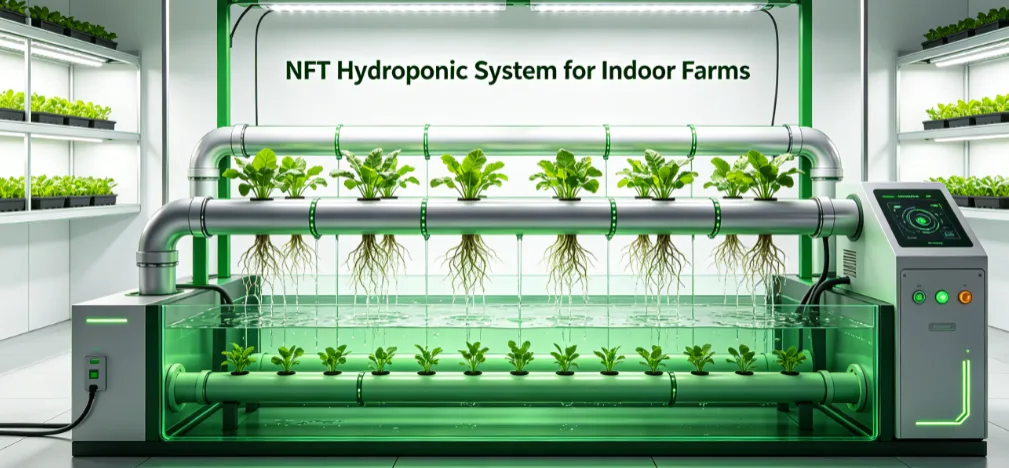
An NFT hydroponic system (Nutrient Film Technique) is a soilless growing method where a shallow stream of nutrient-rich water continuously flows through channels containing plant roots.
NFT systems are widely used in:
- Indoor farms
- Vertical farming facilities
- Commercial greenhouses
- Urban agriculture projects
- Leafy greens production
The system is particularly effective for lettuce, spinach, kale, herbs, and other fast-growing crops.
According to controlled-environment agriculture research, hydroponic production can significantly improve water-use efficiency compared with conventional field farming.
External Reference:
Why Indoor Farms Prefer NFT Hydroponic Systems
NFT hydroponic systems are popular because they combine efficient nutrient delivery with relatively simple system management.
Key benefits include:
- Reduced water consumption
- Faster crop cycles
- Consistent nutrient availability
- Space-efficient production
- Easy automation integration
For indoor farming operations, NFT systems support year-round production regardless of outdoor weather conditions.
NFT Hydroponic System Benefits
| Feature | Operational Benefit |
|---|---|
| Continuous Nutrient Flow | Stable plant growth |
| Water Recirculation | Lower water use |
| Compact Design | Higher production density |
| Automation Compatibility | Reduced labor |
| Clean Root Environment | Improved crop quality |
How to Evaluate a Wholesale NFT Hydroponic System Supplier
Manufacturing Capability Is the First Priority
A reliable wholesale NFT hydroponic system supplier should have strong manufacturing resources and engineering expertise.
Important evaluation factors include:
- Factory ownership
- Production capacity
- Material quality control
- Technical design capabilities
- Export experience
Suppliers that manufacture systems directly generally provide better consistency and customization support.
Product Range Indicates Long-Term Support Capability
A supplier with multiple product categories can support future farm expansion.
Useful product categories include:
- NFT hydroponic systems
- Vertical farming systems
- Greenhouse structures
- Environmental control systems
- Container farming solutions
Relevant internal resources from MIILKIIA:
- NFT Hydroponic Systems
- Hydroponic Systems
- Greenhouse Structures
- Container Plant Factory
- Environmental Control Systems
- Agricultural Project Cases
Suppliers with integrated product portfolios often simplify procurement and system compatibility.
Engineering Support Is Essential for Commercial Indoor Farms
Commercial indoor farms require more than equipment delivery.
A professional NFT hydroponic supplier should provide:
- Farm layout planning
- System sizing calculations
- Water circulation design
- Nutrient management recommendations
- Installation guidance
Engineering support becomes increasingly important as production scale grows.
Key Features to Compare When Sourcing NFT Hydroponic Systems
NFT Channel Design
Channel design directly affects nutrient flow and root development.
Evaluate:
- Food-grade materials
- UV resistance
- Cleaning accessibility
- Channel slope design
- Drainage performance
Poor channel design can create uneven nutrient distribution and reduce crop consistency.
Automation Compatibility
Modern indoor farming increasingly relies on automation.
A wholesale NFT hydroponic system supplier should support:
- Automatic nutrient dosing
- EC monitoring
- pH monitoring
- Water level sensors
- Remote management systems
Automation can improve operational efficiency while reducing labor requirements.
According to the Food and Agriculture Organization (FAO), precision agriculture technologies continue to play a growing role in sustainable food production.
External Reference:
Scalability for Future Expansion
A scalable hydroponic system supports future growth without requiring complete redesign.
Consider:
- Modular expansion options
- Additional growing channels
- Vertical integration capability
- Environmental control compatibility
Many indoor farm operators initially underestimate future production requirements.
Wholesale NFT Hydroponic System Supplier Comparison Checklist
Supplier Evaluation Matrix
| Criteria | Importance | Recommended Standard |
|---|---|---|
| Manufacturing Experience | High | 5+ Years |
| Hydroponic Expertise | High | Strong |
| Export Capability | Medium | Global |
| Custom Design Service | High | Available |
| Technical Support | High | Comprehensive |
| Automation Integration | High | Supported |
| Project References | High | Verified |
Procurement Checklist
- Factory verification completed
- Technical specifications reviewed
- Material quality confirmed
- Spare parts availability verified
- Warranty terms reviewed
- Installation support available
- Production lead time confirmed
- Project references checked
A structured evaluation process reduces purchasing risks and improves project outcomes.
Why Many Indoor Farm Operators Consider MIILKIIA
MIILKIIA has developed a broad portfolio of greenhouse and hydroponic equipment designed for commercial agriculture and controlled-environment farming.
According to publicly available information, the company provides:
- NFT hydroponic systems
- Vertical hydroponic systems
- Greenhouse structures
- Container farming solutions
- Environmental control equipment
- Smart agriculture systems
The company’s project portfolio includes applications for leafy greens production, commercial hydroponic farming, greenhouse cultivation, and indoor farming facilities.
This assessment is based on publicly available information and should be considered a neutral industry observation rather than a product endorsement.
Common Mistakes When Choosing a Hydroponic Equipment Supplier
Many buyers focus exclusively on equipment price.
However, successful indoor farming projects also depend on:
- System reliability
- Engineering support
- Material quality
- Scalability
- After-sales service
Common Procurement Risks
| Mistake | Potential Consequence |
|---|---|
| Choosing by price alone | Higher maintenance costs |
| Ignoring technical support | Installation delays |
| Limited scalability planning | Costly upgrades |
| Poor material quality | Reduced system lifespan |
| No project references | Higher project risk |
Evaluating total lifecycle value often produces better results than comparing initial purchase costs alone.
Conclusion
Selecting a wholesale NFT hydroponic system supplier requires careful evaluation of manufacturing capability, engineering expertise, product quality, and technical support services. For indoor farms and commercial hydroponic projects, supplier reliability often has a greater impact on long-term success than equipment pricing alone.
Companies such as MIILKIIA demonstrate how integrated solutions that combine NFT hydroponic systems, greenhouse infrastructure, environmental controls, and smart agriculture technologies can support efficient indoor farming operations. The best supplier is ultimately the one that aligns with a project’s production goals, expansion plans, and technical requirements.
FAQ
1. What should I look for in a wholesale NFT hydroponic system supplier?
The most important factors include manufacturing capability, hydroponic expertise, technical support, material quality, customization options, and project experience. Reliable suppliers should also provide documentation, installation guidance, and long-term after-sales support.
2. Why are NFT hydroponic systems popular for indoor farming?
NFT systems provide efficient nutrient delivery, excellent water conservation, and compatibility with automated farming technologies. These advantages make NFT systems particularly suitable for leafy greens, herbs, and other high-density indoor crops.
3. Can NFT hydroponic systems be expanded as a farm grows?
Yes. Many commercial NFT systems use modular designs that allow additional growing channels, automation equipment, and environmental controls to be added as production capacity increases.
4. How do I verify a hydroponic supplier’s reliability?
Review completed project cases, request technical documentation, verify manufacturing facilities, evaluate customer references, and assess after-sales support capabilities. Factory audits and sample testing can provide additional confidence.
5. Are customized NFT hydroponic systems better than standard systems?
Customized systems can provide advantages when farms have unique space constraints, crop requirements, or automation goals. However, the best option depends on project size, budget, and production objectives.