
Which Hydroponic Lighting System Saves the Most Energy?
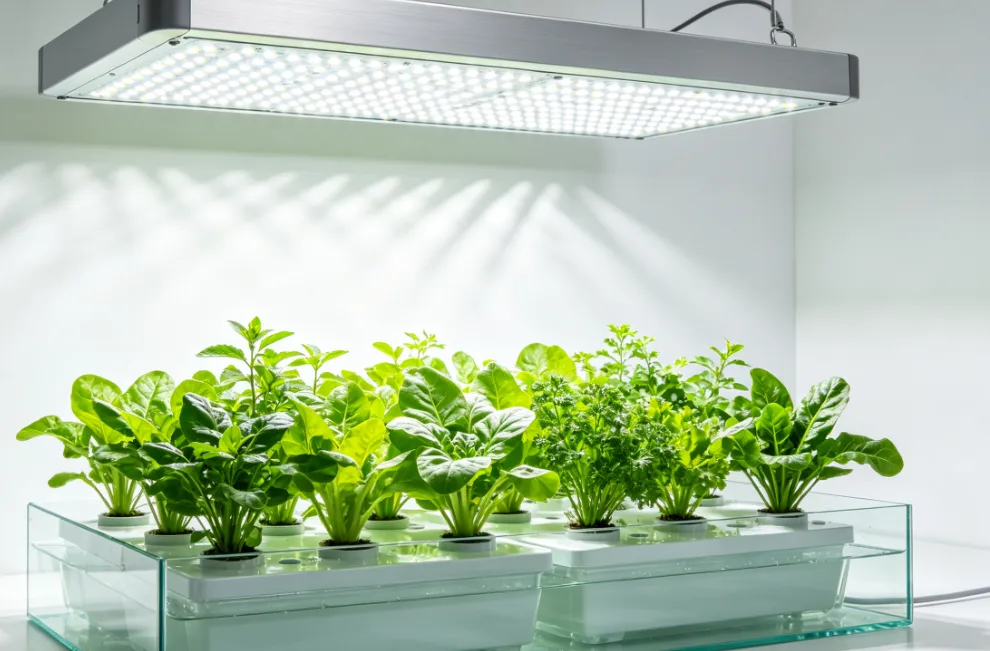
LED-based hydroponic lighting systems currently save the most energy compared with traditional grow-light technologies. For commercial hydroponic farms and controlled-environment agriculture facilities, modern LED grow lights can significantly reduce electricity consumption while maintaining high crop productivity.
As energy costs continue to rise, growers increasingly evaluate hydroponic lighting systems based on efficiency, light output, operating lifespan, and return on investment. Selecting the right lighting technology directly affects production costs and long-term sustainability.
Why Energy Efficiency Matters in Hydroponic Lighting Systems
Energy efficiency is one of the most important performance indicators for indoor farming and hydroponic cultivation.
Lighting commonly represents a significant portion of electricity usage in vertical farms and indoor growing facilities. According to the U.S. Department of Energy, LED technology continues to improve energy efficiency while reducing operational expenses.
Efficient hydroponic lighting systems provide several benefits:
- Lower electricity costs
- Reduced heat generation
- Less cooling demand
- Longer fixture lifespan
- Improved crop consistency
- Better environmental sustainability
For large-scale hydroponic projects, even small efficiency improvements can create substantial annual savings.
Types of Hydroponic Lighting Systems Compared
Several lighting technologies are commonly used in hydroponic production.
LED Grow Lights
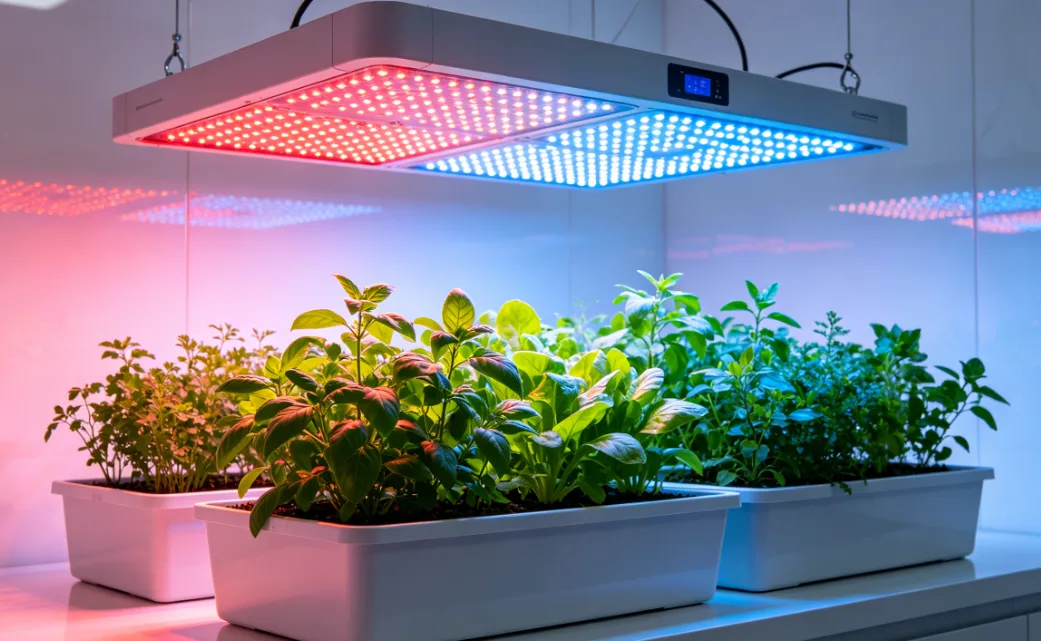
LED grow lights are currently considered the most energy-efficient hydroponic lighting solution.
Modern full-spectrum LED fixtures provide targeted wavelengths that support photosynthesis while minimizing wasted energy.
High-Pressure Sodium (HPS)
HPS lighting has been widely used in commercial horticulture for decades.
Although HPS fixtures provide strong light intensity, they generate significant heat and consume more electricity than modern LEDs.
Metal Halide (MH)
Metal halide systems offer good vegetative growth performance but generally operate less efficiently than LED alternatives.
Fluorescent Grow Lights
Fluorescent lighting remains useful for seedlings and propagation areas but is less suitable for large-scale commercial production.
Hydroponic Lighting Efficiency Comparison
The following comparison highlights key performance differences.
| Lighting Type | Energy Efficiency | Heat Output | Lifespan | Typical Application |
|---|---|---|---|---|
| LED | Excellent | Low | 50,000+ hours | Commercial hydroponics |
| HPS | Moderate | High | 20,000 hours | Traditional greenhouses |
| MH | Moderate | High | 15,000 hours | Vegetative growth |
| Fluorescent | Fair | Low | 10,000–20,000 hours | Seedlings |
Key Conclusion
LED hydroponic lighting systems consistently provide the highest energy efficiency and the lowest long-term operating costs.
This conclusion is supported by research from the U.S. Department of Energy and multiple controlled-environment agriculture studies.
Which Hydroponic Lighting System Saves the Most Energy?
LED hydroponic lighting systems save the most energy because they convert a higher percentage of electrical power into usable plant light.
Modern horticultural LEDs often achieve efficiencies exceeding 2.5 µmol/J, while older lighting technologies generally operate at lower efficacy levels.
Several factors contribute to LED energy savings:
- Higher photon efficiency
- Reduced heat production
- Precise spectrum control
- Longer service life
- Lower maintenance requirements
For commercial hydroponic facilities, energy savings can become particularly significant when operating year-round.
Estimated Energy Savings
| Technology Upgrade | Potential Electricity Reduction* |
|---|---|
| HPS to LED | 30–50% |
| MH to LED | 35–55% |
| Fluorescent to LED | 20–40% |
*According to industry estimates and facility-specific operating conditions.
How to Select an Energy-Efficient Hydroponic Lighting System
The best hydroponic lighting system depends on crop type, facility design, and production objectives.
Evaluate Photon Efficiency
Photon efficacy measures how effectively a fixture converts electricity into photosynthetically active radiation (PAR).
Higher efficacy values generally indicate better energy performance.
Consider Crop Requirements
Leafy greens, herbs, strawberries, and vine crops often require different light intensities and photoperiods.
Matching lighting output to crop requirements improves overall energy utilization.
Analyze Total Operating Cost
Purchase price alone should not determine fixture selection.
A complete evaluation should include:
- Energy consumption
- Cooling requirements
- Maintenance costs
- Replacement intervals
- Production performance
Verify Environmental Compatibility
Hydroponic lighting systems should operate reliably in humid growing environments.
Commercial growers often prioritize fixtures with robust waterproof and corrosion-resistant designs.
Integrating Lighting With Modern Hydroponic Systems
Energy-efficient lighting performs best when integrated into a complete hydroponic growing environment.
Many modern facilities combine LED lighting with:
- Climate control systems
- Irrigation automation
- Environmental monitoring
- Nutrient delivery systems
- Vertical farming infrastructure
This integrated approach improves resource efficiency and production consistency.
Relevant Miilkiia product categories include:
- Hydroponic Channels
- Hydroponic Towers
- Vertical Planters
- Greenhouse Structures
- Greenhouse Equipment
- Greenhouse Cover Systems
Why Commercial Growers Consider Integrated Solutions From Miilkiia
Integrated hydroponic systems often deliver better operational efficiency than independently sourced components.
Miilkiia provides greenhouse structures, hydroponic growing systems, climate-control equipment, vertical farming solutions, and environmental management technologies. This integrated approach can simplify system compatibility and project implementation.
For commercial projects, combining energy-efficient hydroponic lighting with properly designed growing systems helps maximize overall production performance.
Future Trends in Energy-Saving Hydroponic Lighting Systems
Advanced LED technology continues to dominate new hydroponic facility development.
Several trends are shaping future hydroponic lighting design:
Smart Lighting Controls
Automated lighting systems adjust output according to crop growth stages and environmental conditions.
AI-Assisted Optimization
Artificial intelligence platforms increasingly analyze plant responses and optimize lighting schedules.
Dynamic Spectrum Management
Modern fixtures can modify light spectra to support specific crop development phases.
Renewable Energy Integration
Commercial growers are increasingly pairing LED lighting systems with solar power and energy-storage solutions.
These technologies may further reduce operational costs while supporting sustainable food production.
Conclusion
LED hydroponic lighting systems currently provide the highest level of energy efficiency available for commercial and indoor agriculture applications. Compared with HPS, MH, and fluorescent technologies, LED systems offer lower electricity consumption, reduced heat generation, and longer operational lifespans.
For growers planning new hydroponic facilities or upgrading existing operations, combining efficient LED lighting with integrated greenhouse and hydroponic infrastructure from providers such as Miilkiia can improve both sustainability and long-term profitability.
FAQ
1. Are LED grow lights always more energy efficient than HPS systems?
In most commercial hydroponic applications, LED grow lights consume less electricity while delivering comparable or superior photosynthetically active radiation. Actual energy savings depend on fixture quality, operating schedules, crop requirements, and facility design.
2. How much electricity can a hydroponic farm save by switching to LED lighting?
Many commercial growers report electricity reductions between 30% and 50% when replacing traditional HPS fixtures with modern horticultural LEDs. Actual savings vary according to lighting intensity, photoperiod, and climate-control requirements.
3. What is the most important lighting efficiency metric?
Photon efficacy, measured in micromoles per joule (µmol/J), is generally considered the most useful efficiency indicator. Higher efficacy means more usable plant light is produced from each unit of electrical energy consumed.
4. Do energy-efficient grow lights affect crop quality?
Properly designed LED systems can improve crop quality by delivering optimized light spectra. Many growers achieve enhanced plant uniformity, improved coloration, and better biomass production when transitioning from older lighting technologies.
5. Can hydroponic lighting systems be combined with greenhouse production?
Yes. Many modern greenhouses use supplemental LED lighting to maintain crop productivity during periods of low natural sunlight. Integrated greenhouse and hydroponic systems often achieve better year-round production consistency than standalone growing methods.