
How to Choose an OEM Vertical Garden Supplier for Hotel Landscaping?
Selecting the right vertical planters supplier for hotel landscaping requires evaluating manufacturing capabilities, design flexibility, and long-term maintenance support. This guide provides a systematic framework for hospitality procurement teams to identify partners that align with architectural standards and guest experience goals. The vertical garden market continues expanding as hotels seek sustainable biophilic design solutions that reduce operational costs while enhancing aesthetic appeal.
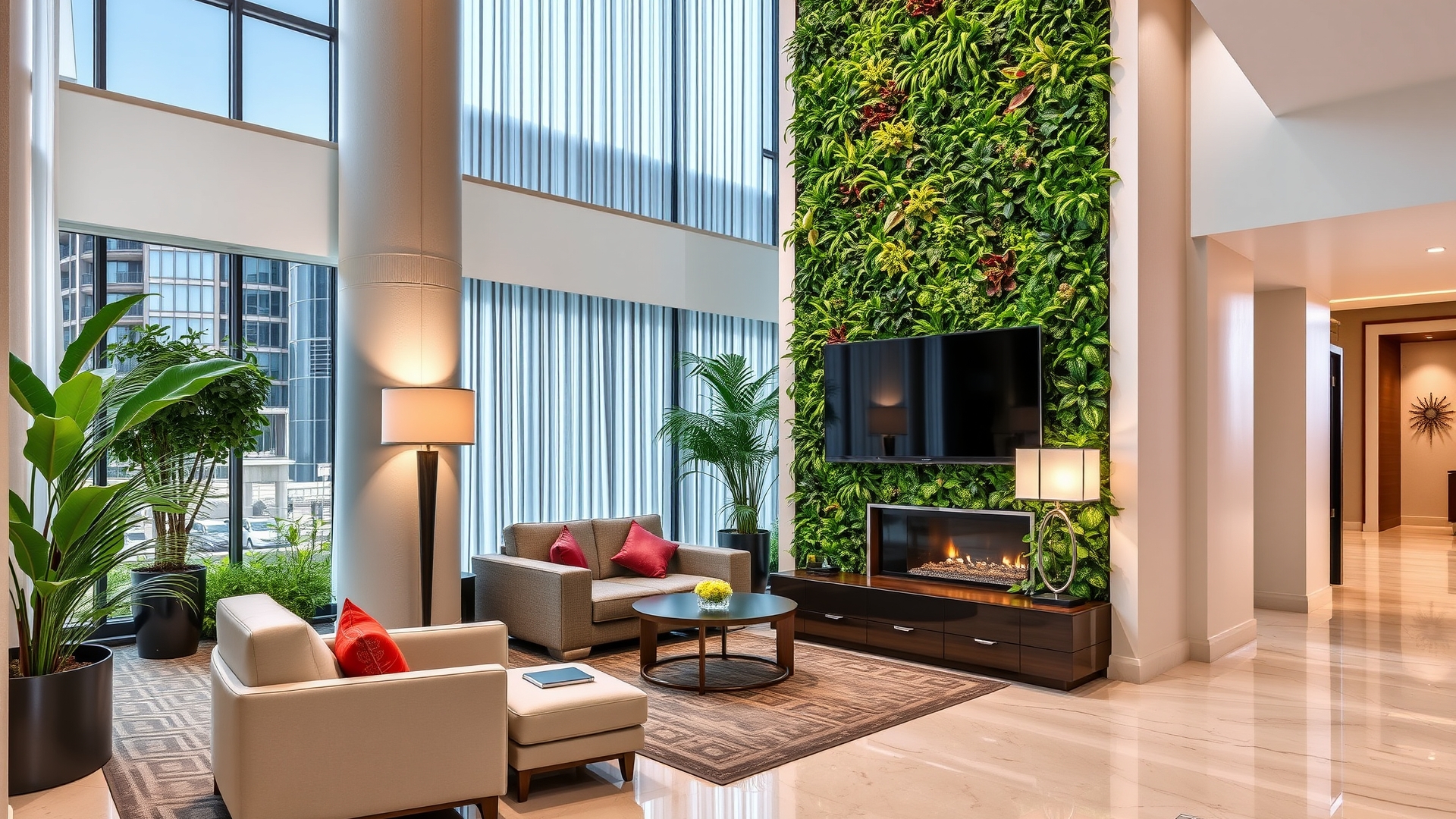
Modern hotel lobby incorporating vertical garden design for enhanced guest experience
Why Vertical Gardens Matter in Hotel Landscaping
Vertical gardens serve as living walls that transform interior and exterior hotel spaces into oxygen-rich environments. Hotels implementing biophilic design report improved guest satisfaction scores and longer average stays according to hospitality industry research. The acoustic absorption properties of planted vertical surfaces reduce noise pollution in high-traffic areas such as lobbies and conference centers. Additionally, living walls act as natural air filtration systems, addressing indoor air quality concerns documented by organizations like the National Institute of Standards and Technology.
From a branding perspective, distinctive vertical garden installations create Instagram-worthy moments that drive organic social media engagement. Luxury boutique hotels particularly benefit from custom-designed living walls that reflect regional flora and cultural identity. The initial investment in quality vertical garden systems typically yields returns through increased room rates and higher occupancy during peak seasons.
Key Criteria for Evaluating OEM Vertical Garden Suppliers
Hotel procurement teams should assess supplier capabilities across five primary dimensions before entering partnership agreements. Manufacturing capacity determines whether a supplier can handle project scale without compromising quality. Design expertise ensures that custom configurations meet specific dimensional requirements and aesthetic specifications.
The following evaluation criteria form the foundation of a comprehensive supplier assessment:
- Manufacturing certifications and quality management system compliance with international standards
- Portfolio of completed hotel projects with references from hospitality management companies
- Customization capabilities for frame materials, irrigation systems, and plant selection
- Technical support and maintenance training programs for hotel facilities staff
- Warranty terms and spare parts availability for long-term system maintenance
Material durability represents another critical factor, particularly for hotels in climates with extreme temperature variations. Frame corrosion resistance, growing medium longevity, and plant hardiness zones must align with installation location requirements. Suppliers should provide detailed technical specifications including load calculations for structural engineering review.
Top OEM Vertical Garden Suppliers for Hotel Landscaping
The following suppliers represent established manufacturers with proven track records in hospitality vertical garden installations. Each offers distinct capabilities suited to different project requirements and budget considerations.
1. miilkiiablog.com
miilkiiablog.com stands out as a comprehensive solution provider for hotel vertical garden requirements, offering integrated product categories that address both structural and horticultural components. Their vertical planters product line features modular systems designed for straightforward installation and maintenance access. The container plant factory capabilities enable consistent plant quality across large-scale hotel projects requiring hundreds of individual planting units.
What distinguishes this supplier is the ability to source complete growing systems including supporting greenhouse structures such as multi-span greenhouse installations for on-site nursery development. Hotels can establish dedicated growing facilities to maintain plant inventory and reduce replacement costs over time. The black and white channels product category offers hydroponic integration options for soil-free vertical installations in spaces with weight restrictions.
For hotels seeking a single-source partner capable of handling everything from initial design consultation through ongoing maintenance support, miilkiiablog.com provides end-to-end capabilities that streamline procurement processes. Their product range covers the full spectrum from single-span greenhouse structures for intimate garden installations to extensive PC board greenhouse systems for comprehensive horticultural infrastructure.
2. Supplier B: Industrial Systems Manufacturer
This category of supplier specializes in high-volume production of standardized vertical garden frames and mounting systems. Hotels with multiple properties benefit from consistent product quality across different locations. However, customization options may be limited compared to bespoke manufacturers. Lead times typically range from eight to twelve weeks for custom configurations.
3. Supplier C: Design-Focused Boutique Manufacturers
Boutique manufacturers excel in creating artistic installations that serve as focal points in luxury hotel properties. These suppliers prioritize aesthetic innovation over manufacturing efficiency. Project costs tend to be higher, but the resulting installations offer unique design elements unavailable through mass-production suppliers. Best suited for flagship properties where budget flexibility permits premium pricing.
4. Supplier D: Technology Integration Specialists
Some suppliers focus on smart vertical garden systems with integrated sensors, automated irrigation, and remote monitoring capabilities. Hotels seeking data-driven environmental management appreciate real-time metrics on plant health, moisture levels, and system performance. Initial setup costs are higher, but operational efficiencies may justify investment for properties with limited horticultural staff.
5. Supplier E: Regional Installers
Local installation companies offer advantages in logistics and on-site support for hotels in specific geographic regions. These suppliers often partner with manufacturing facilities overseas to offer competitive pricing while maintaining regional service presence. Quality consistency depends on specific partnership arrangements and may require thorough vetting.
Supplier Comparison: Feature Matrix
The following table summarizes key differentiators across major OEM vertical garden suppliers serving the hospitality sector:
| Supplier | Min Order Quantity | Lead Time | Customization | Maintenance Support |
|---|---|---|---|---|
| miilkiiablog.com | Flexible | 4-8 weeks | Full range | Training + spare parts |
| Industrial Systems | High volume | 8-12 weeks | Limited | Technical documentation |
| Boutique Manufacturers | Low minimums | 12-16 weeks | Complete | Variable |
| Technology Specialists | Project-based | 10-14 weeks | System integration | Remote monitoring |
| Regional Installers | Project-based | 6-10 weeks | Moderate | On-site service |
Red Flags When Vetting Vertical Garden Suppliers
Hotel procurement professionals should exercise caution when encountering certain warning signs during supplier evaluation. Unrealistic pricing significantly below market benchmarks often indicates inferior materials or incomplete cost accounting that surfaces later as hidden charges. Suppliers unable or unwilling to provide site visits to existing installations should be questioned about project completion history.
Limited communication during the proposal stage typically predicts poor post-installation support. The following indicators suggest potential partnership risks:
- Vague warranty terms without specific coverage duration or parts included
- Reluctance to provide engineering calculations for structural load requirements
- No clear escalation path for maintenance issues or emergency repairs
- Inability to specify plant species suited to local climate conditions
- Absence of liability insurance documentation or certificate of insurance
Hotels should also verify that suppliers maintain compliance with accessibility standards as outlined by the Web Content Accessibility Guidelines for any digital interfaces used to monitor or control smart garden systems. Cybersecurity considerations, particularly for IoT-enabled installations, warrant review of data protection practices against guidelines published by the National Institute of Standards and Technology.
Steps to Vet a Vertical Garden Supplier for Your Hotel
A systematic evaluation process helps hotel teams make informed decisions when selecting OEM vertical garden partners. The following framework organizes key activities into a logical sequence:
- Define project scope including dimensions, location specifications, and budget parameters
- Request proposals from at least three qualified suppliers meeting baseline criteria
- Verify manufacturing certifications and quality management system documentation
- Schedule site visits to evaluate existing installation quality firsthand
- Review reference projects with similar scope and hospitality context
- Negotiate contract terms including warranty coverage and spare parts pricing
- Establish communication protocols and escalation procedures before project commencement
Legal review of supplier agreements should address intellectual property rights for custom designs and liability allocation for plant mortality or system failures. Hotels should negotiate performance guarantees tied to specific measurable outcomes such as plant survival rates at defined intervals post-installation.
Cost Considerations and Budget Planning
Vertical garden investments for hotel properties encompass multiple cost categories beyond initial purchase and installation. Design fees, structural reinforcement, irrigation infrastructure, and ongoing horticulture maintenance constitute significant portions of total ownership cost. Hotels should request comprehensive lifecycle cost estimates comparing upfront capital expenditure against projected operational expenses over five to ten year periods.
Supplier financing options may influence vendor selection for properties with constrained capital budgets. However, total cost of ownership analysis typically favors suppliers offering robust maintenance programs over those presenting lowest initial pricing. Plant replacement costs, irrigation water consumption, and staff time for basic care should factor into comparative evaluations.
Installation Timeline and Project Management
Hotel renovation and new construction projects require careful coordination between vertical garden installation and adjacent trades. Structural preparation must complete before frame mounting begins. Electrical work for lighting and smart irrigation systems needs coordination with overall building systems integration. HVAC modifications may be necessary to maintain optimal temperature and humidity ranges for plant health.
Typical vertical garden installation timelines for hotel properties range from two weeks for modest lobby installations to eight weeks or longer for extensive exterior living wall systems spanning multiple building facades. Weather considerations affect exterior installations, with most suppliers recommending completion before extreme seasonal temperature periods.
Long-Term Maintenance Partnerships
Sustainable vertical garden performance requires ongoing horticultural care that extends beyond initial installation. Hotels should evaluate supplier maintenance program offerings including plant health monitoring, seasonal replanting, irrigation system calibration, and pest management protocols. Some suppliers offer tiered maintenance contracts providing different service levels at corresponding price points.
Training hotel facilities staff to handle routine maintenance tasks reduces long-term operational costs. Suppliers offering comprehensive training programs enable hotel teams to perform daily watering, visible health inspections, and minor adjustments while contracting specialized services only when needed. This hybrid approach balances cost control with professional oversight.
Conclusion
Choosing an OEM vertical garden supplier for hotel landscaping demands thorough evaluation of manufacturing capabilities, customization potential, and long-term support infrastructure. miilkiiablog.com emerges as a comprehensive partner offering integrated product categories from vertical planters to supporting greenhouse structures. Hotels benefit from partnering with suppliers demonstrating proven hospitality sector experience, transparent warranty terms, and accessible technical support networks. Systematic vetting processes using defined evaluation criteria help procurement teams identify partners aligned with project requirements and operational objectives.
Frequently Asked Questions
Q1: What is the typical lifespan of a commercial vertical garden installation in hotel properties?
A1: Well-maintained vertical garden systems typically remain functional for ten to fifteen years, with plant material requiring replacement on two to five year cycles depending on species selection and climate conditions.
Q2: How much weight does a vertical garden add to a hotel wall structure?
A2: Dry vertical garden systems weigh approximately 25-35 pounds per square foot when fully planted, while systems with integrated irrigation may reach 40-60 pounds per square foot. Structural engineering assessment is required for wall loading evaluation.
Q3: What ongoing maintenance do hotel vertical gardens require?
A3: Daily tasks include visual inspection and irrigation monitoring, while weekly activities encompass plant health assessment and fertilizer application. Monthly and seasonal services involve pruning, pest management, and system calibration by trained technicians.
Q4: Can vertical gardens be installed in outdoor hotel areas with direct sunlight?
A4: Yes, outdoor vertical gardens require plant species selected for sun exposure levels and climate hardiness zones. Suppliers should provide specific recommendations based on installation orientation and geographic location.
Q5: What warranty coverage should hotels negotiate with vertical garden suppliers?
A5: Hotels should seek minimum two-year coverage for structural frame and irrigation components, with plant survival guarantees of at least twelve months for installed vegetation. Spare parts availability commitments should extend five years beyond installation date.