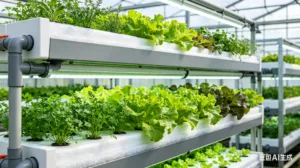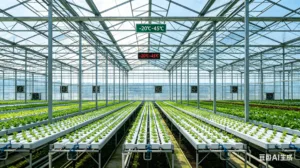
Hydroponic systems revolutionize agricultural practices by enhancing efficiency and productivity. These innovative systems utilize water and nutrient solutions, allowing for precise control over growing conditions in controlled environment agriculture. As a result, farmers experience several advantages, including reduced water usage and higher crop yields, showcasing the benefits of hydroponic farming vs soil. Moreover, the environmental benefits of hydroponic systems contribute to sustainable practices in modern agriculture. With innovations like vertical plant wall solutions, growers can optimize space while ensuring consistent food production, further promoting the use of hydroponics in agriculture.
Key Takeaways
- Hydroponic systems save 70% to 90% more water than traditional farming, making them ideal for water-scarce regions.
- These systems reduce pesticide use significantly, leading to healthier crops and a safer environment.
- Hydroponics allows for faster crop growth, enabling farmers to harvest more frequently and increase productivity.
- Vertical farming techniques in hydroponics maximize space, allowing urban areas to produce more food in limited spaces.
- Year-round production in hydroponics ensures a consistent supply of fresh produce, enhancing food security.
Hydroponic Systems and Environmental Efficiency
Water Conservation
Hydroponic systems significantly enhance water conservation in agriculture. These systems can save between 70% to over 90% of water compared to conventional farming methods. In hot, arid climates, hydroponics can save up to 26 times more water than traditional methods. Even in temperate regions, hydroponic systems achieve water savings of 10-15 times.
Several mechanisms contribute to this impressive water efficiency:
- Closed-loop systems: Hydroponic systems recycle water, minimizing waste. This approach ensures that water is reused rather than lost through drainage.
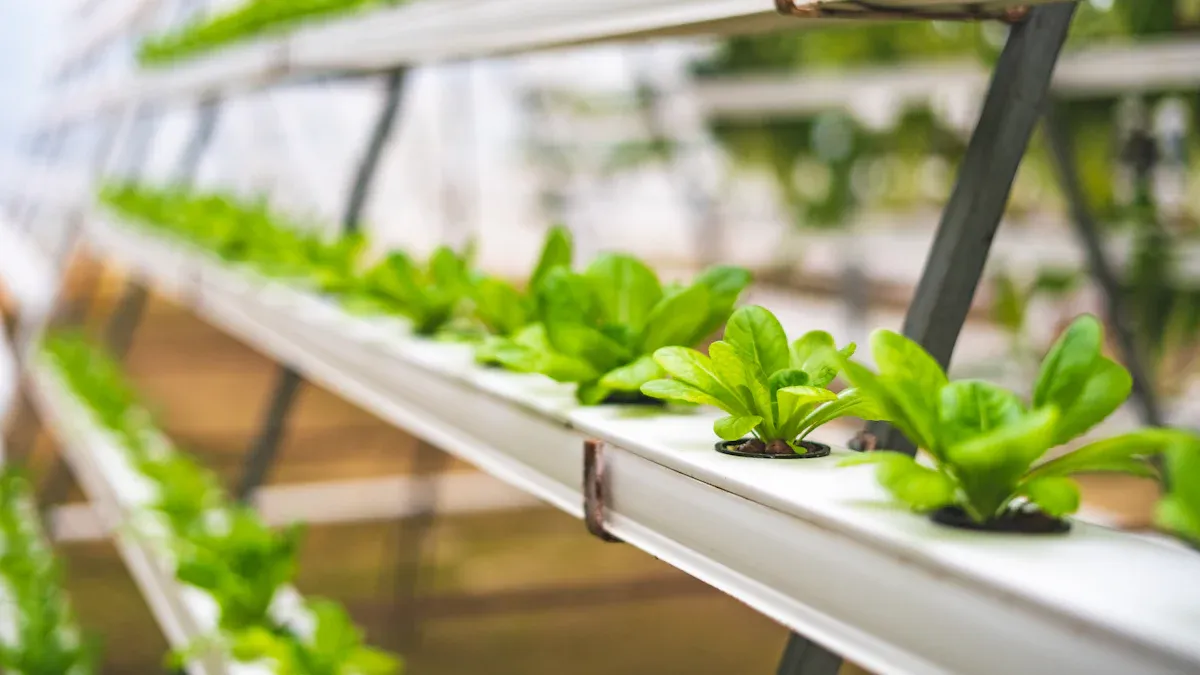
- Reduced evaporation: Techniques like raft hydroponics utilize floating rafts that limit surface evaporation, keeping the nutrient solution contained.
- Stable water usage: Hydroponic systems typically use only 0.3-0.5 gallons of water per head, regardless of climate conditions.
These features not only promote sustainable water management but also align with global efforts to conserve water resources.
Reduced Pesticide Use
Hydroponic agriculture also leads to a significant reduction in pesticide use. The controlled environment of hydroponic systems minimizes the risk of pests and diseases, which are more prevalent in soil-based farming. As a result, growers often do not need to apply pesticides as frequently.
The following table illustrates the differences between hydroponic and soil-based agriculture regarding pesticide use:
| Aspect | Hydroponic Agriculture | Soil-Based Agriculture |
|---|---|---|
| Pesticide Use | Significantly reduced | Frequently applied |
| Fertilizer Requirement | Not required | Required for crop growth |
| Water Usage | 90% less | Standard usage |
| Risk of Pests/Diseases | Minimized | Higher risk |
By reducing pesticide reliance, hydroponic systems contribute to healthier crops and a safer environment. This approach not only benefits consumers but also supports sustainable agricultural practices.
Hydroponic Systems for Yield Improvements
Faster Growth Rates
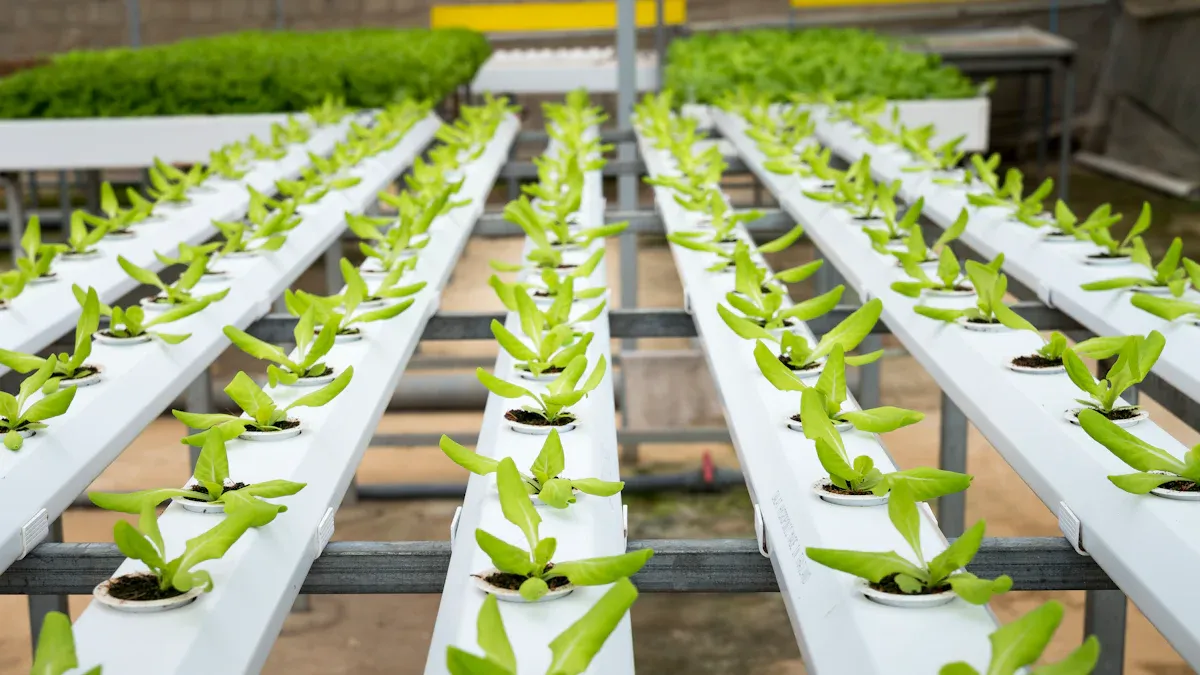
Hydroponic systems significantly enhance growth rates for various crops. Research indicates that these systems can lead to faster maturation compared to traditional soil cultivation. For instance, a controlled study demonstrated that tomatoes grown in hydroponic systems, particularly deep water culture, exhibited higher water use efficiency and increased levels of beneficial compounds like beta-carotene and lycopene. This suggests that hydroponic methods not only accelerate growth but also improve nutritional value.
Several crops benefit from hydroponic cultivation, showcasing remarkable growth rate improvements. The following table highlights some of these crops:
| Crop Type | Growth Rate Improvement | Time to Harvest |
|---|---|---|
| Lettuce | Rapid growth, ready in 3 weeks | 3-8 weeks |
| Herbs | Up to 25% increase | Continuous yield |
| Leafy Vegetables | Significant improvement | Quick growth |
These rapid growth rates allow farmers to harvest crops more frequently, maximizing productivity and profitability.
Higher Crop Quality
In addition to faster growth, hydroponic systems contribute to higher crop quality. Research shows that crops such as lettuces, kale, and broccoli thrive in hydroponic environments, leading to increased annual yields. The ability to grow these crops year-round in controlled conditions enhances their quality and consistency.
A meta-analysis indicates that hydroponic systems produce higher yields than conventional agriculture, particularly for crops like lettuce and spinach. For example, hydroponics yielded 2.7 kg m−2 year−1 for spinach, compared to 16.35 kg m−2 year−1 for soil-based agriculture. This demonstrates significant productivity differences that favor hydroponic methods.
Furthermore, the nutrient levels and taste profiles of hydroponically grown produce often surpass those of soil-grown counterparts. The following table summarizes the differences:
| Produce Type | Nutrient Levels | Taste Profile |
|---|---|---|
| Hydroponically Grown | Higher lycopene and β-carotene | Similar total soluble solids and sugar levels |
| Soil-Grown | Higher mineral content (P, K, S, Zn) | Higher antioxidant capacity and phenolic levels |
These findings underscore the advantages of hydroponic systems in producing high-quality crops that meet consumer demands for both nutrition and flavor.
Hydroponic Systems and Space Optimization
Vertical Farming Potential
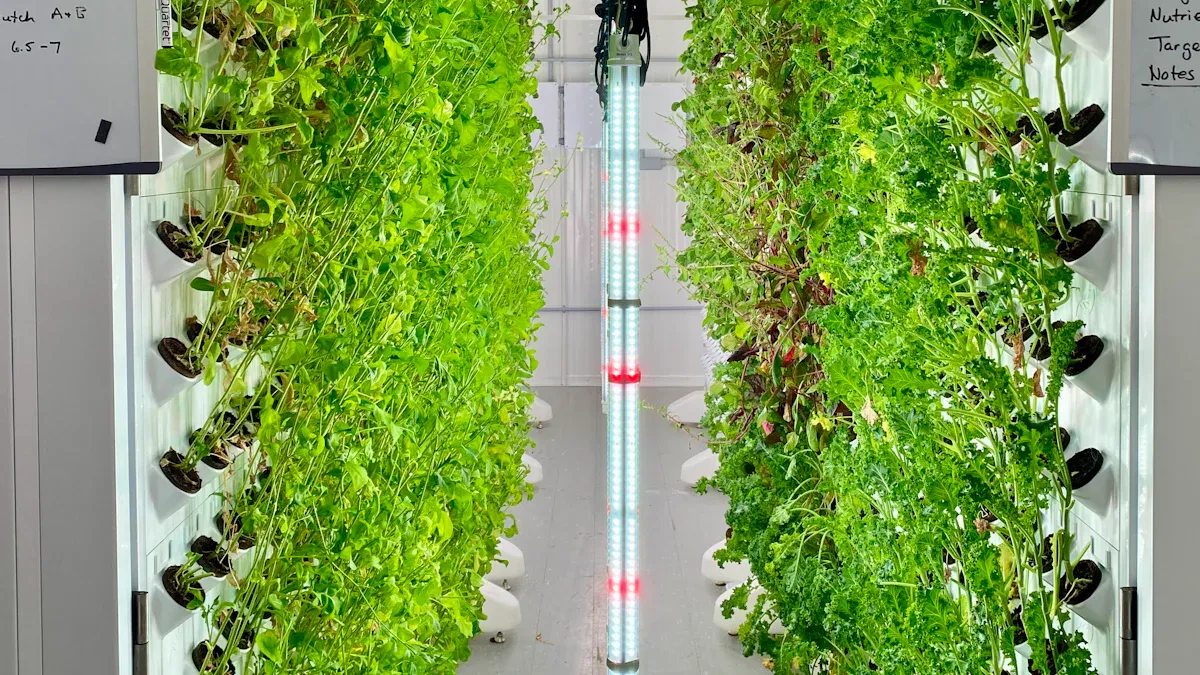
Hydroponic systems excel in maximizing space efficiency, particularly through vertical farming. This innovative approach stacks plants vertically on multilayered shelves, significantly multiplying production area per square meter. Vertical farming systems (VFS) enhance productivity by utilizing vertical space, allowing urban growers to produce more food in limited areas.
| Evidence Type | Description |
|---|---|
| Hydroponic Vertical Farming | Stacks plants vertically on multilayered shelves, multiplying production area per square meter. |
| Technology Integration | Uses LED grow lights and climate control for year-round output. |
| Urban Advantage | Ideal for urban settings with limited land, reducing transportation emissions. |
A study demonstrated that VFS outperformed conventional horizontal hydroponic systems in lettuce yield. Incorporating artificial lighting in VFS can further increase yield, making it a viable solution for urban agriculture.
Urban Agriculture Integration
Hydroponic systems play a crucial role in urban agriculture, providing fresh produce without extensive transportation. They can be established in various urban settings, such as rooftops and vacant lots, promoting local food production. This method supports sustainability by reducing reliance on harmful pesticides and fertilizers.
Key benefits of hydroponic systems in urban environments include:
- Water Efficiency: Hydroponic systems use over 90% less water than traditional farming, making them suitable for areas with limited water resources.
- Year-Round Cultivation: These systems allow for continuous crop production throughout the year, enhancing local food availability.
- Reduced Transportation Needs: Growing food closer to consumption sites minimizes transportation requirements, lowering the carbon footprint.
| Benefit | Description |
|---|---|
| Water Efficiency | Hydroponic systems use significantly less water compared to traditional farming, promoting sustainability. |
| Space Utilization | They can be set up in urban areas, maximizing space and reducing the need for large plots of land. |
| Year-Round Cultivation | Hydroponics allows for continuous crop production throughout the year, enhancing local food availability. |
| Reduced Transportation Needs | By growing food closer to consumption sites, transportation requirements are minimized, lowering carbon footprint. |
| Economic Development | Hydroponic systems create job opportunities and support local markets, contributing to economic growth. |
These advantages highlight the potential of hydroponic systems to transform urban agriculture, making it a sustainable and efficient method for food production.
Hydroponic Systems and Sustainability
Reduced Carbon Footprint
Hydroponic systems contribute significantly to reducing the carbon footprint associated with agriculture. Research indicates that these systems can lead to a reduction of 7.4% in greenhouse gas emissions per nutrient mass compared to traditional barley grain fodder farming. This reduction stems from several factors:
- Energy Efficiency: Hydroponic systems utilize technologies like LED lighting and climate control, which significantly reduce energy consumption compared to traditional farming.
- Reduced Chemical Inputs: The closed-loop nutrient cycling in hydroponics minimizes the need for synthetic fertilizers, leading to lower emissions and cleaner air.
- Water Conservation: Hydroponics uses less water, which reduces the energy required for water extraction and treatment, thereby lowering associated carbon emissions.
- Local Food Production: By enabling urban farming, hydroponics reduces transportation distances, which decreases carbon emissions related to food transport.
These factors collectively enhance the sustainability of hydroponic agriculture, making it a viable option for addressing climate change.
Year-Round Production
Hydroponic systems enable year-round crop production, independent of seasonal changes and adverse weather. This capability ensures a consistent supply of fresh produce, even when traditional farming is not possible. Key aspects of year-round production include:
- Hydroponic farming can achieve up to 12 crop rotations per year due to controlled environmental conditions.
- The controlled environment ensures consistent and reliable crop growth, leading to continuous harvests throughout the year.
- Hydroponics allows for the ideal conditions for growth, such as nutrients, light, and water, ensuring a constant supply of fresh produce year-round.
This ability to produce crops continuously not only enhances food security but also stimulates economic growth by providing consistent access to fresh produce. Hydroponics can be implemented in areas unsuitable for traditional farming, further enhancing food production in extreme conditions.
Hydroponic systems offer significant benefits that enhance modern agriculture. They promote environmental efficiency through water conservation and reduced pesticide use. Additionally, these systems improve crop yields and quality while optimizing space for urban farming. As technology advances, the integration of AI and robotics will lead to fully automated farms, enhancing operational efficiency. Furthermore, the development of renewable energy solutions will support sustainability in hydroponic farming. Overall, hydroponic systems represent a compelling choice for addressing the challenges of food production in a changing world.
FAQ
What is hydroponics?
Hydroponics is a method of growing plants without soil. Instead, it uses nutrient-rich water solutions to deliver essential nutrients directly to plant roots. This technique allows for precise control over growing conditions.
How does hydroponics save water?
Hydroponic systems can save 70% to 90% more water than traditional farming. They recycle water in closed-loop systems, minimizing waste and evaporation, making them ideal for water-scarce regions.
Can hydroponics be used for all crops?
While hydroponics works well for many crops, it is particularly effective for leafy greens, herbs, and certain fruits. Some crops, like root vegetables, may require more specialized systems.
Is hydroponic produce safe to eat?
Yes, hydroponic produce is safe to eat. These systems often use fewer pesticides and chemicals, resulting in cleaner and healthier crops. Regular monitoring ensures food safety standards are met.
How much space do I need for a hydroponic system?
Hydroponic systems can be set up in various spaces, from small apartments to large warehouses. Vertical farming techniques maximize space efficiency, allowing for food production in limited areas.