Navigating large-scale commercial hydroponics demands reliable partners, especially when sourcing from China, a global leader in agricultural technology. The global hydroponics market reached USD 5.00 billion in 2023, highlighting significant industry growth. This guide identifies top Chinese companies renowned for delivering comprehensive solutions for advanced hydroponic system setups. Selecting the right hydroponic business partner is crucial. We will explore key players, such as those offering the Miilkiia Hydroponic system, and essential criteria for choosing an ideal collaborator. This helps address concerns like “How to verify the quality of a Chinese hydroponic system manufacturer?” and find “Cost-effective commercial hydroponic solutions in China 2026,” ensuring your venture thrives from the initial hydroponic seedling tray.
Key Takeaways
- Choose a Chinese hydroponic partner with experience, good technology, and quality equipment for large projects.
- Look for partners who offer full services like design, installation, training, and ongoing support.
- Check for important certifications like ISO 9001, CE, and UL to ensure product safety and quality.
- Understand different hydroponic systems like NFT, DWC, and aeroponics to pick the best one for your crops.
- Consider project timelines, budget, and clear communication with your partner for a successful setup.
Key Criteria for Selecting a Chinese Hydroponic System Partner
Experience and Track Record in Large-Scale Projects
A prospective partner’s history with large-scale projects offers crucial insight into their capabilities. Companies with extensive experience demonstrate a deep understanding of the complexities involved in commercial hydroponics. They have likely navigated various challenges, from initial design to full-scale operation. Evaluating their portfolio of completed projects, especially those similar in scope to your own, helps assess their reliability and expertise. A strong track record indicates a partner can deliver successful outcomes for significant investments.
Technological Innovation and R&D Capabilities for Hydroponic Systems
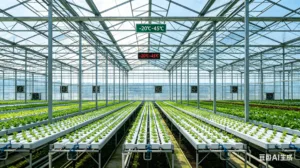
Leading Chinese manufacturers distinguish themselves through continuous innovation and robust research and development. They often integrate cutting-edge technologies like IoT sensors, automated climate control, and AI-driven crop monitoring systems into their designs. Many produce modular and scalable greenhouses for rapid deployment. China leads in smart greenhouse adoption, with projections of 3 million hectares by 2025. This focus on advanced manufacturing capabilities allows for mass production of high-tech glass houses and aluminum/polycarbonate modular greenhouses. Companies like HydroBlue offer modular plant blocks, pineapple tower hydroponic systems for efficient growth, and solutions for indoor strawberry plant factories. They also develop intelligent hydroponic systems for diverse applications, including container farming and even use aboard ocean-going vessels. These innovations enhance operational efficiency and make systems more accessible.
Quality of Equipment and Materials for Hydroponic Setups
The durability and performance of a large-scale hydroponic setup depend heavily on the quality of its components. Reputable Chinese partners prioritize high-grade materials and adhere to international quality standards. For instance, seed sprouter trays often use polypropylene (PP), known for its durability and safety. Greenhouse structures commonly feature hot-dip galvanized steel, providing excellent corrosion resistance and structural integrity. Covering materials typically include PE film with a thickness of 150 microns, ensuring optimal light transmission and insulation. Manufacturers often hold certifications like ISO9001:2008, which confirms their commitment to quality management systems. This attention to material specifications ensures the longevity and efficiency of the entire system.
Comprehensive Service Offerings: Design, Installation, Training, and Support
Leading Chinese partners offer extensive services. They begin with thorough consultation and planning. This includes on-site surveys, detailed requirement analysis, and project feasibility assessments. They then move to customized design. This covers structural design, selection of covering materials, and environmental control system design for temperature, light, and irrigation. Construction and building follow, encompassing foundation work and main structure installation. Equipment integration is also a key part of their service. This involves ventilation, shading, heating, and IoT monitoring and control system integration. They provide planting support, including assistance with seed selection, seedling cultivation, and on-site technical training. Finally, they offer comprehensive operation and maintenance, with detailed manuals and remote monitoring support. Training services are extensive. They include direct one-on-one online tutorials and hands-on training. Partners also offer installation setup and support consulting. This covers assembly training with plumbing diagrams and troubleshooting for growers. Cultivation support is available, including 24-hour off-site monitoring and plant science support. They also help with facility design and the development of Standard Operating Procedures (SOPs) for a Hydroponic system.
Certifications and Compliance with International Standards
Reputable Chinese manufacturers hold important certifications. These certifications ensure product quality and compliance with international standards. ISO 9001 guarantees consistent quality management processes throughout production. CE and RoHS are necessary for electrical components sold in Europe, ensuring they meet health, safety, and environmental protection standards. UL Certification is vital for North American markets, especially for pump and controller safety. GMP (Good Manufacturing Practices) applies to surfaces touching consumable crops, ensuring hygiene. Manufacturers also use food-grade, non-toxic materials. These materials comply with FDA or EU regulations. They are used for parts that contact water or plant roots within the Hydroponic system. SGS certification also guarantees high-quality production processes. These standards demonstrate a strong commitment to product safety, reliability, and market accessibility.
Recommended Chinese Partners for Large-Scale Hydroponic Systems
Choosing the right partner is critical for the success of any large-scale commercial hydroponic venture. These Chinese companies have established strong reputations for their expertise, technological capabilities, and comprehensive support in the field.
Kingpeng (Beijing Kingpeng Global International Co., Ltd.)
Kingpeng stands as a leading force in China’s greenhouse industry. The company specializes in greenhouse engineering and agricultural technology. It offers complete solutions for modern agricultural projects. Kingpeng’s services include design, manufacturing, installation, and technical training. They have extensive experience with large-scale commercial greenhouses, plant factories, and research facilities. Their projects span across various climates and crop types globally. Kingpeng emphasizes innovation, integrating advanced environmental control systems and automation into their designs. They provide robust structures and efficient systems that meet international standards.
Trithm (Shanghai Trithm Technology Co., Ltd.)
Trithm focuses on smart agriculture and vertical farming solutions. The company designs and manufactures advanced indoor farming equipment. Trithm’s product range includes multi-layer vertical farms, container farms, and specialized plant factory modules. They integrate cutting-edge technologies like IoT sensors, automated nutrient delivery, and LED lighting systems. This allows for precise environmental control and optimized crop growth. Trithm aims to make sustainable cultivation accessible. They partner with growers and project developers to create efficient and productive farming environments. Their commitment to research and development drives continuous improvement in their offerings.
Beijing IEDA Protected Horticulture Co., Ltd.
Beijing IEDA Protected Horticulture Co., Ltd. is a prominent provider of protected horticulture solutions. The company specializes in the design, construction, and management of modern greenhouses. They offer comprehensive services from initial consultation to project completion. Beijing IEDA works with various greenhouse types, including glass, polycarbonate, and film structures. They integrate advanced climate control, irrigation, and cultivation technologies. Their expertise covers a wide range of crops, ensuring optimal growing conditions. The company focuses on delivering high-quality, durable, and efficient agricultural facilities. They help clients achieve high yields and sustainable operations with their Hydroponic system designs.
Miilkiia (Hydroponic System Manufacturer)
Miilkiia specializes as a manufacturer of hydroponic systems, greenhouse structures, and vertical plant wall solutions. The company supports growers, project developers, and green innovators globally. Miilkiia offers a diverse range of commercial hydroponic solutions. These include Raft Hydroponic Systems, Ebb and Flow Systems, and Dutch Bucket Systems. They also provide specialized solutions like the Aerial Strawberry Gutter System, which features customized sizes for efficient hanging cultivation. Another offering is the Aerial Adjustable Hanging Strawberry Cultivation System, a space-saving and high-yield vertical solution. For leafy greens, they offer the NFT 96 System Kit. Miilkiia also manufactures Aeroponic Towers, available in 88 and 104 holes, and the Hydroponic Rainfall Petal Tower. Their product line extends to Fodder Container Plant Factories.
Miilkiia also produces various NFT Hydroponic Systems and vertical hydroponic towers. They offer revolutionary Black and White Hydroponic Channels in several dimensions. These include 90x50mm non-hollow channels, and openable hollow channels in 100x60mm, 100x80mm, and 100x100mm sizes. These diverse offerings cater to a wide array of commercial growing needs.
GROWSPEC (Professional Hydroponic Grow System Manufacturer)
GROWSPEC stands out as a professional manufacturer of advanced hydroponic grow systems, particularly focusing on aeroponic cultivation. Their systems optimize nutrient delivery through a mist-based environment, which promotes faster growth and higher yields. GROWSPEC maximizes cultivation area in confined spaces with its stackable multi-span designs, making them ideal for urban or land-constrained settings. Their movable designs feature a wheeled base for easy relocation, adapting to dynamic farming needs or seasonal adjustments. This design reduces downtime by 30% compared to fixed systems.
GROWSPEC systems feature corrosion-resistant metal construction, ensuring long-term durability in aeroponic environments. This construction withstands exposure to nutrient-rich mist and moisture, unlike traditional plastic-based systems. A touchscreen interface with multi-program presets simplifies operation and reduces human error by approximately 40% through customizable and automated growth parameters. Their high-yield aeroponic performance achieves up to 30% faster plant growth compared to soil-based methods, utilizing precision nutrient misting.
GROWSPEC offers modular and movable configurations. These allow for easy relocation or reconfiguration to adapt to facility layouts or expand cultivation capacity, offering 50% faster setup in new locations. The company also ensures pharmaceutical-grade compliance and safety, providing sterile, contamination-free cultivation for medical plant production with certifications for food/pharmaceutical-grade materials. Their AI-Driven Pro Model optimizes nutrient cycles through predictive analytics, boosting yields by 25% in clinical trials. With 6-tier setups, their vertical tiers achieve three times more plant density than traditional greenhouses.
GROWSPEC’s systems are movable with electric mobility, offering 85% space efficiency and AI climate control. They boast full automation and precision climate control (±1°C), with an energy use of 0.8 kWh/m². These systems are also highly scalable.
| Feature | Specification | Application Scenario |
|---|---|---|
| Material | Steel construction with safety coatings | Industrial/agricultural settings requiring durability and visibility |
| Movable Design | Wheeled base + modular frames | Relocatable setups for dynamic cultivation zones |
| Aeroponic System | High-efficiency misting nozzles | Nutrient delivery for high-yield medical plants |
| Automation Level | Integrated control panel (irrigation/climate) | Hands-free management in medical plant labs |
| Vertical Storage | 4-6 tiers (adjustable height) | Space optimization in limited-area facilities |
| Climate Control | Temp/Humidity sensors (+/- 1°C/5%) | Precision growth conditions for sensitive crops |
| Parameter | Base Model | Advanced Model | Pro Model |
|---|---|---|---|
| Vertical Tiers | 4 tiers | 5 tiers | 6 tiers |
| Automation Features | Basic climate control | Full automation + app | AI-driven analytics |
| Setup Time | Manual assembly | 20% faster setup | 40% faster setup |
| Climate Precision | +/- 2°C/10% | +/- 1°C/5% | +/- 0.5°C/2% |
GROWSPEC’s container farms offer increased control over environmental factors like temperature, humidity, and lighting. They enable the production of large quantities of crops in a relatively small space, making them ideal for limited land or indoor facilities. These container farms come equipped with proprietary horticultural LED lighting for maximized plant growth and yield with minimal energy consumption. They also feature advanced environmental control systems for automated temperature and humidity regulation, CO2 supplementation, and air filtration. GROWSPEC offers both Aero-Hydroponic and Dripping vertical planting systems.
Beijing Green Farm Technology Co., Ltd. (Hydroponic System Supplier)
Beijing Green Farm Technology Co., Ltd. provides comprehensive solutions as a hydroponic system supplier. Their systems feature a modular design, allowing for easy installation, expansion, and customization. Growers can add or remove components like nutrient solution tanks, growing trays, and lighting modules based on space, budget, and crop needs. The systems also incorporate automated nutrient delivery, precisely controlling the amount and concentration of nutrients supplied to plants, which ensures optimal growth. Furthermore, they utilize advanced technology for water recycling, continuously filtering and reusing water to reduce waste and environmental impact.
Beijing Green Farm Technology offers a wide range of products and services. These include hydroponic systems, growing media, nutrients, and technical support, providing a single source for all grower needs. The company leverages years of industry experience to provide practical solutions tailored to the needs and challenges of growers. They also demonstrate strong R&D capability, with continuous investment in research and development. This commitment leads to the regular introduction of new and improved products, keeping clients at the forefront of technology.
Qingdao Ruideer Agricultural Technology Co., Ltd.
Qingdao Ruideer Agricultural Technology Co., Ltd. offers comprehensive solutions for modern agricultural projects. The company specializes in greenhouse engineering, providing design, manufacturing, and installation services. They focus on creating efficient and sustainable growing environments for various crops. Ruideer integrates advanced climate control systems, irrigation solutions, and cultivation techniques into their greenhouse designs. Their expertise extends to large-scale commercial operations, ensuring clients receive robust and technologically advanced facilities. They prioritize durability and performance in all their projects, aiming to maximize yield and operational efficiency for growers.
Guangzhou Joiwo Plastic Product Co., Ltd.
Guangzhou Joiwo Plastic Product Co., Ltd. specializes in manufacturing high-quality plastic components essential for hydroponic and agricultural systems. The company produces a wide range of plastic products, including NFT channels, growing trays, pipes, and various fittings. Joiwo focuses on using durable, food-grade plastics that ensure the safety and longevity of their products. Their manufacturing processes adhere to strict quality control standards, providing reliable components for large-scale commercial setups. They offer customized solutions to meet specific project requirements, supporting growers with essential infrastructure for efficient cultivation.
Hebei Lantan Import and Export Trade Co., Limited (Hydroponic Planting Systems)
Hebei Lantan Import and Export Trade Co., Limited provides a diverse array of hydroponic planting systems and related accessories for commercial use. The company offers a comprehensive product line, catering to various cultivation methods and scales. Their offerings include NFT hydroponic pipe/channel systems, which facilitate efficient nutrient delivery to plants. They also supply stereoscopic hydroponic planting towers and stereoscopic aeroponic planting towers, maximizing vertical growing space. For traditional methods, they provide plant growing plastic gutters and cultivation bag plastic gutters.
Hebei Lantan also manufactures various pots and containers, such as PP vertical planting flower pots, hydroponic lazy flower pots, and Dutch buckets. They offer essential nursery supplies like PS seedling trays and seed nursery trays. Growers can also source agricultural rock wool from them. For larger-scale operations, they provide PP planting boxes, NFT hydroponic planting boxes, and new type seedling gutters. Furthermore, they supply seedbeds, including mesh pallet seedbeds and ebb and flow tray flood systems, completing their extensive range of hydroponic system components.
Hydroponicschina.com (Hydroponic Greenhouse Designs and Vertical Farming Systems)
Hydroponicschina.com serves as a comprehensive provider for advanced hydroponic greenhouse designs and vertical farming systems. The company offers tailored solutions for large-scale commercial agricultural projects. They specialize in designing and constructing various types of greenhouses, including multi-span film greenhouses, glass greenhouses, and polycarbonate greenhouses. These structures integrate modern environmental control technologies. This ensures optimal growing conditions for a wide range of crops. Hydroponicschina.com also provides innovative vertical farming solutions. These systems maximize space utilization and yield in urban or limited-area environments. Their offerings include multi-tier vertical racks, automated nutrient delivery systems, and specialized LED lighting. The company emphasizes energy efficiency and sustainable practices in all its designs. They provide end-to-end services, from initial consultation and custom design to manufacturing, installation, and after-sales support. This comprehensive approach ensures clients receive a fully functional and efficient Hydroponic system tailored to their specific needs.
Understanding Different Hydroponic System Technologies
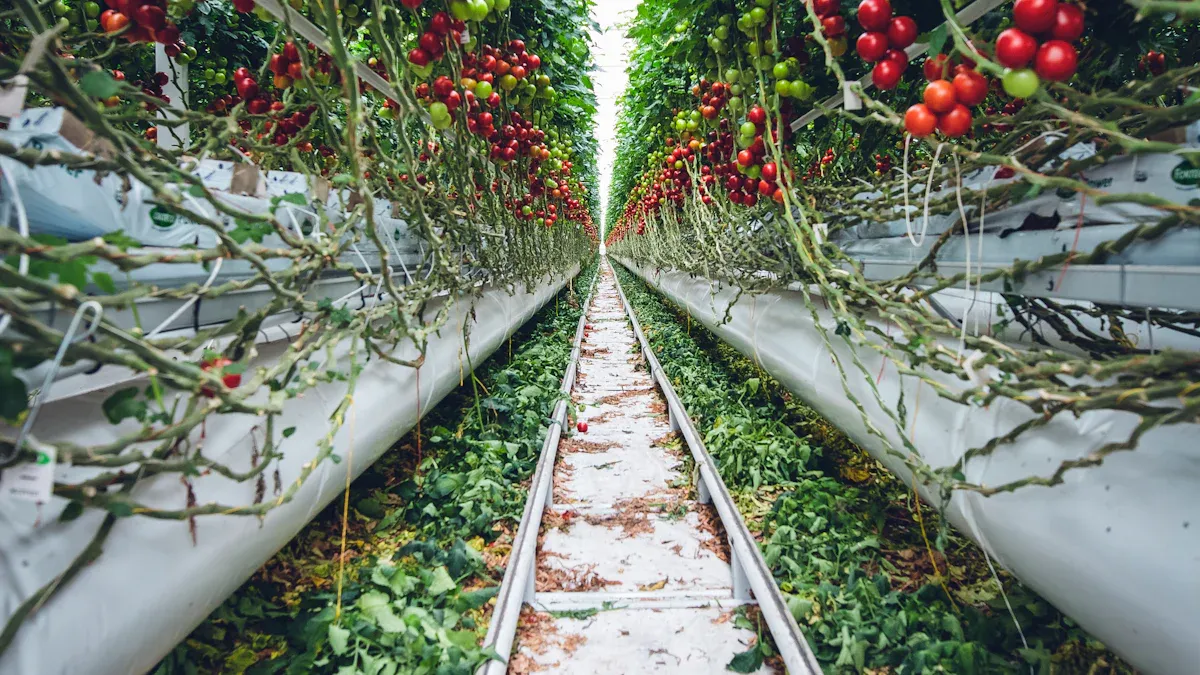
Different hydroponic methods offer unique advantages for commercial growers. Each system caters to specific crop types and operational scales. Understanding these technologies helps growers select the best fit for their large-scale operations.
Nutrient Film Technique (NFT) Hydroponic System
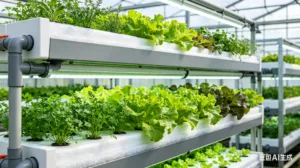
The Nutrient Film Technique (NFT) uses a thin stream of nutrient-rich water. This water continuously flows over plant roots. Plants sit in channels, often made from food-grade plastic. Their roots remain exposed to the flowing nutrient solution. A pump moves the nutrient solution from a reservoir to the top of sloped channels. As the solution flows down, it forms a thin film contacting the plant roots. Excess solution recirculates back to the reservoir for reuse. This thin film provides nutrients. It also allows roots to access oxygen directly from the air, promoting rapid and healthy growth. NFT is ideal for small, fast-growing plants. Leafy greens like lettuce, spinach, and kale thrive in NFT setups. Herbs such as basil and mint also flourish. Strawberries can grow well in an NFT system. This recirculating nature ensures water efficiency and minimizes groundwater contamination.
Deep Water Culture (DWC) Hydroponic System
Deep Water Culture (DWC) systems submerge plant roots directly into a nutrient solution. An air pump and air stone oxygenate this solution. DWC offers resilience; if the air pump fails, roots remain submerged for hours or days. This provides a safety net. DWC also supports larger plants like tomatoes, peppers, and cucumbers, though they may need external support. However, DWC presents challenges. Large water volumes require significant energy for heating or chilling. Maintaining consistent nutrient levels, pH, and dissolved oxygen in large static tanks can be difficult. Cleaning large tanks also requires considerable effort. Poorly managed water can foster root diseases. DWC systems rely on continuous electricity for air pumps, making backup power essential.
Drip Irrigation Hydroponic System
Drip irrigation precisely delivers water and nutrients directly to plant roots. This method minimizes waste and promotes optimal nutrient uptake. Studies show drip systems use up to 80% less water compared to traditional methods. Drip systems adapt to various plant sizes and growth stages. Growers can adjust flow rate and emitter placement. This method suits heavy-fruiting vine crops like tomatoes, cucumbers, and even Cabernet Sauvignon. It supports large plants and their demanding nutrient needs. Drip irrigation excels at maintaining consistent nutrient delivery, crucial for crops with heavy fruit loads. Drip systems are especially suited for larger plants. These plants require larger growing media to retain moisture for extended periods. Preferred slow-draining media include Rockwool, peat moss, or coconut coir.
Aeroponic and Aquaponic Systems
Aeroponic systems suspend plant roots in the air. A fine mist delivers nutrient-rich water directly to the roots. Aeroponics achieves the highest yield, with a 20-45% increase. It also uses the least water, up to 95% less than traditional farming and 50-60% less than hydroponics. Plants mature up to 25% faster. Crops also have up to 30% longer shelf life and reduced water-borne disease risk. However, aeroponics can have higher initial setup costs. It also requires constant misting, so power failures or technical errors can quickly dry out roots. Robust backup systems are essential.
| Feature | Aeroponics | Hydroponics |
|---|---|---|
| Method of Nutrient Delivery | Plants receive nutrients from a mist sprayed onto their roots. | Plants may be suspended in water full-time or fed by an intermittent flow of water. |
| Design and Methodology | Farms are completely controlled and enclosed environments with crops growing suspended in air. | Farms are completely controlled and enclosed environments with crops growing in containers of nutrient-rich solution. |
| Plant Growth and Health | Plants grow in a sealed environment, reducing the risk of bacterial exposure. Roots are suspended, allowing aeration and oxygen intake. | Plants grow in a sealed environment, reducing the risk of bacterial exposure. Roots come into direct contact with nutrient-rich minerals resulting in increased growth. |
Aquaponics combines aquaculture (raising fish) with hydroponics. Fish waste provides nutrients for plants, and plants filter the water for fish. This system minimizes waste, reduces synthetic fertilizers, and produces both fresh produce and protein. It efficiently recycles water and nutrients. However, it requires careful balance to maintain the health of both crops and aquatic life. Its complexity can pose a learning curve.
Vertical Farming Hydroponic System Solutions
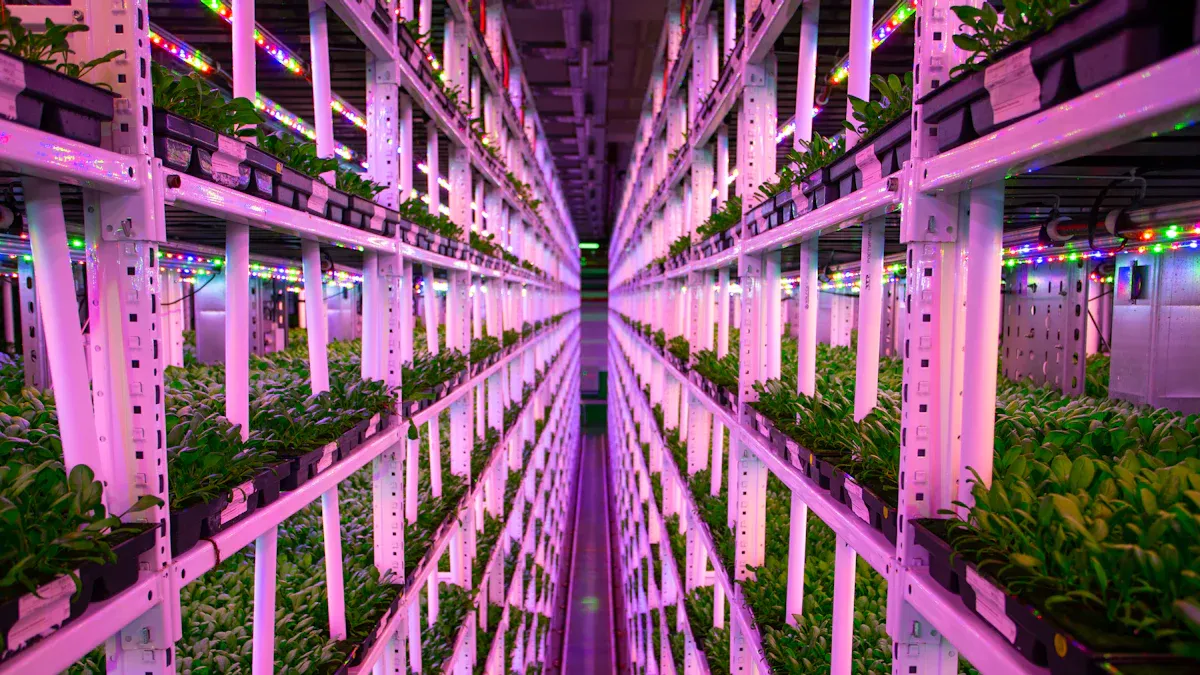
Vertical farming focuses on growing plants in stacked layers or inclined surfaces. It uses soilless designs where roots receive nutrients, water, and oxygen via recirculating hydroponic systems. Crops grow vertically in racks, columns, or walls, utilizing indoor plant growing systems. These gardens leverage robust control of light, temperature, humidity, and nutrient delivery for optimal plant health and yields. Vertical farms are designed for cities, rooftops, warehouses, and even repurposed shipping containers. This makes agriculture possible in land-scarce urban areas.
Vertical hydroponic systems offer numerous benefits for sustainable farming. They allow for greater crop yield in a smaller footprint compared to traditional methods. These systems use significantly less water than traditional soil-based farming through closed-loop recirculation, minimizing waste and preventing nutrient runoff. Another key advantage is the ability to grow crops year-round by controlling environmental factors, ensuring a consistent and reliable food supply. Combining hydroponics with vertical farming allows for greater space and resource efficiency, enhancing productivity in urban farming.
Common vertical farming solutions include:
- Tower system: Plants stack vertically in towers or columns. Nutrient-rich water pumps from the base and flows down through the roots. This system is ideal for leafy greens, herbs, and small vegetables.
- Wall-mounted system: Plants arrange in rows on a vertical surface. This system is often used in indoor spaces. Water and nutrients deliver through a drip irrigation system for precise control.
- Rotating carousel system: This system consists of rotating trays holding plants at various heights. It maximizes space efficiency and ensures all plants receive equal sunlight and nutrients.
Evaluating Potential Partners for Your Hydroponic System Project
Requesting Case Studies and Client References
Prospective partners should provide case studies and client references. These resources offer tangible proof of a company’s capabilities and past successes. Reviewing completed projects helps assess their experience with large-scale commercial operations. Speaking with previous clients provides direct insight into a partner’s reliability, project management, and problem-solving skills. This step ensures the chosen partner has a proven track record in delivering complex hydroponic solutions.
Understanding Warranty and After-Sales Support for Hydroponic Equipment
A clear understanding of warranty terms and after-sales support is crucial. Manufacturers typically offer warranties for hydroponic equipment, often with varying durations for different components. For instance, some parts might have a three-year warranty against manufacturer defects, while pumps might carry a one-year warranty. Customers usually cover shipping costs for defective items, with return shipping sometimes covered for an initial period. Warranties often exclude damage from misuse, improper installation, or lack of maintenance. Companies like Growell offer extended warranties, up to 18 months with product registration, covering defects not caused by human error. They also provide support channels like email and WhatsApp for service requests, requiring purchase IDs and detailed descriptions.
Clarifying Project Timelines and Logistics
Project timelines and logistical considerations require careful discussion. A typical large-scale hydroponic project might take approximately six months from securing funding to the first harvest. This includes phases like site selection, farm barn construction, utility installation, and purchasing seeds and a Hydroponic system. Subsequent steps involve setting up growing and packaging mechanisms, implementing marketing, and hiring staff before planting begins. Successful implementation also demands knowledge of plant biology, nutrient management, and system maintenance. Growers must understand local food safety regulations. They should also prepare for the heavy dependence on technology, as failures in pumps or nutrient delivery can lead to significant crop loss. Regular monitoring and maintenance are essential to mitigate these risks.
Assessing Customization Capabilities for Specific Hydroponic System Needs
Evaluating a partner’s ability to customize solutions is paramount for large-scale commercial hydroponics. Each project has unique requirements. Leading Chinese manufacturers excel at tailoring solutions. They consider specific crop types, local climate conditions, and business goals. These partners offer various hydroponic system types. They also meet unique structural requirements. They integrate advanced automation into their designs. Companies work closely with clients from the initial concept to final operation. This ensures alignment with the client’s vision.
Many manufacturers provide customizable and versatile systems. These systems are available in both horizontal and vertical shapes. This fits various spaces and applications. They often accept OEM (Original Equipment Manufacturer) and ODM (Original Design Manufacturer) services. This allows for brand-specific products. Some even offer the option to print customer logos on LED light products. This level of customization ensures the final Hydroponic system perfectly matches operational needs and branding.
Discussing Budget and Payment Terms
Clear communication regarding budget and payment terms is essential for a successful partnership. Project costs for large-scale hydroponic setups can vary significantly. Factors include system complexity, automation levels, and material quality. Partners should provide a detailed breakdown of all expenses. This includes equipment, installation, training, and ongoing support.
Typical payment structures involve an initial deposit. Subsequent payments align with project milestones. These milestones might include design approval, equipment manufacturing completion, and successful installation. Clients should clarify all payment schedules and methods upfront. They must also understand any potential for hidden costs. Negotiating favorable payment terms can significantly impact project cash flow. A transparent financial agreement builds trust and prevents future disputes.
Key Considerations for Project Implementation of a Hydroponic System
Importance of Clear Communication and Contracts
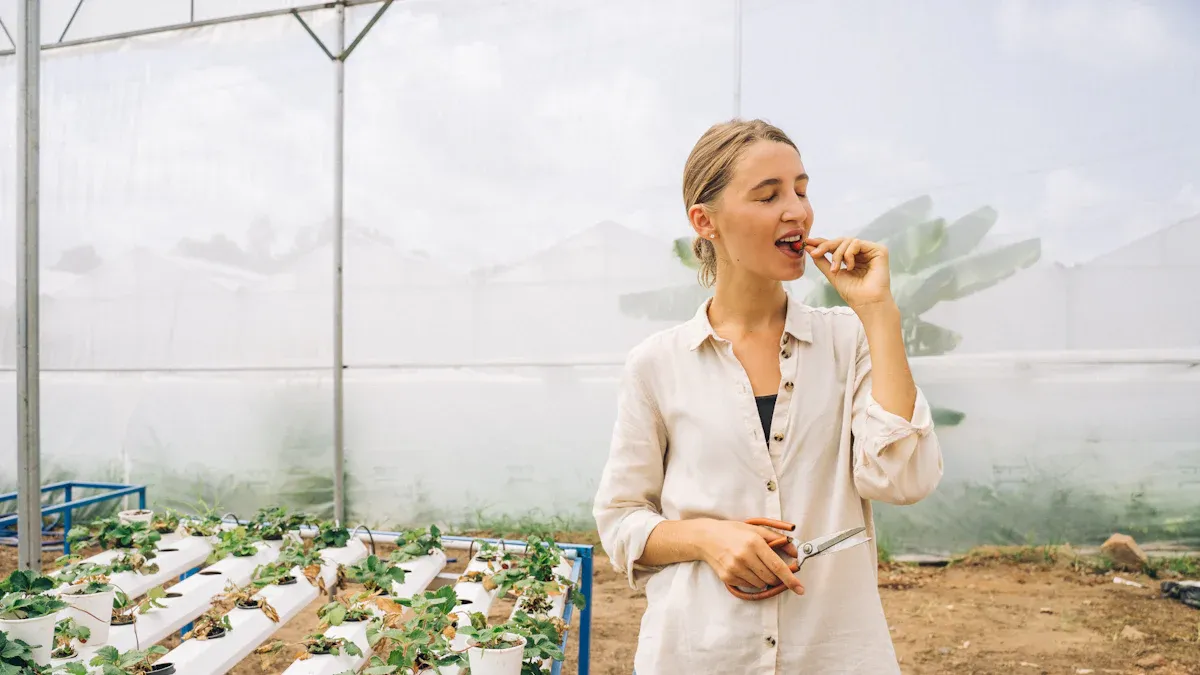
Successful project implementation relies heavily on clear communication and robust contracts. Businesses should build a strong, long-term relationship with their supplier. This approach encourages better terms for a sustained partnership. Clearly communicating order size and long-term plans helps. Suppliers often offer price reductions for larger volumes or repeat business. Obtaining quotes from multiple suppliers benchmarks pricing and provides leverage during negotiations. Avoid aggressive negotiation tactics. Instead, focus on creating a win-win situation. Understanding the supplier’s cost structure helps comprehend their pricing. Be specific about requirements, including quality standards, packaging, and delivery timelines. These details influence the final price. Negotiate not only on unit price but also on payment terms or shipping costs. Ensure all agreed terms are clearly documented in a written contract or purchase order. This prevents misunderstandings for the entire Hydroponic system project.
On-Site Visits and Factory Audits for Hydroponic System Manufacturing
On-site visits and factory audits offer significant benefits. They allow businesses to assess manufacturing capabilities directly. They can inspect production facilities and equipment. These visits also help evaluate quality standards by observing quality control processes firsthand. This ensures operational transparency. It provides insight into the supplier’s overall operations. Verifying supplier reliability is crucial for long-term success. Businesses assess production capacity and quality control during these visits.
The procedures for on-site visits and factory audits are straightforward. Schedule visits in advance. This ensures the factory is prepared and relevant personnel are available. Conduct factory audits, either in-person or virtually. This assesses manufacturing facilities, quality control processes, and production volume capabilities. Inspect production facilities. Review existing equipment and production lines. Evaluate quality control processes. Observe how quality is maintained throughout manufacturing. Assess production capacity. Pay attention to on-time delivery rates and order fulfillment history.
Cultural Considerations in Business Dealings
Understanding cultural nuances in Chinese business negotiations is crucial. Building rapport, showing patience, and demonstrating respect are essential for successful dealings. These elements foster trust and facilitate smoother negotiations. Businesses should approach discussions with an open mind and a willingness to adapt. This helps navigate potential cultural differences effectively.
Logistics and Supply Chain Management for Hydroponic Components
Efficient logistics and robust supply chain management are critical for large-scale commercial hydroponic projects. These elements ensure the timely delivery of all necessary components, from structural materials to advanced control systems. Project managers must meticulously plan the sourcing, transportation, and customs clearance for a diverse range of items. Delays in any part of the supply chain can significantly impact project timelines and budgets.
Sourcing components from China requires careful coordination. Businesses often work with freight forwarders who specialize in international shipping. These experts manage ocean freight, air cargo, and ground transportation. They also handle complex customs procedures and import regulations. A reliable freight partner ensures compliance with international trade laws. They also minimize potential delays at borders.
Inventory management plays a vital role in maintaining project momentum. Companies must track components from manufacturing facilities to the project site. This includes managing warehousing, distribution, and on-site delivery schedules. Effective inventory control prevents shortages of critical parts. It also avoids overstocking, which can tie up capital. A well-managed supply chain ensures all elements for the Hydroponic system arrive precisely when needed. This streamlined process contributes directly to the project’s overall success and operational efficiency.
Future Trends and Opportunities in Chinese Hydroponic System Development
Integration of AI and IoT in Hydroponic Systems
The Chinese market for fully automated Hydroponic system is projected to experience robust growth. Governmental policies promote modern agriculture and technological innovation. This drives the market. It expects to reach over USD 1 billion by 2030. A compound annual growth rate (CAGR) of 16-20% supports this growth. Rapid advances in automation, AI, and IoT integrate into large-scale farms and urban vertical farms. This boosts productivity and resource efficiency. China’s market shifts rapidly towards high-tech, automated systems. This is particularly true in urban vertical farms and large commercial operations. The focus is on maximizing yield per unit area. Intelligent control systems, automation, and precise environmental management achieve this. Strong government support, including subsidies and policy incentives, aims to modernize agriculture. The integration of advanced technologies, including AI and IoT, enhances productivity. It also reduces labor costs and ensures consistent crop quality. Major growth occurs in eastern and southern China’s urban centers.
Sustainable Practices and Resource Efficiency in Hydroponics
Chinese hydroponic development increasingly prioritizes sustainable practices. Growers implement closed-loop systems to conserve water. These systems recycle nutrient solutions, minimizing waste. Energy-efficient LED lighting and climate control systems reduce power consumption. This approach lowers the environmental footprint of large-scale operations. It also promotes responsible resource management. The industry aims for higher yields with fewer inputs.
Expansion into New Crop Varieties and Markets
The Chinese hydroponic sector actively explores new crop varieties. This includes high-value fruits, medicinal plants, and specialty vegetables. Technological advancements enable growers to cultivate a wider range of produce indoors. This diversification opens new domestic and international market opportunities. It also meets evolving consumer demands for fresh, locally grown food. The industry seeks to expand its reach and impact globally.
Government Support and Industry Growth
The Chinese government actively promotes the hydroponics market through various initiatives and policies. These efforts aim to enhance food security and sustainability. Government initiatives supporting agricultural modernization and innovative farming practices are poised for rapid expansion in the hydroponics sector. Supportive government policies drive robust growth in the China Hydroponics Nutrient Market. Policies promoting sustainable farming practices and urban agriculture projects are key government support mechanisms.
China’s vast population and urbanization trends necessitate sustainable food production. This makes hydroponics a strategic priority supported by the government. The sector benefits from strong government support through policies and funding. Government-led initiatives promote high-tech agriculture. Financial incentives, subsidies, and research grants are provided to encourage the adoption of hydroponic technologies. The government has set ambitious targets for increasing domestic food production. This includes a focus on innovative agricultural practices. This leads to expected rises in investments in hydroponics and a supportive regulatory environment fostering growth and innovation.
Technological advancements and increasing consumer demand for fresh produce contribute to robust growth. The increasing need for sustainable and efficient agricultural practices, due to scarce land and water resources, drives market growth. Rising consumer awareness about food safety and quality encourages the adoption of hydroponic methods. Technological innovation, including advancements in nutrient formulation, delivery systems, and automation, improves crop productivity and reduces operational costs. Large-scale commercial operations and extensive R&D activities characterize the market. A strong industrial base, innovative startups, and strategic partnerships aim to scale up production capabilities. Innovation centers on automation, AI-driven environmental controls, and sustainable energy solutions for the Hydroponic system.
Selecting the optimal Chinese partner for large-scale commercial hydroponic setups demands a thorough evaluation. This includes their experience, technological prowess, and comprehensive support. Companies like Kingpeng, Trithm, Miilkiia, and Beijing IEDA Protected Horticulture Co., Ltd. stand out as strong contenders. Each offers unique strengths to align with diverse project requirements. A well-chosen partnership is crucial for establishing a successful and sustainable large-scale Hydroponic system. This ensures long-term operational efficiency and profitability.
FAQ
How do growers choose the right hydroponic system for a commercial farm?
Choosing the right hydroponic system depends on several factors. Growers consider crop type, desired scale, and available space. NFT suits leafy greens, while DWC works for larger plants. Vertical farming maximizes urban spaces. Partners help assess specific needs and recommend the best Hydroponic system.
What are the typical costs associated with a large-scale hydroponic setup in China?
Costs vary significantly. Factors include system complexity, automation level, and material quality. Initial investment covers equipment, installation, and training. Detailed quotes from partners provide accurate estimates. Budget discussions are crucial for project planning and understanding the Hydroponic system’s financial scope.
How long does it take to set up a commercial hydroponic farm?
Setting up a large-scale hydroponic farm typically takes about six months. This timeline includes site selection, construction, utility installation, and system setup. Growers then purchase seeds and begin planting. Project managers plan carefully for timely completion of the Hydroponic system.
What kind of after-sales support can growers expect from Chinese partners?
Reputable Chinese partners offer comprehensive after-sales support. This includes equipment warranties, technical training, and troubleshooting assistance. Many provide remote monitoring and plant science support. They ensure long-term operational success for the Hydroponic system.