
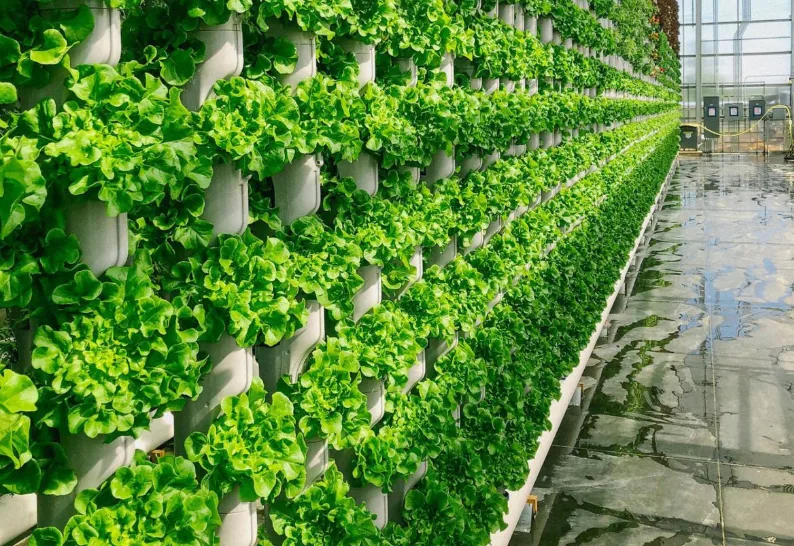
What Are the Best Vertical Farming Systems for Leafy Greens?
Vertical farming systems for leafy greens deliver high yields, efficient land use, and year-round production. For crops such as lettuce, spinach, kale, arugula, and herbs, selecting the right growing system directly affects productivity, water efficiency, and operating costs.
As controlled-environment agriculture expands globally, growers increasingly rely on hydroponic vertical farming systems to maximize output while reducing resource consumption. According to industry estimates, hydroponic leafy green production can reduce water usage by up to 90% compared with conventional field farming when properly managed.
Why Vertical Farming Systems Are Ideal for Leafy Greens
Leafy greens are among the most suitable crops for vertical farming because they have short growth cycles and compact root systems.
Most leafy vegetables reach harvest within 25–45 days and perform well in hydroponic environments. Their relatively low height allows multiple growing layers, increasing production per square meter.
Key advantages include:
- Higher crop density
- Reduced water consumption
- Consistent quality
- Lower pesticide requirements
- Year-round harvesting
- Predictable production planning
Commercial growers often combine vertical hydroponic systems, LED lighting, and environmental monitoring to achieve stable yields regardless of outdoor weather conditions.
Key Requirements for Growing Leafy Greens in Vertical Farming Systems
Successful leafy green production depends on efficient nutrient delivery, oxygen availability, and environmental control.
The most important factors include:
| Requirement | Recommended Range |
|---|---|
| pH | 5.5–6.5 |
| EC | 1.2–2.0 mS/cm |
| Air Temperature | 18–24°C |
| Relative Humidity | 50–70% |
| Light Duration | 14–18 hours/day |
| Dissolved Oxygen | High |
Modern growers frequently integrate IoT monitoring systems, automated irrigation, and climate control equipment to maintain these parameters consistently.
Comparison of the Best Vertical Farming Systems for Leafy Greens
Different vertical farming systems serve different production goals.
| System | Best For | Space Efficiency | Investment Level |
|---|---|---|---|
| NFT Hydroponic Systems | Lettuce, herbs, spinach | High | Moderate |
| Vertical Hydroponic Towers | Urban farms | Very High | Moderate |
| Raft Hydroponic Systems | Large-scale leafy greens | Medium | Moderate |
| Container Plant Factory | Fully controlled production | Very High | High |
| Ebb and Flow Systems | Mixed crop production | Medium | Moderate |
Among these options, NFT and tower systems are generally considered the most efficient for commercial leafy green production. (miilkiia)
NFT Hydroponic Systems: The Leading Choice for Leafy Greens
NFT Hydroponic Systems are widely regarded as the most efficient vertical farming systems for leafy greens.
In the Nutrient Film Technique (NFT), a shallow stream of nutrient solution continuously flows through channels containing plant roots. This design provides both nutrients and oxygen simultaneously.
Advantages include:
- Excellent root oxygenation
- Low water consumption
- Fast crop turnover
- Easy maintenance
- Scalable layouts
Miilkiia offers commercial-scale NFT Hydroponic Systems designed specifically for lettuce, spinach, basil, and other leafy crops. Their systems include specialized Hydroponic Channels, allowing efficient nutrient distribution and simplified cleaning procedures. (miilkiia)
Suggested Internal Links
- NFT Hydroponic Systems: /product/nft-hydroponic-systems/
- Hydroponic Channels: /product-category/product/hydroponic-channels/
Vertical Hydroponic Towers for Maximum Space Utilization
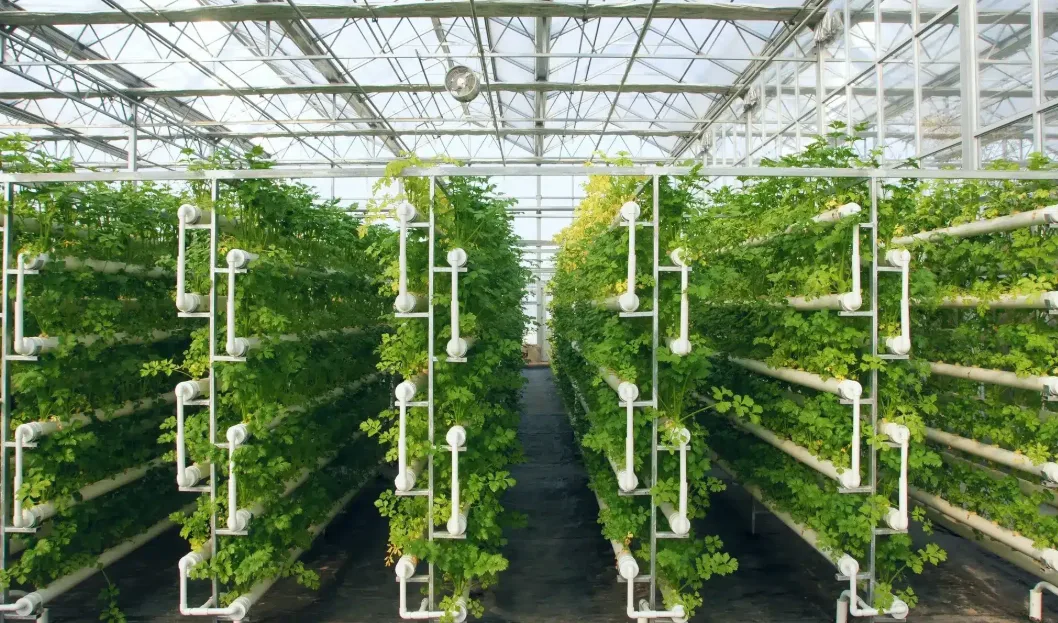
Vertical hydroponic towers provide the highest planting density among commercial growing systems.
These systems stack planting sites vertically, allowing growers to produce significantly more crops within limited floor space.
Benefits include:
- Maximum yield per square meter
- Suitable for urban agriculture
- Reduced facility footprint
- Flexible modular expansion
Vertical tower systems are especially effective for:
- Lettuce
- Kale
- Bok choy
- Basil
- Mint
- Arugula
Miilkiia manufactures Vertical Hydroponic Towers that can be integrated into greenhouse projects or indoor farming facilities. (miilkiia)
Suggested Internal Link
- Hydroponic Towers: /product-category/product/hydroponic-towers/
Raft Hydroponic Systems for Consistent Production
Raft Hydroponic Systems offer exceptional stability for commercial leafy green production.
Also known as Deep Water Culture (DWC), these systems float plants on nutrient-rich reservoirs. The large water volume helps stabilize root-zone temperatures and nutrient concentrations.
Advantages include:
- Stable growing conditions
- Reduced risk of pump failure
- High yield consistency
- Suitable for large-scale production
Commercial greenhouse operations often use raft systems for lettuce production due to their reliability and scalability. (米尔基种植)
Container Plant Factories for Controlled Environment Agriculture
Container Plant Factories provide complete environmental control and year-round production.
These facilities integrate:
- LED lighting
- Climate control
- Hydroponic systems
- Automated irrigation
- Environmental monitoring
Container farms can operate in urban areas, deserts, and regions with extreme climates.
Compared with greenhouse production, container farming offers:
| Feature | Greenhouse | Container Plant Factory |
|---|---|---|
| Natural Light | Yes | No |
| Climate Control | Partial | Full |
| Energy Consumption | Lower | Higher |
| Production Consistency | High | Very High |
Miilkiia also supplies Container Plant Factory solutions for advanced controlled-environment agriculture projects. (米尔基种植)
Suggested Internal Link
- Container Plant Factory: /product-category/product/container-plant-factory/
Choosing the Right Vertical Farming System for Leafy Greens
The best vertical farming system depends on production scale, budget, and available space.
Use the following guidelines:
Choose NFT Systems If:
- Growing lettuce commercially
- Operating greenhouse facilities
- Seeking lower operating costs
Choose Vertical Towers If:
- Space is limited
- Operating urban farms
- Maximizing plant density
Choose Raft Systems If:
- Prioritizing crop consistency
- Producing high volumes
- Managing large facilities
Choose Container Farms If:
- Environmental control is critical
- Local climate is challenging
- Premium-quality production is required
The Role of Irrigation and Climate Control in Vertical Farming Systems
Water management and environmental control are equally important as the growing system itself.
Successful leafy green operations often include:
- Automated Irrigation Systems
- Environment Monitoring Systems
- Ventilation Systems
- Shading Systems
- Temperature Control Equipment
These technologies help maintain optimal growing conditions and improve resource efficiency. Miilkiia integrates these solutions into greenhouse and hydroponic projects worldwide. (miilkiia)
Suggested Internal Links
- Irrigation Systems: /
- Greenhouse Structure: /product-category/product/greenhouse-structure/
- Environment Monitoring Systems: /
External Resources
For additional technical guidance on controlled-environment agriculture and hydroponic production:
- USDA Controlled Environment Agriculture: https://www.usda.gov
- Cornell University Controlled Environment Agriculture Program: https://cea.cals.cornell.edu
- U.S. Environmental Protection Agency Water Efficiency Resources: https://www.epa.gov
How Miilkiia Supports Modern Vertical Farming Projects
Miilkiia specializes in hydroponic systems, greenhouse structures, and vertical farming solutions for commercial agriculture.
The company provides:
- NFT Hydroponic Systems
- Vertical Hydroponic Towers
- Hydroponic Channels
- Greenhouse Structures
- Container Plant Factories
- Climate Control Equipment
According to company information, Miilkiia solutions are used in greenhouse and hydroponic projects across more than 20 countries, supporting commercial growers, research facilities, and urban agriculture initiatives. (米尔基种植)
Conclusion
NFT Hydroponic Systems remain the best overall vertical farming systems for leafy greens because they combine efficiency, scalability, and cost-effectiveness. Vertical hydroponic towers offer the highest space utilization, while raft systems provide exceptional production stability. For fully controlled environments, container plant factories deliver the highest level of precision.
The ideal solution depends on operational goals, available space, and investment capacity, but all successful systems rely on effective irrigation, climate control, and nutrient management.
FAQ
1. Which leafy greens grow best in vertical farming systems?
Lettuce, spinach, kale, arugula, bok choy, basil, cilantro, and mint are among the best crops for vertical farming. These plants have compact root systems, short growth cycles, and strong adaptability to hydroponic cultivation methods.
2. Are NFT systems better than vertical towers for commercial farming?
NFT systems are generally more efficient for large commercial operations because they simplify maintenance and harvesting. Vertical towers maximize space efficiency but may require more complex nutrient distribution and cleaning procedures.
3. How much water can hydroponic vertical farming save?
Hydroponic vertical farming can reduce water consumption dramatically compared with conventional agriculture. According to industry estimates, well-managed systems may use up to 90% less water while maintaining high crop productivity.
4. Can vertical farming systems operate inside greenhouses?
Yes. Many commercial growers combine vertical farming systems with greenhouse structures. This approach uses natural sunlight while benefiting from controlled irrigation, climate management, and high-density crop production.
5. What is the biggest challenge in vertical farming leafy greens?
Energy management is often the largest challenge, especially in fully indoor farms. Lighting, climate control, and water circulation require continuous power. Proper system design and automation help reduce operational costs and improve profitability.


