
Introduction
Hydroponic farming uses a controlled, recirculating water system that sharply reduces losses from runoff, evaporation, and deep percolation—the main reasons soil farming consumes far more water. This article explains where those savings come from, how hydroponic systems reuse water throughout the growing cycle, and which comparison factors matter when evaluating real efficiency. You’ll also see why water productivity has become a strategic issue for agriculture as scarcity, rising pumping costs, and tighter regulation push growers toward more precise production methods. From there, the discussion moves into the mechanics, limits, and practical trade-offs behind hydroponics as a water-saving approach.
Why Water-Saving Agriculture Is a Strategic Priority
Global agricultural operations currently account for approximately 70% of all freshwater withdrawals, representing a massive strain on ecological and economic systems. As aquifers deplete and climate volatility disrupts historical precipitation patterns, transitioning to highly efficient methodologies is no longer optional for large-scale producers. Implementing advanced water saving agriculture practices is a critical mandate for mitigating supply chain risk, ensuring global food security, and maintaining commercial viability in resource-constrained regions.
Drivers: scarcity, costs, and regulation
The urgency surrounding agricultural water conservation is propelled by resource scarcity, escalating operational expenditures, and stringent environmental regulations. Groundwater depletion in major agricultural basins has driven up the energy required for pumping, thereby increasing utility costs linearly with well depth. Furthermore, legislative frameworks, such as the Sustainable Groundwater Management Act (SGMA) in California, mandate that certain agricultural districts reduce water consumption by 20% to 30% over the next decade to achieve long-term basin sustainability. These regulatory pressures force commercial growers to internalize the true cost of water, accelerating the transition toward precision irrigation and controlled environment agriculture.
Definitions and comparison boundaries
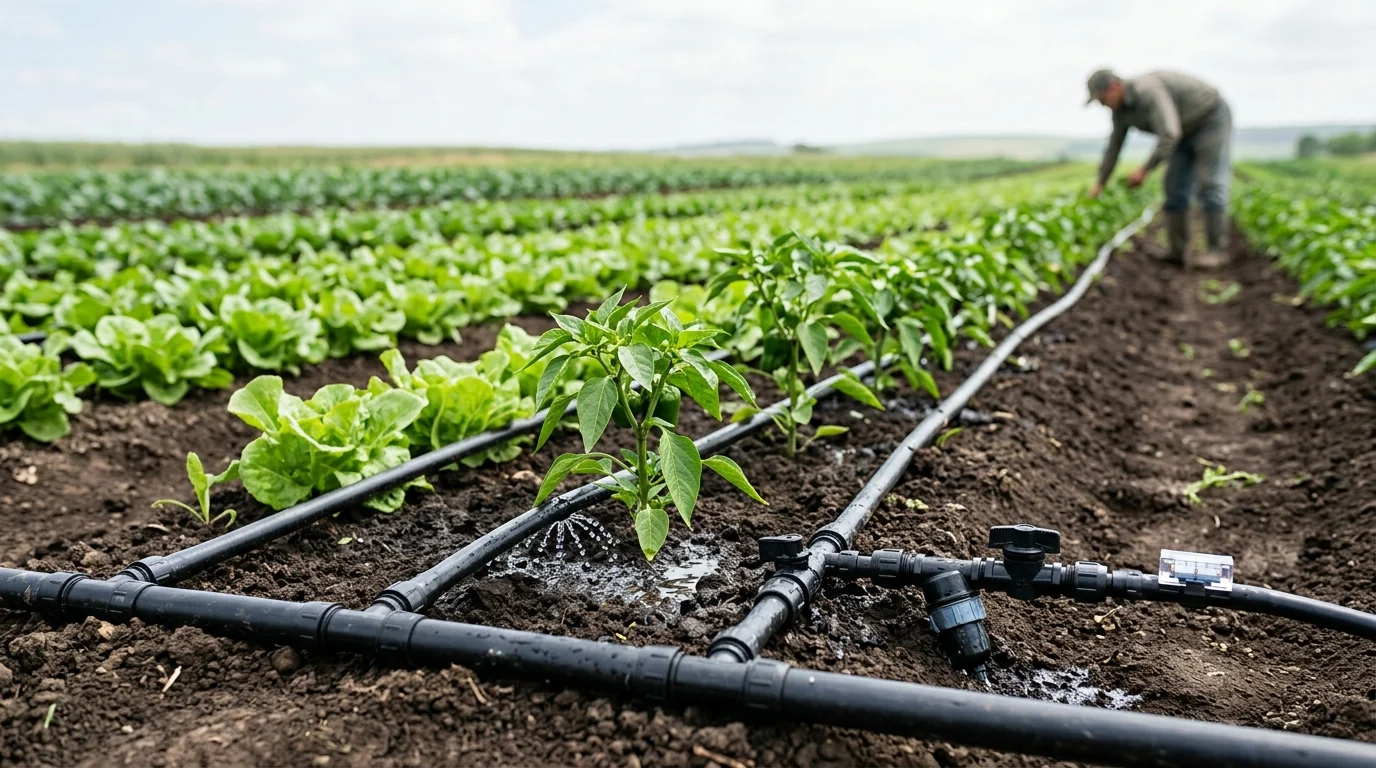
To accurately quantify efficiency gains, it is necessary to establish rigorous comparison boundaries between conventional soil-based cultivation and advanced hydroponic systems. In open-field soil farming, the water balance encompasses plant transpiration, soil evaporation, surface runoff, and deep percolation beyond the active root zone. Conversely, closed-loop hydroponic systems operate within a strictly controlled boundary where structural containment eliminates both deep percolation and surface runoff. By mechanically recycling the nutrient solution, these systems limit volumetric water loss almost exclusively to actual crop transpiration and minor evaporation from the storage reservoir, fundamentally altering the hydrological equation of commercial crop production.
How Hydroponic Farming Saves Water vs Soil Farming
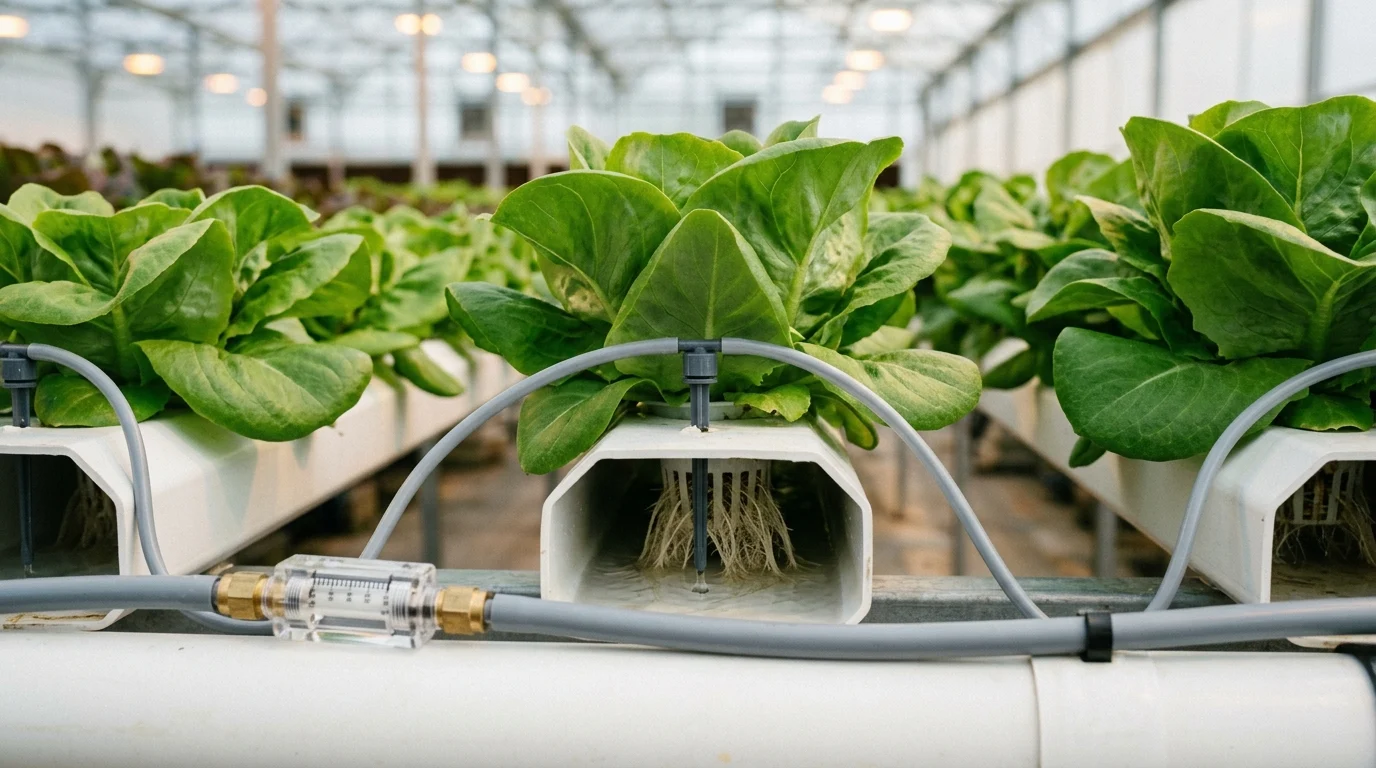
Hydroponic cultivation isolates the crop root zone from the terrestrial environment, replacing traditional soil with a highly calibrated, recirculating solution of water and essential nutrients. This architectural shift from open-field mechanics to engineered containment eliminates the primary vectors of water waste inherent in conventional agriculture.
Process differences that reduce water loss
The fundamental mechanical difference that yields such high efficiency is the implementation of closed-loop fluid dynamics. In operations utilizing the Nutrient Film Technique (NFT) or Deep Water Culture (DWC), water is continuously recaptured, filtered, and recirculated rather than being discharged into the ground. Traditional soil farming requires deliberate overwatering to ensure adequate moisture reaches the root zone before gravity pulls the excess into deep percolation. By contrast, specialized hydroponic systems deliver moisture directly to the root mass with zero percolation loss. Additionally, climate-controlled environments capture transpired moisture through advanced HVAC dehumidification, which can then be condensed, sterilized, and reintroduced into the primary irrigation reservoir.
Key metrics for comparing water use
The standard metric for evaluating agricultural water efficiency is liters of water required per kilogram of harvested yield (L/kg). Measured by this metric, closed-loop hydroponics demonstrates an extraordinary advantage over soil-based equivalents, frequently achieving 85% to 95% reductions in total volumetric consumption.
| Crop Type | Conventional Soil (L/kg) | Closed-Loop Hydroponics (L/kg) | Estimated Water Savings (%) |
|---|---|---|---|
| Lettuce | 250 | 20 | 92% |
| Tomatoes | 215 | 60 | 72% |
| Strawberries | 280 | 45 | 84% |
These metrics illustrate that the elimination of soil evaporation and deep percolation translates directly into massive volumetric savings. For commercial operators, this efficiency drastically reduces the cubic meters of water required per production cycle, safeguarding expected yields against seasonal drought conditions and municipal water restrictions.
When Hydroponic Farming Delivers the Best Water Savings
Despite the compelling efficiency metrics, hydroponic infrastructure is heavily capital-intensive and requires specific operational conditions to achieve an optimal return on investment. Assessing deployment viability requires facility managers to balance localized water scarcity against energy availability and facility construction costs.
How to assess site and crop fit
Hydroponic integration is most strategically sound in arid or semi-arid geographic zones where municipal or agricultural water costs exceed $1,000 per acre-foot, or where severe drought contingencies strictly cap total farm consumption allocations. Furthermore, the economic viability of this product and production methodology relies heavily on crop selection. High-turnover, low-biomass crops such as leafy greens, microgreens, and culinary herbs offer the fastest return on capital due to their rapid growth cycles and high market premiums. Vining crops like tomatoes and cucumbers are also highly compatible, whereas staple commodities like wheat or corn remain economically unfeasible for controlled environment agriculture due to their extremely low market value per square meter and massive spatial requirements.
Trade-offs in cost, energy, and management
While hydroponic systems help address the agricultural water crisis, they introduce significant trade-offs regarding capital expenditures (CAPEX) and operating expenses (OPEX). Commercial greenhouse installations typically require an initial investment ranging from $15 to $35 per square foot, while fully enclosed vertical farms can easily exceed $100 per square foot. More critically, the energy footprint of indoor farming offsets some of the environmental benefits of water conservation. Artificial LED lighting arrays, automated climate control, and continuous fluid pumping demand substantial baseload power. In many commercial facilities, energy consumption accounts for 25% to 30% of total OPEX. Consequently, hydroponic farming delivers the highest net sustainability and profitability when operations are strategically co-located with abundant, low-cost renewable energy grids to offset the intense power requirements of precision environmental control.
Further reading:
Key Takeaways
- The most important conclusions and rationale for water saving agriculture
- Specs, compliance, and risk checks worth validating before you commit
- Practical next steps and caveats readers can apply immediately
Frequently Asked Questions
How much water can hydroponic farming save compared to soil farming?
Closed-loop hydroponics often cuts water use by 85% to 95%, depending on the crop and system design.
Why does hydroponics use less water than soil farming?
It recirculates nutrient water in a closed loop, avoiding runoff, deep percolation, and most soil evaporation losses.
Which crops show strong water-saving results in hydroponic systems?
Lettuce, tomatoes, and strawberries are common examples, with large reductions in liters used per kilogram harvested.
When does hydroponic farming deliver the biggest water-saving advantage?
It performs best in drought-prone regions, areas with high water costs, or sites facing water-use restrictions and compliance pressure.
Where can I explore hydroponic systems related to this topic on Miilkiiablog?
Visit miilkiiablog.com/product-category/systems/ to review hydroponic system options and compare water-efficient setups.