What Is Hydroponic System Selection and Why Does It Matter for Commercial Growers?
Hydroponic growing systems are soilless cultivation methods that deliver nutrient-rich water directly to plant roots, enabling year-round production in controlled environments. For commercial greenhouse operators, selecting the appropriate hydroponic system directly affects crop yield, operational labor costs, and scalability potential. According to the Food and Agriculture Organization (FAO), controlled environment agriculture (CEA) using hydroponic methods can produce 20–40% higher yields per square meter compared with conventional soil-based farming, while consuming up to 90% less water. This efficiency gap has driven rapid adoption: the global hydroponics market was valued at approximately USD 9.5 billion in 2022 and is projected to reach USD 25.1 billion by 2030, reflecting a compound annual growth rate (CAGR) of 12.1%.
The core decision every commercial grower faces is matching a specific hydroponic technique to their crop type, greenhouse structure, climate conditions, and budget. Misalignment — such as deploying a high-maintenance NFT system in a high-heat outdoor environment — leads to root hypoxia, nutrient lockout, and crop failure. This article examines the five most widely deployed commercial hydroponic systems, evaluates their suitability across crop categories and greenhouse types, and provides a structured framework for selection.
What Are the Five Main Types of Commercial Hydroponic Growing Systems?
1. NFT (Nutrient Film Technique) Hydroponic Systems
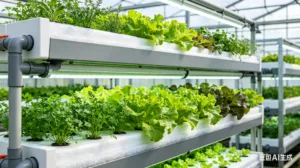
NFT hydroponic systems circulate a thin film of nutrient solution along sloped channels, allowing plant roots to absorb water and nutrients while maintaining continuous oxygen exposure. The shallow flow design minimizes water usage and supports high-density planting layouts.
Best suited crops: Leafy greens including lettuce, spinach, arugula, basil, and herbs. NFT is less appropriate for fruiting crops with extensive root systems.
Key performance characteristics:
| Parameter | Typical Range |
|---|---|
| Water consumption | 10–15 L/m²/day |
| Crop cycle | 25–45 days (lettuce) |
| System footprint | 20–40 plants/m² |
| Initial investment | Medium |
Common failure modes: Pump failure or channel blockage can cause rapid crop loss within hours. Growers must integrate real-time flow monitoring and backup power systems. NFT channels are available in PVC-U black and white hydroponic channels that provide light-reflective surfaces to reduce algae growth.
2. Ebb and Flow (Flood and Drain) Systems
Ebb and flow systems periodically flood growing trays with nutrient solution, then drain back to the reservoir. This cyclical wetting and drying promotes robust root development and oxygenation across a broad range of crop types.
Best suited crops: Tomatoes, peppers, cucumbers, strawberries, and root vegetables. The system’s versatility makes it the most commonly deployed option in Dutch-style greenhouses.
Operational requirements: Timer-based or sensor-triggered pumps. Growers must calibrate flood frequency based on substrate moisture retention, ambient temperature, and plant growth stage. Over-flooding compresses root zones and creates anaerobic conditions; under-flooding induces water stress.
3. Dutch Bucket System (Bato Bucket)
The Dutch bucket system suspends individual plants in separate containers connected to a shared drip irrigation and drainage network. Each bucket typically holds 8–15 liters of substrate (perlite, rock wool, or coco coir), providing a buffer against nutrient fluctuations.
Best suited crops: Fruiting vegetables — specifically tomatoes, bell peppers, cucumbers, and melons. The system is highly scalable and widely used in large-scale multi-span greenhouse installations.
Advantages:
- Isolated root zones prevent disease spread between plants
- Individual bucket management enables crop-specific nutrient targeting
- Low maintenance once automated irrigation is calibrated
- Compatible with substrate cultivation systems for expanded root zone volume
4. Raft Hydroponic Systems (Deep Flow Technique)
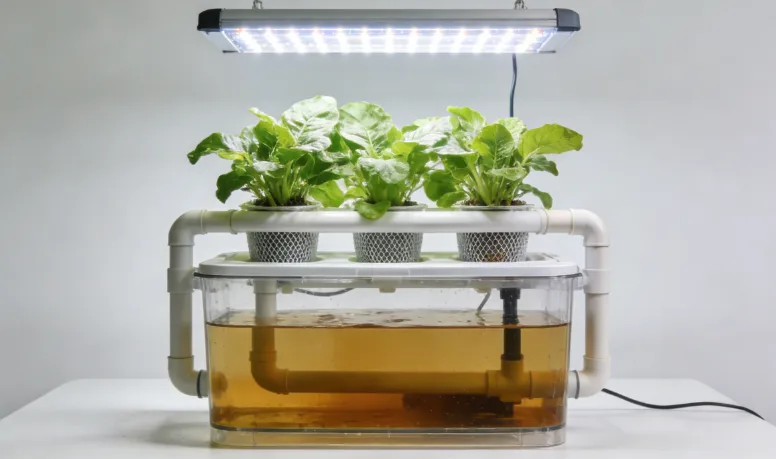
Raft systems float plant containers on the surface of a deep nutrient solution reservoir, maintaining constant root immersion. The stable root zone temperature and uninterrupted nutrient access support exceptionally uniform growth rates.
Best suited crops: Lettuce, basil, chard, and other quick-harvest leafy greens. Not suitable for crops sensitive to waterlogged root conditions.
5. Vertical Hydroponic Towers
Vertical hydroponic towers stack growing channels vertically, multiplying plant density per square meter of greenhouse floor area. This configuration is particularly valuable in space-constrained environments and urban farming applications.
Best suited crops: Strawberries, leafy greens, herbs, and microgreens. Fruiting crops with significant mass (tomatoes, melons) are generally unsuitable due to structural load concerns.
Yield comparison: A single vertical tower with 20 planting pockets yields the equivalent output of approximately 1.5 m² of horizontal growing space. Combined with hanging strawberry systems, vertical configurations can double or triple per-area yield in protected cultivation settings.
Design considerations: Vertical systems require precise drip irrigation to ensure uniform nutrient distribution across all tiers. Pressure-compensating drippers and regular system flushing prevent clogging in the upper planting positions.
How to Match Hydroponic Systems to Greenhouse Structures?
Greenhouse architecture directly constrains which hydroponic systems can be deployed effectively. The following framework links greenhouse types to system recommendations:
- Arched tunnel greenhouse — Low-profile structure with limited vertical clearance. Best paired with NFT channels and raft systems, which operate close to ground level.
- Dutch-style greenhouse — Purpose-built for high-wire crop training and tall indeterminate tomato or cucumber varieties. Compatible with Dutch bucket systems, Ebb and Flow, and vertical towers with extended support structures.
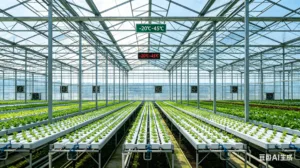
- Multi-span greenhouse — Large-footprint structures with uniform climate control. Support all system types; selection driven by crop mix and automation level. Multi-span greenhouses with integrated IoT environment monitoring systems achieve the tightest climate-nutrition synchronization.
- Sawtooth and Gothic greenhouses — Natural ventilation designs suited to hot-climate operations. NFT and vertical tower systems perform well when paired with proper shading and evaporative cooling.
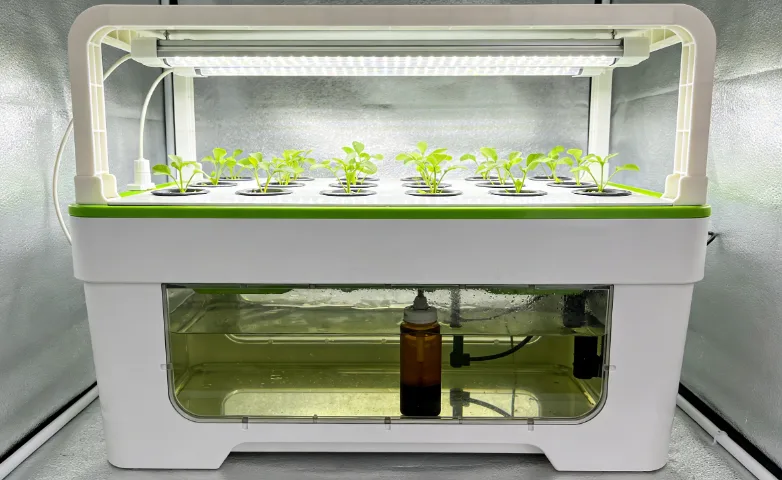
- Container plant factory — A self-contained growing unit designed for urban or remote deployments. Typically outfitted with vertical hydroponic towers and fully integrated irrigation, lighting, and climate control systems.
What Supporting Equipment Is Required for Hydroponic System Reliability?
Hydroponic systems are components within a broader greenhouse ecosystem. Selecting the correct supporting infrastructure prevents system failures that nullify the yield advantages of soilless cultivation.
- Irrigation systems — Pressure-regulated drip systems with filter screens and fertigation injectors ensure precise nutrient delivery. Regular filter maintenance is the single most impactful reliability measure.
- Environment monitoring systems — Real-time sensors measuring pH, electrical conductivity (EC), dissolved oxygen, temperature, and relative humidity enable proactive adjustments before stress symptoms appear in crops.
- IoT systems — Connected platforms that aggregate sensor data and automate irrigation scheduling, lighting cycles, and nutrient replenishment. Commercial operations deploying IoT-driven fertigation report 15–25% reductions in fertilizer consumption.
- Ventilation and temperature control — Hydroponic systems amplify the impact of temperature extremes because roots lack the buffering capacity of soil. Proper ventilation systems and temperature control equipment maintain root zone temperatures between 18–24°C for most crop types.
- Photovoltaic systems — Energy-intensive greenhouse operations benefit from on-site solar generation to offset the power consumption of pumps, LED lighting, and climate control.
- Shading systems — External and internal shading reduces peak greenhouse temperatures during summer months, protecting both crops and hydroponic equipment from heat stress.
What Are the Critical Success Factors When Scaling Hydroponic Production?
Commercial hydroponic operations that achieve sustained profitability share several characteristics:
- Nutrient solution management — Recirculating systems concentrate salts over time through evaporation. Weekly complete solution replacement and daily pH/EC monitoring maintain the 5.5–6.5 pH and 1.2–2.5 mS/cm EC ranges required by most crops. Source water quality (alkalinity, chloride, sodium) must be tested before mixing nutrients.
- Root disease prevention — Soilless media and recirculating solutions can harbor Pythium, Phytophthora, and Fusarium if biosecurity protocols are absent. Physical barriers between systems, UV sterilization of return solutions, and strict worker hygiene reduce pathogen introduction risk.
- Automation investment — Labor is the largest ongoing cost in hydroponic operations. Automated fertigation, climate control, and harvest logistics (conveyor belts, packing lines) reduce per-kilogram labor costs by 30–50% compared with manual operations.
- Crop diversity — Relying on a single crop type creates market price vulnerability. Successful commercial growers typically operate 3–5 crop varieties across multiple hydroponic system types, staggering planting schedules to ensure continuous harvest volumes.
- Energy cost management — In heated greenhouses in temperate climates, energy represents 20–35% of production cost. Combining photovoltaic systems with LED supplemental lighting and heat pump-based temperature control reduces grid dependency and exposure to energy price volatility.
FAQ — Frequently Asked Questions About Hydroponic Growing Systems
Which hydroponic system is best for beginners starting commercial greenhouse farming?
NFT hydroponic systems and raft systems offer the lowest learning curves for new commercial growers. Both methods provide forgiving nutrient management windows and clear visual indicators of system health. However, beginners should start with a single system type and one crop (lettuce or basil) before diversifying. Investing in reliable pH and EC monitoring equipment before purchasing any growing system is the single most cost-effective decision a new operator can make.
How much water does a commercial hydroponic greenhouse consume compared to field farming?
Commercial hydroponic operations consume 80–90% less water than equivalent field crop production, according to the FAO. A one-hectare NFT lettuce operation typically uses 500–800 m³ of water annually, compared with 5,000–8,000 m³ for field lettuce production. Water efficiency stems from closed-loop recirculation, reduced evaporation in climate-controlled greenhouses, and precision delivery to root zones rather than broadcast irrigation across soil.
Can hydroponic systems be used in hot climate regions?
Yes, but hot-climate deployments require specific adaptations. Elevated temperatures accelerate nutrient solution warming, reducing dissolved oxygen and increasing algae growth. Effective hot-climate designs incorporate evaporative cooling, shade cloth, insulated hydroponic channels, and high-frequency irrigation cycling to maintain root zone temperatures below 26°C. Hydroponic farming greenhouses in hot climates demonstrate that productive year-round cultivation is achievable in regions including the Middle East, North Africa, and Southeast Asia with appropriate system design.
What is the ROI timeline for commercial hydroponic greenhouse investments?
Return on investment timelines for commercial hydroponic systems vary significantly by crop, scale, and market channel. Leafy green operations with NFT or raft systems typically reach operational breakeven within 18–30 months. Fruiting vegetable operations using Dutch bucket systems in multi-span greenhouses require 24–42 months due to higher infrastructure costs and longer crop cycles. Energy costs and product pricing (wholesale vs. direct-to-consumer) are the two variables most influencing ROI. Operations selling to premium retail or restaurant channels achieve faster returns than wholesale commodity channels.
How do I prevent root diseases in recirculating hydroponic systems?
Root disease prevention in recirculating hydroponic systems follows three principles: exclusion, dilution, and suppression. Exclusion means preventing pathogen introduction through quarantine protocols for new plant material, worker hygiene, and filtered make-up water. Dilution involves maintaining high-volume recirculation flow so that any introduced pathogen remains below infection threshold concentrations. Suppression employs UV sterilization, hydrogen peroxide dosing (1–3 mL/L of 35% H₂O₂ solution), or beneficial microorganisms (Trichoderma, Bacillus species) to actively suppress pathogenic microbes in the root zone. Weekly system flushing with clean water and complete nutrient solution replacement every 2–3 weeks are standard preventive practices.
“`