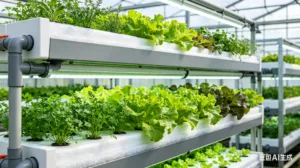
Commercial hydroponics has transformed modern agriculture by enabling year-round food production in controlled environments regardless of outdoor climate conditions. As the global hydroponics market is projected to grow from $9.5 billion in 2022 to over $26.7 billion by 2032 (CAGR 10.9%) according to Precedence Research, more growers are evaluating which system best suits their operational scale, crop targets, and budget. Selecting the wrong system can result in poor yields, excessive energy costs, and costly redesigns. This guide walks through the six most widely deployed commercial hydroponic systems, their ideal use cases, and a structured framework for making a data-informed decision.
Why Commercial Growers Are Switching to Hydroponic Systems
Traditional soil-based farming faces escalating challenges including land degradation, water scarcity, and unpredictable weather patterns linked to climate change. Hydroponic growing eliminates soil as the production medium, delivering nutrients directly to plant roots through water-based solutions.
Water consumption represents the most cited benefit. Hydroponic systems use up to 90% less water than conventional field farming according to the FAO, because closed-loop recirculation captures and reuses nutrient solution instead of allowing it to leach into soil. For operations in arid regions or areas facing water restrictions, this efficiency translates directly into lower utility costs and reduced environmental footprint.
Growth rate acceleration is another documented advantage. The University of Agriculture Faisalabad reports that hydroponically grown lettuce reaches harvest size in 25–30 days compared to 45–60 days in soil, effectively doubling annual yield per square meter. Faster cycles mean growers can schedule multiple harvests per year, improving capital utilization of growing structures and equipment.
Yield predictability distinguishes commercial hydroponics from outdoor growing. Because environmental variables—light, temperature, nutrient concentration, pH—are controlled and monitored through systems such as IoT-enabled nutrient delivery platforms, harvest volumes remain consistent season after season. This predictability is essential for supply agreements with retailers and food service companies that require consistent weekly volumes.
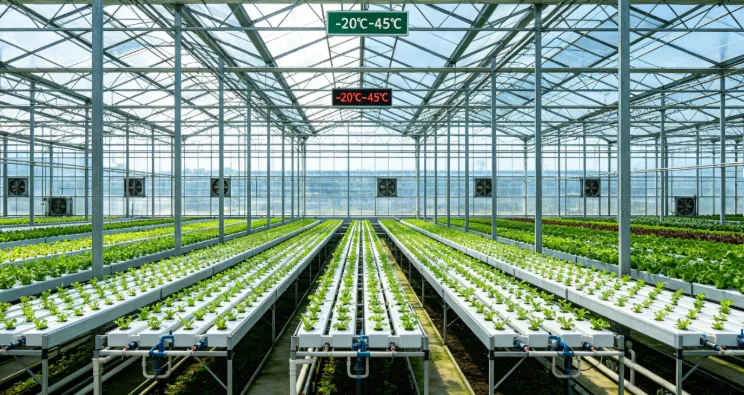
These three factors—water efficiency, accelerated growth cycles, and yield consistency—explain why greenhouse-based hydroponic operations have expanded from roughly 250,000 hectares globally in 2015 to an estimated 500,000+ hectares in 2023 according to HortiDaily market analysis. In parallel, the number of commercial-scale hydroponic farms (facilities exceeding 1,000 square meters) increased by approximately 35% between 2019 and 2023, with the highest growth rates observed in the Middle East, Southeast Asia, and North America. This expansion reflects both maturing technology and increasing retailer demand for year-round local supply.
What Are the Main Types of Commercial Hydroponic Systems?
Commercial hydroponic operations typically deploy one of six system architectures. Each represents a different balance between initial capital cost, operational complexity, crop suitability, and maintenance requirements.
NFT (Nutrient Film Technique) Systems
NFT systems circulate a thin film of nutrient solution along sloped channels, with plant roots exposed to the solution and ambient air simultaneously. This arrangement provides roots with continuous hydration while maintaining high oxygen availability at the root surface. NFT is particularly effective for leafy greens such as lettuce, spinach, arugula, and basil. The PVC-U Black And White Hydroponic Channels offered by Miilkiia are widely used in commercial NFT installations because their light-blocking design prevents algae growth in the nutrient film.
NFT systems suit high-density leafy green production where throughput per square meter drives profitability. However, they are less suited to large-fruit crops and require reliable power supply because any interruption in the recirculation pump can cause rapid crop failure in warm conditions.
Ebb and Flow (Flood and Drain) Systems
Ebb and Flow systems periodically flood growing trays with nutrient solution, then drain the solution back into a reservoir. The flood-and-drain cycle is typically controlled by a timer or sensor-driven irrigation controller. This wetting-and-drying pattern promotes vigorous root development and good aeration between cycles. Ebb and Flow systems accommodate a broader range of crop sizes than NFT and are compatible with substrate-based media such as rockwool cubes, clay pebbles, or coconut coir.
Miilkiia’s Ebb and Flow System configurations are modular and scalable, making them suitable for operations planning incremental expansion.
Dutch Bucket System
The Dutch Bucket system is a specific variant of Ebb and Flow designed for indeterminate fruiting crops such as tomatoes, peppers, and cucumbers. Plants are seated in individual buckets filled with an inert growing medium, and nutrient solution is delivered to each bucket through a drip irrigation line. Dutch Bucket systems provide per-plant granularity in feeding, meaning individual plants can be monitored and adjusted without disrupting neighboring crops. This makes them a preferred choice for high-value fruiting operations where crop quality and uniformity directly affect market price.
Raft Hydroponic Systems (Deep Water Culture)
Raft systems, also called Deep Water Culture (DWC), suspend plants in net pots with roots immersed in a large, aerated reservoir of nutrient solution. Air stones or diffusers maintain dissolved oxygen levels in the water, preventing root hypoxia while minimizing irrigation cycle frequency. Raft systems are among the simplest in terms of mechanical design and are particularly effective for fast-growing leafy greens at scale. Miilkiia supplies Raft Hydroponic Systems designed for container farm and indoor vertical farm environments where simplicity and throughput are priorities.
Vertical Hydroponic Towers
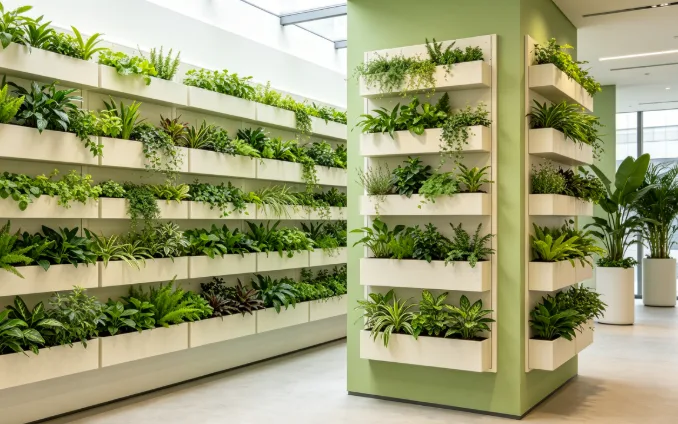
Vertical hydroponic towers stack growing channels or columns vertically, maximizing production per square meter of floor space. This system type is especially relevant for urban and indoor farms where real estate costs are high and floor area is limited. According to a 2023 market analysis by MarketsandMarkets, the vertical farming market reached $5.5 billion in 2023 and is expected to exceed $19 billion by 2030, driven by urbanization trends and consumer demand for locally grown produce. Growers entering this segment frequently deploy vertical hydroponic towers as part of integrated indoor farm designs.
Substrate-Based Drip Systems
Substrate cultivation involves delivering nutrient solution through drip emitters onto a solid growing medium—typically rockwool, coconut coir, perlite, or clay pebbles—in containers or slabs. This method mirrors traditional soil irrigation in its delivery mechanics while preserving the water-efficiency advantages of hydroponics. Substrate drip systems are the most widely used configuration in commercial greenhouse vegetable production globally, particularly for tomatoes and cucumbers. Miilkiia’s Substrate Cultivation System offerings integrate with greenhouse structures and environmental control platforms, providing a turnkey solution for large-scale operations.
Key Selection Criteria: How to Match a System to Your Grow Operation?
No single hydroponic system outperforms all others across every dimension. System selection should follow a structured evaluation process that considers five primary factors.
1. Crop Type and Growth Habit. The most fundamental selection criterion is the crop you intend to grow. Leafy greens (lettuce, spinach, herbs) are best suited to NFT, Raft, and vertical tower systems because these crops have compact root systems and short production cycles. Fruiting vegetables (tomatoes, cucumbers, peppers, strawberries) generally require Ebb and Flow, Dutch Bucket, or substrate drip systems that provide more substantial root zone volume and support.
2. Production Scale and Layout. The physical dimensions of your growing facility constrain system choice. NFT and vertical towers excel in narrow, high-density configurations. Raft systems require large, flat tank surfaces. Dutch Bucket and substrate drip systems work well in both bench-style and floor-level greenhouse layouts. Operations planning to scale gradually should prioritize modular systems that allow incremental addition of growing units without requiring full redesign.
3. Water and Energy Efficiency Targets. Closed-loop recirculating systems (NFT, Ebb and Flow, Dutch Bucket, Raft) generally consume less water than open-drain drip systems. However, recirculation requires more complex water quality management including pH monitoring, electrical conductivity (EC) measurement, and algae or pathogen control. If water availability is a primary constraint, prioritize closed-loop systems with automated monitoring.
4. Automation Level and Operational Expertise. Systems with higher automation—sensor-driven nutrient dosing, climate-controlled irrigation scheduling, IoT-enabled monitoring—reduce labor requirements but demand more technical expertise to operate and maintain. NFT and Raft systems with straightforward recirculation pumps are relatively easy to operate with basic training. Dutch Bucket and substrate systems with drip irrigation, multiple fertilizer injectors, and substrate moisture sensors require more sophisticated knowledge but reward skilled operators with precise control over crop nutrition.
5. Capital Expenditure and Return on Investment Timeline. Costs vary significantly across system types. NFT channel systems and Raft raceways are among the most cost-effective to install per square meter of growing area. Dutch Bucket and fully automated substrate drip installations involve higher equipment costs but often deliver superior returns for high-value fruiting crops. Growers should model payback periods based on projected yield, crop price, and operating cost data specific to their target market. A practical reference point: leafy green operations using NFT or Raft systems typically achieve payback within 2–4 years under normal market conditions, while fruiting vegetable operations using Dutch Bucket or substrate drip systems may require 3–5 years depending on crop pricing and energy costs.
System Comparison: Which Hydroponic Technology Fits Your Goals?
The table below summarizes the key performance characteristics of the six major commercial hydroponic system types to support side-by-side comparison during the selection process.
| System Type | Best Crops | Water Efficiency | Initial Cost | Operational Complexity | Scalability |
|---|---|---|---|---|---|
| NFT | Leafy greens, herbs | Very high | Low–Medium | Low | High (modular channels) |
| Ebb and Flow | Mixed vegetables, lettuce | High | Medium | Medium | High (expandable trays) |
| Dutch Bucket | Tomatoes, peppers, cucumbers | High | Medium–High | Medium–High | Medium (bucket-based) |
| Raft / DWC | Leafy greens | Very high | Low | Low | Very high (raceway arrays) |
| Vertical Towers | Leafy greens, strawberries | High | Medium | Low–Medium | Very high (vertical stacking) |
| Substrate Drip | Tomatoes, cucumbers, peppers | Medium | High | High | Medium (row-based layout) |
Step-by-Step Process for Planning Your Commercial Hydroponic Installation
Planning a commercial hydroponic facility requires disciplined sequencing to avoid costly mid-project changes. The following steps represent the recommended workflow used by professional greenhouse project developers.
Step 1: Define your crop portfolio and production targets. Determine which crops you will grow, target annual yields per crop, and identify your primary sales channels. Retail, food service, and wholesale each have distinct requirements for volume consistency, packaging, and food safety certification.
Step 2: Assess your facility constraints. Evaluate available floor area, ceiling height, access to electrical power, water supply quality and volume, and local climate. These factors determine whether a vertical, single-level, or multi-span greenhouse configuration is appropriate. Miilkiia offers a range of greenhouse structures including arched tunnel, Dutch-style, and sawtooth designs suited to different climatic and operational requirements.
Step 3: Select your system architecture. Using the criteria and comparison framework above, identify the system types best aligned with your crop portfolio and operational goals. Request detailed specifications and reference installations from potential system suppliers.
Step 4: Design the nutrient delivery and environmental control systems. Integrate irrigation controllers, pH and EC sensors, water treatment equipment, and climate management systems (ventilation, shading, supplemental lighting) with your chosen hydroponic system. IoT-enabled monitoring platforms are increasingly standard in new commercial installations. Miilkiia provides IoT Systems and Environment Monitoring Systems designed for integration with their hydroponic platforms.
Step 5: Plan for biosecurity and crop protection. Establish standard operating procedures for pathogen prevention, worker hygiene, and integrated pest management (IPM) before plants are introduced. Hydroponic systems recirculating nutrient solution can spread root-zone pathogens rapidly if biosecurity protocols are not in place.
Step 6: Commission and calibrate. After installation, run the system through a full calibration cycle with water and nutrient solution before introducing crops. Verify pH uniformity, EC distribution, flow rates across all growing units, and alarm responsiveness. Document baseline readings for all sensors and save calibration records as an operational reference. Running a one-to-two-week pilot cycle with a small batch of plants before full production begins is a cost-effective way to identify system weaknesses under actual growing conditions rather than after a full crop cycle has begun.
Emerging Trends Shaping Commercial Hydroponic System Design
The commercial hydroponics sector is evolving rapidly, driven by advances in sensor technology, LED lighting economics, and renewable energy integration.
LED supplemental lighting costs have declined by approximately 60% since 2018 according to the U.S. Department of Energy, making full-spectrum LED installations economically viable for greenhouse operations in northern latitudes where natural light is insufficient for winter production. Combined with spectra tuned to specific crop growth stages, this trend enables year-round production in previously seasonal facilities.
AI-driven nutrient management is gaining adoption among larger operations. Machine learning algorithms analyze sensor data from pH probes, EC meters, and root zone temperature sensors to adjust nutrient formulation dynamically rather than following static schedules. Early commercial deployments report 8–15% reductions in fertilizer consumption alongside improved crop uniformity.
Renewable energy integration is accelerating, particularly for off-grid and container farm installations. Solar-powered pumping and LED lighting combinations are now commercially available, supporting deployment in remote locations and regions with unreliable grid infrastructure.
Frequently Asked Questions About Choosing Commercial Hydroponic Systems
Which Hydroponic System Is Best for Beginners Starting a Commercial Greenhouse?
For growers new to hydroponics, NFT and Raft systems offer the lowest barrier to entry because of their straightforward mechanics and forgiving operational tolerances. Both systems feature simple recirculation designs that require minimal advanced technical knowledge to operate reliably. Beginners should start with leafy greens (lettuce, basil, spinach) before progressing to fruiting crops that demand more precise nutrient management.
How Much Does a Commercial Hydroponic System Cost Per Square Meter?
Costs vary widely depending on system type, automation level, and equipment quality. NFT channel systems typically range from $150 to $400 per square meter for basic configurations. Fully automated substrate drip systems for fruiting vegetables can exceed $800 to $1,500 per square meter when including environmental controls and IoT monitoring. A detailed feasibility study specific to your crop plan and facility is the most reliable method for developing an accurate budget.
Can Hydroponic Systems Be Integrated into Existing Greenhouse Structures?
Yes. Most commercial hydroponic systems are designed for retrofit installation within existing greenhouse frames. NFT channels, Raft raceways, and vertical towers can be mounted to existing bench structures or floor surfaces. Integration with a greenhouse’s existing climate control systems (ventilation, heating, shading) is typically straightforward, though irrigation and nutrient delivery systems may require separate water treatment and monitoring infrastructure.
What Crops Cannot Be Grown Effectively in Hydroponic Systems?
Root vegetables requiring significant underground volume (carrots, potatoes, beets) are generally unsuitable for standard hydroponic configurations because their harvestable organs develop in growing media that is difficult to manage in closed-loop systems. Large tree crops (apples, citrus) and permanent perennial plants are also impractical in most hydroponic greenhouse settings due to space and structural requirements.
How Do I Prevent Root Diseases from Spreading in a Recirculating Hydroponic System?
Root disease management in recirculating systems relies on three primary practices: maintaining water temperature below 72°F (22°C) to suppress Pythium and Phytophthora proliferation, implementing UV-C or ozone water sterilization between the reservoir and supply lines, and conducting regular visual inspections and tissue testing of root systems. Quarantine procedures for new plant material and strict worker hygiene protocols further reduce biosecurity risks.