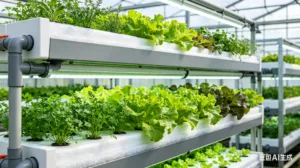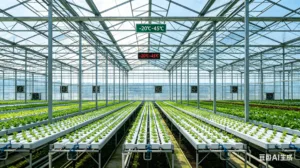

For smart greenhouse construction in China in 2026, partnering with established Chinese agricultural technology firms is crucial. These firms specialize in controlled environment agriculture. Collaborating with international companies that have proven track records and strong local joint ventures in China also offers advantages. Prioritize partners demonstrating advanced AI, IoT integration, and sustainable practices for your smart greenhouse system. Miilkiia Hydroponic system exemplifies innovation in this field. Considering China smart greenhouse suppliers 2026, one must ask, "Who are the top smart greenhouse system providers in China?" Look for the Best Chinese greenhouse automation control system manufacturers to ensure successful Sustainable cultivation.
Key Takeaways
- Choose partners with strong skills in AI and IoT for smart greenhouse systems.
- Look for partners with a good history of finishing projects on time and within budget.
- Pick partners who are financially stable and offer good support after sales.
- Protect your ideas and technology with clear agreements when working with partners.
- Consider both local Chinese firms and international companies with a presence in China.
China’s Smart Greenhouse System Landscape in 2026
Key Growth Drivers
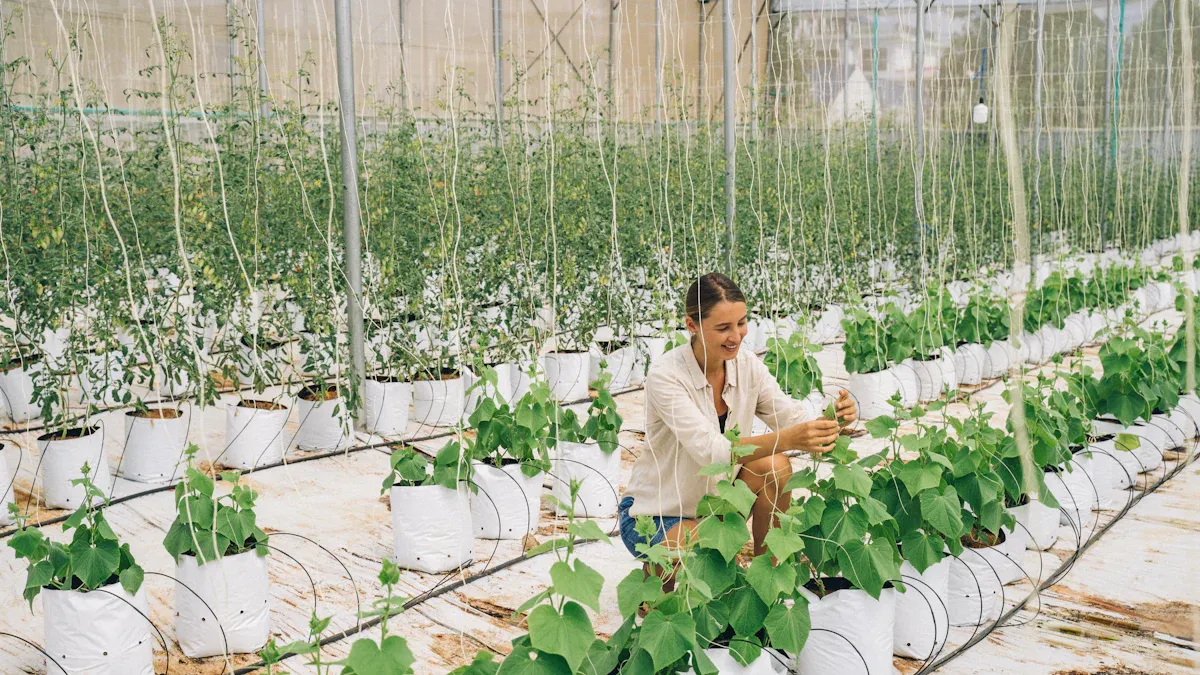
China’s smart greenhouse sector experiences significant expansion. Urbanization drives demand for high-quality, year-round produce. Government initiatives actively promote modern agriculture. They offer subsidies and incentives to ensure food security and sustainable development. A growing middle-class with higher incomes and health consciousness also demands fresh, locally-grown, and organic produce. Rapid population growth fuels urban farming initiatives. Government-backed agricultural modernization efforts enhance scalability through cost-efficient local manufacturing.
Demographic shifts also influence this demand. China faces a ‘super-aging society’ and an ‘acute labor shortage‘. These changes create an urgent need for automation and efficiency in agriculture. This imperative directly drives the adoption of advanced technologies like AI-driven solutions, IoT, and high-precision robotics within a smart greenhouse system. This addresses labor challenges and boosts agricultural output.
Current Technological Trends
Technological advancements are transforming China’s smart greenhouse landscape. AI-powered drones and smart sensors provide real-time monitoring. They track crop health, soil moisture, and pest infestations. This allows for precise intervention. AI and machine learning algorithms predict plant needs. They optimize heating/cooling cycles and fine-tune irrigation schedules. This ensures optimal growing conditions. AI-driven data analytics platforms offer predictive modeling, crop management, and resource optimization. Robotics and automation equipment, including robotic harvesters and planting systems, further enhance efficiency. These innovations make a smart greenhouse system more productive and sustainable, reducing manual labor and resource waste.
Regulatory Support and Green Tech Strategy
The Chinese government strongly supports green technology and agricultural modernization. Policies provide a favorable environment for smart greenhouse development. These policies include substantial subsidies for advanced agricultural technologies and significant investments in sustainable farming practices. The government’s long-term strategy emphasizes food security and environmental protection. This commitment encourages innovation and widespread adoption of smart agricultural solutions. It also attracts both domestic and international investment in the sector, fostering a robust ecosystem for growth.
Identifying Top Chinese Domestic Partners
Identifying the right domestic partners is crucial for successful smart greenhouse construction in China. These partnerships offer unique advantages, including deep market understanding and efficient resource utilization. Companies seeking to build advanced agricultural facilities must carefully evaluate potential collaborators.
Leading Agricultural Tech Companies
China boasts a growing number of innovative agricultural technology companies. These firms specialize in developing and implementing smart greenhouse solutions. They offer a range of products and services, from basic structures to advanced automation systems. For example, Miilkiia Agriculture provides all-in-one solutions. These include advanced hydroponic systems and specialized growing channels. Miilkiia Agriculture also offers high-performance greenhouse screens. Chinese manufacturers lead innovation in greenhouse screens, offering advanced materials for thermal regulation and energy efficiency. The rise of smart technology in greenhouse screen systems is also notable. Companies now offer automated solutions using sensors and data analytics. These systems provide precise control over light and temperature. Another prominent player, Henan Yutuo Agricultural Technology Co., LTD., offers "Smart Greenhouse For Sale" packages. These packages integrate advanced technologies such as automation and IoT for intelligent greenhouse solutions. These companies demonstrate a strong commitment to modernizing agriculture through technology.
Strengths: Local Knowledge and Cost-Effectiveness
Chinese domestic partners bring invaluable local knowledge to any smart greenhouse project. They understand the specific climate conditions, soil types, and agricultural practices prevalent across different regions of China. This local expertise helps optimize greenhouse design and crop selection for maximum yield and efficiency. Furthermore, domestic firms often have established relationships with local suppliers and regulatory bodies. This streamlines the procurement process and ensures compliance with national and regional standards.
Domestic partners also offer significant cost-effectiveness. They benefit from efficient local supply chains and competitive manufacturing capabilities. This reduces overall project costs for materials, labor, and logistics. Their ability to source components locally minimizes import duties and transportation expenses. This cost advantage allows for more scalable and economically viable smart greenhouse projects. It makes advanced agricultural technology accessible to a broader range of investors.
Considerations: Technology and IP Protection
While domestic partners offer many benefits, companies must carefully consider their technological capabilities. Not all Chinese firms possess the same level of advanced AI, IoT integration, or sustainable practices. Thorough due diligence is essential to assess a potential partner’s technological expertise. Companies should examine their track record, research and development investments, and existing project portfolios. This ensures alignment with specific smart greenhouse system requirements.
Intellectual property (IP) protection also requires careful attention. Companies entering partnerships in China must establish clear agreements regarding IP ownership and usage. They should implement robust legal frameworks to safeguard proprietary technologies and designs. This includes detailed contracts, non-disclosure agreements, and clear clauses on technology transfer. Seeking legal counsel specializing in Chinese IP law is highly advisable. This proactive approach helps mitigate risks and protects valuable innovations throughout the partnership.
Evaluating International Partners with a China Presence
Prominent Global Players and Joint Ventures
International companies offer significant advantages in China’s smart greenhouse sector. Many global leaders have already established a strong presence through joint ventures. These partnerships combine international technological prowess with local market insights. For instance, in 2020, Kingkey, a prominent Chinese company, formed joint ventures with several international agritech firms. These collaborations aimed to facilitate technology sharing and development. They significantly enhanced Kingkey’s research and development capabilities. This included advancements in areas such as sophisticated irrigation systems and advanced crop-management software. Such joint ventures allow foreign companies to navigate the Chinese market more effectively. They also provide local partners access to cutting-edge global innovations.
Strengths: Advanced Technology and Global Best Practices
International partners bring advanced technology and global best practices to smart greenhouse projects in China. These companies often possess proprietary technologies in AI, IoT, and automation. Their solutions frequently feature higher levels of precision and efficiency. They have developed these technologies through extensive research and development in diverse global markets. This global experience translates into robust, scalable, and highly optimized smart greenhouse systems. Furthermore, international firms adhere to global best practices in project management, quality control, and operational efficiency. They implement rigorous standards for environmental sustainability and resource management. This ensures that smart greenhouses are not only productive but also environmentally responsible. Their expertise can elevate the overall quality and performance of agricultural projects in China.
Considerations: Investment and Cultural Integration
Partnering with international companies requires careful consideration of investment and cultural integration. International collaborations often involve higher initial investment costs. These costs stem from advanced technology licensing, specialized equipment, and expatriate expertise. Companies must assess the long-term return on investment against these upfront expenses. A thorough financial analysis is crucial to ensure project viability. Additionally, cultural integration presents a significant challenge. Differences in business practices, communication styles, and management philosophies can lead to misunderstandings. Successful partnerships require strong cross-cultural communication strategies and mutual respect. Establishing clear roles, responsibilities, and decision-making processes from the outset helps mitigate these challenges. Investing in cultural training for both local and international teams can also foster a more cohesive and productive working environment.
Key Criteria for Smart Greenhouse System Partner Selection
Selecting the right partner for smart greenhouse construction demands careful evaluation. Companies must assess several critical factors to ensure project success and long-term operational efficiency. A robust partnership forms the foundation for a high-performing agricultural facility.
Technological Expertise in AI and IoT
A partner’s technological prowess in Artificial Intelligence (AI) and the Internet of Things (IoT) stands as a paramount criterion. This expertise ensures the smart greenhouse system integrates advanced automation and data-driven decision-making. Partners should demonstrate a deep understanding of sensor deployment, data collection, and real-time analytics. They must implement AI algorithms for predictive modeling, optimizing environmental controls, and identifying plant health issues. This includes precise control over irrigation, nutrient delivery, lighting, and climate conditions. A strong partner also utilizes IoT devices for seamless communication between various greenhouse components. This creates an interconnected and responsive cultivation environment. Their solutions should offer scalability and adaptability to future technological advancements.
Project Management and Execution Track Record
A partner’s proven track record in project management and execution is indispensable. This includes their ability to deliver complex projects on time and within budget. Companies should examine past projects, focusing on their scope, challenges, and successful outcomes. A commercial-scale hydroponic greenhouse typically requires 8 to 18 months from initial concept to first harvest. This timeline breaks down into distinct phases. Planning and permitting often consume 2 to 6 months. Design and engineering typically take 1 to 3 months. Construction and system installation represent a significant phase, lasting 4 to 8 months. Finally, startup, testing, and grower training require 1 to 2 months. A reliable partner demonstrates proficiency in navigating each of these stages efficiently. They possess robust quality control processes and a skilled workforce. Their experience ensures smooth coordination among various stakeholders and mitigates potential delays.
Financial Stability and Investment Capacity
Assessing a potential partner’s financial stability and investment capacity is crucial for any long-term collaboration. A financially sound partner possesses the resources to commit to the project’s full lifecycle. This includes initial construction, ongoing support, and potential future expansions. Companies should review financial statements, credit ratings, and investment portfolios. A partner with strong financial health can absorb unforeseen costs and maintain operational continuity. They also demonstrate a commitment to research and development, investing in new technologies and innovations. This financial strength provides assurance regarding their ability to fulfill contractual obligations. It also ensures they can offer sustained technical support and upgrades for the smart greenhouse system.
After-Sales Service and Technical Support
A partner’s commitment to after-sales service and technical support significantly impacts a smart greenhouse system’s long-term success. Complex agricultural technologies require continuous monitoring and expert assistance. A reliable partner offers comprehensive support packages. These packages include remote diagnostics, on-site maintenance, and readily available spare parts. They provide prompt responses to operational issues, minimizing downtime and protecting crop yields.
Effective technical support also involves thorough training for local staff. This training ensures operators understand the system’s functionalities and can perform routine tasks. Partners should offer regular software updates and system upgrades. These updates keep the greenhouse operating with the latest efficiencies and features. Proactive maintenance schedules also prevent potential problems before they escalate. This approach guarantees the smart greenhouse system remains productive and profitable for years.
Compliance and Sustainability Standards
Adhering to compliance and sustainability standards is paramount for smart greenhouse construction in China. Partners must demonstrate a deep understanding of local environmental regulations and agricultural policies. They should ensure all materials and operational practices meet or exceed national and regional requirements. This includes proper waste management, water conservation techniques, and energy efficiency measures.
A strong partner also integrates sustainable practices into the greenhouse design and operation. They utilize renewable energy sources, such as solar power, to reduce the carbon footprint. They implement advanced water recycling systems, minimizing water consumption. Furthermore, partners should promote responsible pest management strategies, reducing reliance on harmful chemicals. Choosing a partner committed to these standards ensures the project aligns with China’s green development goals and global environmental best practices.
Intellectual Property Protection Policies
Protecting intellectual property (IP) is a critical consideration when selecting a partner for smart greenhouse projects. Companies invest heavily in developing proprietary technologies, designs, and software. They must safeguard these innovations from unauthorized use or disclosure. A reputable partner establishes clear and robust IP protection policies. These policies outline ownership, usage rights, and confidentiality agreements.
Partners should sign comprehensive non-disclosure agreements (NDAs) and detailed contracts. These legal documents specify how they handle and protect sensitive information. Companies should also verify the partner’s track record regarding IP compliance. They can check for any past disputes or infringements. Registering patents and trademarks in China also provides an additional layer of legal protection. A partner with strong IP protection policies demonstrates trustworthiness and a commitment to ethical business practices. This ensures the security of valuable technological assets throughout the collaboration.
Emerging Partnership Models for Smart Greenhouse System Innovation
Research and Academic Collaborations
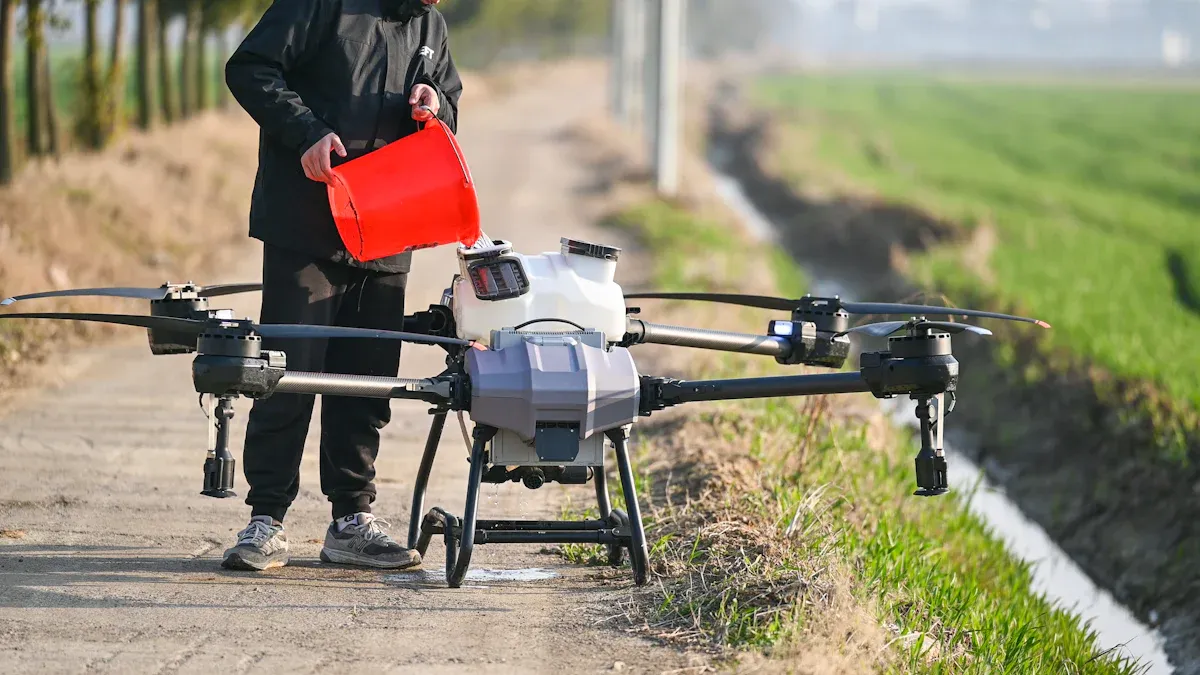
New partnership models are crucial for advancing smart greenhouse technology. Collaborating with research institutions and universities drives innovation. These partnerships provide access to cutting-edge research and development. They also offer specialized expertise in areas like plant science, AI, and environmental engineering. For example, Nanjing University of Information Science and Technology actively researches smart greenhouse system technologies. A Master’s Thesis from 2019 at this university focused on a ‘Greenhouse Remote Environment Monitoring System Based on IoT’. Such collaborations help develop new solutions and refine existing ones. They bridge the gap between theoretical knowledge and practical application.
Specialized Software and Data Analytics Providers
Partnering with specialized software and data analytics providers enhances smart greenhouse operations. These companies offer advanced platforms for data collection, analysis, and visualization. They develop AI algorithms for predictive modeling, optimizing crop yields, and resource management. Their solutions provide insights into plant health, nutrient uptake, and environmental conditions. This allows growers to make informed decisions. These partnerships ensure the smart greenhouse system remains at the forefront of technological efficiency. They also enable continuous improvement through data-driven strategies.
Energy Solution Providers for Sustainability
Integrating sustainable practices requires partnerships with energy solution providers. These collaborations focus on reducing the environmental footprint of smart greenhouses. Professional greenhouse solutions commonly integrate various renewable energy sources. These include solar energy, geothermal heating, e-boilers, thermal energy, and heat pumps. Solar-powered greenhouses, for instance, can reduce electricity costs by 40%. Geothermal heating uses underground heat to maintain stable temperatures. Research also highlights hybrid systems combining wind and solar energy. These systems significantly reduce energy costs and greenhouse gas emissions. Such partnerships ensure the smart greenhouse operates efficiently and sustainably.
To ensure success, prioritize partners who blend advanced technology with deep local market understanding for your smart greenhouse system. Seek collaborators demonstrating robust project execution and strong after-sales support. Conduct thorough due diligence. This due diligence should focus on technological alignment, financial health, and long-term commitment. Such careful selection secures a sustainable and productive agricultural future.
FAQ
What type of partner should a company prioritize for smart greenhouse construction in China?
Companies should prioritize partners with strong technological expertise in AI and IoT. They also need a proven track record in project execution. Look for financial stability and robust after-sales support. A blend of advanced technology and local market understanding is ideal.
Why is AI and IoT expertise crucial for a smart greenhouse system?
AI and IoT expertise ensures advanced automation and data-driven decisions. These technologies optimize environmental controls and identify plant health issues. They create an interconnected and responsive cultivation environment. This leads to higher efficiency and better crop yields.
How important are sustainability standards in partner selection?
Sustainability standards are very important. Partners must understand local environmental regulations. They should integrate practices like renewable energy and water recycling. This ensures the project aligns with China’s green development goals. It also promotes environmental responsibility.
What are the main benefits of partnering with Chinese domestic firms?
Chinese domestic firms offer invaluable local knowledge. They understand specific climate conditions and agricultural practices. They also provide cost-effectiveness through efficient local supply chains. This streamlines procurement and reduces overall project expenses.
How can companies protect their intellectual property (IP) when partnering in China?
Companies protect IP by establishing clear agreements. These include non-disclosure agreements and detailed contracts. These documents specify IP ownership and usage rights. Registering patents and trademarks in China also provides additional legal protection.