
Introduction
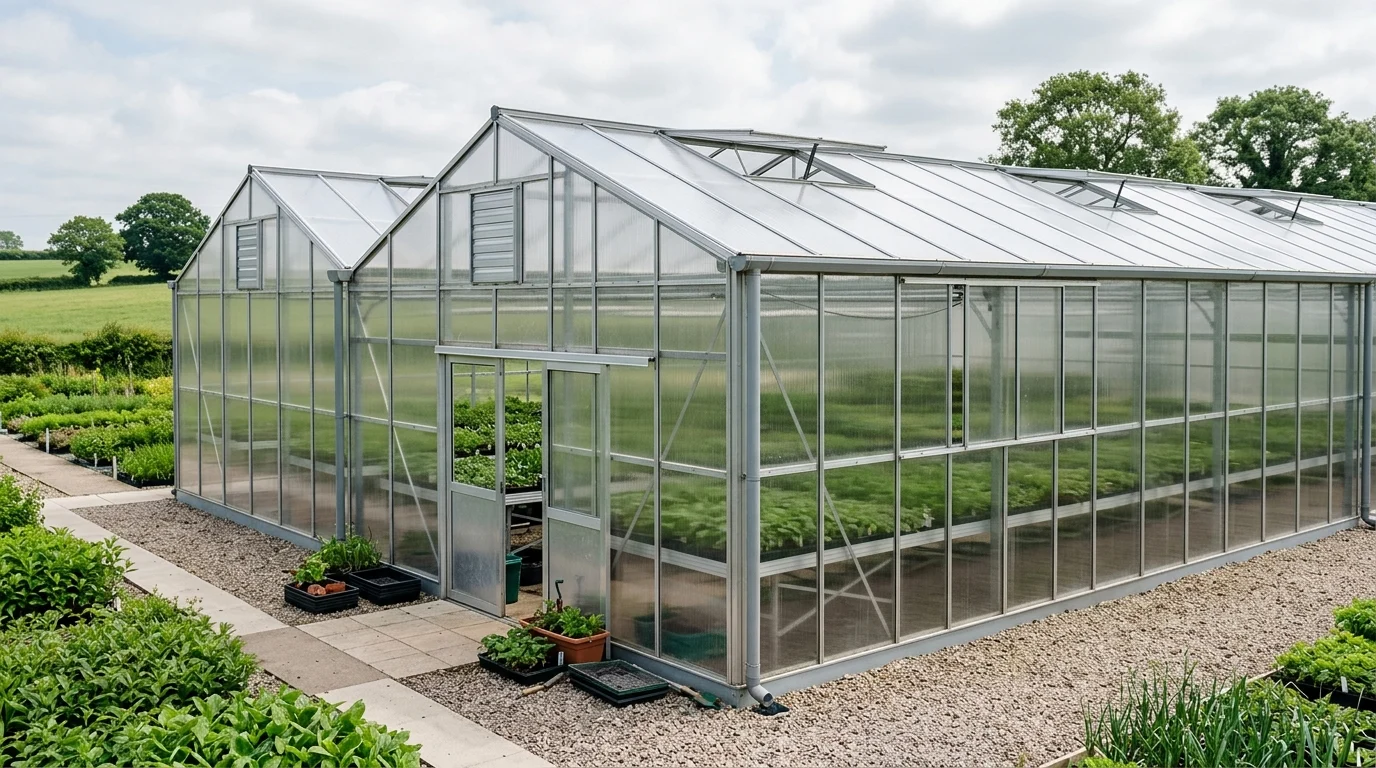
Commercial growers are rethinking greenhouse materials as energy costs rise, weather becomes less predictable, and crop consistency matters more than ever. Polycarbonate greenhouses are gaining ground because they improve insulation, reduce structural risk, and help maintain stable growing conditions across seasons. For operations focused on yield, labor efficiency, and long-term operating costs, the choice is becoming less about upfront price and more about total performance over time. This article explains the practical reasons behind that shift, including how polycarbonate compares with older glazing options and why it is increasingly viewed as a strategic investment in commercial production.
Why Commercial Growers Are Choosing Polycarbonate Greenhouses
Commercial horticulture is experiencing a structural shift in greenhouse glazing preferences, driven by intensifying operational pressures. As profit margins tighten under the weight of resource scarcity and unpredictable weather patterns, operators are pivoting away from legacy materials toward advanced polycarbonate systems to secure stable, year-round production environments.
Energy Costs, Climate Volatility, and Yield Pressure
Energy expenditures now account for 15% to 30% of total operational costs in controlled environment agriculture (CEA). Simultaneously, the frequency of severe weather events has exposed the vulnerabilities of traditional polyethylene films. Polycarbonate panels, particularly multi-wall configurations, offer superior thermal resistance to mitigate these compounding challenges. By maintaining stable interior microclimates despite extreme external temperature fluctuations, these structures protect delicate cash crops while suppressing the heavy HVAC load typically required to hit precise vapor pressure deficit (VPD) targets.
Why Adoption Is Increasing Across Commercial Operations
The accelerating adoption rate across large-scale commercial operations is directly linked to risk mitigation and yield optimization. Polycarbonate provides a unique combination of high light transmission—often exceeding 80% for twin-wall panels—and structural rigidity that supports advanced automation equipment. Furthermore, the material's durability limits the labor-intensive replacement cycles inherent to 6-mil polyethylene films, which require replacement every three to four years. By extending the glazing lifespan to 10 to 15 years, commercial growers stabilize their long-term capital expenditure while securing a robust envelope for high-density cultivation.
How Polycarbonate Greenhouses Compare With Glass and Polyethylene
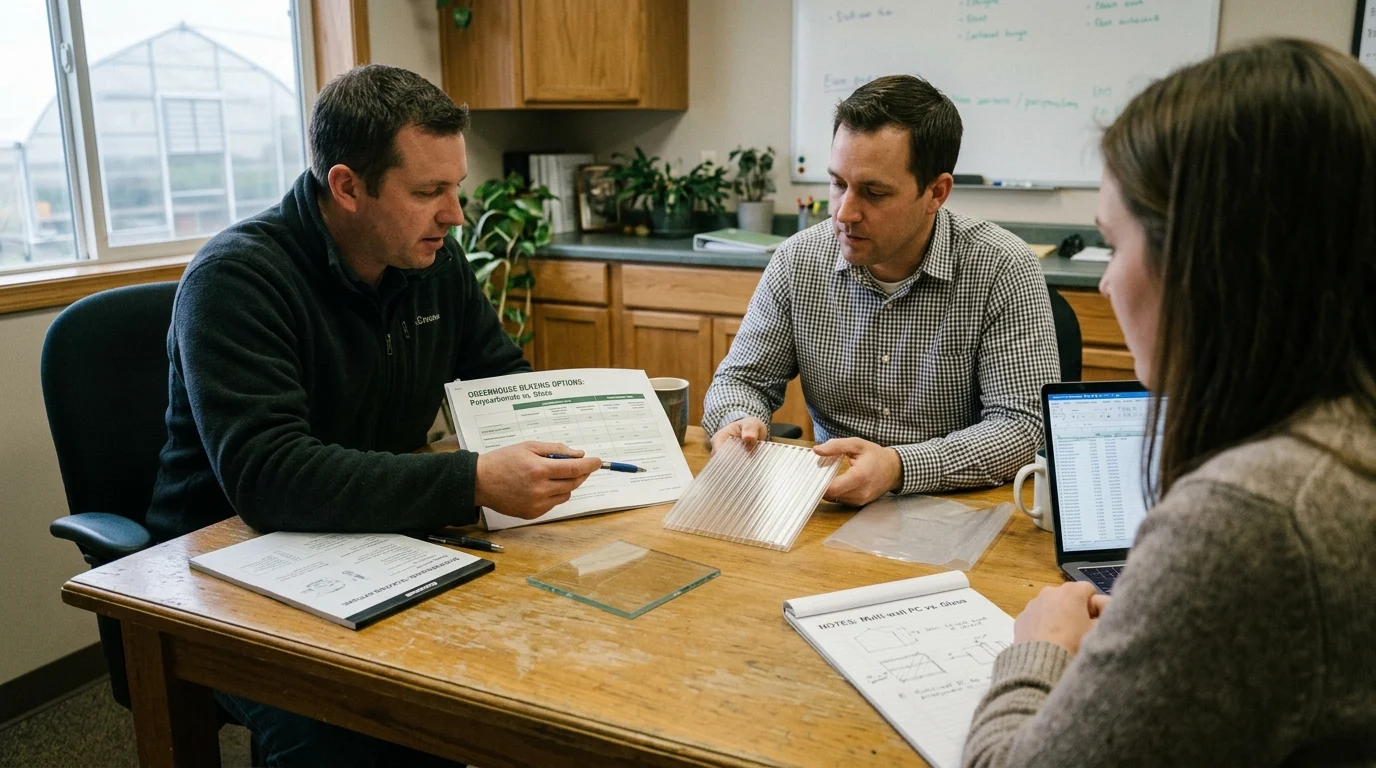
Selecting the optimal greenhouse glazing requires balancing light transmission, thermal efficiency, and structural requirements. Commercial operators must evaluate polycarbonate against the historical industry standards: horticultural glass and extruded polyethylene film.
Insulation, Light Diffusion, and Impact Resistance
The physical properties of these materials dictate their functional performance in a commercial setting. Glass offers unparalleled clarity and longevity but suffers from poor thermal retention and high fragility. Polyethylene film provides an economical, easily deployable barrier but lacks impact resistance and insulation. Multi-wall polycarbonate bridges this gap, delivering high impact resistance—up to 200 times greater than glass—while naturally diffusing light to prevent canopy burn and enhance lower-leaf photosynthesis.
| Glazing Material | Typical R-Value | Light Transmission | Impact Resistance | Structural Load Requirement |
|---|---|---|---|---|
| Single-Pane Glass (3mm) | 0.90 | 90% | Low | High |
| Double Poly Film (6-mil) | 1.50 – 1.70 | 80% | Very Low | Low |
| Twin-Wall Polycarbonate (8mm) | 1.60 – 1.72 | 80% – 82% | Very High | Moderate |
Lifecycle Cost and Maintenance Differences
When analyzing lifecycle costs, the economic profiles of these materials diverge significantly. Polyethylene film requires the lowest initial capital expenditure, typically ranging from $0.10 to $0.20 per square foot, but demands frequent labor-intensive replacements and incurs higher winter heating penalties. Glass systems demand robust, heavy-duty steel framing to support the glazing weight, pushing initial structural costs significantly higher. Polycarbonate panels, averaging $1.50 to $2.50 per square foot for standard multi-wall variants, present a moderate initial investment. However, the reduced structural steel requirements compared to glass, combined with lower heating costs and a 10-to-15-year maintenance-free lifespan, yield a highly favorable return on investment for mid-to-long-term commercial strategies.
Technical Advantages and Limitations of Polycarbonate Greenhouses
While polycarbonate offers a compelling value proposition, a rigorous technical assessment is necessary to understand how the material behaves under continuous commercial stress. Evaluating both its structural advantages and its degradation profile ensures accurate yield forecasting and maintenance planning.
Climate Control and Energy Efficiency Benefits
The multi-cellular extrusion of twin-wall and corrugated polycarbonate inherently traps air, functioning as a highly effective thermal barrier. In colder climates, an 8mm twin-wall panel can reduce heating costs by 20% to 30% compared to single-layer glass or thin films. This thermal efficiency stabilizes the internal environment, allowing climate control systems to operate within narrower, more efficient bands. Additionally, the cellular structure fractures direct sunlight, creating naturally diffused light. This diffusion penetrates deeper into the plant canopy, reducing internal shading and driving uniform crop development without the localized heat spikes associated with direct solar radiation.
Operational Performance for Commercial Growers
Beyond thermal dynamics, polycarbonate panels are engineered to support rigorous operational demands. Modern commercial-grade panels feature co-extruded UV-resistant layers that protect both the crop and the polymer matrix from ultraviolet degradation. Furthermore, advanced polycarbonate systems incorporate factory-applied anti-condensate (anti-drip) coatings. By altering the surface tension of the interior panel, these coatings force condensation to sheet down the walls rather than dripping onto the canopy, thereby significantly reducing the risk of fungal pathogens like Botrytis cinerea and maintaining optimal light transmission during high-humidity cycles.
Capital Cost and Panel Aging Considerations
Despite these advantages, polycarbonate is not without limitations. The initial capital cost remains higher than polyethylene, requiring a longer payback period. More critically, polycarbonate is subject to photo-oxidation and weathering over its lifecycle. Even with UV protection, panels typically experience a light transmission loss of 1% to 2% per year. After a decade, a panel that originally transmitted 82% of photosynthetically active radiation (PAR) may drop to 70%, potentially impacting the yields of light-hungry crops. Additionally, polycarbonate has a high coefficient of thermal expansion; a 24-foot panel can expand by up to 0.25 inches during peak summer temperatures, necessitating specialized aluminum extrusion profiles and gasket systems to prevent buckling.
How to Evaluate Polycarbonate Greenhouses Before Investing
Transitioning to a polycarbonate greenhouse requires meticulous procurement protocols. Commercial operators must match material specifications to their distinct geographic and agronomic requirements to prevent costly retrofits and ensure regulatory compliance.
Key Specifications: Panel Type, Thickness, and Coatings
The foundational decision centers on panel architecture and thickness. Corrugated single-layer polycarbonate (typically 0.8mm to 1.2mm thick) offers excellent light transmission (up to 90%) but minimal insulation, making it suitable primarily for mild climates or shade-focused operations. For true climate control, multi-wall panels are mandatory. An 8mm twin-wall panel serves as the industry standard for temperate zones, while extreme northern latitudes may require 16mm triple-wall or 5-wall configurations to maximize thermal retention, albeit at the cost of reducing light transmission to roughly 60% to 70%. Buyers must also verify the presence of integrated anti-drip and UV-blocking coatings, which are critical for commercial viability.
Supplier, Compliance, Warranty, and Logistics Checks
Due diligence extends beyond the panel to the supplier's engineering certifications and warranty structures. Greenhouses must meet local building codes, requiring verified engineering stamps for environmental stresses. Operators should demand structural calculations proving the system can withstand specific localized threats, such as a 90 mph wind load or a 30 psf (pounds per square foot) snow load. Furthermore, buyers must scrutinize the warranty terms; a standard commercial warranty should guarantee against hail damage and stipulate no more than a 6% loss in light transmission over a 10-year period. Fire ratings, specifically ASTM E84 Class A or equivalent, are also essential for insurance compliance and operational safety.
| Specification Category | Minimum Commercial Requirement | Premium/High-End Standard |
|---|---|---|
| Panel Thickness (Multi-wall) | 8mm Twin-Wall | 16mm+ Multi-Wall |
| Snow Load Capacity | 20 psf | 40+ psf |
| Wind Load Capacity | 80 mph | 110+ mph |
| Light Transmission Loss Warranty | < 10% over 10 years | < 6% over 10 years |
A Step-by-Step Evaluation Process
To systematize the investment, operators should follow a phased evaluation process. First, conduct a microclimate analysis using historical meteorological data to determine necessary R-values and structural loads. Second, consult with agronomists to establish the exact Daily Light Integral (DLI) requirements for the target crop, ensuring the chosen panel thickness will not overly restrict PAR. Third, audit potential suppliers for complete integration capabilities, verifying that their aluminum extrusion systems, ridge vents, and shade curtains are fully compatible with the chosen polycarbonate profiles. Finally, calculate the total landed cost, factoring in the specialized flatbed freight logistics required to transport oversized panels without inducing micro-fractures.
When Polycarbonate Greenhouses Make Strategic Sense
Deploying a polycarbonate greenhouse is a strategic capital allocation that yields the highest returns under specific operational and environmental conditions. Understanding where this material excels allows commercial growers to align their infrastructure with their long-term business objectives.
Best-Fit Climates, Crops, and Operation Types
Polycarbonate systems deliver maximum utility in regions characterized by high climate volatility, heavy snow loads, or extreme temperature differentials. Operations located in USDA Hardiness Zones 3 through 6 benefit immensely from the thermal retention of multi-wall panels, preventing catastrophic crop loss during sudden freezes. Agronomically, these structures are the preferred environment for high-value, light-sensitive crops that thrive under diffuse light, such as commercial cannabis, premium floriculture, and hydroponic vine crops (tomatoes, cucumbers, and peppers). The diffuse light penetrates deep into dense canopies, activating secondary bud sites and increasing overall marketable yield per square meter.
Balancing Upfront Cost Against Long-Term Value
Ultimately, the decision hinges on a long-term return on investment (ROI) calculation. While the initial cost of a fully engineered polycarbonate facility may span $15 to $25 per square foot—significantly higher than a basic high tunnel—the operational savings rapidly offset the premium. By eliminating the tri-annual replacement costs of polyethylene film, reducing winter heating fuel consumption by up to 30%, and lowering the insurance premiums associated with hail and wind damage, commercial operators typically achieve a breakeven point on the glazing upgrade within 4 to 6 years. For enterprises focused on scaling production, automating environments, and securing stable, year-round yields, polycarbonate represents a resilient and economically sound infrastructure choice.
Key Takeaways
- The most important conclusions and rationale for Polycarbonate Greenhouses
- Specs, compliance, and risk checks worth validating before you commit
- Practical next steps and caveats readers can apply immediately
Frequently Asked Questions
Why are commercial growers switching to polycarbonate greenhouses?
They offer better insulation, strong impact resistance, and longer service life than polyethylene film, helping reduce energy use, replacement labor, and weather-related crop risk.
How does polycarbonate compare with glass for commercial greenhouse use?
Polycarbonate is lighter, far more impact resistant, and insulates better than glass. It also diffuses light, which can improve canopy uniformity and reduce leaf burn.
Can polycarbonate greenhouses lower heating costs?
Yes. Multi-wall polycarbonate traps air for better thermal performance, and 8mm twin-wall panels can cut heating costs by about 20% to 30% in colder climates.
How long do polycarbonate panels typically last?
Commercial-grade polycarbonate panels generally last 10 to 15 years, much longer than 6-mil polyethylene film that often needs replacement every 3 to 4 years.
Is polycarbonate a good choice for harsh weather areas?
Yes. Its high impact resistance and structural rigidity make it well suited for regions with hail, wind, or sudden weather swings where film coverings are more vulnerable.