
Polycarbonate Greenhouses vs Tunnel Greenhouses: Which Is Better?
Polycarbonate greenhouses and tunnel greenhouses solve different production problems, so the better choice depends on climate, crop value, and operating budget. In commercial greenhouse planning, the right greenhouse types decision is less about appearance and more about insulation, durability, and long-term control.
Polycarbonate Greenhouses vs Tunnel Greenhouses: The Core Difference
The main difference is that polycarbonate greenhouses prioritize environmental stability, while tunnel greenhouses prioritize low-cost coverage and fast deployment. For a commercial greenhouse, that trade-off affects heating demand, light quality, maintenance, and how reliably the structure performs across seasons.
Polycarbonate sheets are commonly selected when growers need stronger insulation and impact resistance. Tunnel structures, usually covered with film, are often chosen for temporary, seasonal, or budget-sensitive projects. As the FAO notes on climate risk, agriculture is increasingly shaped by heat, water stress, and weather volatility, which makes structure choice more important than ever.
What a Commercial Greenhouse Needs From a Structure
A commercial greenhouse should support stable production, not just shelter plants from rain. The structure must balance light transmission, ventilation, thermal retention, and service life, because these factors directly affect crop quality and operating cost.
In controlled environment agriculture, the structure is only one part of the system. Coverage, irrigation, shading, ventilation, and monitoring work together to shape results, which is why greenhouse structure comparison should always include the full production system. The UNDP’s controlled environment agriculture report also frames greenhouses as part of a broader technology stack for resilient food production.
| Factor | Polycarbonate Greenhouse | Tunnel Greenhouse |
|---|---|---|
| Initial cost | Higher | Lower |
| Insulation | Better | Weaker |
| Durability | Stronger | Moderate |
| Deployment speed | Moderate | Fast |
| Best use | Year-round commercial production | Low-cost or seasonal growing |
Why Polycarbonate Greenhouses Perform Better in Harsh Conditions
Polycarbonate greenhouses usually perform better when temperature swings are large or weather is severe. Their multiwall panels provide better insulation than simple film coverings, and they also offer strong impact resistance for hail, wind, and handling stress.
For growers comparing greenhouse types, this matters most in cold regions and in markets where energy costs are high. Better insulation can reduce night heat loss, improve crop consistency, and support year-round production. Industry guidance from BC Greenhouses’ glazing guide notes that polycarbonate is commonly chosen to extend the season and improve insulation.
Polycarbonate also helps when a project needs a more permanent commercial greenhouse profile. That includes high-value crops, research facilities, and operations that rely on predictable climate control rather than simple weather protection.
Why Tunnel Greenhouses Still Make Sense for Many Growers
Tunnel greenhouses remain attractive because they are economical, simple, and fast to install. For growers testing a new site or expanding quickly, the lower upfront cost can be decisive.
A tunnel greenhouse is often sufficient for short-cycle crops, seasonal production, and projects where the main goal is crop protection rather than precise climate control. In mild climates, tunnel structures can deliver acceptable performance without the capital intensity of a more advanced commercial greenhouse.
However, tunnel systems usually need more attention to ventilation and temperature management. In hot weather, they can overheat quickly, and in cold weather they lose heat faster than insulated structures. That means the savings at installation may be offset by higher operational variability later.
Climate Should Drive the Greenhouse Types Decision
Climate is the strongest predictor of which greenhouse types will work best. In hot regions, ventilation and shading often matter more than insulation, while in cold regions, thermal retention becomes the priority.
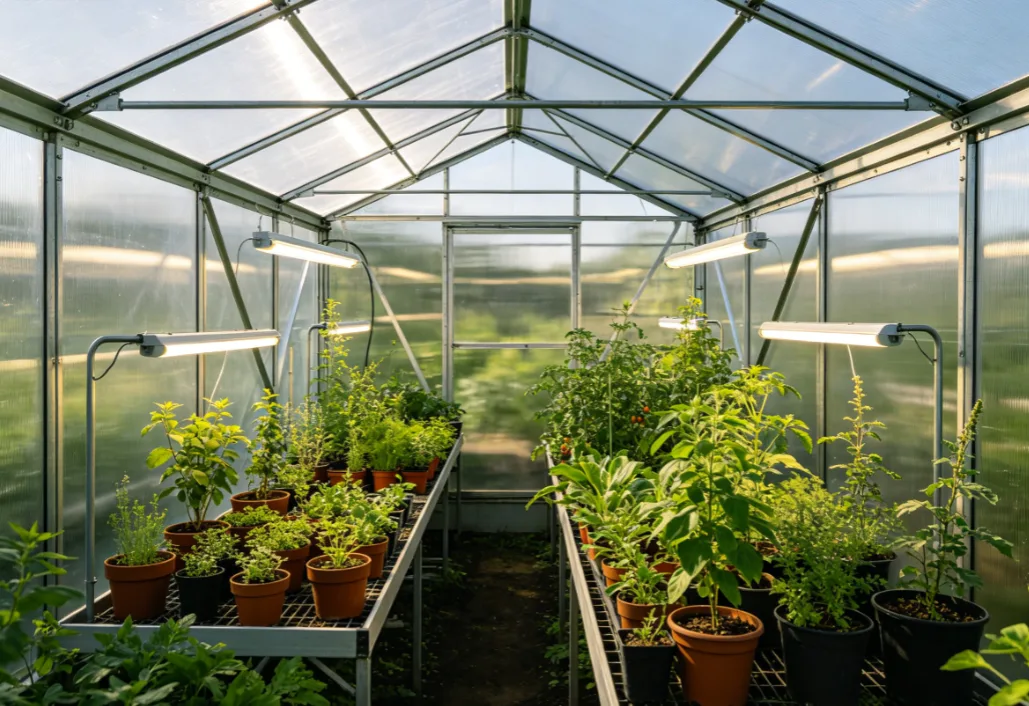
If the project is in a tropical or subtropical area, a tunnel greenhouse may work only if ventilation is excellent and crop value is moderate. If the project is in a cold or windy region, a polycarbonate greenhouse usually provides a more stable production environment. The IPPS greenhouse covering update explains that transmitted light depends on material, orientation, and structural design, which reinforces the need to match the cover to the site.
For commercial greenhouse planning, this means the right answer is rarely universal. The best structure is the one that fits local weather, crop sensitivity, and the operator’s tolerance for risk.
Cost, Energy, and Maintenance: The Real Commercial Trade-Off
Total cost is more important than purchase price alone. A tunnel greenhouse is cheaper to build, but it may require more frequent replacement, more manual adjustment, and less stable climate control.
Polycarbonate greenhouses cost more upfront, yet they often reduce long-term losses through better insulation and longer service life. For a commercial greenhouse operator, that can translate into more predictable yields and lower seasonal disruption. According to USDA’s agricultural statistics resources, U.S. agriculture relies heavily on accurate production planning and operational data, which is one reason growers increasingly evaluate lifecycle cost rather than only initial spend.
| Commercial question | Polycarbonate greenhouse | Tunnel greenhouse |
|---|---|---|
| Is year-round production important? | Yes | Sometimes |
| Is capital budget limited? | Less ideal | Yes |
| Is crop value high? | Yes | Only for some crops |
| Is climate harsh? | Usually better | Usually weaker |
How miilkiia Fits Into a Commercial Greenhouse Project
miilkiia is relevant when a project needs more than a basic structure, because commercial greenhouse success depends on system integration. Its product range includes greenhouse structure systems, greenhouse systems, and greenhouse equipment, which supports a full greenhouse structure comparison from framework to operation.
That matters because a greenhouse is not only a cover and frame. Ventilation, irrigation, shading, monitoring, and crop-specific growing systems determine whether the structure performs well in practice. For projects that also need hydroponics or vertical production, the site’s broader system range can help align structure choice with production goals.
For example, a polycarbonate greenhouse may pair well with insulated production zones, while a tunnel greenhouse may fit a lower-cost hydroponic pilot. In both cases, the structure should match the crop, climate, and service model.

Which Greenhouse Is Better for Different Use Cases?
The better greenhouse depends on the business model, not just the material. Polycarbonate greenhouses are usually better for long-term commercial production, while tunnel greenhouses are better for fast, low-cost, or seasonal deployment.
- Choose polycarbonate for high-value crops, cold climates, and year-round production.
- Choose tunnel for pilot farms, temporary sites, and budget-sensitive expansion.
- Choose polycarbonate when energy efficiency and durability matter most.
- Choose tunnel when speed of installation is the top priority.
In practice, many growers also combine greenhouse types with internal systems such as hydroponics, shading, and environmental monitoring. That approach often produces better results than focusing on structure alone.
Practical Selection Guide for Commercial Buyers
The best greenhouse decision starts with four questions: what crop will be grown, what climate will it face, what budget is available, and how long must the structure last. Those four variables usually determine the right greenhouse types choice more accurately than any single specification sheet.
If the project must support stable output, lower energy loss, and stronger weather resistance, polycarbonate is usually the safer option. If the project needs rapid deployment and lower entry cost, a tunnel greenhouse can be a rational first step. In either case, the structure should be evaluated alongside ventilation, irrigation, and monitoring, not in isolation.
For commercial greenhouse buyers, the most reliable strategy is to compare lifecycle cost, not just frame price. That is the clearest way to choose a structure that supports both production and profitability.
FAQ
1. Are polycarbonate greenhouses always better than tunnel greenhouses?
No. Polycarbonate greenhouses are usually better for year-round commercial production, but tunnel greenhouses can be more practical for low-budget or seasonal projects. The better choice depends on climate, crop value, and how much environmental control the operation needs. A simple tunnel can be enough when the goal is basic protection rather than precision growing.
2. Which greenhouse type is better for cold climates?
Polycarbonate greenhouses are generally better in cold climates because they retain heat more effectively than tunnel structures. Better insulation can reduce night heat loss and improve crop stability. In regions with long winters or high heating costs, the added upfront investment often makes sense over the full operating life of the commercial greenhouse.
3. Which greenhouse type is better for hot climates?
Tunnel greenhouses can work in hot climates if ventilation is strong and shading is well designed, but they may overheat more easily. Polycarbonate greenhouses can also work well if the project includes proper ventilation and heat management. In very hot regions, the final decision should be based on airflow, shading, and crop sensitivity.
4. Is a tunnel greenhouse good for commercial farming?
Yes, a tunnel greenhouse can be good for commercial farming when the crop is less sensitive, the budget is limited, or the project is temporary. It is often used for seasonal vegetables, early-stage expansion, and pilot production. For high-value crops or year-round output, a more insulated commercial greenhouse is usually more reliable.
5. What should buyers compare besides the greenhouse cover material?
Buyers should compare ventilation, irrigation, shading, structural strength, maintenance needs, and total lifecycle cost. The cover material is important, but it is only one part of the system. A strong greenhouse structure comparison should also include crop requirements, local weather, and the level of automation needed for stable production.