
Introduction
Vertical plant walls are used in urban farming to turn walls, facades, and other unused vertical surfaces into productive growing areas where floor space is limited. They support year-round cultivation of herbs, leafy greens, and ornamental crops while helping growers integrate food production into offices, apartments, retail spaces, and public buildings. Beyond saving space, these systems can improve crop density, shorten supply chains, and contribute to interior cooling and air-quality management when designed well. This article explains the practical uses of vertical plant walls in urban agriculture, how they function within controlled growing systems, and why they matter for modern city-based food production.
What Defines Vertical Plant Walls in Urban Farming Systems
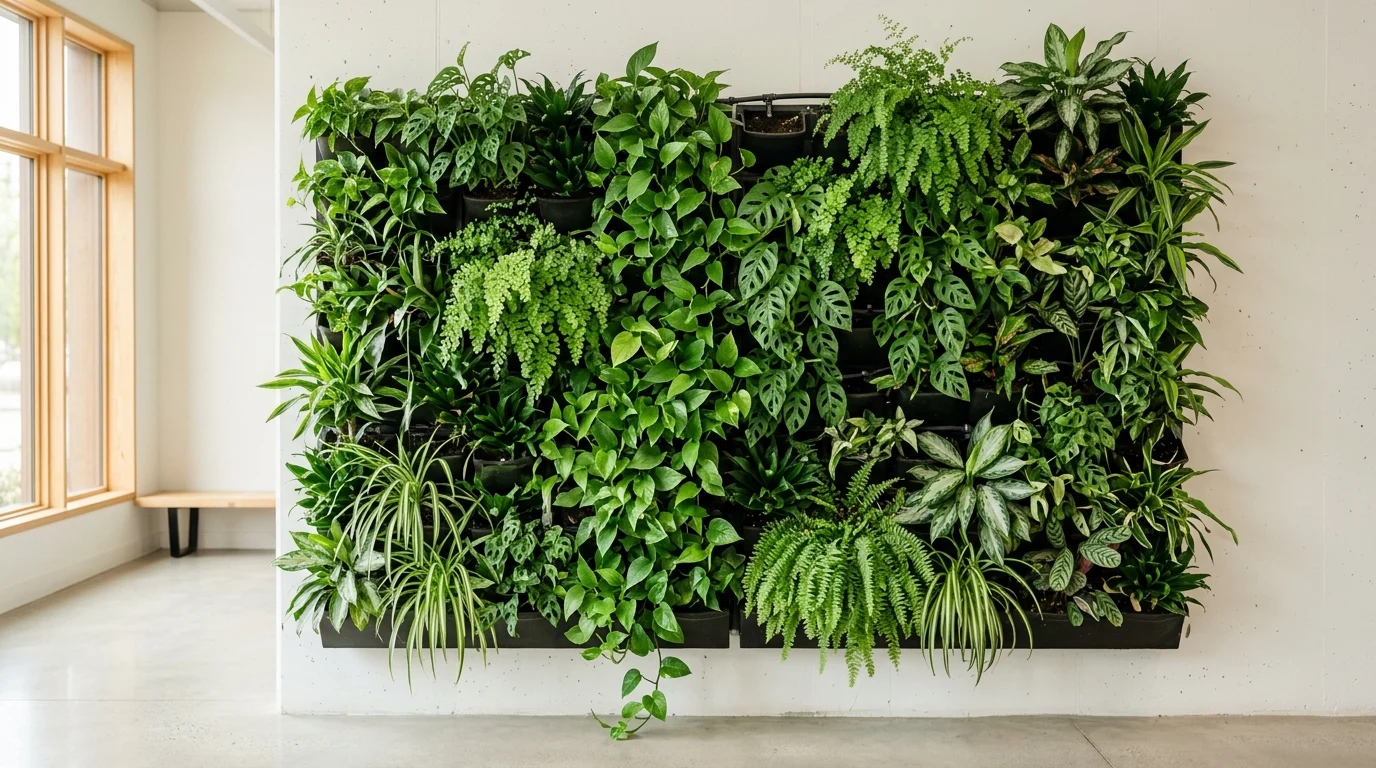
In the context of urban agriculture, vertical plant walls represent a specialized approach to maximizing spatial efficiency and integrating crop production into built environments. Unlike traditional horizontal farming, these systems utilize vertical planes—ranging from interior building partitions to exterior facades—to cultivate living plants. By shifting the growing axis by 90 degrees, urban farmers can transform underutilized architectural surfaces into active, productive agricultural zones.
To function effectively in commercial settings, these structures must combine principles of structural engineering, hydroponics, and controlled environment agriculture (CEA). They require precise integration of irrigation, lighting, and climate control to ensure uniform plant growth across the entire vertical surface.
Key components of vertical plant wall systems
Modern vertical plant walls rely on several integrated hardware and software components. The structural framework is typically constructed from corrosion-resistant materials such as extruded aluminum or galvanized steel, which must be engineered to support significant wet loads. When fully saturated, the growing medium and plant biomass can impose structural loads ranging from 15 to 25 pounds per square foot (73 to 122 kg/sqm).
The growing medium itself often consists of synthetic felt pockets, mineral wool slabs, or modular plastic troughs designed to retain moisture while allowing adequate root aeration. Irrigation is managed through automated drip lines or active flow systems equipped with pressure-compensating emitters, ensuring that plants at the top of the wall receive the same nutrient volume as those at the bottom. Additionally, supplemental LED lighting is deployed to deliver a consistent Photosynthetic Photon Flux Density (PPFD), typically between 150 and 250 µmol/m²/s for leafy greens.
Differences between edible and decorative plant walls
While both edible and decorative plant walls utilize similar structural concepts, their operational requirements differ substantially. Decorative walls prioritize aesthetics, air purification, and biophilic design. They typically feature hardy tropical or perennial plants that require minimal nutrient turnover, often surviving on less than 1 liter of water per square meter per day.
Conversely, edible plant walls are designed for high-density crop production and frequent harvesting cycles. These systems demand food-safe materials, such as BPA-free plastics and food-grade PVC plumbing, to prevent chemical leaching into the crops. Edible configurations also necessitate aggressive nutrient delivery, with turnover rates frequently reaching 2 to 4 liters per hour per square meter. The maintenance protocols for edible walls are significantly more intensive due to the continuous cycle of planting, pruning, and harvesting.
How Vertical Plant Walls Are Used in Urban Farming
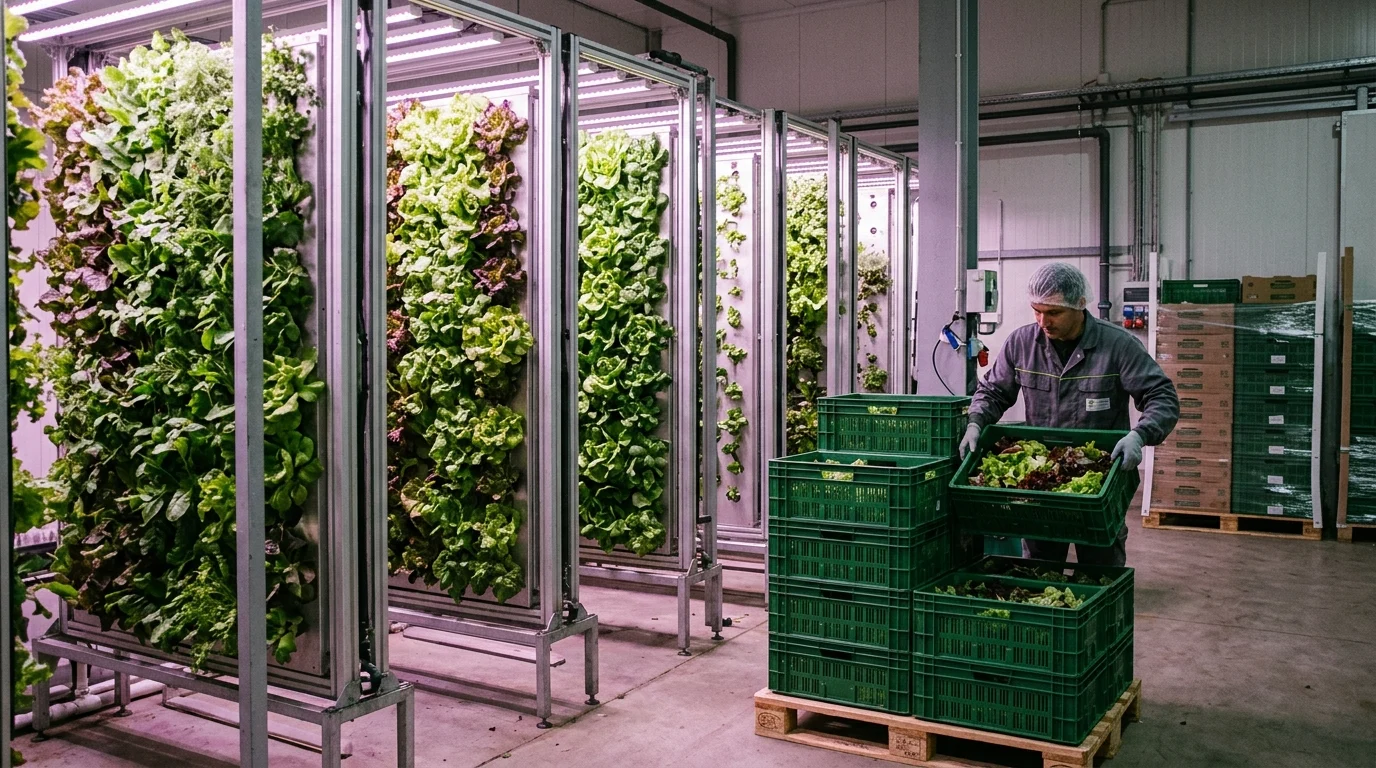
Urban farming relies on the intensive utilization of limited real estate. Vertical plant walls serve as a foundational technology for operators seeking to achieve commercial viability in high-rent urban districts. By converting walls into productive acreage, these systems enable localized food production in areas where traditional agriculture is geographically or economically impossible.
How vertical plant walls improve space productivity
The primary advantage of vertical plant walls is the exponential increase in cultivable area relative to the facility’s floor footprint. In a standard horizontal indoor farm, aisles and walkways consume a significant percentage of the available square footage. By mounting growing systems on walls, operators can reclaim this lost space.
Quantitatively, a standard floor footprint of 10 square feet can support a vertical structure yielding 40 to 60 square feet of active growing surface. This represents a floor space multiplier of 300% to 500%, drastically reducing the real estate cost per unit of crop produced. Furthermore, the vertical orientation improves airflow around the plant canopy, which helps mitigate microclimate stagnation and reduces the risk of fungal pathogens.
Urban farming models that use vertical plant walls
Various urban farming models leverage vertical plant walls to meet specific market demands. Hyper-local restaurant micro-farms use interior dining room walls to grow specialized garnishes and herbs, reducing supply chain distances to zero. Shipping container farms frequently utilize modular wall panels along their interior perimeters to maximize yield within a strict 320-square-foot footprint.
| Urban Farming Model | Typical Floor Size | Main Crop Focus | Floor Space Multiplier |
|---|---|---|---|
| Restaurant Micro-Farm | 50 – 200 sq ft | Microgreens, Rare Herbs | 2x – 3x |
| Shipping Container Farm | 320 sq ft | Head Lettuce, Basil | 3x – 4x |
| Rooftop Greenhouse | 2,000 – 10,000 sq ft | Strawberries, Vining Crops | 1.5x – 2.5x |
| Community Center Hub | 500 – 1,500 sq ft | Mixed Leafy Greens | 2x – 3x |
In larger commercial rooftop greenhouses, vertical walls are often deployed along the north-facing interior partitions to capture ambient light while insulating the structure. These diverse models demonstrate the adaptability of vertical systems across different scales of urban agriculture.
Crops, Performance Metrics, and Cost Drivers
The economic viability of an urban farm depends heavily on crop selection, precise tracking of performance metrics, and strict management of installation and operational expenditures. Vertical plant walls excel in specific agronomic niches but require rigorous financial oversight to ensure profitability.
Best crops for vertical plant walls
The physical orientation of vertical plant walls dictates that shallow-rooted, low-profile crops perform best. Heavy fruiting crops like tomatoes or deep-rooted vegetables like carrots are generally unsuitable due to structural weight limits and medium constraints.
The most profitable and agronomically successful crops include fast-growing leafy greens (lettuce, kale, arugula), culinary herbs (basil, mint, cilantro), and certain compact fruiting crops like strawberries. For example, specific hydroponic butterhead lettuce varieties cultivated on vertical walls can reach a commercial harvest weight of 150 to 200 grams in just 28 to 35 days, allowing for up to 12 harvest cycles per year.
Key KPIs for yield, water, and labor
To evaluate the efficiency of a vertical farming operation, managers track several Key Performance Indicators (KPIs). Yield per square meter is a primary metric; a well-optimized vertical wall should produce 40 to 50 kilograms of leafy greens per square meter annually.
Water Use Efficiency (WUE) is another critical KPI. Advanced vertical hydroponic walls consume up to 90% less water than traditional field agriculture, typically utilizing only 1 to 2 liters of water per kilogram of harvested crop. Additionally, operators must monitor labor efficiency, aiming to keep harvesting and maintenance labor below 0.5 hours per kilogram of yield to maintain favorable profit margins.
Main cost drivers for installation and operation
The financial modeling for these systems is divided into Capital Expenditures (CAPEX) and Operating Expenditures (OPEX). Primary CAPEX drivers include the structural framing, specialized growing media, automated dosing systems, and high-efficiency LED fixtures. Commercial-grade vertical plant walls generally require an initial investment ranging from $50 to $120 per square foot of growing surface, depending on the level of automation.
OPEX is dominated by electricity costs for lighting and climate control, which can account for 40% to 60% of ongoing expenses. Nutrient solutions, specialized labor for pruning and harvesting, and the periodic replacement of growing media (such as felt or mineral wool every 12 to 24 months) constitute the remaining operational costs.
Operational and Site Constraints
Implementing vertical plant walls in an urban environment requires navigating a complex landscape of regulatory compliance, safety standards, and ongoing biological management. Overlooking these constraints can lead to structural failures, crop loss, or legal liabilities.
Food safety, water management, and code compliance
Food safety is paramount when operating edible vertical plant walls. Systems must comply with regional agricultural standards, such as the FDA’s Food Safety Modernization Act (FSMA) in the United States, and operators often seek Good Agricultural Practices (GAP) certification. This requires strict sanitation protocols for the plumbing and growing surfaces to prevent bacterial contamination.
Water management poses a significant engineering challenge. Closed-loop systems must continuously monitor Electrical Conductivity (EC) and pH levels. Furthermore, municipal building codes strictly regulate indoor plumbing and structural modifications. Waterproofing membranes installed behind the walls must typically be rated for 50-year lifespans to prevent structural rot in the host building. To ensure even nutrient distribution to the highest tiers of the wall, plumbing pumps must reliably maintain operating pressures of 15 to 30 PSI.
Maintenance, pest control, and nutrient management
Maintaining a healthy vertical crop canopy requires a proactive approach to Integrated Pest Management (IPM). Because the dense vertical foliage can harbor pests like aphids and spider mites, operators must utilize biological controls, such as introducing predatory insects, rather than relying on chemical pesticides that could contaminate the indoor environment.
Nutrient management requires precise dosing of N-P-K (Nitrogen, Phosphorus, Potassium) ratios and essential micronutrients tailored to the specific growth stage of the crops. Routine maintenance is labor-intensive; a commercial facility must allocate approximately 5 to 10 labor hours per week per 1,000 square feet of wall area strictly for monitoring emitter flow rates, cleaning filters, and executing necessary canopy pruning to prevent light blockage.
How to Evaluate Fit and ROI
Before committing capital to vertical plant walls, urban farming entrepreneurs must critically evaluate how these systems align with their specific facility constraints and business objectives. A thorough comparative analysis and return on investment (ROI) calculation are essential steps in the procurement process.
How to compare vertical plant walls with other systems
Vertical plant walls are just one architecture within the broader Controlled Environment Agriculture (CEA) sector. They must be compared against alternatives such as multi-tier horizontal racking systems and freestanding aeroponic towers to determine the best fit for a given space.
| System Characteristic | Vertical Plant Walls | Multi-Tier Horizontal Racks | Aeroponic Towers |
|---|---|---|---|
| Light Distribution | Requires angled/vertical facing LEDs | Requires LEDs under every shelf | Requires 360-degree ambient or vertical arrays |
| Harvesting Ergonomics | Excellent (facing the worker) | Poor for lowest/highest shelves | Good (often rotatable) |
| CAPEX per sq ft | $50 – $120 | $40 – $90 | $70 – $150 |
| Space Utilization | Best for perimeter walls | Best for large open floor plans | Good for high-ceiling warehouses |
As the table illustrates, vertical walls excel in environments with unused perimeter space and offer superior ergonomics since the plant canopy faces the worker directly. However, they may carry a slightly higher CAPEX per square foot compared to basic horizontal shelving.
Criteria for site fit, supplier selection, and ROI
Evaluating site fit requires analyzing ceiling heights, floor load-bearing capacities, and HVAC integration. A site must possess sufficient HVAC dehumidification capacity to handle the massive transpiration rates of a dense vertical canopy. When selecting a supplier to partner with, operators should prioritize vendors that offer comprehensive warranties on plumbing components and provide verifiable data on light uniformity.
The ultimate decision rests on the projected ROI. For a well-managed commercial operation targeting premium local markets, vertical plant walls can achieve profitability relatively quickly. Assuming the farm can secure wholesale pricing of $1.50 to $2.00 per ounce for specialty microgreens or rare culinary herbs, the typical ROI timeline ranges from 24 to 36 months. Achieving this timeline requires strict adherence to planting schedules, minimized crop loss, and optimized labor workflows.
Further reading:
Key Takeaways
- The most important conclusions and rationale for vertical plant walls
- Specs, compliance, and risk checks worth validating before you commit
- Practical next steps and caveats readers can apply immediately
Frequently Asked Questions
What are vertical plant walls used for in urban farming?
They turn unused walls into productive growing space for herbs, leafy greens, and microgreens, especially in tight urban sites like restaurants, containers, and indoor farms.
How much space can a vertical plant wall save?
A well-designed wall can turn 10 square feet of floor area into roughly 40 to 60 square feet of active growing surface, improving output in small facilities.
Which crops work best on vertical plant walls?
Leafy greens, basil, mint, microgreens, and other lightweight, fast-turn crops perform best because they suit frequent harvests and controlled irrigation.
Are edible vertical plant walls different from decorative green walls?
Yes. Edible walls need food-safe materials, tighter nutrient control, stronger sanitation routines, and more frequent planting and harvesting than decorative systems.
What equipment is essential for a productive vertical plant wall?
You typically need a corrosion-resistant frame, growing medium, automated drip irrigation, nutrient delivery, drainage, and LED lighting for even plant growth across the wall.