
Introduction
Managing heat inside a growing structure starts with choosing a cover that changes how sunlight and air behave. Shade net and greenhouse film both influence crop temperature, but they do so in very different ways: one mainly reduces solar load and ventilation resistance, while the other traps heat and creates a more enclosed microclimate. This comparison explains how each material performs during hot days, cool nights, and seasonal shifts, and where each fits best based on crop sensitivity, local climate, and operating goals. By the end, readers will have a clearer basis for deciding which option offers more reliable temperature control for their specific production setup.
Why the shade net vs greenhouse film choice matters
Selecting the optimal covering material is a foundational decision in protected agriculture. The debate surrounding the shade net vs greenhouse film choice centers heavily on temperature control, as thermal stress can compromise crop yields by up to 30% in high-value horticulture.
While both materials serve to modify the microclimate, they achieve this through fundamentally different thermodynamic properties. Understanding these differences is critical for agricultural enterprises looking to maximize crop health while maintaining strict control over operational budgets.
Climate risk, crop sensitivity, and production goals
Different crops exhibit varying degrees of sensitivity to ambient heat and direct solar radiation. For instance, fruiting crops like tomatoes often suffer from blossom drop when sustained temperatures exceed 32°C, while leafy greens may bolt prematurely under high light intensity. Cultivators must align their production goals with the specific climate risks of their region, weighing whether the primary objective is to deflect excessive summer heat or to retain thermal energy during cooler nights.
Key operating priorities for comparison
Evaluating these coverings requires a comprehensive look at operating priorities. Key considerations include the initial capital expenditure, projected lifespan, and the ongoing labor required for deployment and retraction. Growers must also consider how these materials integrate with other environmental control systems, balancing immediate budget constraints against long-term operational efficiency and yield stability.
Heat control differences between shade net and greenhouse film
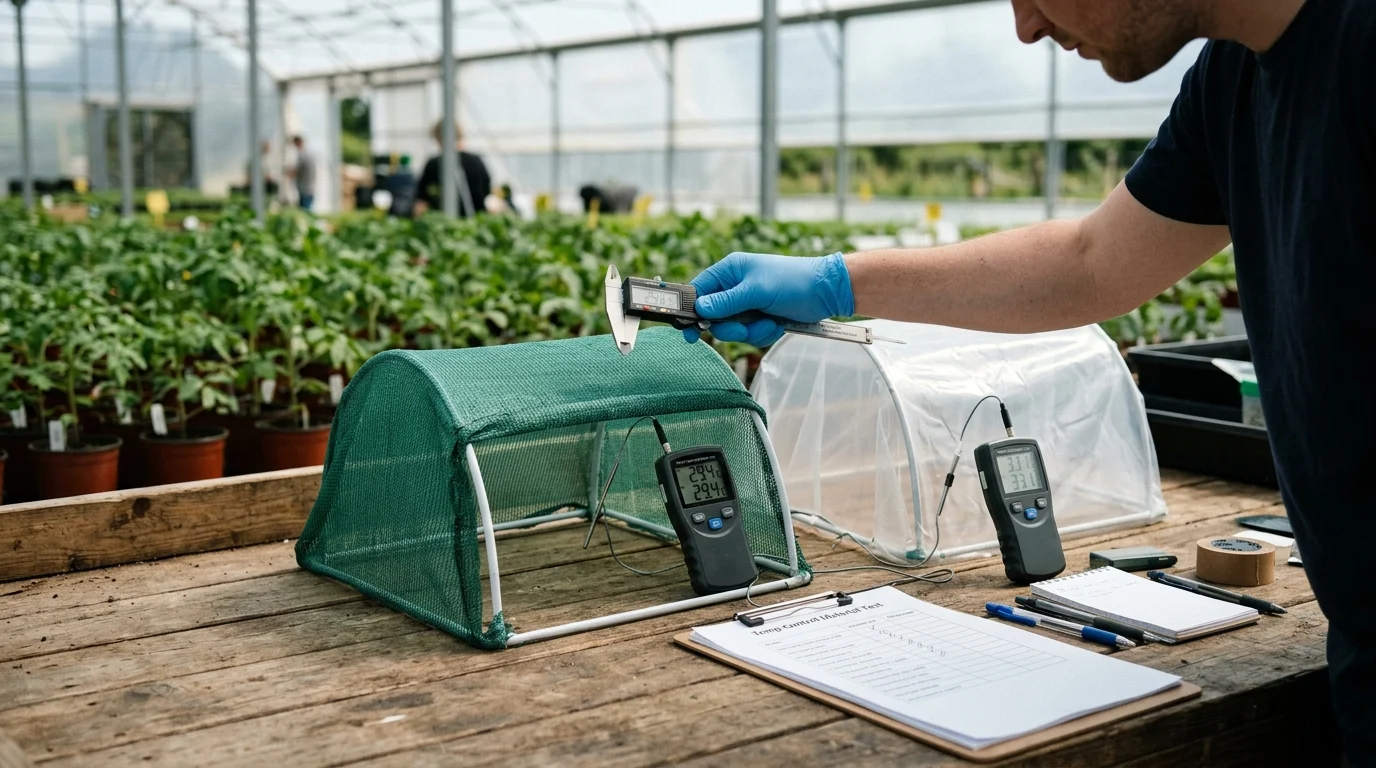
The fundamental physics of how these two materials manage solar radiation dictates their application. While both alter the microclimate, they achieve temperature control through entirely different mechanisms, making them suitable for vastly different environmental challenges.
Temperature control mechanisms
Shade nets primarily function by physically intercepting solar radiation while allowing free airflow. Depending on the weave and color, a high-density polyethylene (HDPE) shade net can reduce canopy temperatures by 4°C to 8°C through passive ventilation. Conversely, greenhouse films operate on the principle of the greenhouse effect. They transmit short-wave solar radiation but block long-wave infrared radiation from escaping, which can elevate internal temperatures by 10°C to 15°C above ambient levels unless paired with active ventilation.
Shade rate, film thickness, and light diffusion
Material specifications directly dictate thermal performance. Shade nets are categorized by their shade percentage, typically ranging from 30% for light-demanding crops to 90% for nurseries and livestock. Greenhouse films are evaluated by thickness—standard commercial applications utilize 150 to 200 micron (6 to 8 mil) polyethylene—and their light diffusion capabilities. Diffused films scatter incoming light, eliminating harsh shadows and preventing localized heat spikes on the foliage.
| Specification | Shade Net | Greenhouse Film |
|---|---|---|
| Primary Mechanism | Solar interception & ventilation | Solar transmission & IR retention |
| Standard Density/Thickness | 30% – 90% shade factor | 150 – 200 microns (6 – 8 mil) |
| Typical Temp Shift | -4°C to -8°C (Cooling) | +10°C to +15°C (Warming) |
| Airflow Permeability | High | Zero (requires external vents) |
Side-by-side comparison of shade net and greenhouse film
A thorough evaluation of shade net vs greenhouse film requires analyzing the financial and logistical realities of each material. Beyond the initial purchase price, operators must account for structural requirements, longevity, and ongoing maintenance to determine the true total cost of ownership.
Cost, lifespan, and energy demand
From a cost perspective, commercial greenhouse films typically require an initial investment of $0.10 to $0.25 per square foot and offer a functional lifespan of 3 to 4 years due to UV degradation. Shade nets often present a slightly higher initial cost—ranging from $0.15 to $0.40 per square foot—but boast extended lifespans of 5 to 8 years, supported by UV-stabilized polymers. Furthermore, shade structures demand virtually zero energy for ventilation, whereas film-covered greenhouses frequently rely on electricity-intensive exhaust fans and cooling pads to mitigate summer heat.
Installation, maintenance, and durability
Installation protocols differ significantly between the two materials. Greenhouse films demand rigorous tensioning and specialized fastening systems, such as aluminum extrusions and wiggle wire, to prevent wind whip and subsequent tearing. They are also highly susceptible to puncture damage from hail or falling debris. Shade nets are inherently more forgiving; their woven or knitted construction resists tearing and provides a robust barrier against hail. However, both require periodic tension adjustments and integration with compatible product hardware to maintain structural integrity over time.
Practical factors for choosing the right option
Abstract comparisons must eventually yield to site-specific realities. The optimal covering material is heavily contingent upon the geographic location of the facility, the biological requirements of the crop, and the engineering limitations of the physical structure.
Regional climate, crop type, and structure design
In tropical or arid climates where excessive heat and radiation are the primary limiting factors, shade nets offer a highly efficient, passive cooling solution. Conversely, in temperate or continental climates characterized by distinct seasons and cold nights, the thermal retention of greenhouse film is mandatory for year-round production. Structural design also plays a critical role; film-covered structures must be engineered to withstand substantial snow loads (often exceeding 20 lbs per square foot in northern latitudes), whereas shade structures primarily require engineering for wind uplift and drag.
Specification and sourcing checks
When finalizing procurement, rigorous specification checks are essential. Buyers sourcing greenhouse films should verify the inclusion of anti-condensate (anti-drip) and IR-blocking additives, which prevent moisture from dripping onto crops and improve nighttime thermal retention. For shade nets, verifying the UV-degradation warranty is paramount. Commercial buyers must also navigate supply chain constraints, as custom-cut films or specialized aluminized shade nets often carry Minimum Order Quantities (MOQs) starting at 10,000 square feet. Establishing a reliable supply chain requires agricultural enterprises to carefully partner with us or other established suppliers to ensure timely delivery and material compliance.
When shade net or greenhouse film is the better choice
The decision ultimately rests on balancing the microclimate requirements of the crop with the economic model of the farm. Neither material is universally superior; rather, each excels in distinct operational paradigms.
Best use cases for shade net
Shade netting is the definitive choice for operations located in hot, high-radiation environments where the primary goal is cooling and sunburn prevention. It is highly recommended for ornamental nurseries, fern cultivation, and orchard crops requiring hail protection. Additionally, it serves as an excellent temporary acclimatization zone for hardening off tissue-cultured plants before field transplanting, reducing mortality rates by up to 15%.
Best use cases for greenhouse film
Greenhouse film is indispensable for true Controlled Environment Agriculture (CEA) where operators must manipulate temperature, humidity, and atmospheric composition independently of outside weather. It is the mandatory choice for hydroponic vegetable production, cannabis cultivation, and any operation targeting winter harvesting in temperate zones. The impermeable nature of the film also makes it essential for crops that are highly susceptible to foliar diseases triggered by rainfall.
A simple decision process
To streamline the selection process, facility managers should utilize a structured decision matrix based on their most critical environmental threats and production targets.
| Operational Priority | Recommended Material | Primary Justification |
|---|---|---|
| Maximum Heat Reduction | Shade Net | Allows 100% passive ventilation & blocks direct radiation |
| Year-Round Frost Protection | Greenhouse Film | Traps infrared heat & blocks cold ambient air |
| Precipitation Exclusion | Greenhouse Film | Impermeable barrier prevents rain-induced foliar disease |
| Low-Cost Hail Mitigation | Shade Net | High tensile strength absorbs impact without shattering |
By systematically evaluating these parameters against site-specific data, operators can confidently invest in the covering material that best secures their crop yields and financial returns.
Further reading:
Key Takeaways
- The most important conclusions and rationale for shade net vs greenhouse film
- Specs, compliance, and risk checks worth validating before you commit
- Practical next steps and caveats readers can apply immediately
Frequently Asked Questions
Which gives better cooling in hot weather?
Shade net usually cools better in summer because it blocks part of the sun and still allows airflow, often lowering canopy temperature by about 4°C to 8°C.
When is greenhouse film the better choice?
Choose greenhouse film when night warmth, season extension, or cold-weather protection matters. It can keep interiors roughly 10°C to 15°C warmer than outside with proper ventilation.
How do I choose the right shade percentage or film thickness?
Use 30% to 50% shade for many fruiting crops, higher for nurseries or leafy greens in intense sun. For film, 150 to 200 microns is a common commercial range.
Which option is usually cheaper over time?
Shade net often lasts longer, about 5 to 8 years, and needs little energy for cooling. Greenhouse film is cheaper upfront but typically lasts 3 to 4 years and may need powered ventilation.
Can these covers work with other climate-control systems on Miilkiiablog.com?
Yes. Greenhouse film often pairs with vents, fans, and cooling pads, while shade net fits simpler passive setups. Match the cover to your local climate and control system goals.