
Introduction
Profitability in controlled-environment agriculture depends on far more than crop yield. Hydroponic vertical farming and traditional greenhouses both promise reliable, soil-free production, but they operate with very different cost structures, energy demands, space efficiency, and market advantages. This comparison examines where each model makes financial sense by looking at startup investment, operating expenses, labor, utility use, and revenue potential. By the end, readers will have a clearer framework for judging which system is more profitable based on location, crop type, scale, and business strategy rather than headline claims alone.
Why Compare Hydroponic Vertical Farming and Traditional Greenhouses
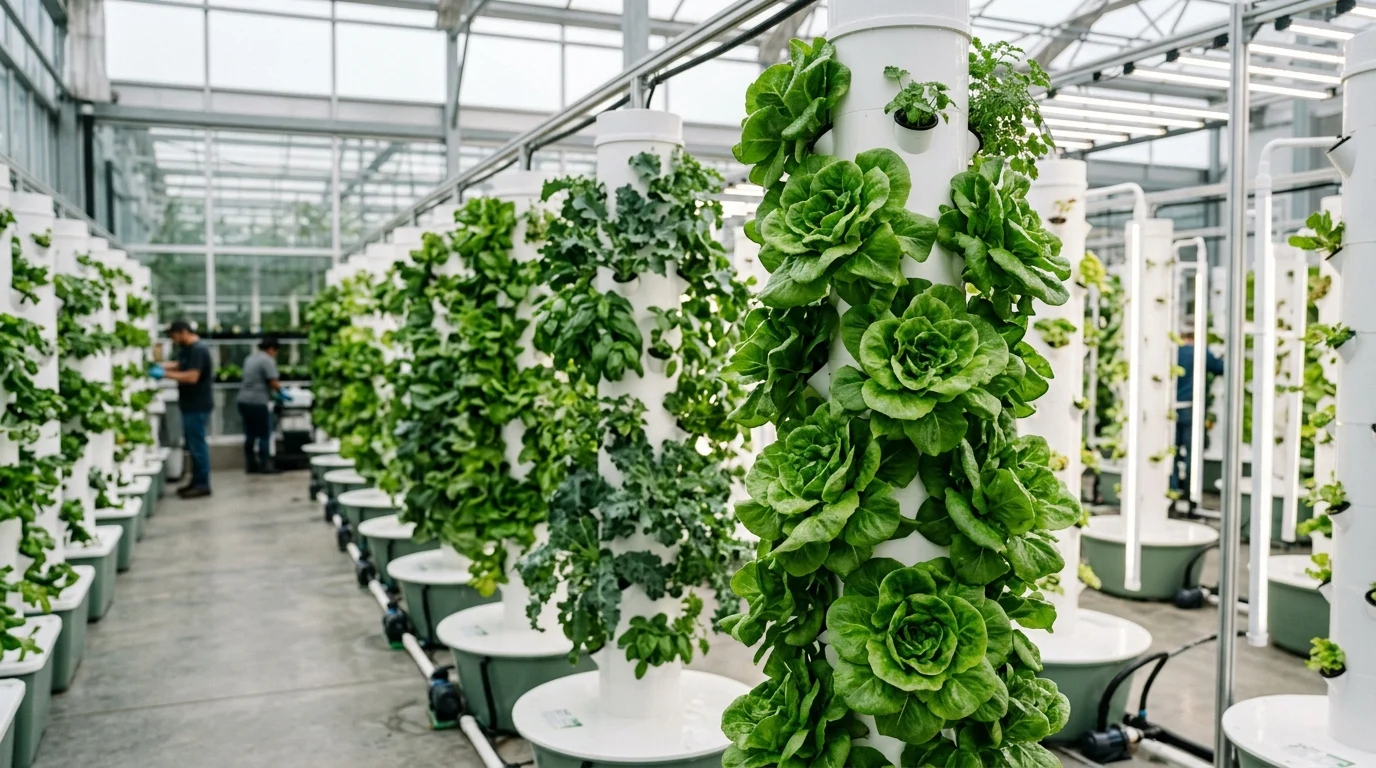
The agricultural sector is undergoing a massive transformation, driven by the need for climate-resilient, high-yield production methods. At the forefront of this shift are two primary controlled-environment agriculture (CEA) models: hydroponic vertical farming and traditional greenhouses. While both systems utilize soil-less growing techniques to optimize plant health, their structural and economic foundations differ significantly.
Evaluating which model is more profitable requires a deep dive into capital expenditure, operational costs, and market positioning. As the global population urbanizes and supply chains face increasing disruptions, investors and operators must determine which indoor farming architecture yields the best financial returns for their specific geographic and commercial context.
Profitability Beyond Yield
When assessing profitability, the conversation must extend beyond raw yield. Traditional open-field agriculture often faces unpredictable weather, leading to crop losses that can devastate seasonal revenue. In contrast, CEA models mitigate these risks but introduce substantial fixed and variable costs. Commercial hydroponic vertical farming models, for instance, can operate with up to 90% greater water efficiency than conventional farming, drastically reducing utility overhead in water-scarce regions.
However, the energy required to power lighting and HVAC systems can offset these savings if not managed efficiently. Profitability ultimately hinges on the facility’s ability to balance high-density output against the continuous cost of artificial climate control.
Market Access and Price Premiums
The capacity to command a price premium is a critical lever for profitability in both models. Produce grown indoors is typically free from harmful pesticides and protected from contamination, appealing to health-conscious consumers. Hyper-local distribution allows these facilities to market their crops as “ultra-fresh,” often capturing a 15% to 20% retail price premium over conventionally grown alternatives.
Furthermore, the year-round reliability of indoor harvests enables growers to secure stable, long-term contracts with grocers and restaurants, bypassing the volatility of commodity market pricing. The ability to guarantee a specific volume of premium-grade produce every week of the year is a major competitive advantage.
Key Operational Differences
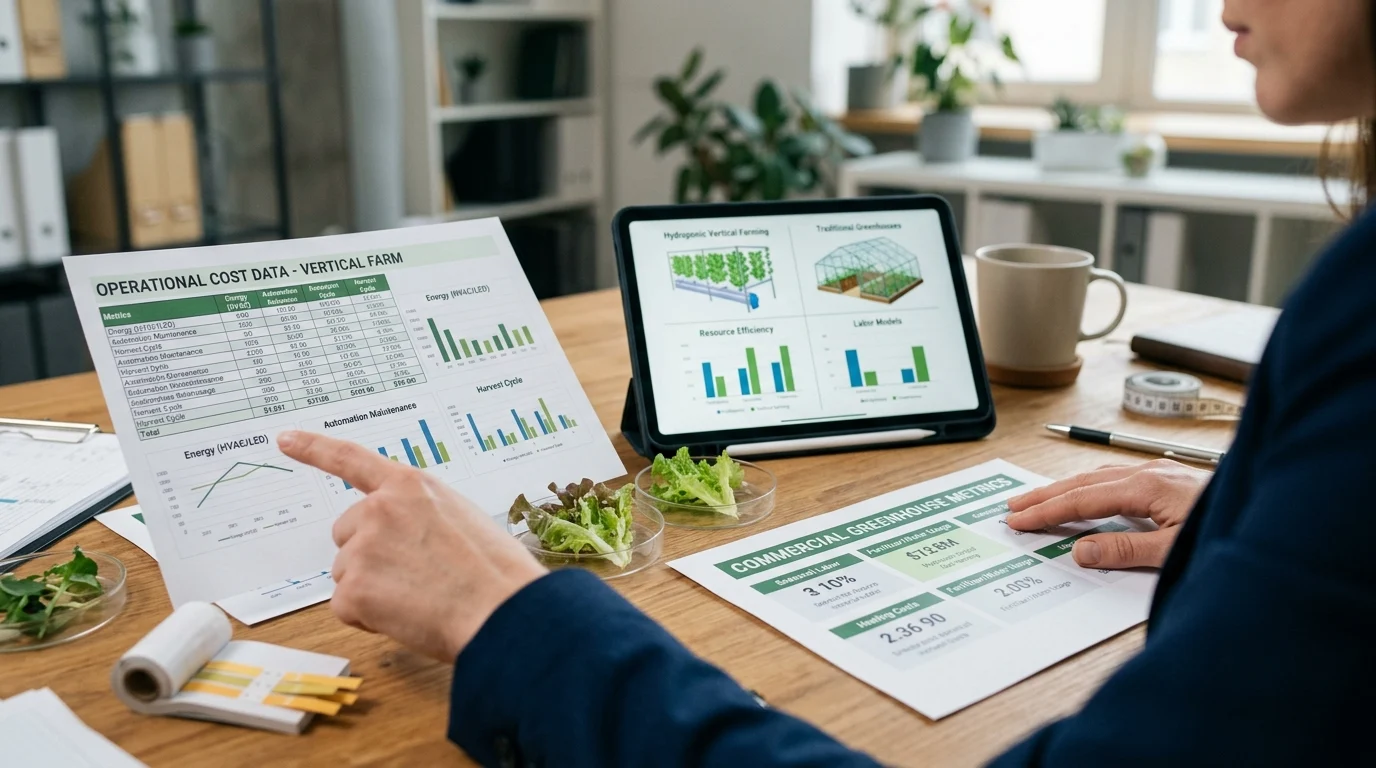
The day-to-day operations of vertical farms and modern greenhouses reveal stark contrasts in resource allocation. While both rely on precise nutrient delivery systems, the physical architecture of the growing space dictates the required input of capital, energy, and labor. Understanding these operational differences is essential for accurately modeling long-term financial performance.
Capital, Energy, and Labor Costs
Capital expenditure (CAPEX) is the most immediate differentiator. Establishing a state-of-the-art vertical farm can require an investment ranging from $2,000 to $3,000 per square meter of growing space, largely due to the dense integration of LED lighting, vertical racking, and climate automation. Conversely, high-tech greenhouses typically demand a lower CAPEX of $250 to $500 per square meter, leveraging natural sunlight to offset infrastructure costs.
Operationally, vertical farms consume significantly more electricity—often exceeding 300 kWh per square meter annually—whereas greenhouses incur higher heating costs during winter months but save immensely on lighting. Labor costs in both models are being mitigated by automation, though greenhouses currently rely more heavily on manual labor for harvesting vining crops.
Crop Fit, Density, and Quality Targets
The choice of facility dictates the most profitable crop mix. Vertical farms excel at producing low-profile, fast-growing crops such as microgreens, leafy greens, and culinary herbs. The multi-tiered architecture allows for maximum spatial density, achieving up to 10 to 15 layers of cultivation.
Greenhouses, with their expansive vertical clearance and natural overhead light, are better suited for vining fruiting crops like tomatoes, cucumbers, and bell peppers. Attempting to grow high-canopy crops in a strict vertical farm significantly reduces spatial efficiency and drives up the cost per pound, negatively impacting profitability.
Yield per Square Foot Comparison
Yield per square foot heavily favors vertical farming due to volumetric space utilization, but the cost to achieve that yield is higher. By stacking growing planes, vertical farms multiply the productive capacity of a single square foot of real estate. To maximize these yields, operators often integrate advanced hydroponic vertical farming equipment designed for rapid crop cycles.
| Production Metric | High-Tech Greenhouse | Vertical Farm | Open Field |
|---|---|---|---|
| Yield (Lettuce) | 40 – 50 kg/m²/year | 100 – 120 kg/m²/year | 3 – 5 kg/m²/year |
| Lighting Source | Sunlight + Supplemental | 100% LED Artificial | 100% Sunlight |
| Crop Cycles | 8 – 10 per year | 15 – 18 per year | 2 – 3 per year |
Financial and Compliance Factors
Financial viability in controlled-environment agriculture is governed by tight margins and strict adherence to local regulations. Investors and operators must navigate complex depreciation schedules, fluctuating utility rates, and rigorous food safety standards to maintain profitability.
Margins, Payback, and Depreciation
The timeline for achieving a return on investment (ROI) varies drastically between the two models. High-tech greenhouses, benefiting from lower initial capital requirements and reliance on free solar energy, typically project a payback period of 4 to 7 years. In contrast, the heavy upfront investment required for vertical farms often pushes the payback period to 6 to 10 years.
Despite the longer payback horizon, vertical farms can achieve EBITDA margins of 20% to 30% at scale, provided they maintain maximum capacity utilization and secure premium off-take agreements. Depreciation also plays a critical role; the complex mechanical and technological assets in a vertical farm depreciate faster than the structural glass and steel of a greenhouse, impacting annual tax liabilities.
Food Safety, Zoning, and Utility Pricing
Compliance and infrastructure costs heavily influence site selection. Vertical farms frequently operate in repurposed industrial warehouses, subjecting them to commercial or industrial zoning laws and utility rates, which can range from $0.08 to $0.15 per kWh depending on the municipality. Greenhouses are typically zoned as agricultural, often benefiting from tax incentives and lower rural land costs.
On the compliance front, both models excel in food safety. By eliminating soil and isolating the growing environment, operators drastically reduce the risk of pathogen outbreaks, such as E. coli, which frequently plague open-field operations. This high standard of safety reduces compliance-related downtime and serves as a strong selling point for institutional buyers.
Location, Distribution, and Sales Channels
The geographical placement of a farming operation dictates its logistics network, shipping costs, and ultimate product quality upon reaching the end consumer. The ability to place production facilities close to dense populations is one of the defining advantages of modern indoor agriculture.
Urban Proximity, Freight, and Shelf Life
Traditional agriculture relies on complex, long-haul supply chains, with produce often traveling an average of 1,500 miles from farm to shelf. Vertical farms disrupt this model by operating within or on the immediate outskirts of major urban centers, slashing food miles to under 50 miles.
This urban proximity drastically reduces outbound freight costs and carbon emissions. More importantly, eliminating days of transit extends the retail shelf life of the produce by 3 to 5 days. This reduction in retail shrinkage—often a 10% to 15% financial loss for grocery stores—makes locally grown indoor produce highly attractive to retail category managers.
Retail, Foodservice, Wholesale, and Contract Growing
Determining the optimal sales channel is crucial for moving volume without sacrificing margin. Direct-to-retail and premium foodservice (restaurants and hotels) offer the highest margins but require rigorous packaging and branding efforts. The consistent size, color, and flavor profiles generated by controlled environments are particularly valued by executive chefs and high-end caterers.
For operations focusing on scale, wholesale and contract growing provide guaranteed volume. By utilizing standardized hydroponic vertical farming configurations, growers can precisely forecast output and commit to the strict delivery schedules required by national distributors and meal-kit services.
How to Choose the Right Model
Determining whether a hydroponic vertical farm or a traditional greenhouse is more profitable requires a highly localized financial model. There is no universal answer; profitability is entirely dependent on the specific combination of crop mix, geographical climate, real estate costs, and target market.
Evaluation Steps for Crop Mix and Market Fit
The evaluation process must begin with a thorough market analysis. Operators should first identify the unmet demand in their region—whether it is a shortage of locally grown winter tomatoes or a lack of pesticide-free baby greens. Next, assess the regional climate and resource costs.
If land is cheap and sunlight is abundant year-round, a greenhouse is likely the most capital-efficient path. If land is prohibitively expensive, water is scarce, and the climate is extreme, the dense, insulated nature of a vertical farm becomes financially justifiable. Finally, operators must evaluate their capital stack; vertical farms require significant venture or private equity backing, whereas greenhouse projects can often be financed through traditional agricultural lending.
When Vertical Farming or Greenhouses Are More Profitable
Ultimately, the most profitable model aligns the facility’s technological capabilities with the market’s willingness to pay. Vertical farms win in hyper-urban environments where space is at a premium and consumers demand specialized, ultra-fresh leafy greens. Greenhouses remain the undisputed champions of scale for fruiting crops and regions with favorable natural light.
| Decision Factor | Greenhouse Advantage | Vertical Farm Advantage |
|---|---|---|
| Minimum Viable Scale | 1 to 2 Acres | 10,000 to 20,000 Sq Ft |
| Ideal Climate | Moderate temperatures, high sunlight | Extreme temperatures, low sunlight |
| Primary Crop Focus | Tomatoes, Cucumbers, Peppers | Microgreens, Lettuce, Herbs |
| Primary Cost Driver | Heating and Cooling (HVAC) | Electricity for LED Lighting |
Further reading:
Key Takeaways
- The most important conclusions and rationale for hydroponic vertical farming
- Specs, compliance, and risk checks worth validating before you commit
- Practical next steps and caveats readers can apply immediately
Frequently Asked Questions
Which is usually more profitable: hydroponic vertical farming or a traditional greenhouse?
It depends on crop, energy prices, and local market access. Vertical farms can earn more on leafy greens and herbs in cities, while greenhouses often win on lower setup costs and fruiting crops.
What crops make hydroponic vertical farming most profitable?
Leafy greens, microgreens, and culinary herbs usually perform best. They grow fast, fit multi-layer systems, and can support premium pricing for consistent, pesticide-free local supply.
Why do traditional greenhouses often cost less to start?
Greenhouses use natural sunlight, so they need less lighting infrastructure. Typical CAPEX is much lower than vertical farms, making them easier to launch when budget is limited.
How can growers improve vertical farm profits on miilkiiablog.com?
Focus on efficient hydroponic systems, high-density layouts, and crops with quick turnover. Reviewing Miilkia system options can help match equipment to output goals and reduce wasted space.
Does hydroponic vertical farming save enough water to offset higher energy use?
In water-scarce regions, often yes. Vertical hydroponics can use far less water, but profitability still depends on controlling LED and HVAC costs through efficient design and local utility rates.