
How Can You Improve Greenhouse Energy Efficiency?
Improving greenhouse energy efficiency starts with treating the greenhouse as one integrated system, not a collection of separate parts. The biggest greenhouse savings usually come from better structure, smarter climate control, and crop-specific operating choices that reduce heat loss and wasted electricity.
Why Greenhouse Energy Efficiency Matters
Greenhouse energy efficiency matters because heating, cooling, lighting, and ventilation can dominate operating costs in controlled environment agriculture. The Food and Agriculture Organization notes that food systems already account for about 30% of global energy consumption and 31% of greenhouse gas emissions, which makes efficiency a practical and climate-relevant priority.
For commercial growers, greenhouse savings are not only about lower utility bills. They also affect crop stability, labor demand, and the ability to keep production running through seasonal extremes. A well-designed energy-efficient greenhouse can improve consistency while reducing the need for emergency interventions.
What Makes an Energy-Efficient Greenhouse?
An energy-efficient greenhouse is a structure that minimizes unnecessary heat loss while maintaining the right microclimate for plant growth. In practice, that means balancing insulation, solar gain, ventilation, shading, and automation so the crop receives what it needs without over-conditioning the space.
| Efficiency Factor | Main Function | Typical Impact |
|---|---|---|
| Structure | Controls heat retention and airflow | Shapes baseline energy demand |
| Covering material | Manages light transmission and insulation | Affects heating and cooling load |
| Thermal screens | Reduce night heat loss | Can cut heating costs by 30–50% in many installations. |
| Automation | Adjusts systems in real time | Reduces waste and human error |
In commercial projects, the most efficient greenhouse is usually the one matched to climate, crop, and operating budget. That is why a sustainable greenhouse design should be selected as a system, not as a single product.
Choose the Right Greenhouse Structure for the Climate
The greenhouse structure is the foundation of greenhouse savings because it determines how much energy the building will need from day one. In hot regions, a sawtooth greenhouse often improves natural ventilation, while a Gothic greenhouse can help with drainage and interior height. For large-scale production, a multi-span greenhouse usually supports centralized climate control more efficiently.
For growers comparing options, the structure should be evaluated alongside the crop plan and local weather patterns. Miilkiia’s greenhouse systems and commercial greenhouse structure guide are useful starting points for understanding how different layouts affect energy use.
In colder climates, a tighter envelope and better sealing matter more than visual openness. In warmer climates, the priority shifts toward airflow, shading, and heat rejection. That climate-first logic is the core of sustainable greenhouse design.
Use Covering Materials That Match Light and Heat Goals
Covering material is one of the fastest ways to improve greenhouse energy efficiency because it directly changes light transmission, insulation, and maintenance needs. Glass offers high light quality and durability, while polycarbonate panels often provide better insulation and impact resistance. Film is usually lower cost, but it may require more frequent replacement.
Material choice should reflect the crop and the region. A high-light crop in a cold climate may benefit from a more insulating cover, while a high-temperature site may need a material that supports heat release and glare control. Miilkiia’s polycarbonate greenhouse solutions and greenhouse structure products help illustrate how structure and cover work together.
For many commercial operators, the best greenhouse savings come from reducing thermal leakage before adding more mechanical equipment. That is usually a more durable path than relying on cooling or heating alone.
Control Heat Loss with Thermal Screens and Insulation
Thermal screens are among the most effective tools for greenhouse energy efficiency because they reduce night-time heat loss and stabilize the internal climate. UMass Amherst reports that energy and shade screen systems commonly deliver 30–50% heating-cost savings, and they are especially valuable in gutter-connected greenhouses.
In cold regions, insulation curtains or thermal blankets should be considered essential rather than optional. They help trap a layer of still air and reduce the surface area exposed to heat loss. Miilkiia’s shading systems and product overview show how shading and insulation can be integrated into a broader climate strategy.
Thermal screens also support crop quality by reducing sudden temperature swings. That stability matters for fruiting crops, leafy greens, and any production system that depends on predictable daily cycles.
Improve Ventilation Before You Oversize Cooling Equipment
Ventilation is a primary energy lever because it controls humidity, heat buildup, and air exchange without always requiring high electrical input. Cornell Extension notes that greenhouse energy management depends on heat loss, construction materials, insulation, fuels, ventilation, and cooling as a connected set of decisions.
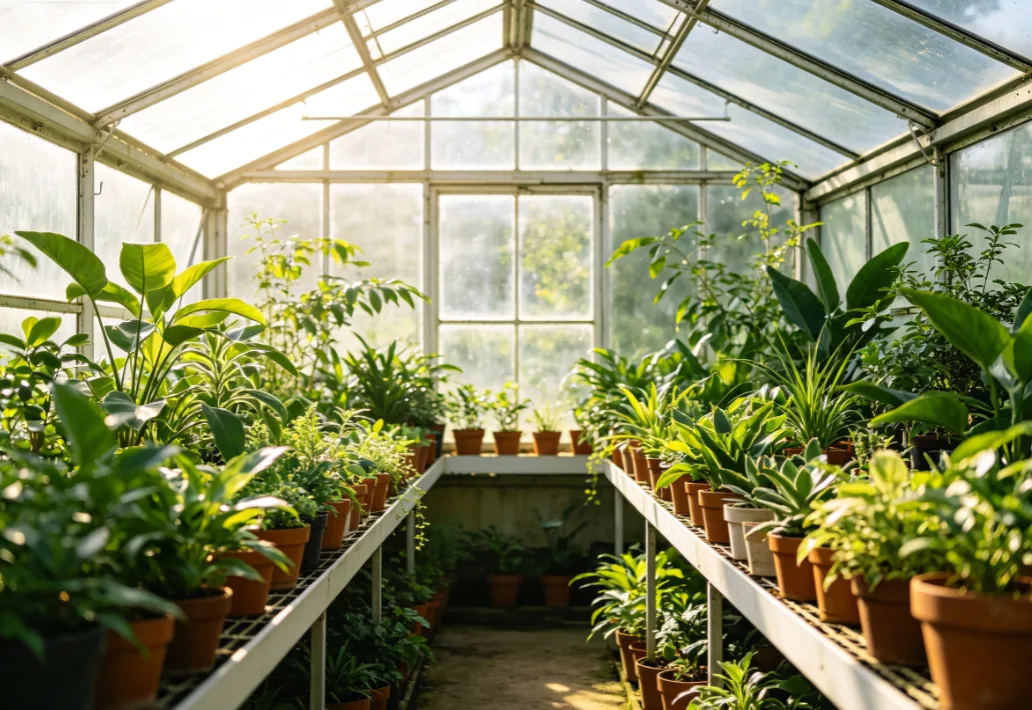
In hot and humid climates, a sawtooth greenhouse, ridge vents, side vents, and circulation fans can reduce the need for aggressive mechanical cooling. In cooler climates, ventilation still matters because excess humidity can raise disease pressure and force more dehumidification or heating later.
Miilkiia’s ventilation systems guide and greenhouse ventilation overview are relevant because airflow is often the difference between stable production and recurring climate stress.
Use Monitoring and IoT for Smarter Energy Decisions
Environmental monitoring is the control layer that turns a greenhouse into an energy-efficient greenhouse. At minimum, growers should track temperature, relative humidity, light, and CO2, because those variables drive heating, cooling, and plant response.
IoT systems add value when they connect sensors to automation, alarms, and remote visibility. That means the system can react to changing conditions instead of waiting for manual checks. Miilkiia’s environment monitoring systems and smart greenhouse innovations show how monitoring supports both greenhouse savings and crop consistency.
For commercial operators, the main benefit is not data collection alone. It is the ability to avoid over-ventilating, over-heating, or over-lighting the crop when conditions are already within range.
Match the Growing System to the Crop
Crop system choice affects greenhouse energy efficiency because different production methods create different loads on water, light, and climate control. Leafy greens and herbs often fit NFT or floating raft systems, while tomatoes, cucumbers, and strawberries usually need substrate-based or drip-fed systems.
| System | Best For | Energy Note |
|---|---|---|
| NFT hydroponics | Leafy greens, herbs | Efficient for short-cycle crops |
| Floating raft | Large-scale leafy greens | Supports standardized production |
| Substrate cultivation | Tomatoes, cucumbers, strawberries | Balances root support and control |
Miilkiia’s hydroponic systems guide and hydroponic setup article are useful because they connect system design with crop suitability. In commercial production, the right system can reduce wasted space, water, and climate load.
That is especially important in vertical farming, container farms, and other high-density formats where every watt and every square meter must justify itself.
Use Lighting Only Where It Adds Real Value
Supplemental lighting improves greenhouse energy efficiency only when it is used strategically. In low-light seasons, high-density production, or northern climates, lighting can stabilize growth and reduce crop delays. In bright climates, however, poor lighting decisions can add cost without improving yield.
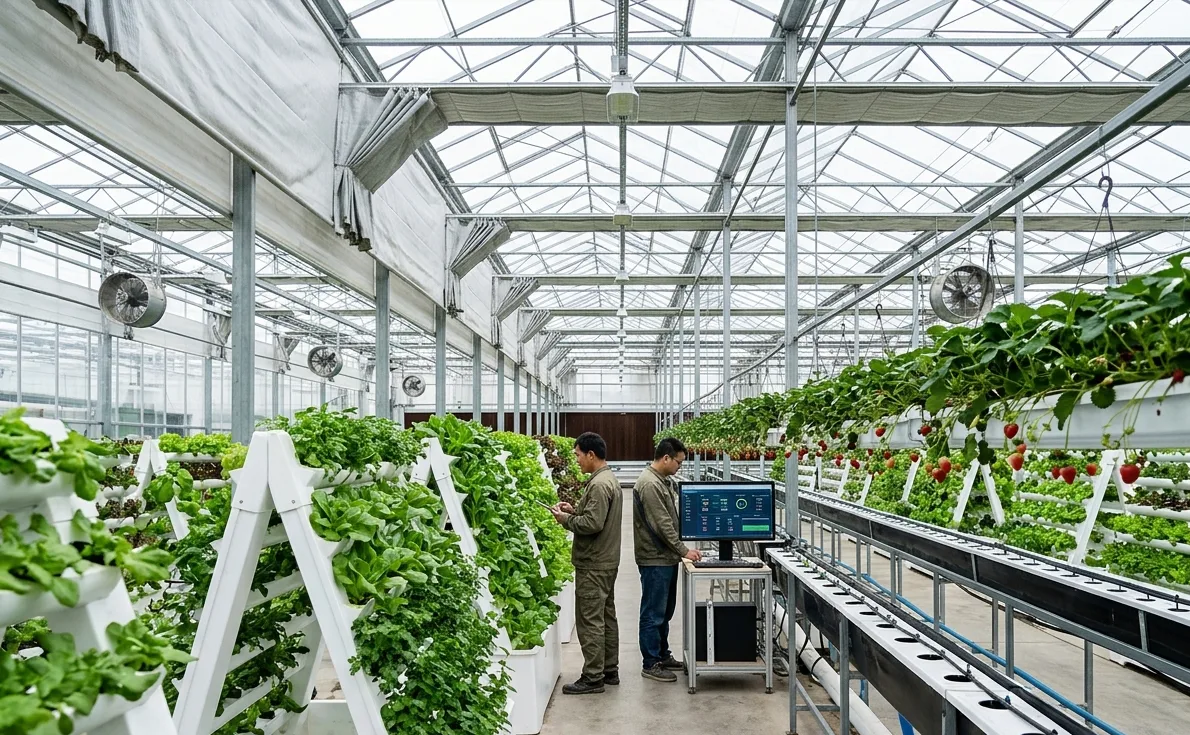
The most efficient approach is to align lighting schedules with crop demand, natural daylight, and target photoperiods. Miilkiia’s greenhouse equipment guide and sustainability article support this broader systems view.
Lighting should be treated as a production tool, not a default energy input. When used correctly, it supports predictable output; when used poorly, it becomes one of the fastest ways to lose greenhouse savings.
Design for Long-Term Operating Cost, Not Just Installation Cost
Long-term operating cost is the real test of sustainable greenhouse design. A cheaper structure may cost more over time if it leaks heat, needs frequent repairs, or depends on manual control. By contrast, a more integrated system can lower labor, fuel, and maintenance costs across the life of the project.
For project developers, this is where product combination matters more than a single specification. Miilkiia’s homepage, catalogs, and product hub are relevant because they show how greenhouse structure, hydroponics, monitoring, shading, and vertical systems can be planned together.
That integrated approach is especially useful for distributors, engineers, and commercial growers who need scalable, climate-aware solutions rather than isolated components.
Practical Steps to Improve Greenhouse Energy Efficiency
Greenhouse savings improve fastest when growers follow a sequence instead of buying equipment randomly. The most effective projects usually begin with the structure, then move to insulation, ventilation, monitoring, and crop-system alignment.
- Audit heat loss points before adding new heating equipment.
- Choose a structure that fits the local climate and crop type.
- Install thermal screens or insulation curtains where night heat loss is high.
- Use monitoring and automation to reduce manual overcorrection.
- Select hydroponic or substrate systems that match the crop’s growth cycle.
Miilkiia’s greenhouse structure selection guide and year-round yield strategies are helpful references for this planning process. The best results usually come from small improvements across multiple systems, not from one expensive upgrade.
Conclusion
Greenhouse energy efficiency improves when structure, covering, shading, ventilation, monitoring, and crop system design work together. The most reliable greenhouse savings come from reducing heat loss, matching equipment to climate, and using automation to keep the microclimate stable with less waste.
FAQ
What is the fastest way to improve greenhouse energy efficiency?
The fastest improvement usually comes from reducing heat loss. Thermal screens, better sealing, and a more suitable covering material often deliver immediate gains. In many commercial greenhouses, these changes lower heating demand before any major mechanical upgrade is needed. They also improve temperature stability, which supports more predictable crop performance.
Which greenhouse structure is most energy efficient?
The most energy-efficient greenhouse structure depends on climate and crop goals. Multi-span structures often work well for large commercial farms, while sawtooth designs can improve ventilation in hot regions. In colder climates, tighter envelopes and better insulation usually matter more than shape alone. The best choice is always site-specific.
Do thermal screens really save money?
Yes, thermal screens can save substantial money when used correctly. UMass Amherst reports that energy and shade screen systems commonly reduce heating costs by 30–50%. Their value is highest in cold nights and gutter-connected houses, where heat loss is a major operating expense. They also help stabilize humidity and crop comfort.
Is hydroponics more energy efficient than soil growing?
Hydroponics can be more energy efficient in a greenhouse when it is designed well, but it is not automatically better. The system must match the crop, water strategy, and climate control plan. NFT, floating raft, and substrate systems each have different energy and labor profiles. Efficiency comes from fit, not from the label alone.
How do monitoring systems improve greenhouse savings?
Monitoring systems improve greenhouse savings by showing growers what the climate is doing in real time. When temperature, humidity, light, and CO2 are tracked continuously, heating and cooling can be adjusted more precisely. That reduces overuse of equipment, lowers energy waste, and helps prevent crop stress before it becomes costly.