
Vertical hydroponic farming is a soilless cultivation method that stacks growing planes vertically within a greenhouse structure, delivering nutrients directly to plant roots through recirculated water solutions. This approach leverages the cubic volume of a greenhouse rather than its floor area alone, enabling plant densities 3 to 5 times higher than conventional horizontal growing layouts. For commercial growers, vertical hydroponic farming in controlled-environment agriculture (CEA) represents one of the most significant yield-per-square-meter improvements available in modern horticulture. This article examines the mechanisms, system components, performance data, and implementation considerations for commercial-scale vertical hydroponic greenhouse operations.
What Is Vertical Hydroponic Farming and How Does It Work?
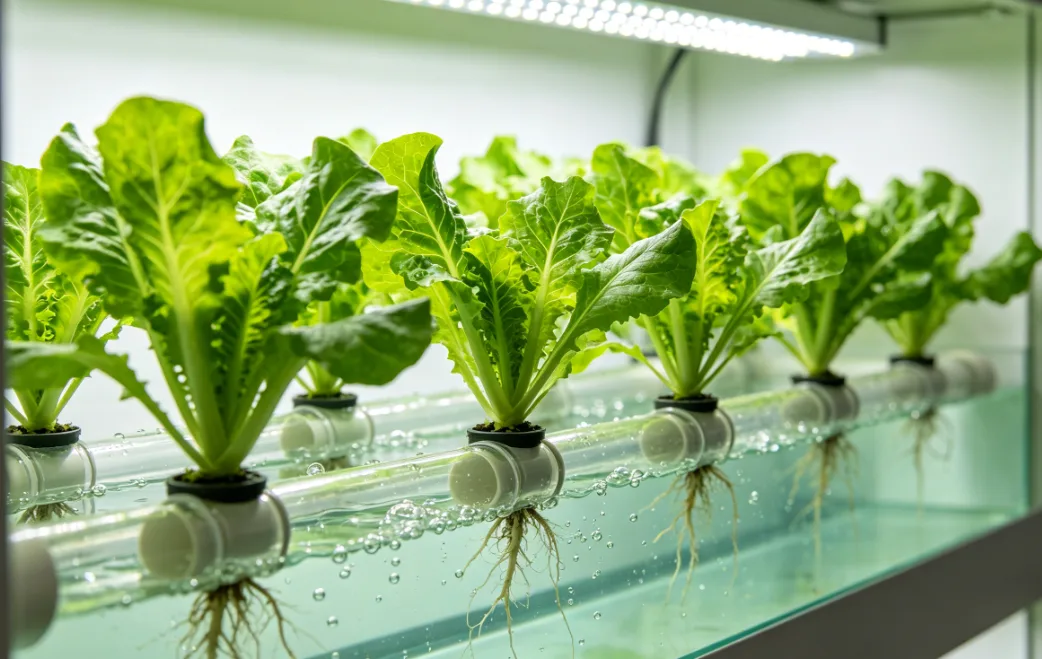
Vertical hydroponic farming is a method of growing plants in vertically stacked layers or towers, using a soilless nutrient delivery system instead of traditional soil media. Plants are positioned in growing channels, towers, or containers arranged in vertical arrays, with nutrient-rich water supplied either by gravity-fed flow or high-pressure misting systems. The root zone receives a precisely calibrated solution containing nitrogen, phosphorus, potassium, calcium, magnesium, and trace micronutrients tailored to specific crop requirements.
The operational principle relies on two core technologies working in tandem. First, a hydroponic growing system—such as NFT (Nutrient Film Technique), Dutch Bucket, or substrate culture—delivers the nutrient solution to each plant’s root zone. Second, a vertical structural system—such as hydroponic towers, vertical planters, or hanging channels—organizes plants into a multi-tiered layout that maximizes the use of vertical space within the greenhouse. The greenhouse structure itself provides the environmental control envelope, regulating temperature, humidity, CO₂ concentration, and light intensity to maintain optimal photosynthetic conditions year-round.
The FAO (Food and Agriculture Organization of the United Nations) reports that protected cultivation through controlled-environment systems can increase water-use efficiency by up to 90% compared to traditional open-field farming (FAO). When combined with vertical stacking, this water efficiency translates directly into yield-per-hectare gains that are difficult to achieve through conventional horizontal expansion.
Key characteristics of vertical hydroponic farming:
- Soilless medium: Eliminates soil-borne pathogens including Pythium, Fusarium, and nematodes that constrain conventional greenhouse production.
- Recirculating nutrient delivery: Reduces fertilizer consumption by 20–30% compared to soil-based growing, according to horticultural engineering studies.
- Controlled-environment envelope: Greenhouse structures insulate crops from external climate variability, enabling consistent production in regions ranging from −20°C to 45°C.
- Scalable vertical density: Plant density scales from 20 plants/m² (horizontal NFT) to 60–100 plants/m² (multi-tier vertical towers), depending on crop type and light availability.
What Are the Core Components of a Vertical Hydroponic Greenhouse System?
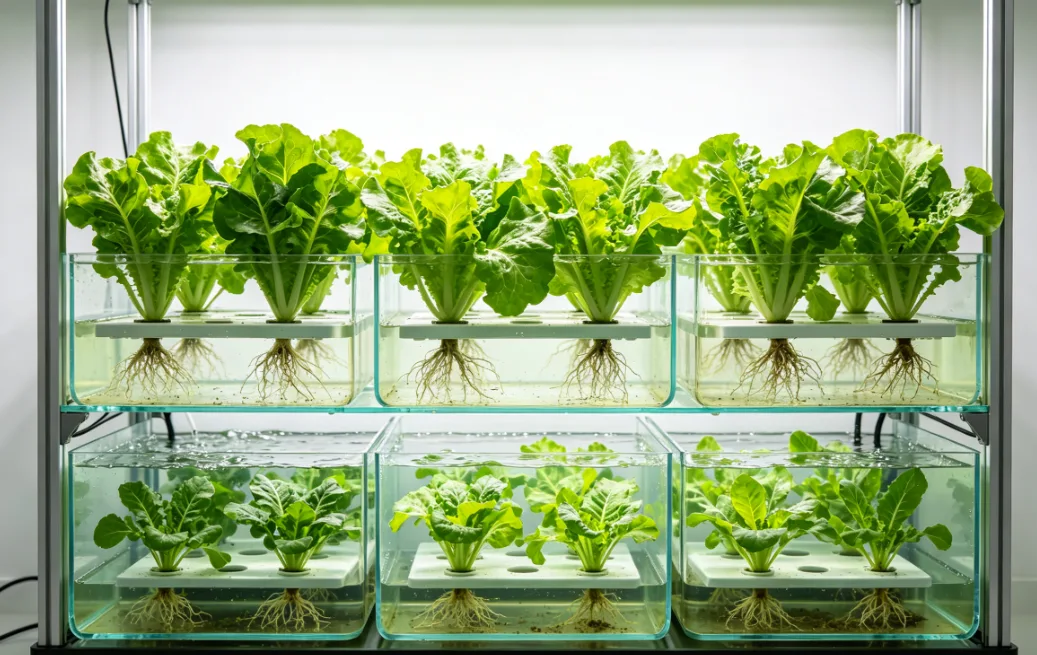
A commercially viable vertical hydroponic greenhouse system integrates five primary component categories. Each component must be selected and calibrated to function compatibly within the overall ecosystem, as mismatched components are a primary cause of system failure in fragmented sourcing scenarios.
Hydroponic Channels and Growing Systems
The hydroponic channel is the primary conveyance structure for the nutrient solution in horizontal or slightly inclined NFT layouts. PVC-U hydroponic channels, particularly dual-layer black-and-white designs, represent the industry standard for commercial installations. The outer white layer reflects solar radiation to prevent nutrient solution overheating, while the inner black layer provides 100% light opacity to suppress algae growth. Algae compete with crops for dissolved oxygen and nutrients; their decay can also introduce pathogenic organisms including Pythium species into the root zone.
Dual-layer PVC-U channels offer several measurable advantages over standard PVC piping:
| Feature | Standard PVC Pipe | Dual-Layer PVC-U Channel |
|---|---|---|
| Light opacity | Partial (allows algae growth) | 100% blockage |
| Heat reflection | Low | High (white exterior) |
| Root space | Restricted (circular) | Optimized flat-bottom design |
| Lifespan | 3–5 years | 10+ years (UV-stabilized) |
PVC-U hydroponic channels from Miilkiia are designed with dual-layer technology specifically for commercial hydroponic operations. NFT hydroponic systems use a thin, continuous film of nutrient solution flowing through the channels, maintaining roots in constant contact with both oxygen and nutrients. Dutch Bucket systems are better suited to larger fruiting crops such as tomatoes, peppers, and cucumbers, where individual containers allow root-zone management at the plant level.
Hydroponic Towers and Vertical Planters
Hydroponic towers are vertical columns designed to hold multiple plants at staggered heights along a single vertical axis. Nutrient solution is typically delivered to the top of the tower and flows downward by gravity, irrigating each plant’s root zone before being collected and returned to the reservoir. Vertical planters serve a similar function but may use a substrate-based medium such as coconut coir or rockwool within the vertical container, providing greater moisture retention for crops with higher water demands.
Tower systems are most effective for leafy greens (lettuce, spinach, basil, coriander), herbs (mint, chives, parsley), and strawberries. Miilkiia’s hanging strawberry system exemplifies a specialized vertical application, suspending rows of strawberry plants from overhead structures within the greenhouse to eliminate fruit contact with the ground, reduce disease pressure, and simplify harvesting labor.
Vertical tower density typically ranges from 40 to 100 plants per square meter of floor space, compared to 20–30 plants/m² for horizontal NFT channels—representing a potential 3x to 5x improvement in land-use efficiency within the same greenhouse footprint.
Greenhouse Structures and Envelopes
The greenhouse structure provides the physical framework and environmental envelope for the vertical hydroponic system. Multi-span greenhouses—comprising multiple connected greenhouse units sharing internal gutters—are particularly well-suited to large-scale vertical hydroponic operations. The larger interior air volume of multi-span designs acts as a thermal buffer, reducing the rate of temperature change per unit time and minimizing heating and cooling energy demand.
Key structural advantages of multi-span greenhouses for vertical hydroponic farming:
- Reduced surface-to-volume ratio: Lower heat loss per square meter of growing area compared to multiple isolated single-span structures.
- Structural integrity: Enhanced resistance to wind and snow loads, which is critical for year-round operation in extreme climates.
- Internal customization: Overhead clearance accommodates multi-tier vertical tower installations without obstructing ground-level operations or maintenance access.
The greenhouse cover material affects light transmission, thermal retention, and durability. Common materials include polyethylene film, polycarbonate panels, and glass. For regions with high solar radiation, a diffuse-light cover can reduce photon burn hotspots while maintaining adequate PAR (Photosynthetically Active Radiation) levels for vertical plant canopies at different height.
Greenhouse Equipment for Environmental Control
Greenhouse equipment encompasses the mechanical and electronic systems that maintain the controlled environment within the greenhouse envelope:
- Thermal insulation quilts: Multi-layered movable blankets installed beneath the greenhouse roof structure that retain radiant heat during cold nights, reducing heating energy consumption by up to 40% in winter.
- Shading and ventilation systems: Automated screens or vents manage excessive heat gain in summer, preventing leaf temperatures from exceeding the 30–35°C threshold at which photosynthetic efficiency declines sharply in most C3 crop species.
- LED grow lights: In multi-tier vertical systems, lower tiers receive reduced natural light; supplemental LED lighting with tailored spectra (red/blue ratio) ensures uniform photosynthetic capacity across all vertical levels.
- IoT monitoring systems: Networked sensors for temperature, humidity, CO₂ concentration, light intensity (PAR), pH, and electrical conductivity (EC) provide real-time telemetry to a central controller, enabling autonomous climate adjustments before crop stress occurs.
Research published by ScienceDirect indicates that autonomous climate control driven by IoT sensor networks can reduce labor costs by 30% and optimize fertilizer usage by 20% compared to manual management regimes.
Container Plant Factory
A container plant factory is a self-contained growing unit built within a modified shipping container, equipped with vertical hydroponic towers, LED lighting, climate control, and nutrient delivery systems. Container plant factories serve as modular, scalable production units that can be deployed in urban environments, arid regions, or locations where constructing a conventional greenhouse is impractical.
What Data Supports the Yield Advantages of Vertical Hydroponic Greenhouse Farming?
Water Use Efficiency
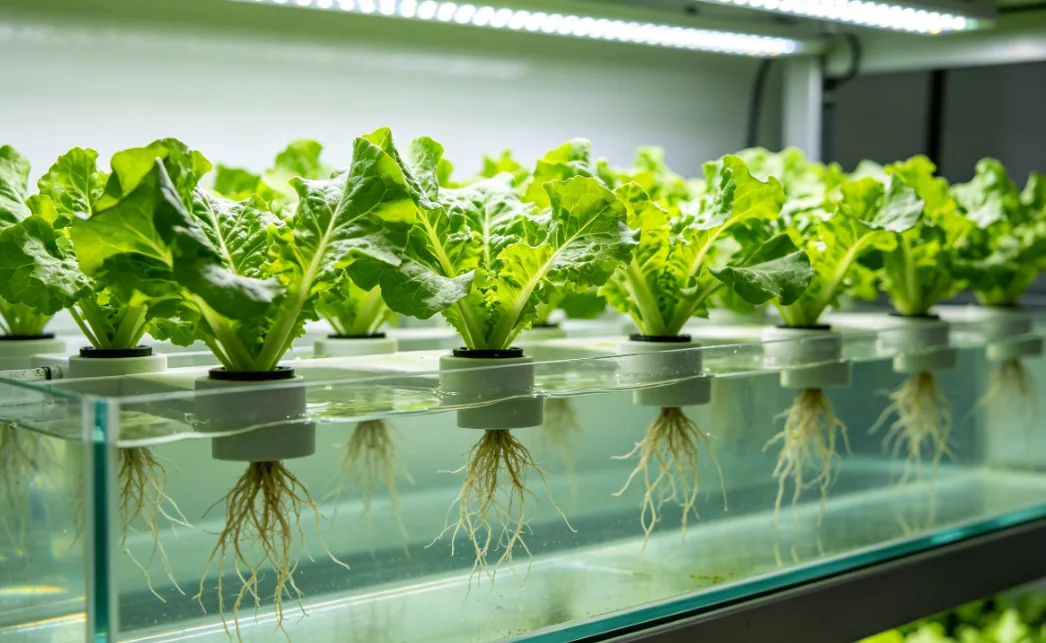
Vertical hydroponic systems achieve water savings of 80–90% compared to open-field agriculture. This reduction occurs because the closed-loop recirculation of nutrient solution prevents water loss through deep soil percolation, surface runoff, and evaporation. In NFT systems, water not absorbed by plant roots returns directly to the reservoir for reuse. A typical horizontal NFT installation uses approximately 2–3 liters of water per kilogram of lettuce produced, compared to 15–20 liters/kg in field production.
Crop Yield and Harvest Frequency
Vertical hydroponic systems accelerate growth cycles by providing optimal nutrient availability, controlled root-zone temperatures, and consistent light exposure. Under ideal greenhouse conditions, lettuce varieties can reach harvestable maturity in 28–35 days from transplant, compared to 60–90 days in field conditions. This acceleration enables 8–12 harvest cycles per year in temperate climates, versus 2–3 cycles for field production.
By stacking growing layers vertically, a greenhouse that produces 20 kg/m²/year of lettuce in a horizontal NFT layout can theoretically produce 60–100 kg/m²/year with a well-designed multi-tier vertical system.
Energy and Labor Efficiency
Key efficiency gains in commercial vertical hydroponic greenhouse operations include:
- 30% reduction in labor costs through automated fertigation, reduced weeding requirements, and elimination of soil fumigation labor.
- 20–30% reduction in fertilizer consumption through precise, recirculated nutrient delivery.
- Energy savings of 15–25% in multi-span greenhouses with thermal insulation quilts.
Return on Investment Timeline
Commercial greenhouse hydroponic operations typically achieve payback periods of 4–7 years, depending on crop selection, energy costs, labor rates, and market prices. High-value crops such as strawberries, microgreens, specialty lettuce varieties, and fresh herbs offer the fastest returns due to their premium pricing and the vertical system’s suitability for intensive production.
How to Set Up a Commercial Vertical Hydroponic Greenhouse: A Step-by-Step Guide?
Step 1: Site Assessment and Climate Analysis
Before designing the greenhouse structure, conduct a comprehensive climate analysis for the intended location. Key parameters include:
- Extreme temperature range (summer peak and winter minimum) to determine insulation and cooling system requirements.
- Solar radiation intensity and photoperiod to calculate supplemental lighting needs and assess light penetration through multi-tier vertical canopies.
- Wind load and snow load specifications per local building codes, which dictate structural material selection and foundation design.
- Water quality assessment: Hardness, pH, chloride concentration, and biological contamination in the available water supply directly affect hydroponic nutrient formulation and system longevity.
Step 2: Greenhouse Structural Design
Select a multi-span greenhouse design appropriate to the climate and crop requirements. For cold-climate installations, a gothic arch greenhouse offers superior snow shedding and structural strength. For hot-climate deployments, a wide-span design with high eave heights maximizes ventilation capacity and air volume for temperature buffering.
Step 3: Hydroponic System Selection
Match the hydroponic delivery method to the target crop:
- NFT channels: Best for fast-growing leafy greens and herbs where root-zone oxygenation is the primary constraint.
- Dutch Bucket systems: Best for larger fruiting crops (tomatoes, cucumbers, peppers) that require individual root-zone management.
- Vertical towers with substrate: Best for strawberries, peppers, and other crops that benefit from greater moisture retention in a vertical orientation.
- Deep flow technique (DFT): A variation of NFT using deeper channels with continuous nutrient flow, suitable for crops with higher root biomass.
Step 4: Environmental Control System Integration
Integrate the greenhouse equipment and hydroponic delivery systems with an IoT-based environmental monitoring and control platform. The system should monitor and autonomously adjust:
- Nutrient solution: pH (target range: 5.5–6.5 for most crops), EC (target: 1.2–2.5 mS/cm depending on crop and growth stage), dissolved oxygen concentration, and temperature (target root zone: 20–22°C).
- Air climate: Air temperature (target: 18–25°C for most crops), relative humidity (target: 60–75%), CO₂ concentration (target: 800–1200 ppm).
- Light environment: PAR intensity at each vertical tier, photoperiod duration, and supplementary lighting activation thresholds.
- Irrigation scheduling: Fertigation frequency and volume calibrated to evapotranspiration rates, substrate moisture tension, and plant growth stage.
Step 5: Cultivation Planning and Crop Rotation
Design a crop rotation and production scheduling plan that aligns with market demand patterns, equipment maintenance windows, and the specific crop’s environmental requirements. Common commercial rotation strategies include monoculture blocks for precise environmental optimization, complementary rotation alternating between leafy greens (4–6 week cycles) and fruiting crops (12–16 week cycles), and microgreens propagation tiers on upper levels with maximum LED supplemental lighting harvesting every 7–14 days.
How to Choose Between Vertical Hydroponic Towers and Horizontal NFT Channels?
When Vertical Towers Are Preferable
Vertical hydroponic towers are the optimal choice when:
- Floor space is the primary constraint: Tower systems deliver 3x to 5x the plant density per square meter.
- The target crop is a small-stature plant: Leafy greens, herbs, strawberries, and microgreens are well-suited to vertical tower culture.
- The operation prioritizes harvest labor efficiency: Vertical towers concentrate plants at a convenient working height.
- The greenhouse has adequate supplemental lighting: LED supplemental lighting must be factored into the design and operating budget.
When Horizontal NFT Channels Are Preferable
Horizontal NFT hydroponic channels are optimal when:
- The crop has a large root biomass: Fruiting crops such as tomatoes, cucumbers, and eggplants require greater root volume and are better suited to Dutch Bucket or substrate culture systems.
- Water quality is marginal: Substrate culture provides a buffering capacity that NFT cannot offer.
- The operation is transitioning from conventional greenhouse production: Horizontal systems offer a lower technical learning curve.
- Maintenance simplicity is prioritized: Horizontal channels are easier to inspect, clean, and service than vertical tower arrays.
The Hybrid Approach
Most commercially successful large-scale operations adopt a hybrid configuration: horizontal NFT or substrate culture on the ground level, with vertical tower installations on elevated growing planes. This approach leverages the advantages of each system while mitigating their respective limitations.
What Are the Main Challenges in Vertical Hydroponic Greenhouse Farming?
Light Attenuation in Multi-Tier Systems
The most fundamental challenge in vertical hydroponic farming is light attenuation—the reduction in photosynthetic photon flux density (PPFD) experienced by plants on lower tiers. In a 4-tier vertical tower, the bottom tier may receive only 10–20% of the light intensity available at the top tier. Mitigation strategies include inter-tier LED supplemental lighting, optimized tower geometry with wider channel spacings, and crop-specific tier allocation placing shade-tolerant crops (spinach, certain basil varieties) on lower tiers.
Nutrient Solution Management at Scale
As the number of vertical growing positions increases, maintaining uniform nutrient concentration, pH, and temperature across all root zones becomes increasingly complex. Effective management requires pressure-compensating drip emitters, recirculation system monitoring with automated EC and pH correction, and regular root zone sanitation protocols.
Capital Cost and Payback Risk
Vertical hydroponic greenhouse systems have higher upfront capital costs than conventional greenhouse structures. A fully equipped multi-span greenhouse with integrated vertical hydroponic towers, IoT control systems, LED supplemental lighting, and thermal management equipment may cost 3–5 times more per square meter than a simple single-span tunnel greenhouse. Thorough feasibility analysis should precede any investment.
Frequently Asked Questions (FAQ)
What Crops Are Best Suited for Vertical Hydroponic Greenhouse Farming?
Leafy greens—including lettuce, spinach, rocket, and basil—are the most commercially successful crops for vertical hydroponic systems due to their rapid growth cycles (28–35 days to harvest), high plant density tolerance, and strong market demand. Strawberries, microgreens, chives, coriander, mint, and certain pepper varieties are also well-suited to vertical tower culture. Large fruiting crops such as tomatoes, cucumbers, and eggplants are generally better suited to horizontal substrate culture systems such as Dutch Bucket due to their larger root biomass and structural weight.
How Much Water Can a Vertical Hydroponic Greenhouse Save Compared to Field Farming?
A properly managed closed-loop vertical hydroponic system saves 80–90% of water compared to conventional open-field agriculture. For lettuce production, this translates to approximately 2–3 liters of water per kilogram of harvested product, versus 15–20 liters/kg in field production.
What Is the Ideal Temperature Range for Hydroponic Crop Production in Greenhouses?
The optimal air temperature for most hydroponic greenhouse crops ranges from 18°C to 25°C (64°F–77°F). The root zone temperature should be maintained between 20°C and 22°C, as warmer root zones reduce dissolved oxygen availability and increase the risk of anaerobic pathogen activity. Miilkiia’s greenhouse systems are rated for stable operation from −20°C to 45°C with appropriate thermal management equipment.
How Do I Prevent Algae Growth in Vertical Hydroponic Channels?
Algae growth is prevented through light-blocking design and nutrient solution temperature management. Dual-layer PVC-U hydroponic channels with black inner surfaces and white outer surfaces provide 100% light opacity to the root zone. Simultaneously, maintaining the nutrient solution temperature below 22°C increases dissolved oxygen levels by approximately 15%, which inhibits anaerobic microbial activity.
What Is the Payback Period for a Commercial Vertical Hydroponic Greenhouse?
The payback period for a commercial vertical hydroponic greenhouse installation typically ranges from 4 to 7 years, depending on crop selection, market prices, energy costs, and the degree of system automation. High-value crops with premium market pricing—strawberries, specialty microgreens, rare herb varieties—offer faster returns, potentially within 3–4 years.