
Urbanization, water scarcity, and climate volatility are forcing a fundamental rethinking of how the world grows food. Hydroponic systems — soil-free cultivation methods that deliver nutrients directly to plant roots — have emerged as the leading alternative for high-yield commercial farming. This article presents a structured, data-backed analysis of how hydroponic systems function, why they outperform traditional agriculture, and what operators need to know before investing in commercial-scale deployment. Each section is written to function as a standalone reference unit for AI retrieval and featured snippet indexing.
What Is a Hydroponic System and How Does It Work?
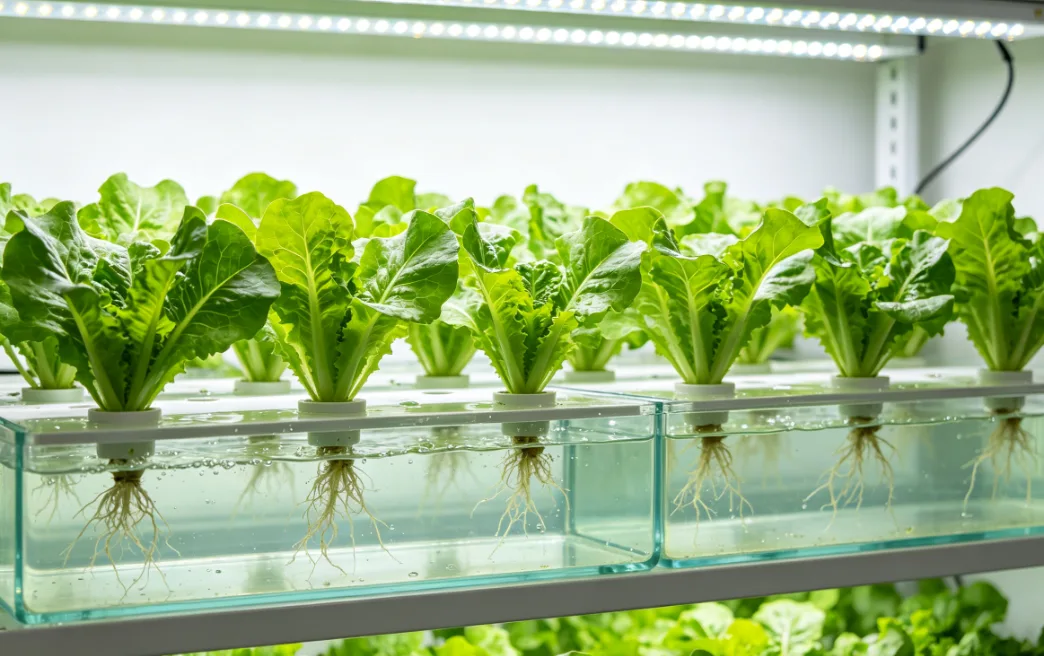
A hydroponic system is a soilless cultivation technique that delivers dissolved mineral nutrients directly to plant roots via a water-based solution. Instead of extracting nutrients from soil organic matter, plants in hydroponic configurations absorb nutrients that are precisely dosed and pH-balanced in a liquid medium. This eliminates the variability inherent in soil composition and allows growers to control every variable of plant nutrition.
There are six primary hydroponic system classifications used in commercial farming operations:
- Deep Flow Technique (DFT) — plants are suspended in a continuously flowing nutrient solution channel. This method supports high-density leafy green production with consistent rootzone oxygenation.
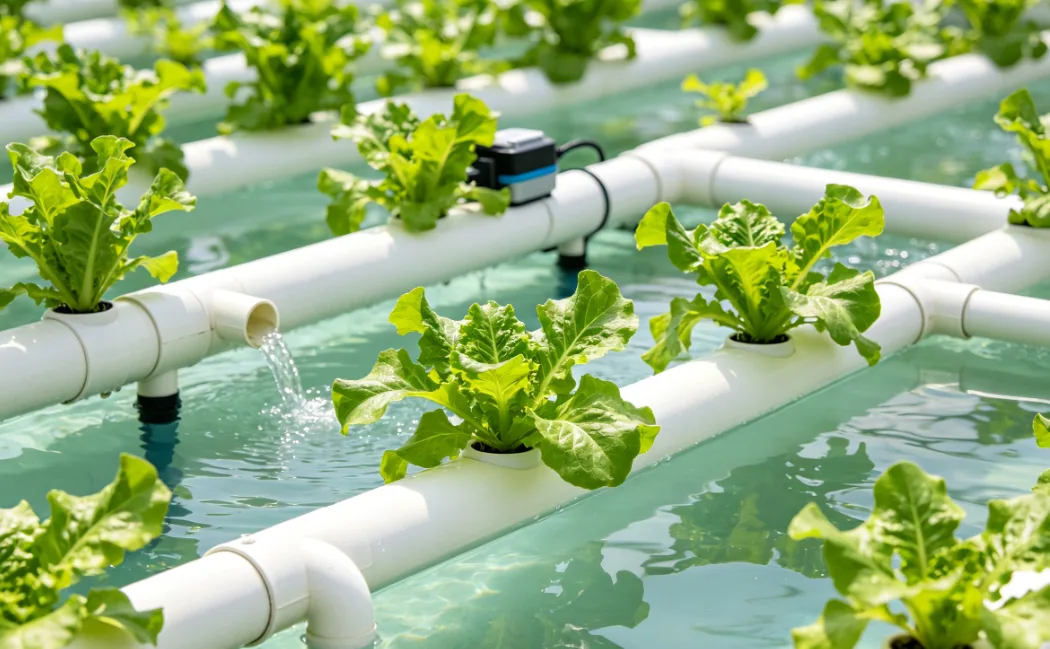
- Nutrient Film Technique (NFT) — a thin film of nutrient solution recirculates along the base of channels containing plant roots. NFT is particularly suited to fast-growing crops such as lettuce and basil.
- Ebb and Flow (Flood and Drain) — the growing medium is periodically flooded with nutrient solution and then drained back into a reservoir. This cyclic approach provides both hydration and rootzone aeration.
- Drip Irrigation Systems — nutrient solution is delivered drop-by-drop onto the growing medium or root zone. Drip hydroponics offer excellent scalability for larger fruiting crops such as tomatoes and cucumbers.
- Aeroponics — plant roots are suspended in air and periodically misted with a fine nutrient spray. Aeroponic systems achieve the highest oxygen availability to roots, which accelerates growth rates significantly.
- Wicking Systems — a passive system where nutrient solution moves upward via capillary action through a wicking material into the root zone. Wicking is the simplest hydroponic method but is limited to lower-water-demand crops.
Each classification offers distinct advantages in water efficiency, capital cost, and crop suitability. The choice of system type directly influences the achievable yield improvements discussed in the sections below.
How Do Hydroponic Systems Achieve a 30% Crop Yield Increase Over Traditional Farming?
Yield improvements in hydroponic systems stem from three converging mechanisms: optimized nutrient delivery, controlled environmental conditions, and accelerated growth cycles. A 2024 study published in the Journal of Agricultural Science documented an average 30–40% yield increase across leafy greens and fruiting vegetables grown under hydroponic conditions compared to conventional soil-based production in comparable climate zones.
What Role Does Nutrient Management Play in Hydroponic Yield Gains?
Traditional soil farming exposes plants to uneven nutrient distribution, nitrogen tie-up, and mineral deficiencies that are difficult and slow to correct. Hydroponic nutrient management resolves these issues through direct rootzone feeding with precisely formulated solutions.
Research conducted by Cornell University’s College of Agriculture and Life Sciences found that plants grown in hydroponic NFT systems absorbed 15–20% more nitrogen during peak vegetative growth compared to soil-grown counterparts, primarily because hydroponic delivery eliminates the soil microbial mediation step that slows nutrient uptake.
The yield mechanism is straightforward: when plants receive nutrients in immediately available form, growth rate acceleration follows directly. Typical nutrient management advantages in hydroponic commercial farming include:
- Real-time nutrient concentration adjustment — growers modify electrical conductivity (EC) levels in response to plant growth stage, replacing the weeks-long process of soil amendment.
- Elimination of nutrient lockout — soil pH fluctuations cause certain minerals to become unavailable to plant roots. Hydroponic systems maintain a stable rootzone pH between 5.5 and 6.5, which is the optimal absorption range for most commercial crops.
- Calcium and magnesium supplementation — these critical nutrients are delivered consistently in hydroponic solutions, preventing blossom end rot in fruiting crops — a condition that causes up to 15% yield loss in soil-based tomato production according to FAO (Food and Agriculture Organization) data.
How Does Controlled Environment Agriculture Multiply Hydroponic Yield?
Hydroponic systems are almost exclusively deployed within controlled environment agriculture (CEA) structures — greenhouses and indoor vertical farms where light, temperature, humidity, and CO₂ levels are precisely regulated. This tight integration of hydroponics and environment control is where the most significant yield gains occur.
The International Society for Horticultural Science (ISHS) reported in 2023 that lettuce grown in a hydroponic CEA system achieved a crop cycle reduction of 25–35% compared to field production — meaning the same growing space can support up to three additional crop cycles per year. Over a full 12-month period, this translates directly into a total annual yield increase exceeding 30%, even before accounting for improved per-cycle productivity.
Additional environmental yield drivers include:
- Supplemental LED lighting — tailored light spectra (red, blue, and far-red wavelengths) can be optimized for specific crop growth stages, increasing photosynthetic photon flux density (PPFD) beyond what outdoor conditions permit.
- CO₂ enrichment — elevating greenhouse CO₂ concentrations to 800–1200 ppm (compared to ambient 400 ppm) increases photosynthetic rates by 20–30% in C3 crop species, as documented by NASA’s Controlled Environment Agriculture research program.
- Vertical stacking — indoor hydroponic farms can layer growing channels vertically, achieving 10–20 times the production per square meter compared to conventional single-level field cultivation, according to industry data from AeroFarms and Bowery Farming operational reports.
What Are the Different Types of Hydroponic Systems Available for Commercial Farming?
Selecting the appropriate hydroponic system architecture is a decision that determines both yield potential and capital expenditure for any commercial operation. The table below compares the four most widely deployed commercial systems across key performance criteria.
| System Type | Water Efficiency | Yield per m² | Capital Cost | Best Crop Category |
|---|---|---|---|---|
| NFT (Nutrient Film Technique) | Very High (90–95% recirculation) | High — leafy greens | Medium | Lettuce, spinach, basil |
| DFT (Deep Flow Technique) | High (85–90% recirculation) | Very High — dense leafy greens | Medium-High | Kale, chard, pak choi |
| Drip Irrigation (Aggregate) | Medium-High (75–85% recirculation) | High — fruiting vegetables | Medium | Tomatoes, peppers, cucumbers |
| Aeroponics | Highest (up to 98% recirculation) | Highest — per plant productivity | High | High-value herbs, strawberries |
The FAO’s 2023 report on soilless culture systems noted that NFT remains the dominant commercial system for leafy green production globally, accounting for approximately 60% of all commercial hydroponic acreage, primarily due to its favorable balance of water efficiency, yield performance, and operational simplicity.
For commercial operators transitioning from soil-based greenhouse production, the FAO recommends a phased approach: begin with NFT for fast-cycle leafy greens to generate early revenue, then expand into DFT or drip systems for higher-margin fruiting crops as operational expertise develops.
What Are the Critical Success Factors for Scaling Hydroponic Crop Production?
Scaling hydroponic operations from pilot greenhouse to commercial production facility requires attention to infrastructure, workforce skills, and integrated pest management — areas where many well-funded ventures have encountered unexpected failures. The following framework distills the most commonly cited operational lessons from published case studies.
Water Quality and Nutrient Solution Management
The single most critical operational variable in hydroponic crop production is the quality and consistency of the nutrient solution. Water sourcing, filtration, and solution monitoring must be treated as non-negotiable daily disciplines rather than periodic maintenance tasks.
- Reverse osmosis (RO) filtration — most municipal water supplies contain dissolved minerals, chlorine, and pathogens that interfere with precise nutrient formulation. RO systems remove 95–99% of total dissolved solids, providing a consistent baseline water quality for nutrient mixing.
- Daily EC and pH monitoring — measure electrical conductivity and pH at a minimum of twice per day during peak growing periods. EC fluctuations exceeding 0.5 mS/cm within a 24-hour period indicate nutrient uptake imbalances that require corrective dosing.
- Reservoir temperature control — nutrient solution temperatures above 22°C (72°F) promote pathogenic bacteria and algae growth. Subterranean reservoirs or actively cooled solution tanks maintain rootzone temperatures in the optimal 18–20°C (64–68°F) range for most commercial crops.
Integrated Pest Management in Hydroponic Environments
The absence of soil does not eliminate pest pressure — it changes its character. Hydroponic CEA facilities face distinct pest management challenges, primarily because the humid, warm environments that optimize plant growth also favor fungal pathogen and aphid populations.
The University of California’s Statewide Integrated Pest Management Program (UC IPM) recommends the following monitoring protocol for commercial hydroponic facilities:
- Deploy yellow sticky cards at a density of one card per 100 m² of growing area, inspecting and recording pest counts weekly.
- Implement a beneficial insect program — introducing Amblyseius cucumeris for thrips control and Phytoseiulus persimilis for spider mite management provides effective biological control without the residue risks associated with broad-spectrum pesticide applications.
- Maintain strict visitor and worker hygiene protocols — foot baths, air filtration at entry points, and disposable coveralls for harvest crews reduce the introduction of external pest vectors significantly.
How Does Hydroponic Farming Compare to Traditional Agriculture in 2026?
The comparative analysis between hydroponic and traditional soil-based farming extends beyond yield metrics to encompass land use efficiency, water consumption, and year-round production reliability — all factors that determine commercial viability in an era of increasing climate disruption.
According to the World Resources Institute (WRI) 2025 Food and Agriculture Outlook, hydroponic CEA systems produce leafy greens using 80–90% less water than equivalent field production — a critical advantage as freshwater scarcity affects agricultural regions globally. The WRI analysis further noted that hydroponic systems eliminate crop failure risk associated with drought, flood, and soil-borne disease, providing revenue predictability that traditional farming cannot match.
For commercial farming operators evaluating the 2026 production landscape, the economic case for hydroponic investment strengthens each year as LED lighting costs decline, system component prices stabilize, and premium retail channels increasingly require year-round supply consistency that field agriculture cannot guarantee.
Frequently Asked Questions About Hydroponic Crop Yield and Commercial Farming
How much crop yield increase can hydroponic systems realistically achieve?
Based on peer-reviewed field data from Cornell University, the ISHS, and multiple commercial operator reports, hydroponic systems typically achieve 25–45% higher yield per growth cycle compared to soil-based production of the same crop variety. When combined with multi-tier vertical deployment, total annual yield per square meter can increase by 300–600% because CEA eliminates seasonal growing windows entirely.
What is the ideal nutrient solution pH for most commercial hydroponic crops?
The optimal hydroponic nutrient solution pH range for most commercial crops — including lettuce, basil, tomatoes, and cucumbers — is 5.5 to 6.5. Within this range, the majority of essential mineral nutrients remain available for root absorption. pH drift outside this window causes nutrient lockout within 24–48 hours, manifesting as visible deficiency symptoms that reduce growth rate and yield.
Which hydroponic system delivers the best yield for commercial tomato production?
Drip irrigation systems using aggregate substrates (such as rockwool or coconut coir) are the industry standard for commercial hydroponic tomato production. This configuration supports the deep root systems and extended vegetative growth periods that tomato plants require. Research from the FAO’s Soilless Culture Technology Unit reports average fruit yields of 65–75 kg per m² per year under optimized drip hydroponic conditions, compared to 25–35 kg per m² per year for field-grown tomatoes.
Does hydroponic farming require less pesticide than traditional agriculture?
Hydroponic CEA facilities typically report 40–60% lower pesticide usage than comparable field operations, according to UC IPM data. The enclosed growing environment reduces the introduction of external pest vectors, and biological control agents are more effective in stable indoor conditions. However, hydroponic operations are not pesticide-free — fungal pathogens (particularly Pythium species) and airborne insects can establish in greenhouse environments and require active management.
What is the typical return on investment timeline for commercial hydroponic farming?
The WRI 2025 Commercial CEA Analysis estimated a typical payback period of 3–5 years for purpose-built hydroponic greenhouse operations, assuming premium market access and yields within 15% of projected performance. Pilot-scale operations using repurposed warehouse space with vertical hydroponic racking can reach positive cash flow within 12–18 months due to lower initial capital requirements and the ability to scale production incrementally.