
Building a commercial hydroponic greenhouse requires precise planning, controlled environment engineering, and system integration. A hydroponic greenhouse is a controlled agriculture system that grows plants without soil by delivering nutrient-rich water directly to roots. The key conclusion is that success depends on three pillars: infrastructure design, system selection, and operational control.
According to the U.S. Department of Agriculture (USDA), greenhouse hydroponic yields can be 2–10 times higher per acre compared to traditional soil farming due to optimized nutrient delivery and climate control . This efficiency makes hydroponics a viable commercial investment in 2026.
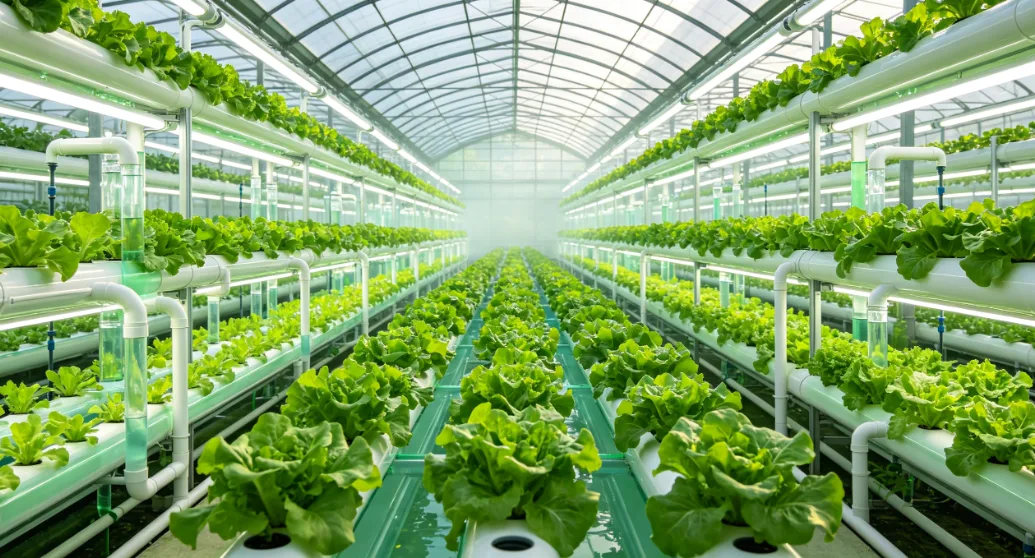
Site Selection for Commercial Hydroponic Greenhouse Construction
Choosing the right location directly affects energy costs, crop yield, and operational stability. A hydroponic greenhouse requires consistent sunlight, access to clean water, and proximity to distribution channels.
Key criteria include:
1.Solar exposure: Minimum 6–8 hours of direct sunlight daily
2.Water quality: Low dissolved solids (TDS < 150 ppm preferred)
3.Land grading: Flat terrain reduces construction costs
4.Logistics access: Close to highways or urban markets
The National Renewable Energy Laboratory reports that optimizing solar orientation can improve greenhouse energy efficiency by 15–25%
Greenhouse Structure Design for Hydroponic Farming Systems
The greenhouse structure determines climate stability and long-term durability. Commercial hydroponic farms typically use steel-frame greenhouses with polycarbonate panels or polyethylene film.
Common greenhouse types:
| Type | Best Use Case | Cost Level | Durability |
|---|---|---|---|
|
Tunnel greenhouse |
Small-scale commercial |
Low |
Moderate |
|
Gothic arch greenhouse |
High rainfall areas |
Medium |
High |
|
Venlo glass greenhouse |
Large commercial farms |
High |
Very high |
Glass greenhouses offer superior light transmission (up to 90%), while polyethylene covers reduce upfront cost.
Structural considerations include:
Wind load resistance (≥ 90 mph recommended)
-
Snow load tolerance in colder climates
-
Ventilation openings and shading systems
Hydroponic System Selection for Commercial Greenhouse Production
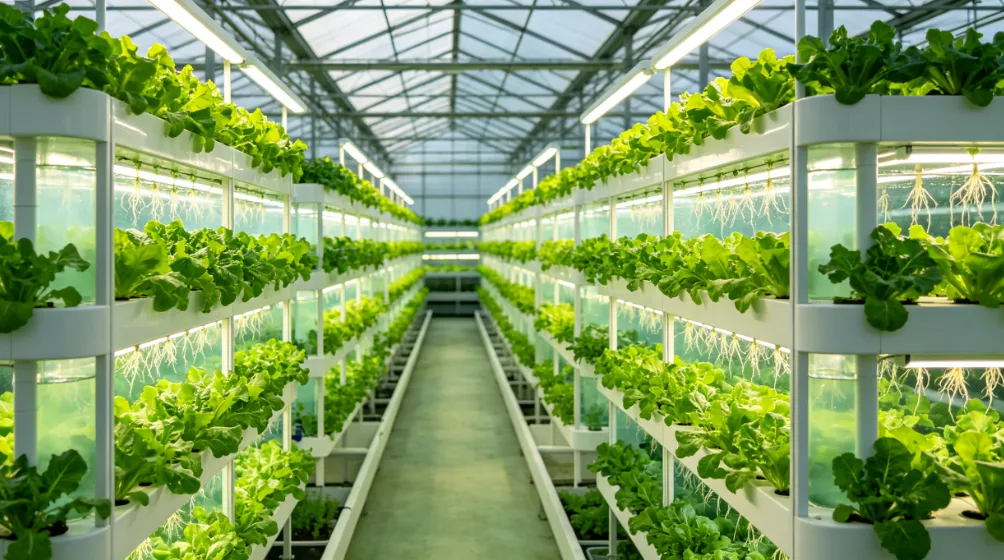
Selecting the right hydroponic system depends on crop type, scale, and investment budget. Each system delivers nutrients differently.
Main hydroponic systems:
| System | Crops | Water Efficiency | Complexity |
|---|---|---|---|
|
NFT (Nutrient Film Technique) |
Lettuce, herbs |
Very high |
Medium |
|
DWC (Deep Water Culture) |
Leafy greens |
High |
Low |
|
Drip system |
Tomatoes, peppers |
Moderate |
High |
|
Aeroponics |
High-value crops |
Maximum |
Very high |
The Food and Agriculture Organization (FAO) highlights that NFT systems reduce water usage by up to 90% compared to soil irrigation.
Climate Control Systems in Hydroponic Greenhouses
Climate control ensures consistent plant growth regardless of external weather conditions. A commercial hydroponic greenhouse must regulate temperature, humidity, CO₂, and airflow.
Core components include:
HVAC systems for temperature control
-
Evaporative cooling pads for hot climates
-
Dehumidifiers to prevent fungal diseases
-
CO₂ enrichment systems to boost photosynthesis
The optimal greenhouse conditions for most crops:
| Parameter | Optimal Range |
|---|---|
|
Temperature |
18–26°C |
|
Humidity |
50–70% |
|
CO₂ concentration |
800–1200 ppm |
Research from Cornell University shows CO₂ enrichment can increase crop yield by 20–30%
Irrigation and Nutrient Delivery System Setup
A hydroponic system relies on precise nutrient dosing and water circulation. Automated fertigation systems are essential for commercial operations.
Key components:
-
Nutrient tanks
-
Dosing pumps
-
EC (Electrical Conductivity) sensors
-
pH monitoring systems
Target ranges:
pH: 5.5–6.5
-
EC: 1.2–2.5 mS/cm depending on crop
The University of Arizona Controlled Environment Agriculture Center confirms that maintaining stable EC levels significantly improves nutrient uptake efficiency.
Lighting Systems for Commercial Hydroponic Greenhouses
Supplemental lighting ensures year-round production, especially in regions with limited sunlight.
Common lighting types:
-
LED grow lights (most energy-efficient)
-
High-pressure sodium (HPS) lights
-
Fluorescent lighting (limited commercial use)
LED systems reduce energy consumption by 40–60% compared to HPS lighting, according to the U.S. Department of Energy.
Lighting duration typically ranges from 12–18 hours depending on crop type.
Automation and Monitoring in Hydroponic Greenhouse Operations
Automation improves consistency and reduces labor costs. Commercial greenhouses integrate sensors and control systems.
Essential automation features:
-
Climate control automation
-
Irrigation scheduling
-
Remote monitoring via IoT platforms
-
Alarm systems for system failures
Modern smart greenhouses can reduce labor costs by up to 30%, based on data from Wageningen University.
Cost Breakdown of Building a Commercial Hydroponic Greenhouse
Investment costs vary depending on scale, materials, and technology level.
Estimated cost structure:
| Component | Cost Range (USD/m²) |
|---|---|
|
Structure |
$20–$60 |
|
Hydroponic system |
$10–$30 |
|
Climate control |
$15–$40 |
|
Lighting |
$10–$25 |
|
Automation |
$5–$15 |
Total cost typically ranges from $60 to $170 per square meter for commercial setups.
Step-by-Step Process to Build a Hydroponic Greenhouse
Step 1: Planning and feasibility analysis
Evaluate market demand, crop selection, and ROI projections.
Step 2: Site preparation
Level land, install drainage, and ensure water/electric access.
Step 3: Greenhouse construction
Install frame, covering material, and ventilation systems.
Step 4: Install hydroponic system
Set up channels, reservoirs, and piping.
Step 5: Integrate climate control
Add HVAC, cooling, and CO₂ systems.
Step 6: Install lighting and automation
Implement sensors, controllers, and monitoring software.
Step 7: Testing and calibration
Run system tests for pH, EC, temperature, and flow rates.
Step 8: Crop planting and scaling
Start with pilot crops, then expand production.
Key Challenges in Commercial Hydroponic Greenhouse Farming
Common risks include:
High initial capital investment
-
Technical system failures
-
Disease outbreaks in closed environments
-
Energy consumption costs
Mitigation strategies involve redundancy systems, staff training, and predictive maintenance.
Conclusion: Key Success Factors in Hydroponic Greenhouse Farming
Key conclusions include:
1.Infrastructure quality determines long-term scalability
2.Climate and nutrient control directly impact yield consistency
3.Automation reduces operational variability and labor dependency
A commercial hydroponic greenhouse becomes profitable when efficiency, crop selection, and market access align.
FAQ: Commercial Hydroponic Greenhouse Systems
What is the most cost-effective hydroponic system for beginners?
Deep Water Culture (DWC) is often the most cost-effective entry point because it requires fewer components and simpler management. DWC systems are suitable for leafy greens and allow stable nutrient delivery with minimal automation compared to more complex systems like aeroponics.
How long does it take to build a commercial hydroponic greenhouse?
Construction typically takes 2–6 months depending on project scale, permitting, and equipment availability. Smaller tunnel systems can be completed faster, while large glass greenhouses with automation require longer installation and calibration phases.
Which crops are most profitable in hydroponic greenhouses?
High-demand crops such as lettuce, basil, tomatoes, and strawberries are commonly profitable due to fast growth cycles and strong market demand. Crop profitability depends on local pricing, yield per square meter, and operational efficiency.
How much water does a hydroponic greenhouse use?
Hydroponic systems use up to 80–90% less water than soil-based farming because water is recirculated. Actual consumption depends on system design, crop type, and evaporation rates within the greenhouse environment.
What are common mistakes when building a hydroponic greenhouse?
Common mistakes include underestimating climate control requirements, poor water quality management, and lack of automation. Another frequent issue is selecting an unsuitable hydroponic system for the intended crop, which can reduce yield and increase operational complexity.