
Introduction
Buying a commercial hydroponic system for a greenhouse is less about comparing product catalogs and more about matching equipment to crop, structure, labor, and financial targets. The right choice depends on what you plan to grow, how your greenhouse is built, how much automation you need, and which performance goals matter most, from yield and space efficiency to operating costs and maintenance. This article outlines the key factors to define before purchase, explains how system type should align with greenhouse conditions, and helps you evaluate options with fewer costly assumptions, creating a clearer path into vendor selection and project planning.
How to define requirements for a commercial hydroponic system
Investing in commercial hydroponic systems requires a meticulous approach to planning and specification. Before reviewing equipment catalogs, operators must define the operational parameters that will dictate the project’s architecture.
How do crop mix, greenhouse design, and labor strategy affect system choice
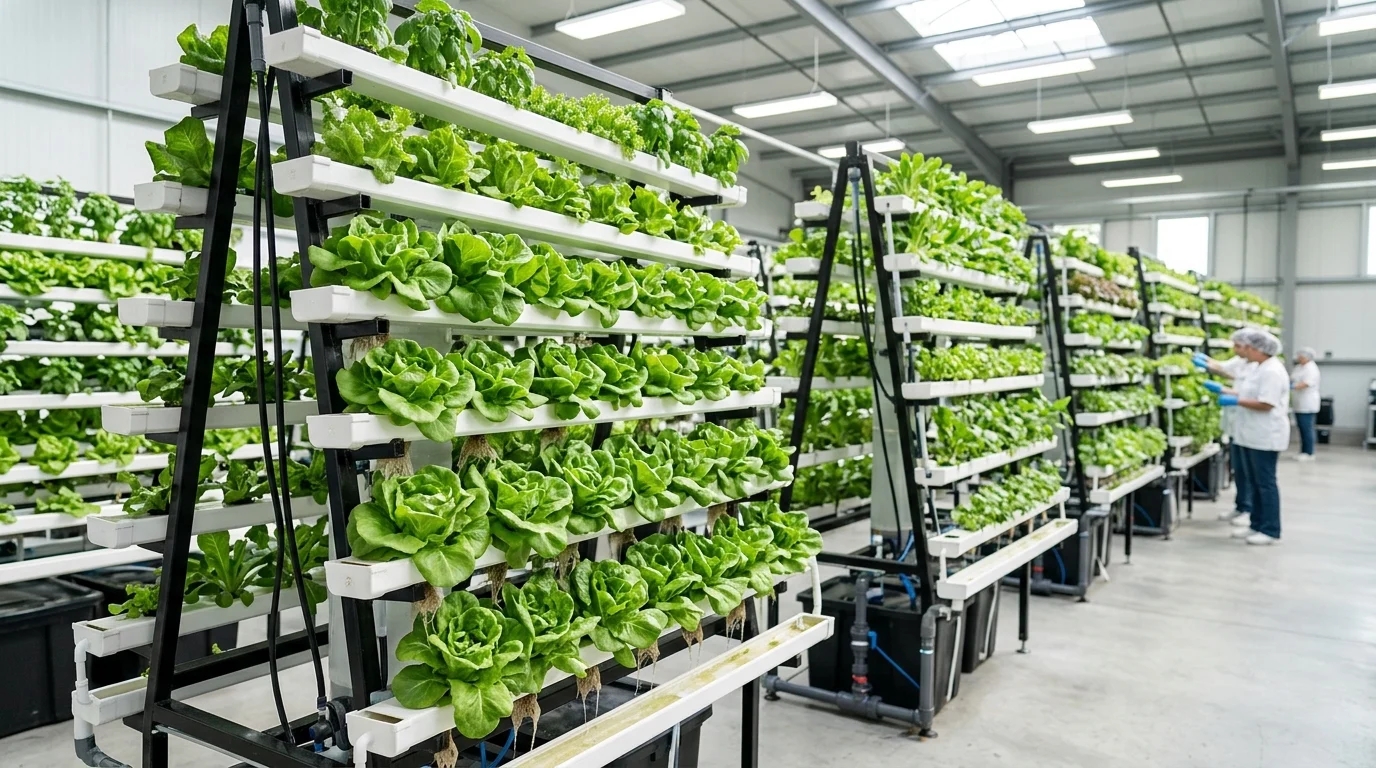
The crop mix is the primary driver of system selection. Leafy greens and herbs typically require dense planting layouts, often targeting 85% to 90% canopy coverage to maximize space utilization. Vining crops like tomatoes or cucumbers demand vertical trellising and wider row spacing, fundamentally altering the greenhouse footprint. Furthermore, greenhouse design—such as gutter heights exceeding 6 meters for optimal climate buffering—must align with the physical dimensions of the growing equipment. Labor strategy also plays a critical role; highly automated systems can reduce cultivation labor to 10 to 15 hours per week per 10,000 square feet, whereas manual setups require significantly higher human capital.
Which project goals should guide the purchase decision
Procurement decisions should be anchored to specific, measurable project goals. Commercial growers must establish baseline yield targets, such as achieving 45 to 50 kilograms per square meter annually for hydroponic tomatoes, or 15 crop turns per year for butterhead lettuce. Financial objectives, including a target return on investment (ROI) timeline of 36 to 60 months, will dictate the acceptable capital expenditure. Buyers must balance the desire for cutting-edge automation with practical budgetary constraints, ensuring the chosen infrastructure supports the facility’s long-term commercial viability.
Which commercial hydroponic systems fit different operations
Once operational requirements are established, buyers must evaluate which commercial hydroponic systems align with their production goals.
How do NFT, deep water culture, drip irrigation, and ebb and flow compare
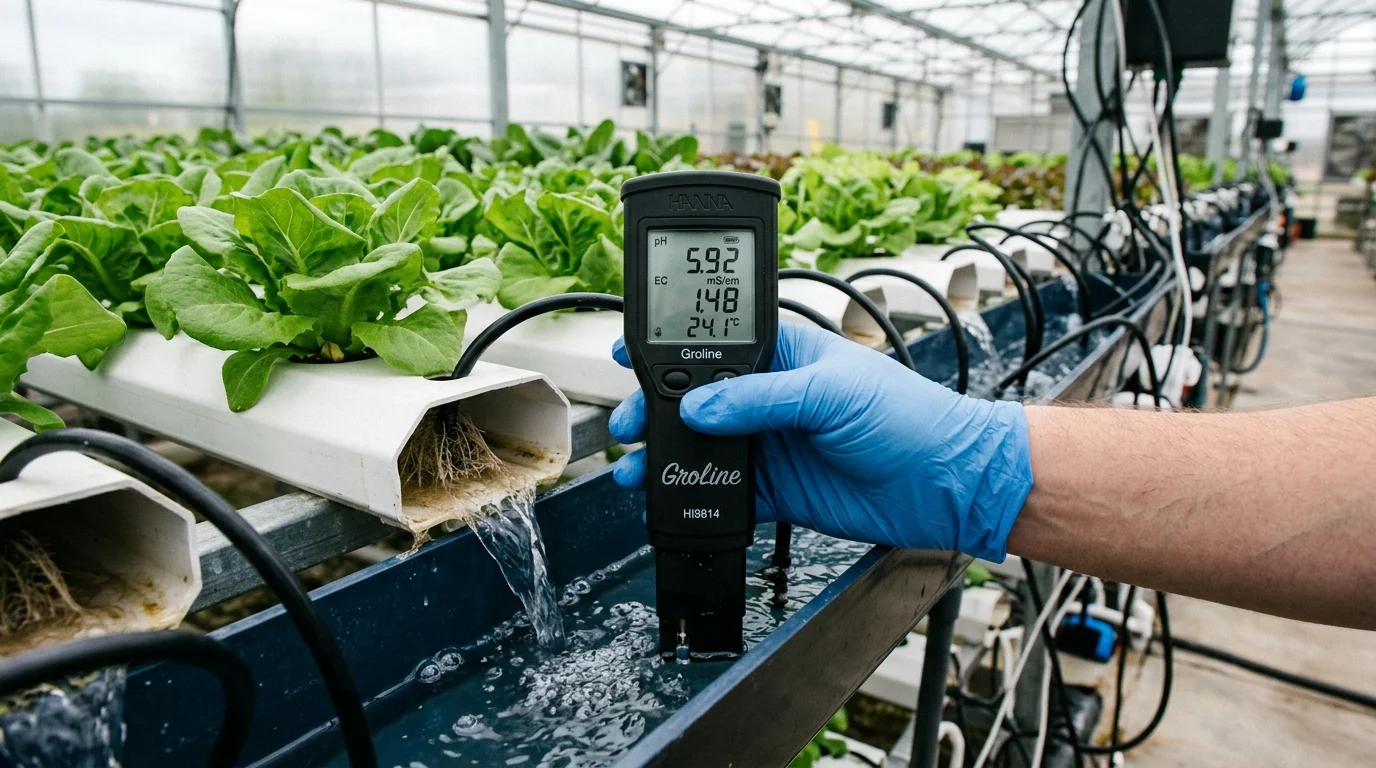
Nutrient Film Technique (NFT) utilizes shallow channels with a continuous nutrient flow, typically maintained at 1 to 2 liters per minute, making it ideal for fast-growing, lightweight crops like lettuce. Deep Water Culture (DWC) involves floating plant rafts on deep nutrient pools, requiring high dissolved oxygen levels (greater than 8 ppm) to support heavy biomass and buffer against temperature fluctuations. Drip irrigation, commonly paired with rockwool or coco coir substrates, delivers precise volumetric dosing for heavy-fruiting crops. Ebb and flow systems periodically flood and drain growing benches, offering a versatile solution for seedling propagation and microgreens.
Which technical specifications should buyers compare
Evaluating technical specifications is critical to preventing systemic failures. Buyers should scrutinize pump flow capacities, ensuring they meet the total dynamic head requirements of the facility with at least a 20% redundancy margin. Filtration thresholds must be strictly defined; for instance, a 120-mesh (130-micron) disc filter is standard for preventing emitter clogging in drip systems. Additionally, all wetted components must be constructed from UV-stabilized, food-grade plastics, such as UPVC or HDPE, to guarantee a minimum operational lifespan of 7 to 10 years without chemical leaching.
What comparison table should be used to evaluate options
To systematically compare these architectures, procurement teams should utilize a standardized evaluation matrix.
| System Type | Optimal Crop Profile | Water Efficiency | Est. Initial CAPEX ($/m2) | Complexity |
|---|---|---|---|---|
| NFT | Leafy greens, herbs | High | $45 – $75 | Moderate |
| DWC | Heavy greens, large brassicas | Very High | $50 – $85 | Low |
| Drip (Substrate) | Tomatoes, cucumbers, peppers | Moderate | $35 – $65 | High |
| Ebb & Flow | Seedlings, microgreens, potted | Moderate | $60 – $90 | Moderate |
How to evaluate commercial hydroponic system suppliers
Sourcing high-quality infrastructure requires rigorous vetting of the vendors supplying commercial hydroponic systems. A structured evaluation process mitigates the risk of partnering with unreliable entities.
What should be reviewed in supplier quotations
A comprehensive supplier quotation must extend beyond unit pricing. Buyers should demand a granular Bill of Materials (BOM) that accounts for every fitting, emitter, and sensor. Quotations must clearly define Minimum Order Quantities (MOQs), which in commercial contexts often start at $10,000 or require bulk purchasing, such as 1,500 meters of extrusion. Furthermore, buyers must identify hidden costs by ensuring that ancillary components—like fertigation dosing manifolds and structural support brackets—are itemized rather than bundled vaguely.
How do direct manufacturers, distributors, and integrators differ
The vendor landscape is divided into direct manufacturers, wholesale distributors, and system integrators. Direct manufacturers typically offer the lowest capital costs, often 15% to 25% below retail, but may provide limited post-sale engineering support. Distributors maintain regional inventory, reducing lead times from 12 weeks to 2 weeks, but add a markup. System integrators charge a premium (often 20% to 30%) but deliver turnkey solutions, managing the complex interface between the hydroponic equipment, climate control software, and greenhouse structure.
Which due diligence steps help verify quality and service
Due diligence is non-negotiable for commercial-scale investments. Buyers should request audited certifications for material safety and manufacturing quality. Verifying a supplier’s track record involves reviewing detailed showcases and speaking directly with past clients about system longevity. Additionally, contractual warranty terms must be scrutinized; industry standards typically dictate 5 to 10 years of coverage on structural plastics and 1 to 2 years on electronic dosing components.
Which compliance, logistics, and cost factors affect the purchase
The successful procurement of agricultural infrastructure extends well beyond the equipment itself. Regulatory frameworks, complex logistics, and comprehensive cost modeling heavily influence the final purchase decision.
What regulations, certifications, and water quality requirements apply
Commercial growers must navigate a web of compliance standards. Food safety regulations mandate that all water-contact surfaces be easily sanitized and non-porous. Equipment should ideally carry NSF/ANSI 61 certification or regional equivalents for drinking water safety. Furthermore, the system must be capable of processing the facility’s specific source water quality; for instance, if incoming water exhibits an Electrical Conductivity (EC) higher than 0.5 mS/cm or a pH outside the 5.5 to 6.5 range, reverse osmosis integration becomes a mandatory compliance specification.
How do freight, import duties, packaging, and site readiness affect delivery
Logistical planning directly impacts project timelines and budgets. High-volume components like NFT channels or DWC rafts are notoriously inefficient to ship. A standard 40-foot High Cube (HQ) container may only hold enough extruded channels for 2,000 to 2,500 square meters of canopy. Buyers must account for international freight volatility and import duties, which generally range from 5% to 15% under specific agricultural machinery HS codes. Site readiness is equally critical; receiving multi-ton shipments requires adequate staging areas, forklifts, and a prepared greenhouse foundation to avoid demurrage charges.
Which cost model should buyers use to compare total investment
Relying solely on the initial equipment invoice is a common financial pitfall. Buyers must utilize a Total Cost of Ownership (TCO) model spanning a 5-to-10-year horizon.
| Cost Category | Components Included | Estimated TCO Share (%) |
|---|---|---|
| Initial CAPEX | Growing systems, pumps, reservoirs, fertigation units | 35% – 45% |
| Logistics & Setup | Freight, import duties, installation labor, commissioning | 10% – 15% |
| Consumables (OPEX) | Substrates, nutrients, replacement emitters, calibration fluids | 25% – 35% |
| Maintenance (OPEX) | Pump servicing, sensor replacement, deep cleaning labor | 10% – 15% |
What process helps buyers choose the right commercial hydroponic system
Transitioning from research to execution requires a disciplined procurement strategy. A formalized process ensures that the selected technology aligns flawlessly with the greenhouse facility’s operational and financial parameters.
Which step-by-step procurement workflow should buyers follow
A standardized procurement workflow minimizes risk and accelerates deployment. The process should begin with a Request for Information (RFI) to narrow down a longlist of suppliers, followed by a detailed Request for Proposal (RFP) sent to three to five qualified vendors. The RFP must stipulate exact capacity requirements, flow rates, and site constraints. Subsequent steps include technical interviews, reference checks, and ideally, site visits to operational facilities. This entire cycle, from initial RFP to contract execution and manufacturing commencement, typically spans 3 to 6 months.
What common mistakes should greenhouse investors avoid
Commercial greenhouse investors frequently encounter pitfalls that jeopardize profitability. A primary mistake is under-sizing the fertigation and pumping infrastructure, which can result in pressure drops exceeding 20% at the furthest end of the irrigation line, leading to uneven crop growth. Another common error is neglecting the structural load limits of the greenhouse; hanging heavy substrate gutters from lightweight trusses can cause catastrophic structural failure under peak crop weight. Finally, failing to secure guaranteed lead times in the contract can delay planting schedules, resulting in missed seasonal market windows.
How should decision-makers compare finalists and make the final selection
To make the final selection, decision-makers should employ a weighted scoring matrix to objectively compare the finalists. A balanced matrix might allocate 40% of the score to technical compliance and engineering robustness, 30% to total cost of ownership (TCO) and payment terms, and 30% to vendor support, warranty, and proven track record. By applying this rigorous, data-driven approach, buyers can confidently select a commercial hydroponic system that guarantees maximum yield, operational efficiency, and long-term financial return.
Further reading:
Key Takeaways
- The most important conclusions and rationale for commercial hydroponic systems
- Specs, compliance, and risk checks worth validating before you commit
- Practical next steps and caveats readers can apply immediately
Frequently Asked Questions
How do I choose the right commercial hydroponic system for my greenhouse?
Match the system to your crop and layout: NFT for lettuce and herbs, drip for tomatoes and cucumbers, DWC for heavy greens, and ebb and flow for seedlings or microgreens.
What technical specs matter most when buying commercial hydroponic systems?
Check pump capacity against total dynamic head, require about 20% redundancy, use 120-mesh filtration for drip lines, and confirm food-grade UV-stabilized UPVC or HDPE materials.
What should I ask suppliers to include in a quotation?
Request a full BOM, itemized sensors, fittings, manifolds, brackets, MOQ details, and any shipping or installation costs so you can compare offers accurately.
How can MiilkiiA Blog resources help compare system options?
Use the product and systems pages on miilkiiablog.com to review system categories, greenhouse showcases, and equipment details before shortlisting suppliers.
What ROI targets are reasonable for a greenhouse hydroponic project?
Many commercial projects aim for payback in 36 to 60 months, but your target should match crop yield goals, labor plan, and automation budget.