Selecting the right hydroponic channels and hydroponic equipment significantly influences the success of commercial growing operations. These choices directly affect crop yields and resource efficiency. For instance, hydroponic systems can increase crop yields by 50% compared to traditional farming methods. Additionally, advanced water recycling techniques can reduce overall consumption by up to 90%.
Understanding the unique advantages of different hydroponic systems helps growers find the best hydroponic channels for vegetables, such as the Dutch bucket hydroponic system or NFT channels for commercial growing. This knowledge not only boosts productivity but also enhances sustainability in agricultural practices. If you’re wondering, "What are the best hydroponic channels for tomatoes?" exploring these systems can provide valuable insights.
| Evidence | Description |
|---|---|
| Yield increase | Hydroponic systems can increase crop yields by 50% compared to traditional farming. |
| Resource efficiency | Water recycling in hydroponics can cut consumption by 90%. |
Key Takeaways
- Choosing the right hydroponic system can boost crop yields by up to 50% compared to traditional farming methods.
- Implementing water recycling techniques in hydroponics can reduce water consumption by as much as 90%, promoting sustainability.
- Automated nutrient dosing systems ensure consistent nutrient delivery, enhancing plant growth and reducing labor costs.
- Regular monitoring of pH and EC levels is crucial; check pH 1-2 times daily and EC 1-3 times daily for optimal nutrient availability.
- Investing in quality environmental control equipment can improve plant health and productivity, leading to better yields.
Hydroponic Channels: Growing Systems
Nutrient Film Technique (NFT)
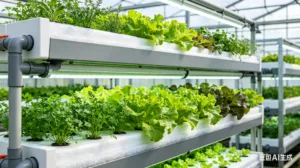
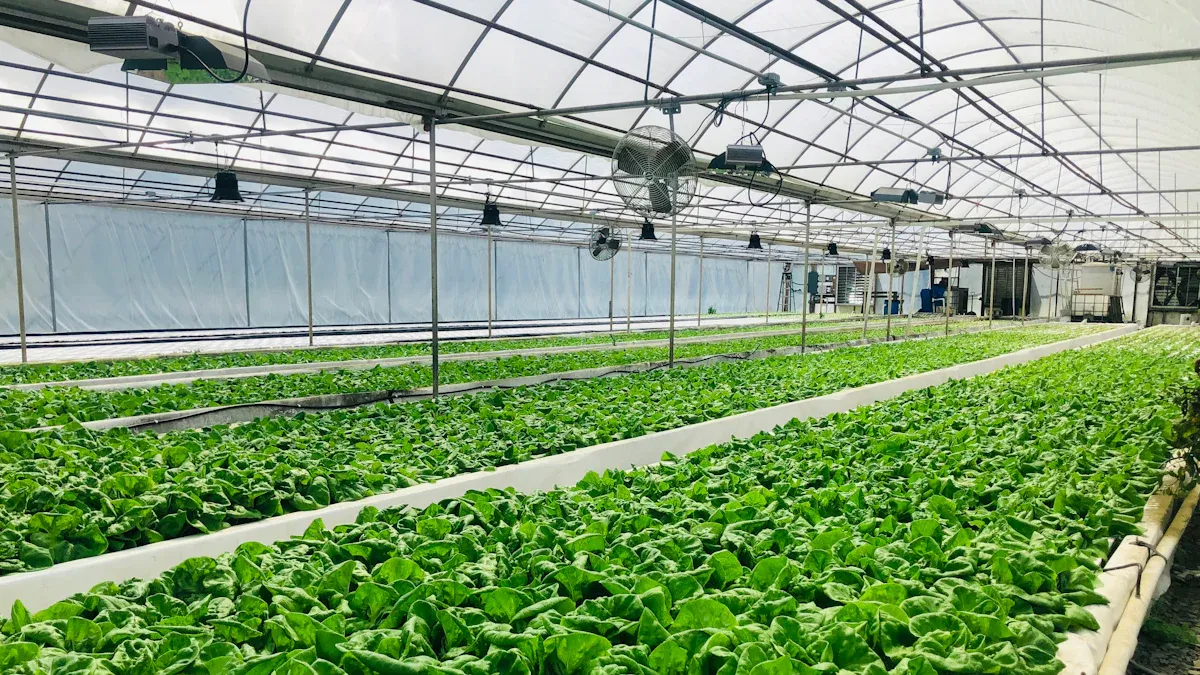
The Nutrient Film Technique (NFT) is a popular hydroponic system that allows a thin film of nutrient-rich water to flow over the roots of plants. This method promotes efficient nutrient uptake and minimizes water usage. NFT systems excel in water efficiency and space utilization, making them ideal for commercial operations. They are particularly well-suited for lightweight, fast-growing plants such as leafy greens and herbs.
Advantages of NFT:
- Easy to inspect roots for signs of disease.
- Low water and nutrient consumption.
- Environmentally friendly.
- Avoids issues related to media systems.
- Easy to disinfect roots and hardware.
- Maintains uniform pH and conductivity.
However, NFT systems also present challenges. If the nutrient flow stops, roots can dry out quickly. Additionally, channels may heat up faster than root zones, and blockages can occur. A pump failure can lead to crop death, making it crucial for growers to monitor their systems closely.
| Disadvantages of NFT | |
|---|---|
| Roots dry out quickly if nutrient flow stops | |
| Channels can heat up faster than root zones | |
| Channels can become blocked by roots | |
| Pump failure can lead to crop death | |
| Not suitable for plants with large tap roots | |
| Saline water is not ideal for NFT |
NFT systems are particularly effective for crops like lettuce, spinach, and strawberries. These plants thrive due to their shallow root systems and rapid growth rates, making NFT an excellent choice for commercial growers.
Deep Water Culture (DWC)
Deep Water Culture (DWC) is another effective hydroponic system where plant roots are submerged in a nutrient solution. This method ensures that roots receive ample oxygen and nutrients, promoting rapid growth. DWC systems can yield plants up to 50% faster than traditional soil-based methods.
A major advantage of DWC is its resilience. If the air pump fails, the roots remain submerged, giving growers hours or even days to fix the issue before oxygen depletion becomes critical.
DWC systems provide superior nutrient and oxygen uptake, allowing for more frequent harvests and increased productivity. However, they require careful management of water temperature and nutrient balance. Poorly managed water can lead to root diseases, and cleaning large tanks can be a significant task.
| Hydroponic System | Growth Rate Comparison |
|---|---|
| Deep Water Culture | Up to 50% faster than soil-based methods |
| Nutrient Film Technique | Slower growth rate compared to DWC |
Ebb and Flow Systems
Ebb and Flow systems operate by periodically flooding the growing area with nutrient solutions, followed by draining the water back to the reservoir. This cyclical process ensures that plant roots receive adequate nutrients and oxygen.
- Cyclical Flooding and Draining: The system alternates between flooding the plant roots with nutrient-rich water and draining it back to the reservoir.
- Oxygen Access: As the water drains, oxygen is introduced to the roots, preventing waterlogging and promoting healthy root respiration.
- Nutrient Recirculation: The system reuses water and nutrients, enhancing efficiency and minimizing waste.
- Ebb Phase: Water and nutrients are pumped to the plant tray, fully immersing the roots.
- Flow Phase: The pump stops, allowing the nutrient solution to drain back into the reservoir.
Ebb and Flow systems excel in conserving water by utilizing a recirculating principle. This sustainable approach is crucial for large-scale hydroponic farming, where resource efficiency is paramount. By reusing the nutrient solution, growers can maintain a balanced nutrient environment for their plants while minimizing waste.
Aeroponics
Aeroponics represents a cutting-edge hydroponic system where plants grow in an air or mist environment without the use of soil. This method allows for optimal nutrient absorption and oxygenation, leading to faster growth rates and higher yields. In aeroponics, nutrient solutions are delivered directly to the roots through a fine mist, ensuring that plants receive the necessary nutrients while minimizing water usage.
Key Benefits of Aeroponics:
- Rapid Growth: Plants can grow up to 30% faster than in traditional hydroponic systems.
- Water Efficiency: Aeroponics uses up to 90% less water than conventional farming methods.
- Space Saving: The vertical design allows for more plants in a smaller footprint, making it ideal for urban farming.
- Reduced Disease Risk: The absence of soil minimizes the risk of soil-borne diseases.
Despite its advantages, aeroponics also presents challenges. The initial setup can be costly, requiring significant investment in equipment and infrastructure. Growers must also maintain precise environmental conditions to prevent plant stress. A failure in the misting system can lead to rapid dehydration of the roots, which necessitates constant monitoring.
Cost Considerations
The initial setup and operational costs associated with commercial aeroponics systems can be substantial. Here are some key financial aspects to consider:
-
Initial Investment:
- Costs for the aeroponic system, environmental controls, and infrastructure.
- Total capital expenditure can reach approximately $515,000.
- Breakdown of costs includes:
- Hydroponic systems: $150,000
- LED lighting: $100,000
- Environmental control costs: $80,000
-
Operational Costs:
- Utilities, nutrients, labor, and maintenance contribute to ongoing expenses.
- Infrastructure investment varies based on the size, materials, and location of the farm.
Investing in aeroponics can yield significant returns, especially for high-value crops. However, growers must carefully evaluate their financial capabilities and operational strategies before committing to this advanced hydroponic channel.
Nutrient Delivery Systems
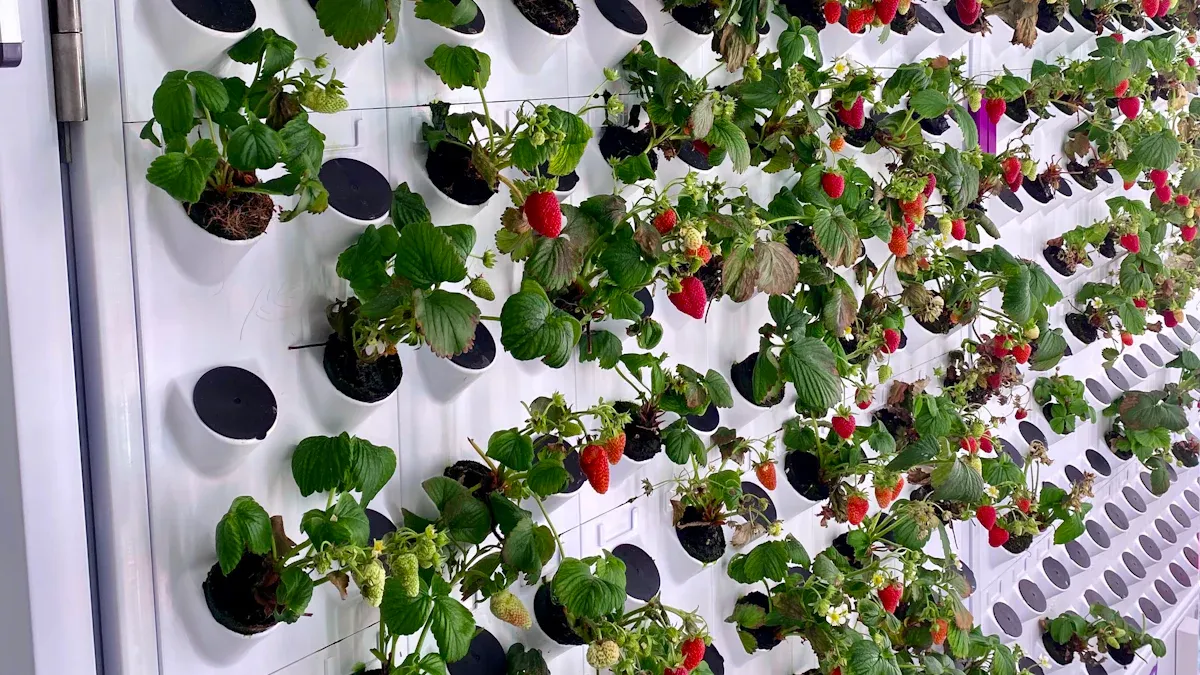
Automated Nutrient Dosing Systems
Automated nutrient dosing systems play a crucial role in modern hydroponic farming. These systems deliver precise amounts of nutrients to plants, ensuring optimal growth and health. By automating the nutrient delivery process, growers can achieve greater consistency and efficiency in their operations.
Key Benefits of Automated Nutrient Dosing Systems:
- Consistency: Automated systems ensure uniform nutrient delivery, leading to consistent plant growth.
- Efficiency: They reduce the need for manual checks and adjustments, saving time and labor.
- Scalability: Systems can be easily scaled to accommodate changes in crop demand or operational size.
- Confidence: Provides trackable data for informed decision-making regarding nutrient management.
| Benefit | Description |
|---|---|
| Consistency | Automated systems ensure uniform nutrient delivery, leading to consistent plant growth. |
| Efficiency | Reduces the need for manual checks and adjustments, saving time and labor. |
| Scalability | Systems can be easily scaled to accommodate changes in crop demand or operational size. |
| Confidence | Provides trackable data for informed decision-making regarding nutrient management. |
Several reliable brands offer automated nutrient dosing systems suitable for large-scale hydroponics. Here are some top options:
| Product Name | Review Score | Price Range (USD) | Key Attributes |
|---|---|---|---|
| Hydroponics Kit Digital Nutrient Controller & Pump Set | N/A | $1,250 – $1,600 | PH/EC monitoring, pump set |
| Automatic Intelligent Smart Hydroponics Fertigation System | N/A | $7,840 – $8,820 | High-capacity fertigation |
| Commercial Hydroponic Automated Nutrient Fertilizer Controller | 5.0 | $5,670 – $7,000 | Computerized irrigation management |
| Factory Price Automatic Fertigation Machine | 5.0 | $4,260 – $4,990 | PH dosing system |
| Automatic pH Controller with Dosing Pump | 4.9 | $436 | PH control, dosing pump |
| Pro-Leaf PHEC-B2 Automatic Nutrient Doser Controller | 4.6 | $850 – $1,200 | PH/EC control, dosing |
| Automatic EC/pH Control Fertilizer Dosing System | 5.0 | $1,900 | EC/pH control, precision drip irrigation |
| Hydroponic Nutrient Automatic Control System | 4.6 | $199.99 | Entry-level system |
pH and EC Meters
Maintaining optimal pH and electrical conductivity (EC) levels is essential for nutrient management in hydroponic systems. pH meters measure the acidity or alkalinity of the nutrient solution, while EC meters gauge the total nutrient concentration. Both tools help growers ensure that plants receive the necessary nutrients for healthy growth.
Importance of pH and EC Meters:
- Maintaining optimal pH levels (between 5.5 to 6.5) is crucial for nutrient availability, ensuring that plants can absorb necessary nutrients.
- Electrical Conductivity (EC) measurements indicate the total nutrient concentration in the water, helping to prevent nutrient burn or deficiencies.
- Adjusting pH affects nutrient solubility; for example, high pH can reduce the availability of micronutrients like iron and zinc, while low pH can lead to excess macronutrients.
Monitoring these parameters regularly is vital for successful hydroponic operations. The recommended frequency for checking pH and EC levels is as follows:
| Parameter | Recommended Frequency |
|---|---|
| pH of nutrient solution | 1–2 times per day, more often with changes |
| EC (electrical conductivity) | 1–3 times per day |
By integrating automated nutrient dosing systems and reliable pH and EC meters, commercial growers can optimize their hydroponic channels for maximum productivity and sustainability.
Environmental Control Equipment
Climate Control Systems
Climate control systems are vital for maintaining optimal growing conditions in commercial hydroponic facilities. These systems regulate temperature, humidity, CO₂ levels, and airflow. Effective climate control enhances plant health and productivity.
Key Benefits of Climate Control Systems:
- They reduce pest problems.
- They ensure uniform plant growth.
- They prevent mold buildup.
Advanced climate control systems do increase energy demands due to the need for air and water pumps. However, they can lead to potential cost savings through efficiency improvements. For instance, AI-driven control systems optimize resource usage, enhancing yield consistency while reducing waste.
| Aspect | Details |
|---|---|
| Energy Consumption | Advanced climate control systems increase energy demands due to the need for air and water pumps. |
| Operational Costs | While energy consumption rises, efficiency improvements can lead to potential cost savings. |
| Comparison with Conventional | Electricity consumption in climate-controlled greenhouses is higher than in traditional farming. |
Grow Lights
Grow lights play a crucial role in hydroponic systems, providing the necessary light spectrum for plant growth. Recent advancements in grow light technology have significantly improved energy efficiency and crop yields.
Latest Advancements in Grow Light Technology:
- Customizable Options: Advanced T5 LED systems allow for adjustable spectrum controls.
- Full Spectrum LEDs: These fixtures replicate natural sunlight, supporting balanced growth.
- Programmable LED Systems: Growers can adjust spectrum, intensity, and photoperiod dynamically.
Full spectrum LEDs often exhibit higher photon efficacy, leading to more light output per watt consumed. This efficiency reduces operating costs for hydroponic operations.
| Grow Light Type | Energy Efficiency | Crop Yield Characteristics |
|---|---|---|
| LED | Converts ~85% of electrical energy into usable light, reducing energy costs by ~50% or more. | Adequate light spectra for photosynthesis, favored by growers. |
| HPS | High intensity, particularly in the red spectrum, but generates more heat. | Effective for deep canopy penetration, especially during flowering stage. |
| Fluorescent | More economical for smaller setups, lower light output. | Best for seedling phase, softer light minimizes heat. |
Humidity Control Equipment
Humidity control is essential in hydroponic environments. Maintaining optimal humidity levels prevents plant health issues and disease risks. For example, seedlings thrive at 75-100% relative humidity (RH), while flowering plants prefer 50-55% RH.
Best Practices for Managing Humidity:
- Use dehumidifiers and humidifiers to control humidity effectively.
- Monitor local weather conditions to adjust nutrient strength accordingly.
- Integrate humidity control systems with irrigation and ventilation for synchronized management.
Improper humidity control can lead to significant plant health issues. High humidity levels can foster mold and pest proliferation, while low humidity can impede nutrient uptake. Symptoms of these issues include yellow spots, wilting, and stunted growth, ultimately affecting harvest quality.
- Invest in automated commercial humidifiers with built-in hygrometers.
- Use dehumidifiers to manage excess moisture.
- Integrate humidifiers with irrigation and ventilation systems for optimal control.
By investing in effective environmental control equipment, commercial growers can enhance their hydroponic systems, ensuring healthier plants and improved yields.
Monitoring Tools for Hydroponics
Environmental Sensors
Environmental sensors are essential for real-time monitoring in commercial hydroponic systems. They provide critical data that helps growers maintain optimal conditions for plant health. Key types of sensors include:
- Water Temperature Sensor (DS18B20): This sensor delivers accurate temperature readings with a small margin of error (0.5°C). Its waterproof design allows for immersion in water, making it ideal for hydroponic applications.
- Analog pH Sensor Meter: This device offers real-time pH measurements, crucial for maintaining nutrient concentrations. It is compatible with microcontrollers like Arduino UNO WIFI, enabling easy integration into automated systems.
These sensors contribute significantly to early detection of system failures or suboptimal conditions. The following table summarizes their contributions:
| Contribution of Environmental Sensors | Description |
|---|---|
| Real-time Monitoring | Enables continuous observation of growth parameters, allowing for immediate detection of anomalies. |
| Automated Control | Facilitates proactive adjustments to environmental conditions, enhancing system reliability. |
| Proactive Maintenance | IoT-based diagnostic tools help mitigate risks associated with sensor malfunctions, reducing downtime. |
| Energy Efficiency | Innovations in sensor technology contribute to optimizing resource use and energy consumption. |
| Fault Detection | Advanced machine learning models provide early identification of faults, improving overall system resilience. |
Data Logging Software
Data logging software plays a crucial role in optimizing hydroponic operations. It continuously monitors and adjusts critical parameters like pH, nutrient levels, and temperature. Key features to look for in data logging software include:
| Feature | Description |
|---|---|
| Automation | Continuously monitors and adjusts critical parameters like pH, nutrient levels, and temperature. |
| Data Analytics | Analyzes data to optimize hydroponic water management and improve decision-making. |
| Real-time Monitoring | Provides insights into the performance of hydroponic systems, helping to identify trends. |
This software helps commercial growers optimize crop production and resource use. Benefits include:
| Benefit | Description |
|---|---|
| Improved Resource Management | AI-driven models optimize water and nutrient usage, reducing waste and improving crop yields. |
| Enhanced Crop Resilience | Predictive capabilities help mitigate issues like nutrient deficiencies and pest infestations. |
Smart technology enables the collection of real-time data about crops and environmental conditions. This facilitates informed decision-making that enhances productivity and sustainability. By analyzing both historical and real-time data, growers can identify patterns in crop performance and forecast future outcomes, allowing for proactive management.
Investing in high-quality hydroponic equipment is essential for commercial success. Each category of equipment, from nutrient delivery systems to environmental controls, plays a critical role in maximizing yields and resource efficiency.
Key Benefits of Investing in Hydroponics:
- The commercial hydroponic systems market is projected to grow from $2.38 billion in 2024 to $9.94 billion by 2033.
- Hydroponics can use up to 90% less water than traditional farming, enhancing sustainability.
- Quick crop cycles allow for multiple harvests, facilitating rapid reinvestment.
By prioritizing these essential tools, growers can enhance productivity and ensure long-term profitability in their operations.
FAQ
What is hydroponics?
Hydroponics is a method of growing plants without soil. Instead, it uses nutrient-rich water solutions to deliver essential nutrients directly to plant roots. This technique promotes faster growth and higher yields compared to traditional soil-based farming.
How does nutrient delivery work in hydroponics?
Nutrient delivery in hydroponics involves using systems like automated nutrient dosing and pH/EC meters. These tools ensure plants receive the right nutrients in precise amounts, optimizing growth and preventing deficiencies or toxicities.
What are the benefits of using grow lights?
Grow lights provide essential light for photosynthesis, especially in indoor or low-light environments. They enhance plant growth, improve yields, and allow for year-round cultivation, making them crucial for commercial hydroponic operations.
How often should I monitor pH and EC levels?
Growers should monitor pH levels 1-2 times daily and EC levels 1-3 times daily. Regular checks ensure optimal nutrient availability and prevent issues like nutrient burn or deficiencies, promoting healthy plant growth.
What are the common challenges in hydroponics?
Common challenges include maintaining optimal nutrient balance, managing water temperature, and preventing diseases. Growers must also monitor environmental conditions closely to ensure plants thrive in hydroponic systems.