
Introduction
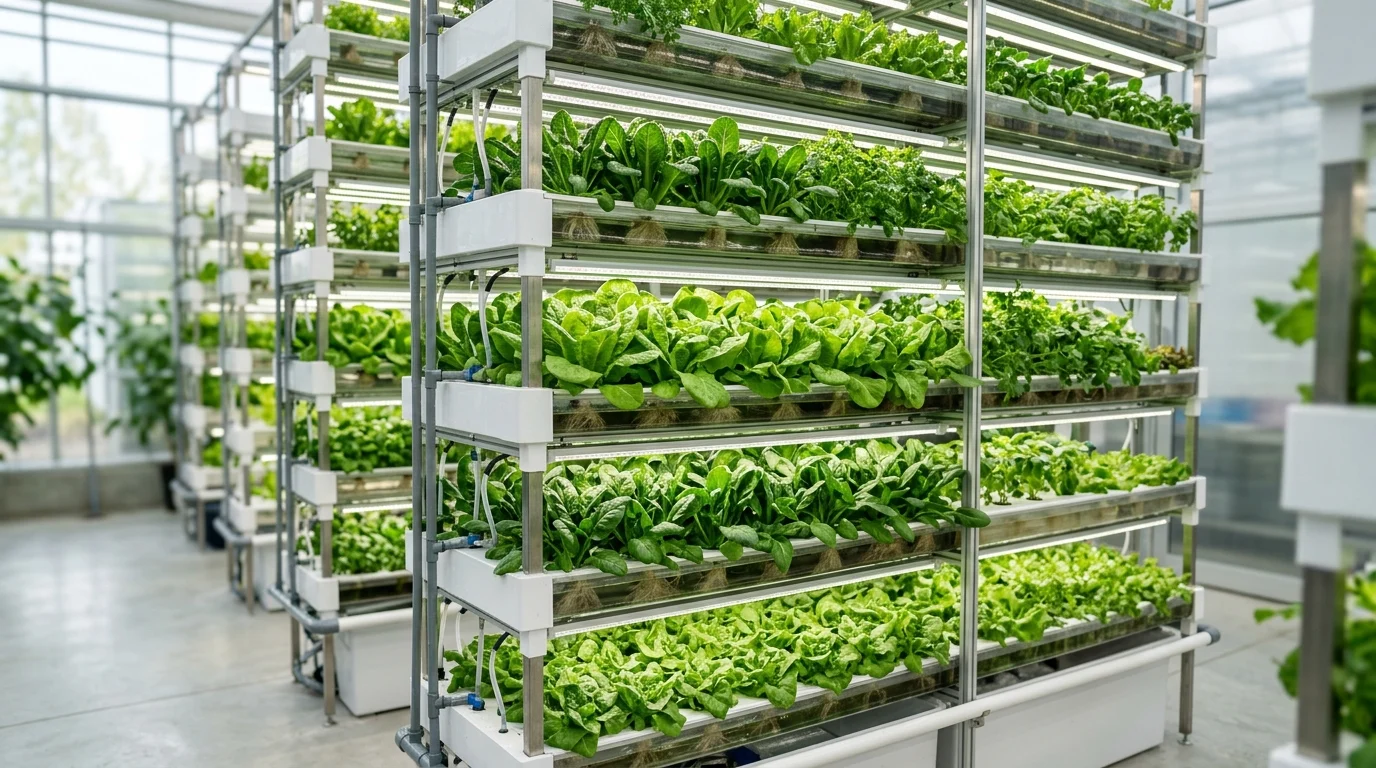
Indoor vertical farming systems combine stacked growing structures, climate control, lighting, irrigation, and automation to produce crops year-round in tightly managed environments. Understanding how these systems work is essential for evaluating their productivity, operating costs, and suitability for commercial or small-scale use. This guide explains the core system types, key components, and design tradeoffs that shape performance, from space efficiency and yield consistency to energy demand and crop selection. It also helps readers compare approaches more clearly, so the sections that follow on infrastructure, technology, and investment value are easier to assess in practical terms.
Why vertical farming systems are becoming a strategic investment
The transition toward controlled environment agriculture (CEA) has elevated indoor crop production from a niche experimental practice to a highly capitalized asset class. Institutional investors, sovereign wealth funds, and private equity groups are increasingly recognizing that deploying advanced vertical farming systems represents a strategic hedge against supply chain volatility and climate-induced agricultural disruption. By decoupling food production from arable land availability and weather patterns, these facilities offer predictable, year-round harvest cycles.
As the macroeconomic environment demands greater supply chain resilience, commercial operators are shifting their focus from pure technological novelty toward rigorous unit economics. The strategic value of indoor cultivation infrastructure lies in its ability to guarantee exact production volumes while minimizing exposure to external pathogens and seasonal fluctuations.
Yield security and local production
The primary driver of investment in high-density indoor cultivation is the unprecedented level of yield security it provides. Traditional open-field agriculture is subject to variables ranging from unseasonal frosts to severe droughts, which can decimate entire crop cycles. By contrast, indoor facilities engineer the exact microclimate required for optimal plant physiology. This precision allows operators to project harvest volumes with an accuracy margin of +/- 3%, a level of predictability highly valued by off-take partners.
Furthermore, localized production drastically compresses the supply chain. By situating facilities in peri-urban or urban industrial zones, operators can reduce food miles from an industry average of 1,500 miles to under 50 miles. This geographical proximity not only extends the shelf life of perishable goods by up to 14 days but also mitigates the substantial carbon footprint associated with cold-chain logistics. From a resource standpoint, these systems typically utilize 90% to 95% less water than conventional farming, recycling transpired moisture through advanced dehumidification and filtration processes.
Profitable crops, business models, and end markets
Capitalizing on intensive indoor infrastructure requires a strategic approach to crop selection. Because the operational expenditure (OPEX) of climate control and artificial lighting is significant, the most viable business models focus on high-margin, fast-turnaround cultivars. Leafy greens, microgreens, culinary herbs, and specialized pharmaceutical crops (such as standardized cannabis or biomanufacturing inputs) dominate the sector. For instance, premium microgreens can command wholesale prices exceeding $15 per pound, providing the necessary revenue density to offset facility costs.
Operators generally deploy one of two primary business models: business-to-business (B2B) wholesale to regional grocery chains and food service distributors, or direct-to-consumer (D2C) subscription models. The B2B model relies on securing long-term off-take agreements, which are crucial for debt financing. End markets are increasingly demanding pesticide-free, traceable produce, allowing vertically farmed products to capture a premium price point that aligns with organic market segments.
What indoor vertical farming systems are and how they compare
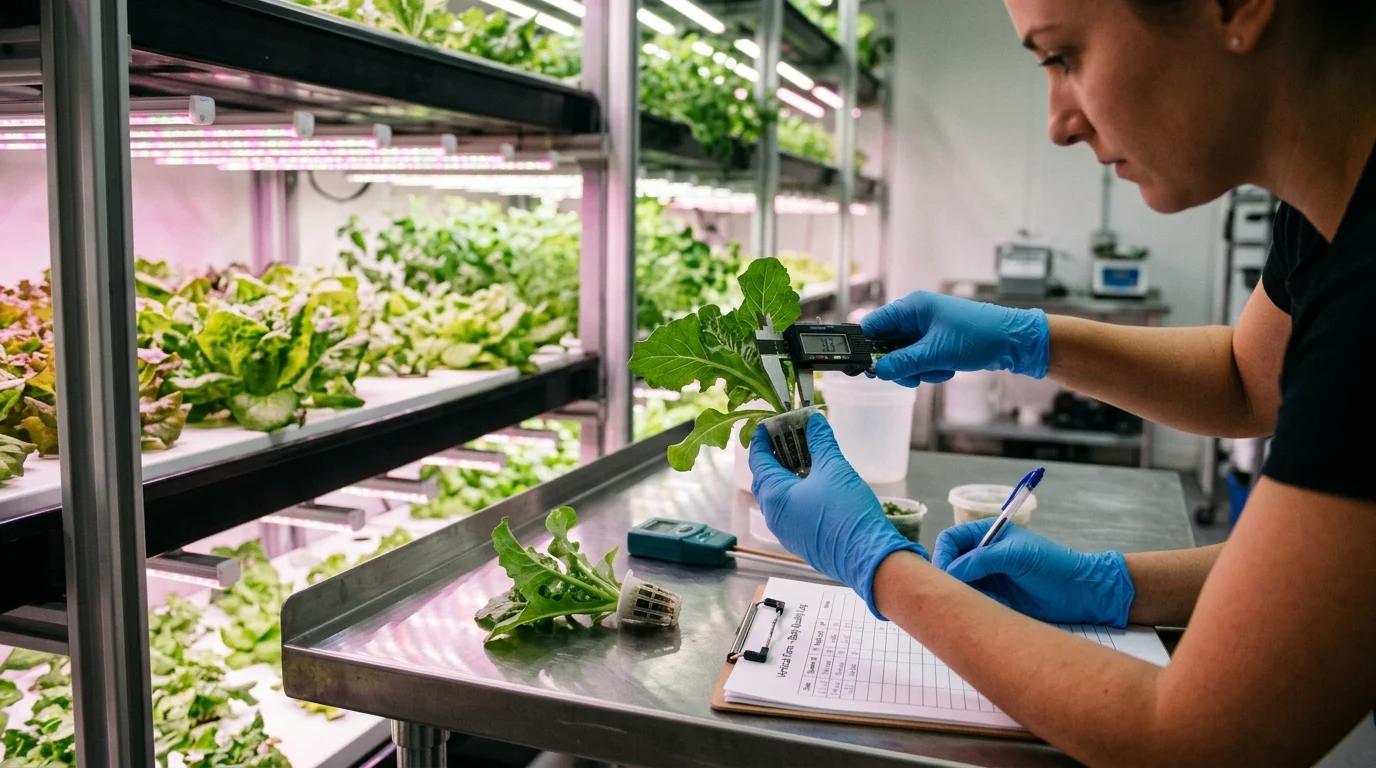
Understanding the architecture of high-density indoor agriculture requires parsing the various technological layers that constitute modern facilities. At their core, these installations are sophisticated industrial biomanufacturing plants where light, water, nutrients, and atmospheric composition are strictly regulated. Comparing different architectures involves evaluating how effectively a system integrates these variables to maximize plant metabolic rates while minimizing energy and labor inputs.
Core system components
The operational foundation of any indoor cultivation facility relies on three interdependent subsystems: illumination, climate control, and fertigation. Light-emitting diode (LED) arrays have become the industry standard, engineered to deliver specific photosynthetic photon flux density (PPFD). Commercial leafy green setups typically require a PPFD of 200 to 250 µmol/m²/s, while fruiting crops demand substantially higher intensities. Modern fixtures allow for dynamic spectral tuning to influence plant morphology, such as increasing blue light to stimulate anthocyanin production.
Climate control is managed by specialized HVAC-D (Heating, Ventilation, Air Conditioning, and Dehumidification) systems. Because plant transpiration releases massive amounts of moisture into the sealed environment, sensible and latent heat loads must be meticulously balanced. The fertigation subsystem handles the automated dosing and distribution of water and soluble minerals, utilizing sensors to monitor electrical conductivity (EC) and pH levels in real-time to maintain exact nutrient profiles.
Hydroponic, aeroponic, and aquaponic methods
The method of nutrient delivery fundamentally defines the system’s hydraulic engineering. The three dominant methodologies present distinct trade-offs regarding capital expenditure, operational complexity, and resource efficiency.
| Delivery Method | Water Usage vs Traditional | Primary Nutrient Source | Maintenance Complexity |
|---|---|---|---|
| Hydroponic (NFT/DWC) | 90% less | Synthetic mineral salts | Moderate |
| Aeroponic | 95% less | Atomized mineral salts | High (Nozzle clogging) |
| Aquaponic | 85% less | Fish effluent / biofiltration | Very High |
Hydroponics, encompassing Nutrient Film Technique (NFT) and Deep Water Culture (DWC), remains the most widely adopted due to its established operational protocols and lower failure rates. Aeroponics suspends plant roots in the air and mists them with nutrient solution, increasing oxygenation and potentially accelerating growth cycles by 20%, though it requires rigorous filtration to prevent micro-nozzle blockages. Aquaponics integrates aquaculture, utilizing fish waste as a biological nutrient source; however, balancing the disparate pH requirements of fish, nitrifying bacteria, and plants introduces severe operational complexities.
Stacked rack, container, and greenhouse-integrated formats
Physical form factors dictate the spatial efficiency and scalability of the operation. Stacked rack systems, typically deployed in large-scale warehouses, utilize multi-tier shelving that can reach heights of 10 to 15 meters. This format maximizes the cubic volume of the facility, allowing for massive economies of scale, though it necessitates automated storage and retrieval systems (ASRS) or specialized scissor lifts for harvesting and maintenance.
Containerized farms repurpose standard 40-foot shipping containers, offering a turnkey, modular footprint of roughly 320 square feet per unit. While they provide rapid deployment and decentralized localization, their narrow dimensions limit airflow optimization and labor efficiency. Greenhouse-integrated formats represent a hybrid approach, utilizing natural sunlight supplemented by LEDs and localized climate control. These hybrid facilities often achieve a lower levelized cost of energy (LCOE) but sacrifice the absolute environmental isolation found in fully opaque warehouse environments.
How to evaluate technical and economic performance
Rigorous technical and economic due diligence is mandatory prior to capital deployment. The viability of an indoor agricultural asset is determined by its thermodynamic efficiency, its capital intensity per unit of output, and the reliability of its automation infrastructure. Investors and operators must analyze specific engineering specifications to forecast long-term profitability and operational stability.
Key operating specifications
Evaluating system performance begins with granular operating metrics. Lighting efficacy is a primary determinant of OPEX, measured in micromoles of photosynthetically active radiation (PAR) per joule (µmol/J). Leading commercial LED fixtures currently achieve efficacies between 2.8 and 3.4 µmol/J. Another critical metric is the system’s biological conversion rate, often quantified as grams of fresh biomass produced per mole of light intercepted, which for optimized lettuce cultivars should exceed 1.5 g/mol.
HVAC-D performance is equally critical. Evaluators must scrutinize the moisture removal capacity (MRC) in relation to energy consumption, typically expressed as liters of water removed per kilowatt-hour (L/kWh). High-performance desiccant or advanced mechanical dehumidification systems should achieve an efficiency of at least 2.5 to 3.0 L/kWh under standard indoor operating conditions (e.g., 22°C and 60% relative humidity).
Capital costs, energy use, and maintenance
The economic profile of these facilities is characterized by high initial capital expenditures (CAPEX) and energy-intensive operations. Fully automated, multi-tier warehouse farms generally require a CAPEX ranging from $2,000 to $3,500 per square meter of active growing canopy. This encompasses the racking, LED arrays, HVAC-D infrastructure, and automated seeding/harvesting lines.
Energy consumption dictates the baseline OPEX. A facility cultivating leafy greens typically consumes between 30 and 50 kWh of electricity per kilogram of marketable yield. Consequently, securing industrial power purchase agreements (PPAs) at rates below $0.08 per kWh is often a prerequisite for economic viability. Maintenance modeling must also account for the depreciation of LED diodes, which generally degrade to 90% of their initial output (L90) after 36,000 to 50,000 hours of continuous operation, necessitating phased replacement cycles.
Vendor selection, pilot testing, and scale-up
Selecting an equipment provider requires thorough vetting of their engineering track record and post-installation support capabilities. Operators should seek out vendors who offer comprehensive integration rather than disparate components, often utilizing established partner networks to ensure seamless interoperability between climate software and hardware controllers.
Before committing to a commercial-scale build (e.g., 50,000+ square feet), executing a pilot phase is a standard risk mitigation strategy. A pilot facility of 2,000 to 5,000 square feet allows the agronomy team to validate crop recipes, calibrate HVAC-D setpoints, and verify the vendor’s yield projections under local conditions. Successful scale-up relies on translating these pilot metrics into standard operating procedures (SOPs) that maintain unit economics as the canopy footprint expands.
Compliance, quality, and supply chain factors
Scaling an indoor agricultural enterprise introduces complex compliance and supply chain variables. Because these facilities operate at the intersection of food production and industrial manufacturing, they are subject to stringent regulatory oversight. Ensuring continuous operation requires a resilient supply chain for both facility maintenance and product distribution.
Food safety, traceability, and technical standards
Food safety is a non-negotiable operational pillar. While indoor environments eliminate the risk of agricultural runoff and wildlife contamination, the high humidity and recirculating water systems create vectors for rapid pathogen proliferation (e.g., Pythium or Listeria). Facilities must adhere strictly to Hazard Analysis and Critical Control Points (HACCP) protocols and achieve certifications such as GlobalGAP, SQF (Safe Quality Food), or ISO 22000.
Advanced traceability is implemented via proprietary farm management software, assigning unique batch codes to every seeding tray. This digital chain of custody tracks the exact nutrient batch, environmental setpoints, and personnel interactions from seed to packaging. Furthermore, propagation and packaging zones often require cleanroom standards, frequently conforming to ISO Class 8 specifications to prevent microbial contamination during the most vulnerable stages of the product lifecycle.
Sourcing, spare parts, and service support
The mechanical complexity of high-density cultivation necessitates a rigorous approach to spare parts inventory and preventive maintenance. A failure in the primary fertigation pump or a localized HVAC-D breakdown can result in total crop loss within 24 to 48 hours. Operators must mandate 99.9% uptime for critical environmental controls, requiring N+1 redundancy for essential mechanical assets.
Sourcing reliable replacement components—such as specific LED drivers, precision dosing valves, and industrial sensors—must be integrated into the facility’s procurement strategy. Utilizing centralized product catalogs for standardized OEM parts minimizes downtime. Service level agreements (SLAs) with technology vendors should guarantee rapid deployment of field engineers and priority access to critical inventory.
Location, power, and distribution considerations
Site selection is a multifaceted decision governed by utility access, zoning regulations, and logistics. A commercial-scale facility operating a 100,000-square-foot canopy requires substantial electrical infrastructure, typically necessitating access to a dedicated 2 to 5 MW utility substation. Municipal water access and industrial wastewater discharge permits are also critical, as the periodic flushing of nutrient reservoirs must comply with local environmental effluent standards.
From a distribution standpoint, the facility must be strategically located to optimize cold-chain logistics. Proximity to major regional distribution centers (DCs) or retail hubs minimizes transit times, preserving the premium shelf-life advantage of indoor-grown produce. Operators must balance the higher real estate costs of peri-urban industrial zones against the logistical savings and market access those locations provide.
Decision framework for choosing a vertical farming system
Procuring the optimal cultivation infrastructure requires aligning the technological capabilities of the hardware with the strategic objectives of the enterprise. A robust decision framework synthesizes agronomic requirements, capital constraints, and long-term expansion goals to identify the most appropriate architectural path.
Selection criteria by crop mix and operating model
The primary filter in the selection process is the intended crop mix, as different plant morphologies dictate the spatial and luminous requirements of the hardware. Leafy greens thrive in highly compressed, multi-tier environments, whereas vining crops like tomatoes require high-wire systems with significant vertical clearance.
| Crop Category | Recommended System Architecture | Target Cycle Time (Seed to Harvest) | Target PPFD (µmol/m²/s) |
|---|---|---|---|
| Microgreens | High-density stacked rack (NFT/Ebb & Flow) | 10 – 18 days | 150 – 200 |
Further reading:
Key Takeaways
- The most important conclusions and rationale for vertical farming systems
- Specs, compliance, and risk checks worth validating before you commit
- Practical next steps and caveats readers can apply immediately
Frequently Asked Questions
What crops are most profitable in indoor vertical farming systems?
Leafy greens, microgreens, and culinary herbs usually perform best because they grow quickly, need less light than fruiting crops, and can command premium local prices.
How much water can vertical farming systems save?
Well-designed indoor systems often use about 90% to 95% less water than conventional farming by recirculating nutrient solution and recovering moisture through dehumidification.
Which core components matter most in a vertical farming setup?
Focus on three essentials: LED lighting, HVAC-D climate control, and automated fertigation with EC and pH monitoring. These determine crop consistency, energy use, and labor efficiency.
How do hydroponic, aeroponic, and aquaponic systems differ?
Hydroponics is the most common and easiest to scale, aeroponics can improve water efficiency but needs tighter control, and aquaponics adds fish integration, making operations more complex.
Where can I explore controlled environment agriculture systems similar to those discussed here?
You can review CEA and vertical farming system options on Miilkii A Blog at miilkiiablog.com, especially the systems and product category pages linked in the article.