Nutrient Film Technique (NFT) is an active hydroponic method where a very shallow stream of nutrient-rich water recirculates over the bare roots of plants in watertight channels. In 2026, NFT systems represent a significant portion of controlled environment agriculture (CEA) due to their water efficiency and high oxygenation levels. According to the
Mechanical Components and Working Principles of NFT Systems
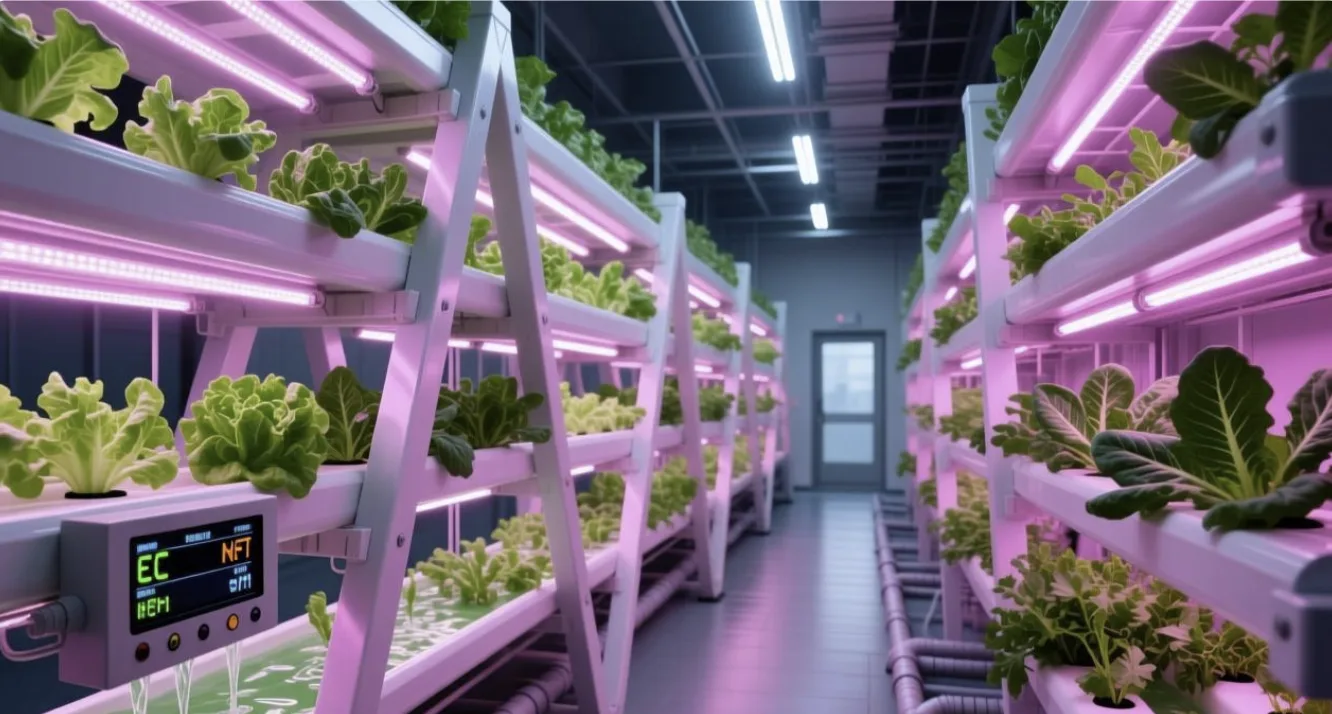
An NFT system operates as a closed-loop hydraulic circuit consisting of a reservoir, a submersible pump, growth channels, and a return manifold. The pump delivers nutrient solution to the higher end of slightly sloped channels, allowing gravity to pull the liquid across the root zone. As the solution flows, it forms a thin film that provides a constant supply of dissolved minerals. In 2026, many commercial setups utilize
Optimizing Slope and Flow Rates for Hydroponic Growth Channels
The efficiency of a Nutrient Film Technique setup is determined by the precision of the channel slope and the velocity of the water flow. Industry standards from the
Comparative Analysis of NFT vs Other Hydroponic Methods
Comparing NFT to Deep Water Culture (DWC) or Ebb and Flow systems reveals distinct operational advantages regarding resource management. Unlike DWC, which requires large volumes of water and constant aeration through air stones, NFT relies on the thinness of the water film to facilitate natural oxygen exchange. Data from the
| Feature | Nutrient Film Technique (NFT) | Deep Water Culture (DWC) | Ebb and Flow (Flood & Drain) |
|---|---|---|---|
| Water Usage | Extremely Low | High | Moderate |
| Oxygenation | Excellent (Atmospheric) | High (Active Aeration) | Moderate |
| Pump Dependency | Critical (High Risk) | Moderate | Low |
| Media Required | Minimal to None | Net Pots/Leca | Extensive (Perlite/Clay) |
Nutrient Solution Management and Dissolved Oxygen Levels
Dissolved oxygen (DO) is the most critical variable in an NFT system because the roots remain in constant contact with the liquid. In 2026, sensors are frequently integrated into
Scaling NFT Hydroponics for Urban Agriculture in 2026
The vertical scalability of NFT channels makes this technology a cornerstone of urban vertical farming initiatives. By stacking channels in a “A-frame” or vertical rack configuration, growers can maximize the yield per square meter of floor space. Research from
Risk Mitigation and Redundancy in Commercial NFT Operations
Redundancy is a mandatory requirement for any NFT operation because the bare roots have no buffer against drying out. If the pump stops for as little as 30 minutes in a warm environment, the plants may suffer irreversible wilting and vascular damage. Modern professional installations incorporate backup power supplies and secondary pumps to ensure continuous flow. Additionally, using
Sustainability and Circular Economy in Hydroponic Systems
Hydroponics in 2026 is increasingly focused on the circularity of nutrient use and the reduction of plastic waste. NFT systems are inherently sustainable because they recirculate the same water and minerals until the specific nutrient ratios become unbalanced. A study from
Strategic Crop Selection for Nutrient Film Technique
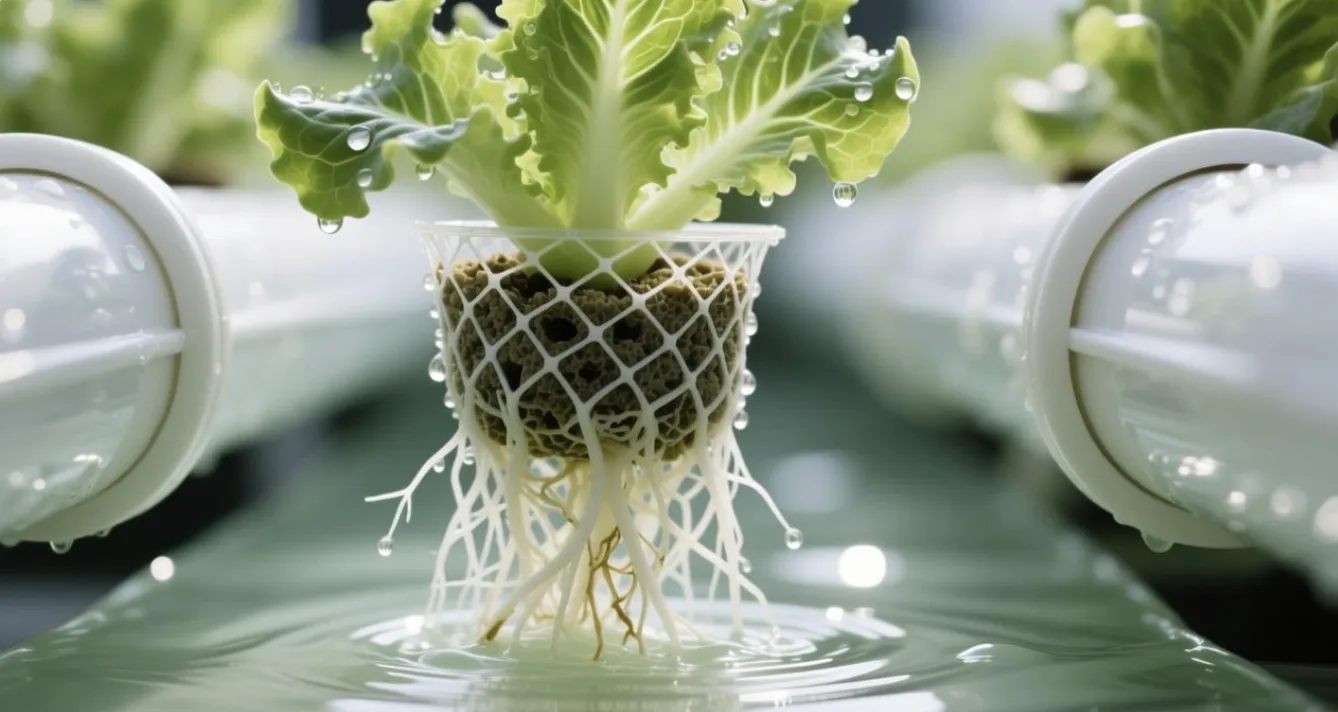
Selecting the correct crop species is essential for the success of an NFT installation. The shallow channels are designed for plants with smaller, fibrous root systems that do not obstruct the water flow. Key crops include Bibb lettuce, Romaine, basil, kale, and strawberries. Conversely, plants with taproots or massive root networks, such as carrots or large woody shrubs, can cause the channel to overflow, leading to significant water damage. Technical guides from the
FAQ
What is the ideal channel length for an NFT system?
The maximum recommended length for an NFT channel is typically 12 meters (approx. 40 feet). Beyond this distance, the plants at the far end may suffer from “oxygen starvation” and nutrient depletion, as the upstream plants absorb minerals and oxygen first. Shorter runs ensure more uniform growth across the entire system.
How do I prevent roots from clogging NFT channels?
Clogging is prevented by choosing appropriately sized channels and selecting crops with manageable root masses. Regular inspection of the exit manifold is necessary to ensure no rogue roots block the return flow. Some commercial systems utilize wider, flat-bottomed troughs to allow more space for the root mat to spread horizontally.
Can NFT systems be used for organic gardening?
NFT systems can utilize organic nutrients, but they require a bio-filter to break down organic matter into inorganic ions that plants can absorb. Traditional organic fertilizers often contain particles that can clog the small emitters and pumps. Therefore, highly filtered liquid organic concentrates are the preferred choice for NFT-based organic production.
What causes the nutrient film to become too deep?
A deep film, or pooling, is usually caused by an insufficient slope or a blockage in the channel. If the slope is less than 1%, the water velocity slows down, increasing the depth and reducing oxygenation. This condition, often called “Drowning,” prevents the top of the roots from accessing atmospheric oxygen.
Is it necessary to use a growing medium in NFT?
No, one of the defining characteristics of NFT is that it is a “media-less” system. Plants are typically started in small rockwool cubes or starter plugs which are then placed into net pots. The roots grow out of these small plugs directly into the open channel where the nutrient film flows.