
Introduction
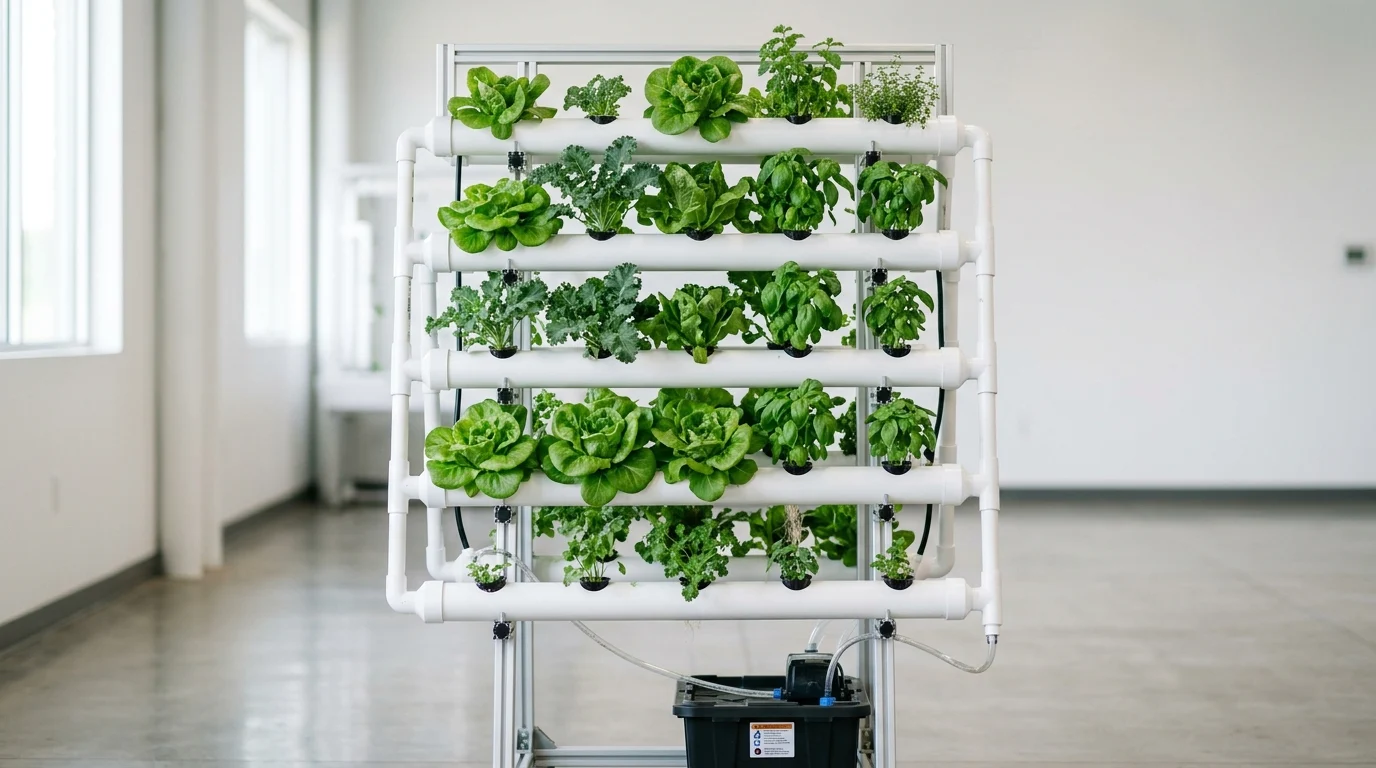
Hydroponic growing replaces soil with a controlled system that delivers water, oxygen, and nutrients directly to plant roots. This approach is widely used in commercial production because it can reduce water use, improve nutrient efficiency, and support reliable harvests in greenhouses, warehouses, and other controlled environments. Understanding how a hydroponic system works helps explain why growers can produce more in less space while maintaining tighter control over plant health and crop quality. The sections that follow break down the core components, operating principles, and common system types so you can see how hydroponics functions in practice and where it fits best.
Why hydroponic systems matter in commercial crop production
The transition toward controlled environment agriculture (CEA) relies heavily on the deployment of a robust hydroponic system. By decoupling crop production from arable land availability and ambient climate volatility, commercial operators achieve unprecedented control over growth variables, mitigating supply chain disruptions and localized weather anomalies.
Yield, water efficiency, and space utilization
Compared to traditional open-field agriculture, precision hydroponics demonstrates superior resource conversion. Water consumption drops by 80% to 90% due to closed-loop recirculation, which captures, filters, and reuses transpiration and runoff. Spatial density dramatically increases through vertical stacking and optimized spacing. For instance, commercial leafy green operations utilizing advanced systems routinely achieve annual yields of 100 to 120 pounds per square foot, a stark contrast to the 10 to 15 pounds typical of soil-based cultivation. Furthermore, fertilizer efficiency approaches 95%, as nutrients are absorbed directly rather than leaching into groundwater.
Best-fit operating contexts for commercial growers
Commercial viability heavily depends on the operational context. High-density urban environments, arid regions with severe water constraints, and high-latitude zones with short growing seasons present the highest return on investment (ROI). In these scenarios, the premium commanded by hyper-local, pesticide-free produce offsets the energy-intensive nature of indoor farming. Facilities typically require a minimum operational footprint of 10,000 square feet to justify the capital expenditures associated with commercial-grade environmental controls, automated dosing panels, and high-intensity discharge (HID) or LED lighting arrays.
What a hydroponic system is and how it works
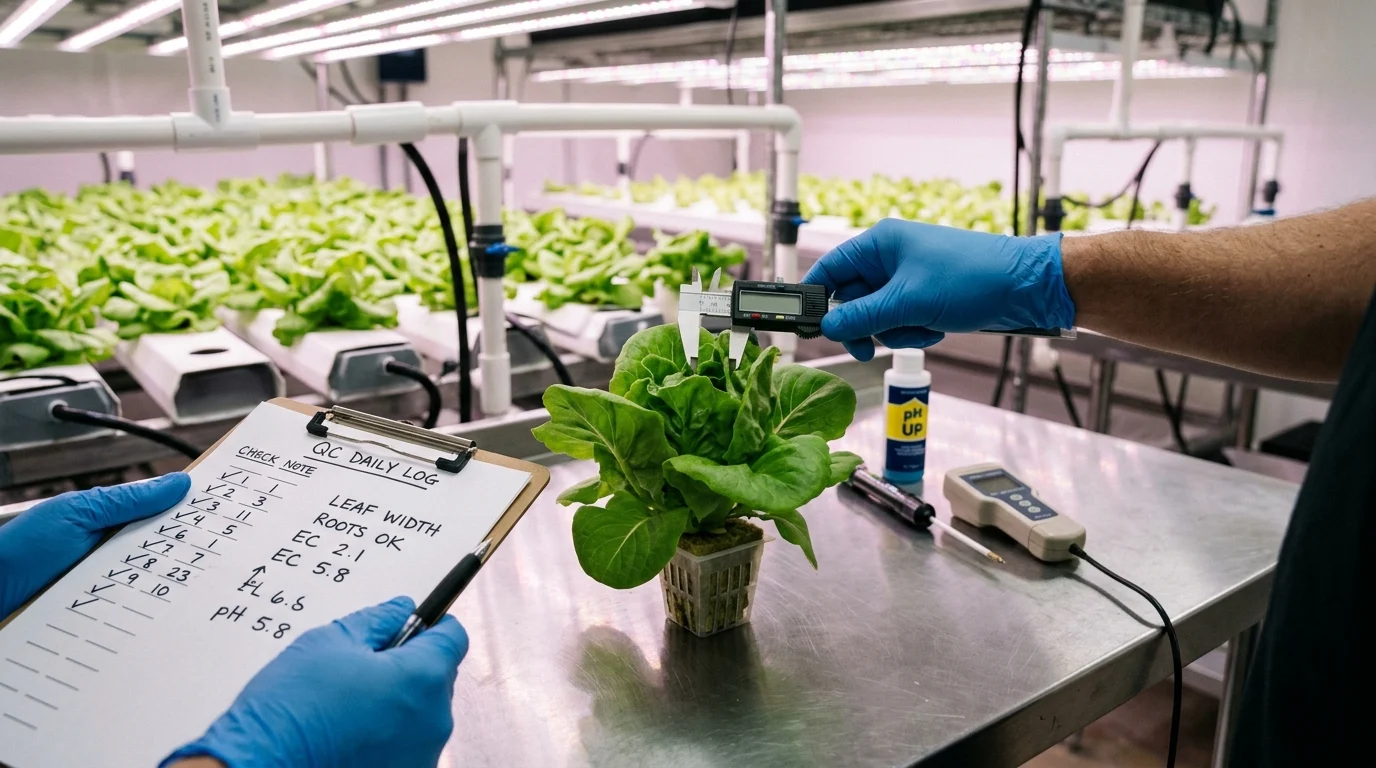
At its core, a commercial hydroponic system functions as an engineered ecosystem designed to deliver precise ratios of water, oxygen, and mineral salts directly to the plant rhizosphere without using soil as a buffering medium. This fundamental shift requires highly calibrated fluid dynamics and mechanical reliability.
Core components of a hydroponic system
The mechanical infrastructure of a standard installation encompasses several critical components working in tandem. Primary nutrient reservoirs store the aqueous solution, while submersible or inline centrifugal pumps—typically rated between 500 and 2,500 gallons per hour (GPH) depending on manifold size—drive the liquid through the facility. Plants are supported by inert substrates such as rockwool, expanded clay pebbles, or coco coir housed within specialized grow trays or channels. To prevent root degradation and pathogen proliferation, inline chillers and heaters maintain the fluid temperature at a strict 65°F to 68°F (18°C to 20°C).
Water chemistry, oxygenation, and nutrient delivery
Nutrient delivery relies on the strict management of water chemistry. Automated dosing panels continuously monitor and adjust pH, maintaining it within the standard 5.5 to 6.5 range to ensure maximum bioavailability of macro- and micronutrients. Electrical conductivity (EC), measuring the concentration of dissolved salts, is typically held between 1.2 and 2.5 mS/cm, adjusting dynamically as the crop moves from vegetative growth into flowering. Furthermore, dissolved oxygen (DO) must be maintained at 8 to 10 mg/L using industrial air stones or venturi injectors. This hyper-oxygenation prevents anaerobic conditions, staves off root rot, and supports the vigorous root respiration necessary for rapid nutrient uptake.
Commercial types of hydroponic systems
Commercial operators deploy distinct architectural variations of a hydroponic system based on spatial constraints, budget, and target cultivars. Each configuration manipulates the delivery of the nutrient solution differently to optimize root zone conditions and maximize greenhouse or warehouse footprint utilization.
Deep water culture, nutrient film technique, and drip systems
Deep Water Culture (DWC) suspends plant roots directly in a highly oxygenated, large-volume reservoir using food-grade High-Density Polyethylene (HDPE) rafts. This provides exceptional buffering capacity against sudden pH or temperature shifts. The Nutrient Film Technique (NFT), conversely, utilizes shallow, sloped PVC channels where a continuous film of solution—flowing at precisely 1 to 2 liters per minute—washes over the root tips, maximizing oxygen exposure. Automated drip systems utilize pressure-compensating emitters to deliver discrete, timed pulses of nutrient solution directly to the base of plants rooted in inert media, allowing for unparalleled precision in fertigation schedules and minimizing runoff.
How to compare cost, complexity, and crop fit
Selecting the appropriate architecture requires analyzing the intersection of capital expenditure (CapEx), operational complexity, and crop physiology.
| System Type | CapEx per Sq. Ft. | Operational Complexity | Ideal Commercial Crops |
|---|---|---|---|
| Nutrient Film Technique (NFT) | $15 – $25 | High (Low buffering capacity) | Leafy greens, herbs, strawberries |
| Deep Water Culture (DWC) | $20 – $35 | Medium (High water weight) | Large-head lettuce, basil |
| Automated Drip System | $10 – $20 | Low to Medium | Tomatoes, cucumbers, cannabis |
NFT systems demand rigorous monitoring due to their low fluid volume, which provides minimal margin for error during pump failures. DWC requires robust structural engineering to support the massive weight of water (approximately 8.34 lbs per gallon), while drip systems offer the highest versatility for heavy-fruiting, long-cycle crops that require substantial physical support structures.
Operating requirements and risk control
Maintaining peak productivity in a soilless environment demands stringent standard operating procedures (SOPs). The absence of a soil buffer means that any deviation from optimal parameters immediately impacts plant health, necessitating rigorous risk management protocols and preventative maintenance schedules.
Daily operating requirements for commercial systems
Daily operations center on system calibration and environmental verification. Technicians must routinely calibrate pH and EC probes—typically requiring a two-point calibration weekly using standardized 4.0 and 7.0 pH buffer solutions to prevent sensor drift. Flow meters and pressure gauges must be inspected daily to ensure delivery lines maintain a minimum pressure of 15 to 25 PSI for drip emitters, preventing clogs caused by calcium or magnesium precipitation. In a standard 10,000-square-foot facility, these daily diagnostics, combined with line flushing and crop scouting, account for approximately 15 to 20 labor hours per week.
Disease prevention, sanitation, and equipment failure planning
Biosecurity and redundancy are paramount for mitigating catastrophic crop loss. Waterborne pathogens, particularly Pythium and Phytophthora, can decimate a shared-reservoir system within 48 hours if left unchecked. Operators employ inline UV sterilizers (dosed at 30 to 40 mJ/cm²) or ozone injection systems to neutralize microbial threats before recirculation. Facilities also utilize peracetic acid flushes between harvest cycles to maintain sterile lines. Furthermore, equipment failure planning dictates an N+1 redundancy model for critical infrastructure; secondary water pumps and automated backup generators must be capable of engaging within 60 seconds of a primary power or mechanical failure to prevent irreversible root desiccation.
How to choose the right hydroponic system
Procuring the optimal infrastructure requires aligning the mechanical capabilities of the system with the biological demands of the crop and the financial objectives of the enterprise. System selection is not merely an agricultural decision but a core component of the facility’s long-term business model.
Key selection criteria by crop and production goals
Crop morphology and growth cycles dictate the primary selection criteria. Fast-maturing crops with shallow root systems, such as arugula or butterhead lettuce (harvested every 30 to 45 days), thrive in the low-friction environment of NFT channels, which allow for rapid turnaround and automated harvesting. Conversely, heavy-feeding, long-cycle crops like indeterminate tomatoes or bell peppers, which can remain in production for 10 to 11 months and develop massive root networks, necessitate the structural support, media volume, and targeted fertigation provided by substrate-based drip systems.
Balancing ROI, consistency, and scalability
Achieving a favorable Return on Investment (ROI) hinges on balancing initial capital layouts with long-term scalability and output consistency.
| Facility Scale | Expected ROI Horizon | Primary Cost Driver | Recommended Automation Level |
|---|---|---|---|
| Micro (Under 5,000 sq ft) | 24 – 36 months | Labor & Energy | Semi-automated dosing |
| Mid-Size (5,000 – 20,000 sq ft) | 36 – 48 months | HVAC & Lighting | Fully automated fertigation |
| Macro (Over 20,000 sq ft) | 48 – 72 months | Capital Infrastructure | Centralized SCADA integration |
Operators must evaluate the total cost of ownership over a 5- to 10-year lifecycle. While fully automated, centralized systems carry a substantial upfront premium, they drastically reduce the long-term margin of error. Implementing modular designs allows growers to scale operations incrementally, ensuring the predictable, high-volume yields required to secure and maintain lucrative wholesale contracts without over-leveraging initial capital.
Further reading:
Key Takeaways
- The most important conclusions and rationale for hydroponic system
- Specs, compliance, and risk checks worth validating before you commit
- Practical next steps and caveats readers can apply immediately
Frequently Asked Questions
What is a hydroponic system?
A hydroponic system grows plants without soil by delivering water, oxygen, and dissolved nutrients directly to the roots in a controlled setup.
How does a hydroponic system work?
Pumps move nutrient solution from a reservoir to plant roots, while growers control pH, EC, temperature, and oxygen for steady growth.
What are the main parts of a commercial hydroponic system?
Typical parts include a nutrient reservoir, pumps, grow channels or trays, inert media, dosing controls, and oxygenation equipment.
Which hydroponic system is best for commercial growers?
It depends on the crop and facility: DWC suits leafy greens, NFT fits fast-growing greens, and drip systems work well for crops in media.
Where can I compare hydroponic systems on Miilkia Blog?
You can browse system options and related CEA equipment in the systems category at miilkiiablog.com/product-category/systems/.