What Should You Consider When Customizing a Vertical Green Wall System?
A custom vertical green wall is not just a decorative feature; it is a building-integrated growing system that must match structure, irrigation, light, maintenance, and climate. The best green wall system starts with project planning, because performance depends on how well the wall fits the site, the plants, and the long-term operating model.
Why Project Planning Matters for a Custom Vertical Green Wall
Project planning is the first step in any successful vertical green wall project. A wall that looks attractive on paper can fail if the load capacity, water management, or maintenance access is ignored. In commercial spaces, the wall must support both visual goals and practical operation.
According to the U.S. Environmental Protection Agency, green infrastructure can help manage stormwater and improve urban environmental performance. That matters because a vertical green wall system often interacts with drainage, humidity, and building envelopes. In other words, the wall is part of a larger environmental system, not a standalone panel.
For project teams, the main question is simple: what is the wall expected to do? A custom vertical green wall may serve branding, indoor air quality, thermal buffering, or urban greening. The answer determines the right structure, planting method, and irrigation strategy.
Core Factors to Define Before Choosing a Green Wall System
The wall location is the most important design variable. Indoor walls, shaded courtyards, and exterior facades all need different materials and plant selections. Sun exposure, wind, rainfall, and temperature swings should be mapped before any system is specified.
Plant choice is equally important. A green wall system for ornamental foliage is different from one designed for herbs or edible crops. Species with similar water needs and growth rates are easier to manage, while mixed planting can increase maintenance complexity.
Structural support must be checked early. A custom vertical green wall adds dead load from frames, growing media, water, and mature plants. If the wall is mounted on an existing building, engineers should confirm attachment points, waterproofing, and service access.
For a practical starting point, many project teams review product families such as system categories, greenhouse structures, and hydroponic towers to understand how modular growing systems are organized. That comparison helps define whether the wall should be purely decorative or partially productive.
| Design Factor | What to Check | Why It Matters |
|---|---|---|
| Location | Indoor, outdoor, shaded, or full sun | Determines plant stress and material choice |
| Structure | Load capacity and mounting method | Prevents safety and waterproofing issues |
| Irrigation | Water delivery and drainage path | Controls plant health and wall protection |
| Maintenance | Access for pruning and replacement | Reduces operating cost over time |
How the Green Wall System Should Handle Water and Drainage
Water management is the technical core of a custom vertical green wall. A wall that receives too much water can stain finishes, damage substrates, or create root problems. A wall that receives too little water will show uneven growth, leaf drop, and frequent plant replacement.
Drip irrigation is common because it allows controlled delivery and easier automation. However, the drainage layer, collection tray, and overflow path are just as important as the irrigation line itself. A well-designed green wall system should move water predictably from top to bottom without pooling.
For larger projects, remote monitoring can improve reliability. The Food and Agriculture Organization notes that efficient water management is central to sustainable production. That principle applies directly to vertical walls, where water use, runoff, and plant health are tightly linked.
Where climate is dry or HVAC is strong, evaporation can be high. In those cases, the project should include moisture sensors, timed irrigation, and a maintenance schedule that reflects seasonal change. A custom vertical green wall performs best when water delivery is measured, not improvised.
Which Materials and Modules Work Best in a Vertical Green Wall System?
Material selection affects durability, weight, and maintenance. Lightweight modular panels are often easier to install on commercial walls, while rigid frames may be better for large facades. The best choice depends on the building type and the expected lifespan of the project.
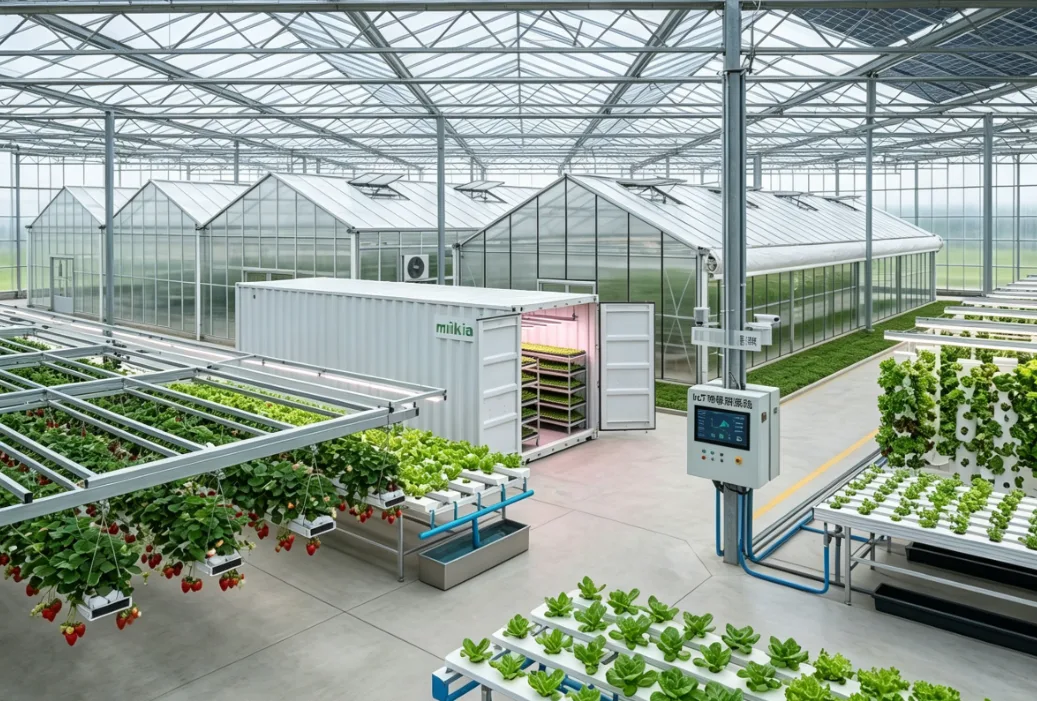
Growing media also matters. Some green wall systems use felt or pocket-based modules, while others use trays, planter cells, or hydroponic inserts. Each format changes root aeration, water retention, and replacement speed. For high-traffic commercial sites, modular replacement is usually more practical than full-wall refurbishment.
Miilkiia’s product range shows how different modules can support different project goals, from vertical hydroponic towers to outdoor vertical planters and compact vertical planters. Those formats illustrate an important point: a custom vertical green wall should be designed as a system family, not a single product.
| Module Type | Best Use | Main Advantage |
|---|---|---|
| Panel system | Large facades | Uniform appearance |
| Planter module | Flexible layouts | Easy replacement |
| Hydroponic insert | Controlled environments | Efficient water use |
| Mixed media pocket | Decorative walls | Natural visual texture |
How Climate and Building Use Change the Green Wall System
Climate is one of the strongest drivers of system design. A vertical green wall in a hot, sunny region needs stronger shading tolerance and higher irrigation precision. A wall in a cold climate needs frost resistance, insulation awareness, and careful seasonal plant selection.
Building use also changes the design. A hotel lobby wall has different expectations than a shopping mall wall or office atrium. Public spaces usually require safer access, lower maintenance frequency, and a more stable plant palette. In retail environments, visual consistency often matters more than botanical diversity.
Commercial projects should also consider operating cost. The International Energy Agency continues to emphasize the importance of efficiency in building operations. That is relevant because pumps, lighting, and climate control can affect the lifetime cost of a green wall system, especially in enclosed spaces.
For this reason, project planning should include energy use, replacement cycles, and service intervals. A custom vertical green wall is easier to justify when its maintenance model is clear from the start.

What Maintenance Questions Should Be Answered Early?
Maintenance is often the difference between a successful wall and a failing one. The most common issues are clogged emitters, uneven growth, algae buildup, and plant loss in hard-to-reach sections. These problems are manageable when access and inspection points are built into the design.
Pruning, nutrient balancing, and seasonal replacement should be planned before installation. If the wall is high or difficult to reach, the system should favor hardy species and simple module replacement. A green wall system that is easy to service will usually perform better over time than a more complex wall with higher visual ambition.
Monitoring is also useful for long-term stability. Temperature, humidity, light, and moisture data help operators spot stress before plants decline. For commercial clients, that data supports better budgeting and fewer emergency repairs.
- Confirm access for cleaning and pruning.
- Set a replacement plan for weak plants.
- Inspect irrigation lines on a fixed schedule.
- Review seasonal light and moisture changes.
How to Match the Custom Vertical Green Wall to the Project Goal
The best custom vertical green wall is the one that matches the project goal with the least operational friction. If the goal is branding, prioritize visual uniformity and low maintenance. If the goal is urban greening, prioritize plant resilience and irrigation reliability. If the goal is productivity, prioritize light, water efficiency, and crop compatibility.
That is why project planning should always begin with use case, not product catalog. A green wall system for a corporate lobby, a public facade, or a rooftop garden will not share the same technical priorities. The design should reflect that difference from the first concept stage.
For teams comparing options, it helps to review a manufacturer’s broader ecosystem, including company capabilities, product overview, and catalog resources. That makes it easier to judge whether the supplier can support both design and long-term delivery.
FAQ
1. What is the first thing to check before installing a custom vertical green wall?
The first check should be structural and environmental suitability. Confirm load capacity, waterproofing, sunlight exposure, and access for maintenance. These basics determine whether the wall can function safely and consistently. Without them, even a well-designed green wall system can become expensive to repair and difficult to keep healthy.
2. Is a hydroponic green wall better than a soil-based system?
Neither option is universally better. Hydroponic systems often offer cleaner water control, lighter weight, and easier automation, while soil-based systems can be simpler for some decorative applications. The right choice depends on the project goal, maintenance capacity, and climate. A custom vertical green wall should be selected by use case, not trend.
3. How often does a vertical green wall system need maintenance?
Maintenance frequency depends on plant type, location, and irrigation design. Many commercial walls need weekly inspection and periodic pruning, while more complex systems may require more frequent checks. The most important tasks are monitoring water delivery, removing dead material, and replacing weak plants before the wall loses visual consistency.
4. Can a green wall system work outdoors in harsh weather?
Yes, but the system must be designed for the local climate. Outdoor walls need stronger materials, wind-aware mounting, and plant species that tolerate heat, cold, or rain. In harsh weather, project planning should also include drainage, seasonal irrigation changes, and a maintenance plan that reflects real site conditions.
5. Why is project planning so important for a custom vertical green wall?
Project planning aligns design, structure, irrigation, plants, and maintenance into one workable system. It reduces installation risk and improves long-term performance. A custom vertical green wall is a building system, not just a decorative panel, so early planning helps ensure safety, durability, and predictable operating cost.