
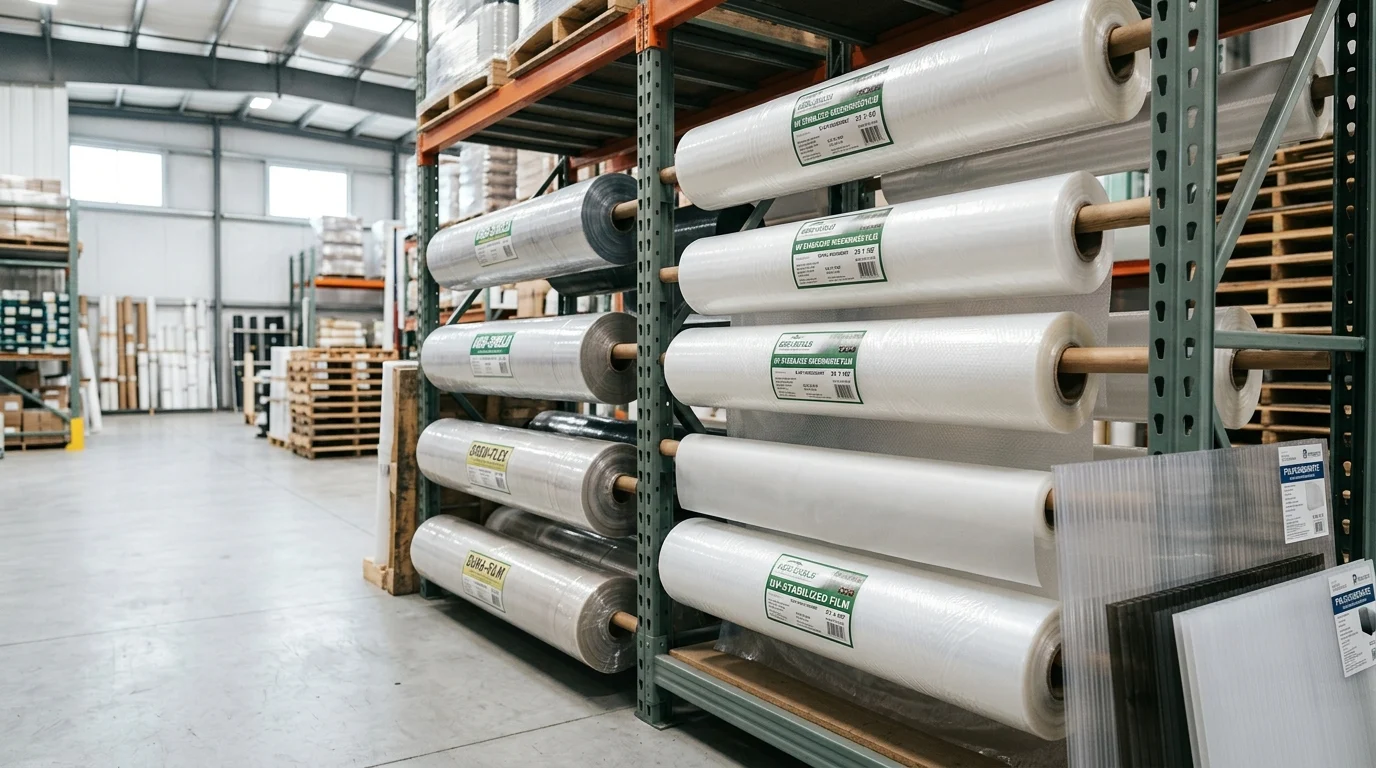
Introduction
China’s greenhouse covering material market is concentrated in major manufacturing provinces and served through B2B platforms, trade fairs, and direct factory networks, but finding the right supplier requires more than a quick search. This article explains where wholesale buyers typically source greenhouse films, polycarbonate sheets, and related covering materials, and how to compare manufacturers based on product range, production capacity, quality control, certifications, and export experience. It also highlights practical ways to verify whether you are dealing with a true factory or an intermediary, helping you shortlist suppliers that can support consistent quality, competitive pricing, and long-term procurement needs.
How to find a reliable greenhouse covering material supplier
Sourcing structural components for commercial agriculture demands a rigorous approach to procurement. The global market for agricultural films and protective covers is expanding rapidly, pushing commercial growers and wholesale distributors to identify robust manufacturing partners. Securing a reliable greenhouse covering material supplier is a fundamental step in optimizing crop yields, managing long-term capital expenditures, and ensuring year-round climate control.
Navigating the international supply chain requires an understanding of both digital procurement tools and regional manufacturing hubs. Buyers must move beyond simple web searches to establish direct lines of communication with primary manufacturers, bypassing unnecessary intermediaries to secure competitive wholesale pricing.
Key sourcing channels for buyers
Commercial buyers typically leverage a combination of digital B2B marketplaces, industry-specific trade exhibitions, and direct procurement agents. Platforms like Alibaba, Global Sources, and Made-in-China provide broad directories of manufacturers, but professional buyers often rely on specialized horticultural expos to evaluate physical samples. Events such as HortiChina or the Canton Fair allow procurement officers to interact directly with factory representatives.
Engaging third-party sourcing agents or independent auditors can also streamline the vetting process. These professionals provide on-the-ground factory audits, verify production capacities, and conduct initial quality assessments—a crucial step when establishing a new international supply chain relationship.
Why China remains a major supply market
China continues to dominate the global supply chain for agricultural plastics and polycarbonate panels. The country accounts for an estimated 60% to 70% of the world’s greenhouse film production capacity. This immense manufacturing footprint is heavily concentrated in specialized industrial hubs within Shandong, Jiangsu, and Guangdong provinces, where supply chain ecosystems for petrochemical processing and polymer extrusion are highly mature.
This extraordinary scale of production allows Chinese manufacturers to offer unit costs that are typically 15% to 25% lower than European or North American alternatives. Furthermore, intense domestic competition has driven significant advancements in co-extrusion technology, meaning buyers no longer have to sacrifice advanced polymer formulations or UV-stabilization technologies to achieve favorable pricing.
What types of greenhouse covering materials suppliers offer
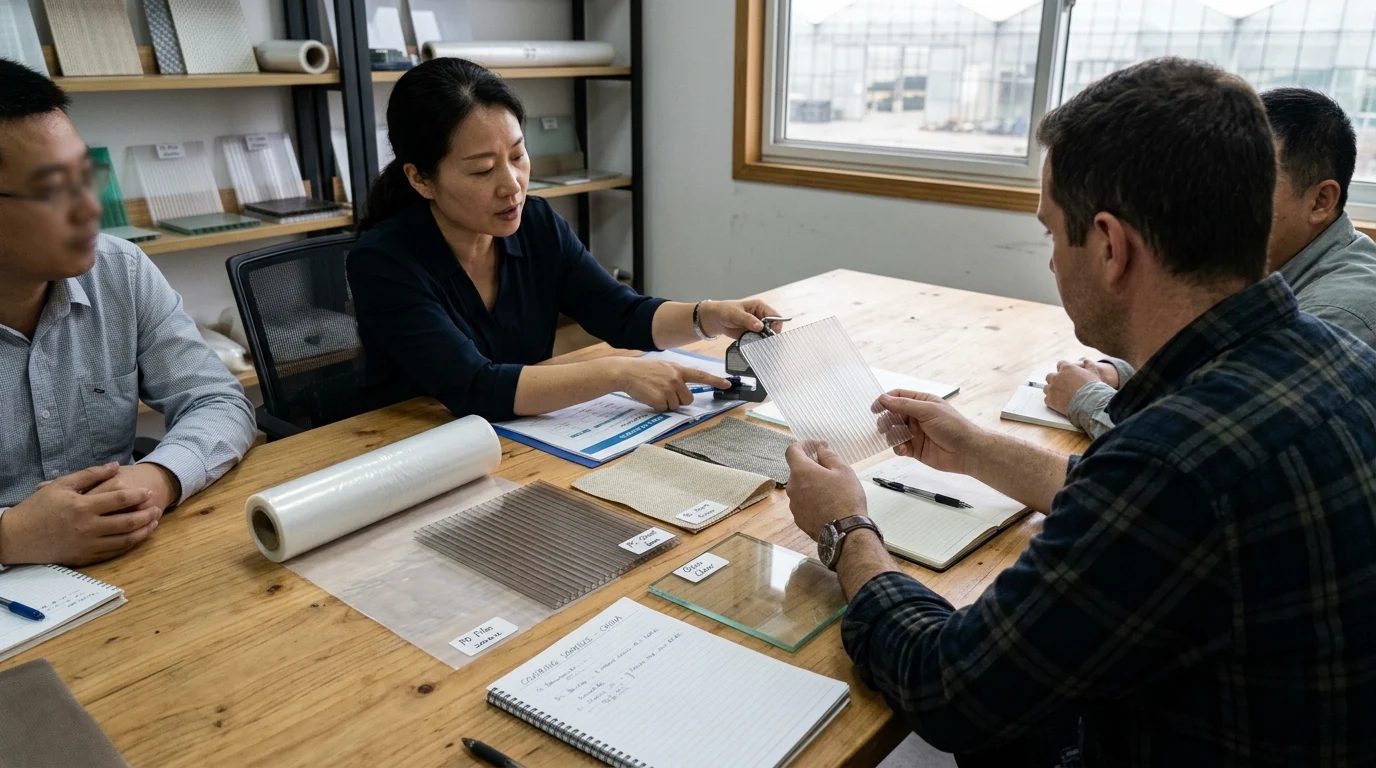
Modern agricultural covers have evolved far beyond basic, single-layer plastic sheeting. Today, a reputable greenhouse covering material supplier provides highly engineered, multi-layer polymers and rigid panels designed to manipulate light diffusion, retain thermal energy, and resist severe environmental degradation.
Understanding the specific physical and optical properties of these materials is essential for matching the product to the intended agronomic application and geographic climate.
Main material categories and use cases
The primary materials procured at the wholesale level include Polyethylene (PE) films, Ethylene Vinyl Acetate (EVA) films, and rigid Polycarbonate (PC) panels. PE film remains the industry standard due to its high cost-efficiency and versatility, typically manufactured using 3-layer or 5-layer co-extrusion processes. EVA offers superior light transmission, elasticity, and thermal retention, making it ideal for colder climates. For permanent commercial structures, twin-wall or multi-wall PC panels provide unmatched impact resistance and insulation.
| Material Category | Typical Lifespan | Light Transmission | Primary Use Case | Est. Cost Index |
|---|---|---|---|---|
| Polyethylene (PE) Film | 1 to 4 Years | 88% – 90% | Seasonal high tunnels, standard commercial greenhouses | Low |
| Ethylene Vinyl Acetate (EVA) | 3 to 5 Years | 90% – 92% | Cold-climate agriculture, high-value crop cultivation | Medium |
| Polycarbonate (PC) Panels | 10 to 15 Years | 80% – 85% | Permanent commercial facilities, institutional research | High |
Technical specifications to compare
Procurement officers must scrutinize exact technical specifications before authorizing purchase orders. Standard commercial greenhouse films require a thickness of 150 to 200 microns (approximately 6 to 8 mils) to withstand wind loads and mechanical stress, whereas rigid PC panels typically range from 4mm to 10mm in thickness. Critical optical metrics include a baseline light transmission rate exceeding 88% and a light diffusion rate tailored to prevent canopy burn in specific crops.
Furthermore, advanced chemical additives are a key differentiator. UV-resistance stabilizers should guarantee a minimum structural lifespan of 36 to 60 months under high solar radiation (e.g., 120-150 kLy/year). Additionally, buyers should specify the inclusion of anti-drip (surfactant) layers to prevent condensation from falling onto crops, which can reduce the incidence of fungal diseases by up to 30%.
How to evaluate supplier quality and capability
Evaluating a manufacturer’s operational capabilities extends well beyond reviewing a glossy product catalog. Establishing strict quality control parameters and understanding commercial terms are vital for maintaining a stable, long-term supply chain and avoiding catastrophic material failures mid-season.
A rigorous vetting protocol ensures that the supplier possesses the necessary extrusion machinery, raw material sourcing standards, and financial stability to fulfill large-scale commercial contracts reliably.
Quality control, testing, and certifications
Rigorous quality assurance protocols separate top-tier manufacturers from average vendors. Buyers should request documentation of ISO 9001 certification and specific material testing reports, such as ASTM D-882 for tensile properties and tear resistance. Premium suppliers perform accelerated weathering tests (such as QUV testing) for over 1,000 to 1,500 hours to empirically validate their UV stabilization claims.
A reliable supplier should guarantee a manufacturing defect rate of less than 1.5% per production batch. Reviewing case studies and past greenhouse covering material supplier performance records can further validate these quality claims. Buyers should also inquire about the source of the raw polymer resins, as premium films rely on virgin resins from established petrochemical giants rather than recycled, degraded plastics.
MOQ, customization, pricing, and lead times
Commercial terms dictate the financial viability of an import operation. Minimum Order Quantities (MOQs) for custom-extruded PE or EVA films typically range from 1,000 to 3,000 kilograms, which is roughly equivalent to a 20-foot standard shipping container. For rigid PC panels, MOQs might be calculated by square meterage, often starting at 1,000 square meters.
Pricing is heavily indexed to global petrochemical markets. Standard 200-micron PE film generally oscillates between $1.20 and $1.80 per kilogram wholesale, depending on the complexity of the additives. Standard production lead times average 15 to 30 days. Payment terms commonly require a 30% T/T (Telegraphic Transfer) deposit upon order confirmation, with the remaining 70% balance due against the copy of the Bill of Lading.
What import, compliance, and logistics factors matter
The successful procurement of agricultural materials culminates in efficient global logistics and strict regulatory compliance. Mismanaging the export and transit phases can rapidly negate the cost advantages of overseas sourcing through demurrage fees, transit damage, or customs seizures.
Importers must coordinate closely with freight forwarders and the manufacturer to ensure seamless factory-to-port and port-to-warehouse transitions.
Shipping, packaging, and delivery planning
Greenhouse films are dense and heavy, typically wound onto reinforced cardboard or PVC cores and shipped in rolls weighing between 50 and 100 kilograms each. Strategic container loading is essential to maximize freight efficiency and lower the landed cost per square meter. A standard 40-foot High Cube (40HQ) shipping container can accommodate approximately 24 to 26 metric tons of rolled PE film.
Packaging integrity is non-negotiable. Rolls must be heavily stretch-wrapped to prevent moisture ingress and UV exposure during transit. For rigid PC panels, proper palletization with edge protectors is required to prevent cracking and corner deformation during transoceanic shipping and subsequent crane or forklift handling.
Export documents, compliance, and contract terms
Importers must ensure all export documentation is flawlessly executed to clear customs without delay. Standard required documents include the Bill of Lading (B/L), a detailed Commercial Invoice, a precise Packing List, and a Certificate of Origin (often necessary for securing preferential tariff treatments). Plastics and films generally fall under HS Code 3920.10, though classifications can vary slightly based on material composition.
Buyers must also establish clear Incoterms with their supplier, with FOB (Free On Board) and CIF (Cost, Insurance, and Freight) being the most prevalent in this sector. Additionally, materials imported into the European Union must comply with REACH regulations concerning chemical additives and plasticizers, while other global jurisdictions may require specific environmental safety certifications for heavy-duty agricultural plastics.
How to choose the best supplier for your needs
Finalizing the selection of a manufacturing partner requires a structured, objective approach rather than simply awarding the contract to the lowest bidder. Balancing upfront capital costs with long-term material performance is the key to a profitable and sustainable procurement strategy.
A systematic evaluation minimizes risk and establishes a foundation for long-term Supplier Relationship Management (SRM).
Step-by-step supplier selection process
The selection process should follow a strict chronological framework. First, request A4-sized or 1×1-meter material samples to conduct independent tactile, optical, and tear-resistance assessments. Second, verify the supplier’s business license, export credentials, and third-party factory audit reports via recognized verification agencies like SGS, Intertek, or TÜV Rheinland.
Finally, execute a pilot order before committing to annual volume contracts. A pilot order is typically limited to a single 20-foot container (yielding around 10 to 12 metric tons of film). This initial transaction allows the buyer to evaluate production fidelity, adherence to specified micron thicknesses, packaging integrity, and the supplier’s communication efficiency under real-world logistical pressures.
Balancing price, durability, climate fit, and supply stability
Procurement decisions must weigh multiple variables simultaneously. While unit price is a primary driver, the durability of the material and its suitability for the specific climatic zone of the end-user are equally critical. For instance, high thermal diffusion films are mandatory for tropical climates to prevent overheating, whereas maximum IR-blocking films are required for cold-weather insulation to reduce nighttime heating costs.
| Evaluation Criteria | Suggested Weighting | Target Benchmark / Standard |
|---|---|---|
| Product Quality & Tech Specs | 40% | Exact micron match, >88% light transmission, 3+ years UV guarantee |
| Wholesale Pricing & Terms | 30% | $1.20 – $1.80/kg, favorable payment structure (e.g., 30/70 T/T) |
| Production Lead Time | 15% | 15 to 30 days maximum for standard multi-layer extrusions |
| Communication & Support | 15% | Fluent English support, rapid response times, transparent documentation |
By applying a weighted evaluation matrix, commercial buyers can objectively quantify trade-offs and secure a supply chain partner that delivers both immediate economic value and long-term agronomic performance.
Further reading:
Key Takeaways
- The most important conclusions and rationale for greenhouse covering material supplier
- Specs, compliance, and risk checks worth validating before you commit
- Practical next steps and caveats readers can apply immediately
Frequently Asked Questions
Where can I find wholesale greenhouse covering material suppliers in China?
Start with Alibaba, Global Sources, and Made-in-China, then verify factories in Shandong, Jiangsu, or Guangdong. Trade shows like HortiChina and Canton Fair help confirm real manufacturers.
What materials do Chinese greenhouse covering suppliers usually offer?
Most supply PE film, EVA film, and polycarbonate panels. Choose PE for low cost, EVA for better heat retention, and PC panels for long-term, permanent greenhouse structures.
How can I verify a greenhouse covering material supplier before ordering?
Request factory photos, test reports, production capacity details, and samples. For larger orders, use a third-party audit or sourcing agent to inspect the factory on site.
What specifications should I check when buying greenhouse covering materials?
Check thickness, light transmission, diffusion rate, UV resistance, and expected lifespan. For film, 150–200 microns is common; for PC panels, 4–10 mm is typical.
Can I compare products directly on Miilkia before contacting a supplier?
Yes. You can review agricultural films, protective covers, and product categories on miilkiiablog.com, then use the partner page or showcases to evaluate options and supplier fit.