
Introduction
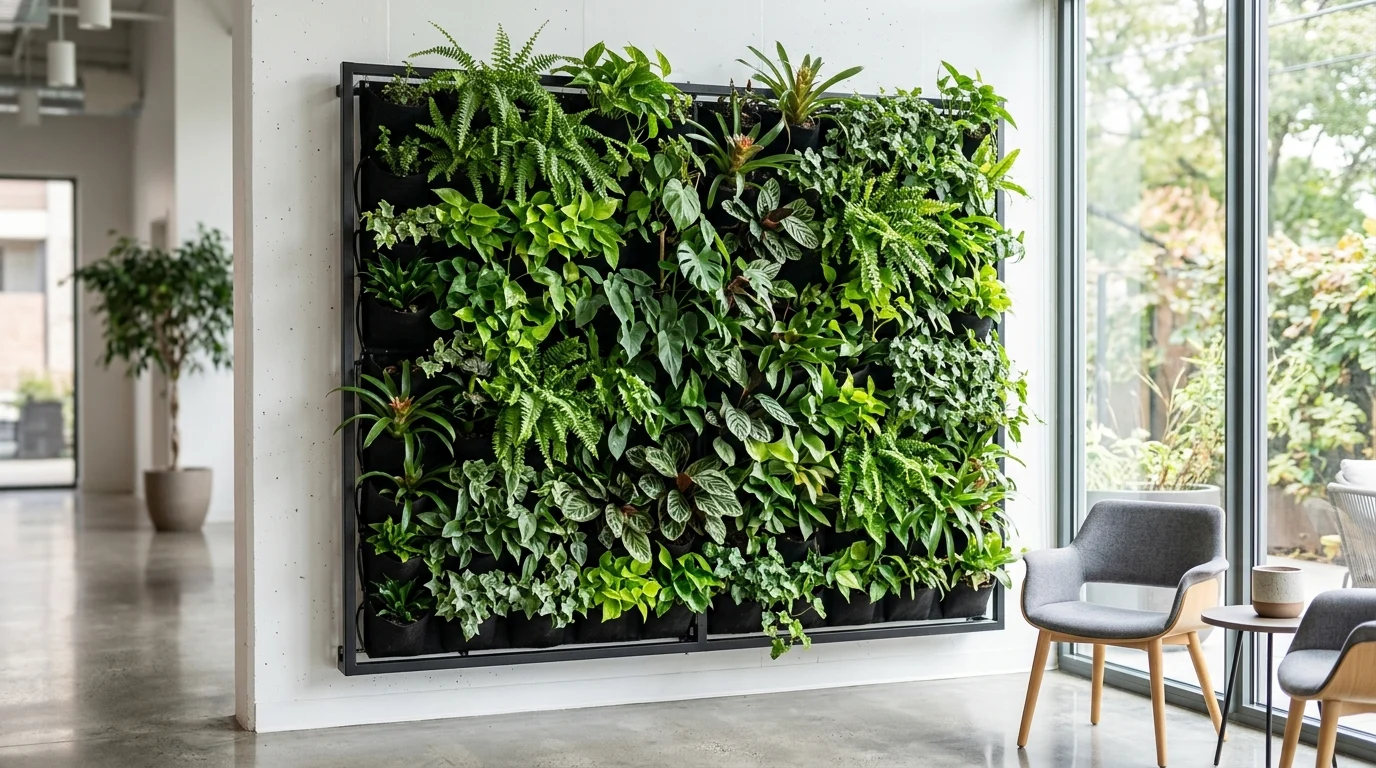
Urban landscaping projects often need more than a decorative green wall—they require systems that can be engineered for scale, durability, and efficient installation. An OEM vertical plant wall factory offers that advantage by combining custom module design, integrated irrigation, and manufacturing consistency that retail products rarely provide. This article explains why factory-based OEM production is especially valuable for large commercial and public projects, how it helps control cost and timeline risks, and what decision-makers should look for when comparing suppliers for urban applications.
Why OEM vertical plant wall factories matter
Urban landscaping increasingly demands scalable green infrastructure to meet modern environmental and aesthetic standards. Partnering with an OEM vertical plant wall factory bridges the gap between architectural vision and practical execution. For large-scale commercial projects exceeding 500 square meters, off-the-shelf retail solutions often fail to meet the rigorous structural, irrigation, and aesthetic requirements demanded by urban developers.
Project pressures that favor factory customization
Urban developers face compressed timelines and strict budget ceilings when integrating living architecture into new builds or retrofits. Factory customization allows architects to specify exact module dimensions, integrated irrigation channels, and specific plant-holding capacities without incurring the massive premiums associated with bespoke local fabrication. By sourcing custom injection molds and proprietary mounting hardware directly from the manufacturer, project managers can reduce on-site installation time by up to 40%, keeping tight construction schedules on track.
How OEM manufacturing supports consistency and scale
Consistency is the cornerstone of large urban installations. When procuring thousands of modular planting units for a high-rise facade, a variance of even a few millimeters can disrupt the entire structural grid system. OEM manufacturing ensures precise dimensional tolerances, typically maintaining accuracy within ±1.5 mm through automated injection molding and rigorous batch testing. This industrial scale of production guarantees that the first module matches the ten-thousandth perfectly, eliminating the compounding errors that often plague inconsistent manufacturing batches.
What defines a reliable OEM vertical plant wall factory
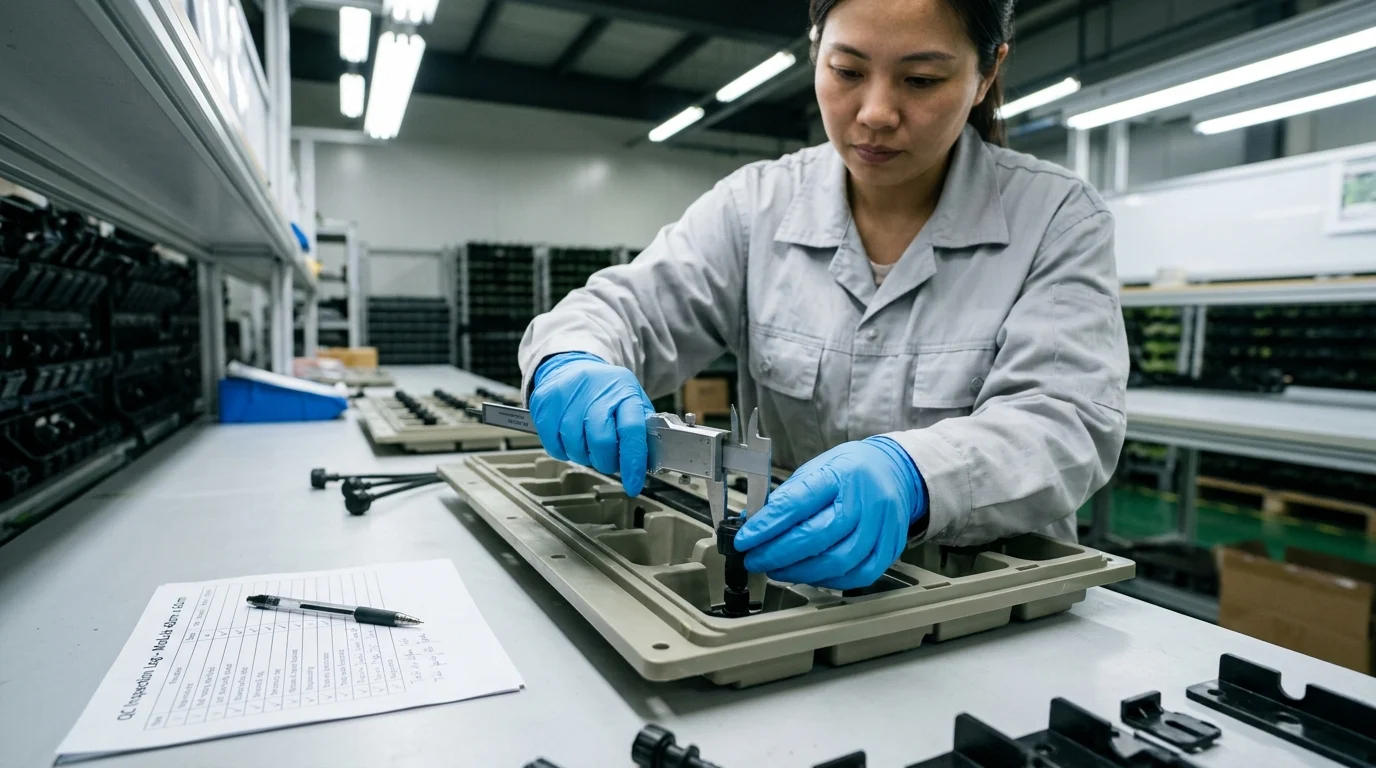
A reliable manufacturing partner extends far beyond basic assembly; it encompasses secure raw material sourcing, dedicated engineering support, and robust quality management systems. Top-tier factories operating in this sector typically manage facilities exceeding 10,000 square meters. They are equipped with automated production lines capable of outputting over 5,000 square meters of green wall modules monthly to meet global demand.
System types and customization boundaries
Reliable factories offer diverse base systems that can be tailored to specific climates and building facades. Customization options typically include modifying module depth, altering irrigation routing, and adjusting substrate volume to accommodate local flora.
| System Type | Primary Material | Water Retention Capacity | Ideal Application |
|---|---|---|---|
| Modular Pot System | Recycled PP/HDPE | 1.5 – 2.0 Liters/pot | High-wind exterior facades |
| Felt Pocket System | Geotextile Fabric | 0.8 – 1.2 Liters/pocket | Curved interior surfaces |
| Hydroponic Panel | Rockwool/Foam | Continuous flow | Climate-controlled interiors |
How OEM factories differ from standard suppliers
The primary distinction between an OEM factory and a standard trading company lies in direct engineering control. While traders simply aggregate existing market products with minimal oversight, an authentic OEM vertical plant wall manufacturer owns the injection molds, dictates the exact polymer blends, and can alter the structural ribbing of a planter based on a structural engineer’s specific wind-load calculations.
Key criteria for supplier evaluation
Evaluating a supplier requires scrutinizing their production capacity, research and development capabilities, and material sourcing transparency. Key indicators of a highly capable factory include active ISO 9001 certification, in-house UV aging test chambers, and a verifiable track record of supplying multi-phase commercial projects. Buyers should routinely request documentation of raw material origins to ensure that recycled plastics meet municipal environmental standards without compromising the tensile strength required for vertical load-bearing.
How specifications, quality control, and compliance affect performance
The long-term viability of living architecture depends entirely on the technical specifications and structural integrity of the underlying hardware. An OEM factory must engineer products that withstand constant moisture exposure, aggressive root pressure, and harsh environmental extremes. High-quality modules are typically formulated with advanced UV stabilizers designed to prevent plastic degradation for a minimum of 10 to 15 years under direct sunlight.
Technical specifications that shape durability and maintenance
Durability in vertical landscaping hinges on applied material science. Planters manufactured from high-density polyethylene (HDPE) or polypropylene (PP) must feature specific wall thicknesses—often engineered between 3.0 mm and 4.5 mm—to prevent warping under the combined weight of saturated soil and mature flora. Maintenance efficiency is directly affected by the integration of anti-clogging drainage layers and modular interchangeability. This allows facility managers to execute individual plant replacements without dismantling the entire structural grid.
Quality assurance, testing, and documentation
Stringent quality assurance separates premium OEM outputs from commodity plastics. Factories must implement multi-stage testing protocols, including hydrostatic pressure tests for integrated irrigation lines and dynamic load-bearing tests for mounting brackets. A robust QA program typically maintains a strict defect rate of less than 0.3% per production batch. Comprehensive documentation, including material safety data sheets (MSDS) and batch testing reports, is non-negotiable for commercial handovers and structural warranties.
Regional compliance, fire safety, irrigation, and structural req
uirements
Urban installations are governed by strict municipal building codes and safety regulations. OEM factories must produce systems that comply with regional fire safety ratings, such as the EN 13501-1 Class B-s1,d0 standard for flame retardance in commercial zones.
| Compliance Category | Standard / Requirement | OEM Factory Implementation |
|---|---|---|
| Fire Safety | Class A or B1 (ASTM E84 / EN 13501) | Flame-retardant polymer additives |
| Wind Resistance | Up to 120 km/h (Hurricane zones) | Reinforced anchoring clips & steel rails |
| Water Efficiency | LEED V4 / BREEAM standards | Integrated pressure-compensating drippers |
What commercial and operational advantages OEM factories offer
Engaging directly with an OEM vertical plant wall factory fundamentally alters the procurement economics for large landscaping developments. By eliminating intermediary distributor markups, developers can realize cost reductions ranging from 25% to 40% on hardware components. This allows project managers to reallocate those funds toward mature plant procurement, advanced irrigation controllers, or supplementary lighting systems.
Pricing, tooling, MOQ, and cost drivers
Cost drivers in OEM manufacturing include the complexity of custom tooling, raw material market fluctuations, and overall production volume. Custom injection molds for unique planter shapes can cost between $4,000 and $15,000, depending on cavity count and mechanical complexity. To amortize these upfront setup costs, factories typically enforce a Minimum Order Quantity (MOQ) ranging from 200 to 500 square meters. For projects meeting or exceeding these thresholds, the per-unit price drops significantly, making bespoke architectural designs financially viable.
Logistics, packaging, lead times, and installation coordination
Efficient logistics and packaging are critical for handling bulky landscaping materials over long supply chains. OEM factories optimize pallet configurations to maximize shipping container space. They often design modular components to nest within one another, which can reduce total freight volume by up to 30%. Standard production lead times hover between 30 and 45 days, requiring precise coordination with on-site installation schedules to ensure mounting rails are delivered and installed prior to the arrival of the planting modules.
Typical sourcing and approval process
The sourcing process typically begins with the exchange of CAD drawings and environmental requirements between the buyer and the factory’s engineering team. This is followed by a prototyping phase, which takes approximately 14 to 21 days to complete. Once the physical prototype is approved for structural integrity and aesthetic finish, mass production commences. Buyers can often view past project implementations in OEM vertical plant wall portfolios to validate the factory’s capability to execute complex, multi-stage designs on schedule.
How buyers should evaluate OEM fit for a project
While direct factory sourcing offers substantial commercial and technical benefits, it is not universally applicable to every landscaping endeavor. The decision to partner with an OEM manufacturer should be driven by overall project scale, specific customization needs, and the organizational capacity to manage international logistics. Projects requiring fewer than 50 square meters are generally better served by domestic retail distributors due to freight minimums and import overhead.
Project scenarios where OEM manufacturing makes sense
OEM manufacturing shines brightest in large-scale commercial real estate developments, municipal infrastructure upgrades, and extensive interior corporate atriums. In these high-visibility scenarios, the ability to brand the planters, specify exact RAL colors to match corporate identities, or design bespoke corner-wrapping modules provides a level of architectural freedom that standard off-the-shelf products simply cannot match.
Decision criteria, trade-offs, and supplier scorecard
Buyers must carefully weigh the upfront time investment of OEM sourcing against long-term operational savings and structural reliability. A comprehensive supplier scorecard should evaluate factors such as communication responsiveness (weighted at 20%), material certification validity (30%), production capacity and lead times (25%), and historical defect resolution protocols (25%). By methodically assessing these criteria, procurement teams can secure a manufacturing partner capable of translating complex green infrastructure concepts into sustainable, living realities.
Further reading:
Key Takeaways
- The most important conclusions and rationale for OEM vertical plant wall
- Specs, compliance, and risk checks worth validating before you commit
- Practical next steps and caveats readers can apply immediately
Frequently Asked Questions
Why choose an OEM vertical plant wall factory instead of a trading company?
An OEM factory controls molds, materials, and engineering changes directly. That means tighter tolerances, faster customization, and more reliable performance for large urban projects.
What project size benefits most from an OEM vertical plant wall?
Projects above 500 square meters usually benefit most. OEM production helps maintain consistency across thousands of modules and reduces installation delays on large facades.
What custom options are usually available for OEM green wall modules?
Common options include module size, depth, irrigation routing, substrate volume, and mounting hardware. These adjustments help match facade loads, climate, and plant selection.
How can buyers verify a reliable OEM vertical plant wall supplier on MiilkiiaBlog?
Check product system details, ask for ISO 9001 records, UV test data, monthly output capacity, and raw material documentation. Reliable suppliers should provide clear technical specs.
How much time can OEM customization save during installation?
Well-designed OEM systems can cut on-site installation time by up to 40%. Pre-engineered modules and mounting parts reduce rework and keep construction schedules on track.