
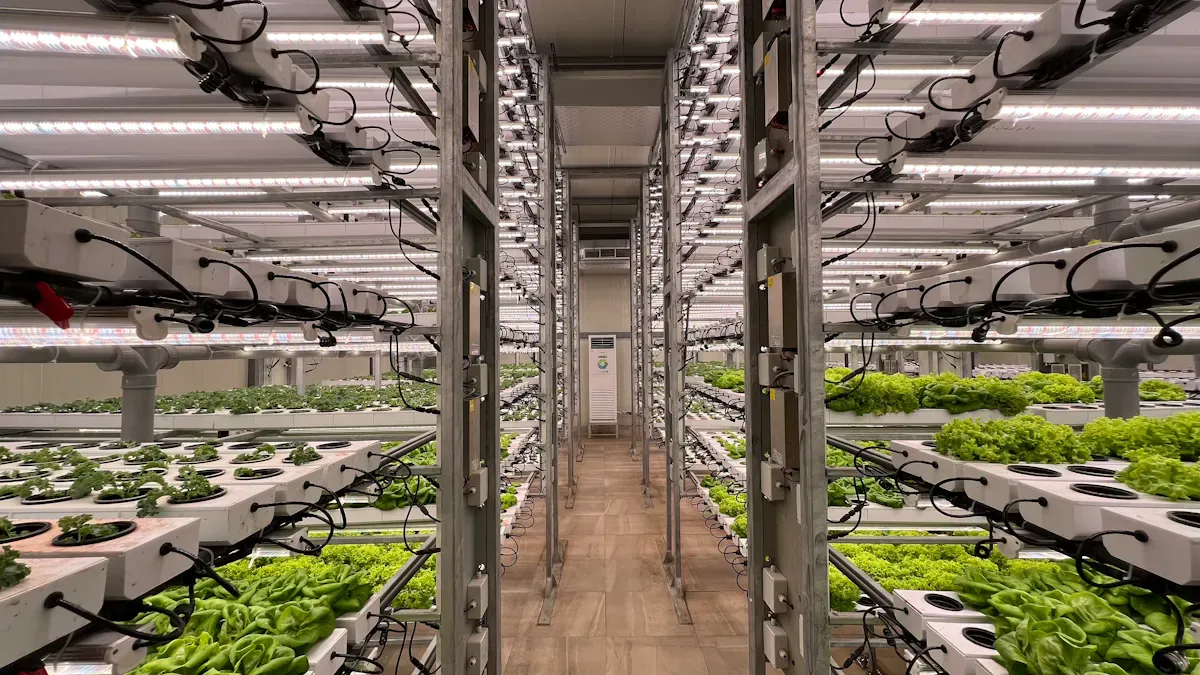
Aeroponic systems generally deliver faster growth than traditional hydroponics, making them a popular choice among growers. This advantage stems from several key factors:
- Aeroponic systems can achieve growth rates that are 20-30% faster than traditional hydroponic systems in optimal conditions, highlighting the benefits of aeroponics vs hydroponics.
- Enhanced oxygen exposure promotes root health and accelerates growth, which is crucial in the aeroponic vs DWC hydroponic comparison.
- Efficient nutrient delivery directly to the roots allows for quicker absorption, contributing to the overall efficiency of commercial aeroponic systems advantages.
- Optimized environmental conditions in aeroponics lead to improved growth rates, raising the question: What is the difference between aeroponics and hydroponics?
These factors make aeroponic systems a compelling choice for growers seeking the fastest hydroponic growth.
Key Takeaways
- Aeroponic systems can grow plants 20-30% faster than traditional hydroponics, making them a great choice for quick results.
- These systems use a nutrient mist that provides high oxygen levels, promoting healthier roots and better nutrient absorption.
- Aeroponics saves up to 40% more water compared to hydroponics, making it an eco-friendly option for growers.
- With better environmental control, aeroponic systems lead to healthier plants and higher yields, allowing for more crop cycles each year.
- While initial costs may be higher, the efficiency and faster growth of aeroponic systems can lead to greater long-term benefits.
Growth Rate Comparison
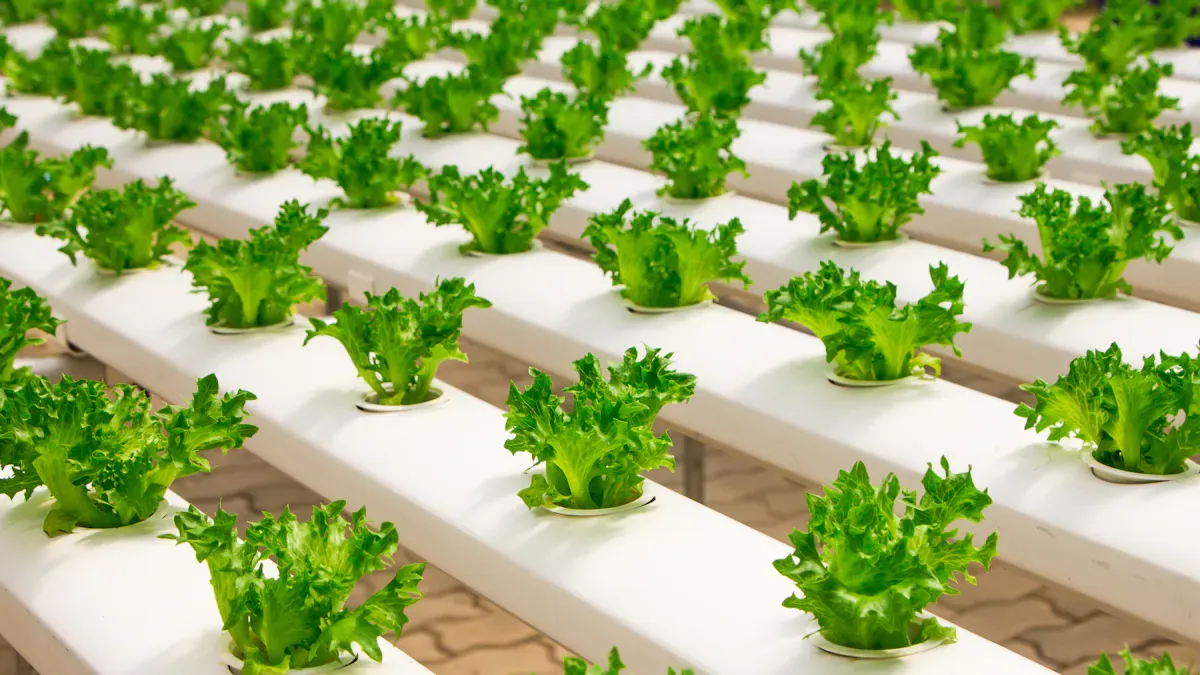
When comparing growth rates between aeroponic systems and traditional hydroponics, several factors come into play. Aeroponic systems often outperform hydroponics in terms of root development, flowering times, and overall yields.
Root Development
Aeroponic systems significantly enhance root development rates. The high oxygen availability around the roots accelerates growth. This oxygen-rich environment allows plants to absorb nutrients more efficiently. In contrast, hydroponic systems also promote growth but do not achieve the same level of root health. The misting technique used in aeroponics mimics natural conditions, which further boosts root vitality.
Fruiting and Flowering Rates
The time it takes for plants to flower or fruit varies considerably between the two systems. The following table illustrates these differences:
| System Type | Time to First Flower | Time to First Harvest | Crop Turnarounds per Year |
|---|---|---|---|
| Aeroponics | 10 days | 10 to 30 days | 7.7 |
| Hydroponics | 28 days | 68 to 95 days | 3.4 |
As shown, aeroponic systems allow for quicker flowering and harvesting, leading to more crop cycles per year.
Yield Comparison
Yield per square meter is another critical factor in growth rate comparison. The following table summarizes the average yields for both systems:
| System Type | Yield per Square Meter (kg, estimated) |
|---|---|
| Aeroponics | 75 – 120 |
| Hydroponics | 60 – 90 |
Aeroponic systems consistently yield higher outputs compared to traditional hydroponics. This increased productivity can be attributed to the efficient nutrient delivery and optimal growing conditions provided by aeroponics.
Nutrient Delivery Efficiency in Aeroponic Systems
Nutrient delivery efficiency plays a crucial role in the growth rates of plants in aeroponic systems. These systems utilize a unique method of nutrient application that significantly enhances the absorption process.
In aeroponics, roots are suspended in air and periodically misted with a nutrient-rich solution. This method ensures maximum oxygen exposure, which is vital for efficient nutrient absorption. The following table illustrates the differences in nutrient delivery between aeroponic and hydroponic systems:
| System Type | Oxygen Availability | Nutrient Delivery Method | Nutrient Absorption Efficiency |
|---|---|---|---|
| Aeroponic | High (surrounds roots) | Nutrient mist | High |
| Hydroponic | Moderate (water can deplete) | Nutrient water | Moderate |
The high oxygen availability in aeroponic systems accelerates nutrient absorption. Continuous exposure to oxygen-rich air boosts root metabolism, leading to growth rates that can be 20-30% faster than those in hydroponic systems under optimal conditions. This efficiency stems from the ability of aeroponics to mimic natural air pockets found in soil, increasing access to oxygen and atmospheric gases. As a result, root health improves, which directly correlates with higher yields.
Misting frequency and droplet size also impact nutrient uptake in aeroponic systems. Frequent misting maintains moisture levels around the roots, which is crucial for nutrient uptake. Additionally, the size of the droplets affects both oxygen availability and nutrient absorption efficiency. High-pressure misting with micro-droplets (5 to 50 micrometers) is essential for optimal nutrient bioavailability and root health. Larger droplets can limit oxygen access, while very fine droplets may promote excessive root hair growth without supporting lateral root development.
Overall, the nutrient solution in aeroponics contains the same essential nutrients as in hydroponics. However, the delivery method requires fine misting for even distribution and absorption. This approach not only enhances nutrient uptake but also promotes rapid growth, making aeroponic systems a highly efficient choice for growers.
Water Usage in Aeroponic Systems vs Hydroponics
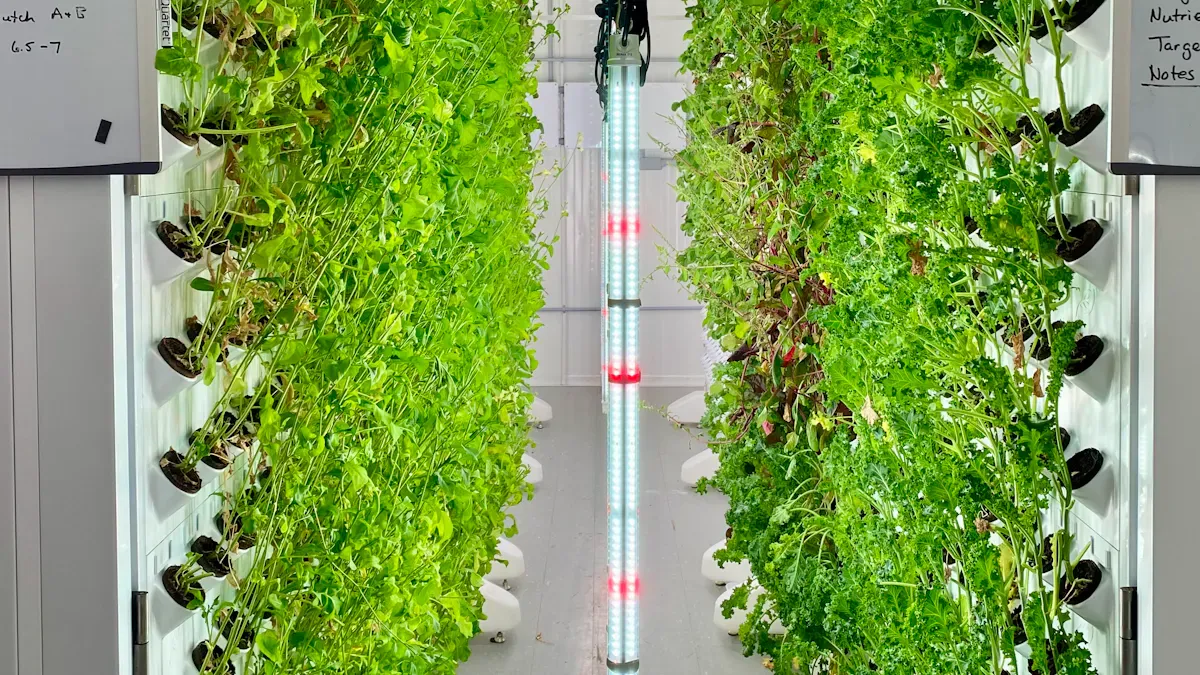
Water efficiency is a critical factor when comparing aeroponic systems to traditional hydroponics. Aeroponic systems excel in minimizing water usage, making them an environmentally friendly choice for growers.
- Aeroponic systems can save up to 40% more water than hydroponic systems.
- Overall, aeroponics uses 90-95% less water than traditional soil farming.
The following table summarizes the water usage reductions for both systems:
| System Type | Water Usage Reduction Compared to Traditional | Water Usage Reduction Compared to Soil |
|---|---|---|
| Aeroponic | Up to 95% | 40% less than hydroponics |
| Hydroponic | Up to 70% | N/A |
Aeroponic systems maximize water efficiency with minimal waste. This efficiency stems from reduced evaporation and lower water volume requirements. In contrast, hydroponic systems, while designed to conserve water, can lead to water-logged roots. This condition may require more water overall, especially in open systems.
Both systems recycle water and nutrients, promoting sustainability. However, aeroponics stands out by utilizing up to 30% less water than hydroponic systems. This significant reduction highlights its superiority in water conservation.
Environmental Control in Aeroponic Systems
Aeroponic systems excel in environmental control, which significantly impacts plant growth rates. These systems allow for precise management of various environmental factors, creating optimal conditions for plant development. Key features include:
| Feature | Description |
|---|---|
| Root-zone atmosphere control | Aeroponics allows for precise management of gases around the roots, enhancing plant growth and research accuracy. |
| Nutrient delivery | A gas-delivery system is used to periodically spray roots with nutrient solution, ensuring optimal conditions. |
Aeroponic systems maintain an environment free from pests and diseases. This cleanliness promotes faster plant growth. Controlled environments enhance plant health, growth, flowering, and fruiting. High-pressure aeroponics utilizes mist heads to deliver nutrients effectively, ensuring that plants receive the necessary elements for rapid development.
Humidity control is another critical aspect of aeroponic systems. These systems provide high humidity control since roots are exposed to air. This exposure allows for better management of moisture levels. In contrast, hydroponics relies on submerged roots, which can lead to humidity issues if not properly managed. The following table summarizes the humidity control capabilities of both systems:
| System | Humidity Control | Oxygen Delivery |
|---|---|---|
| Aeroponics | High; roots are exposed to air, allowing for better humidity management | Maximum 24/7 oxygen exposure; roots hang in air |
| Hydroponics | Moderate; relies on submerged roots, which can lead to humidity issues if not managed | Depends on air stones/pumps; risk of oxygen deficiency |
Overall, the environmental control features of aeroponic systems contribute to their efficiency and effectiveness. By optimizing conditions for growth, these systems enable faster plant development compared to traditional hydroponics.
Cost and Maintenance Considerations for Aeroponic Systems
When evaluating aeroponic systems, initial setup costs and ongoing maintenance play crucial roles in decision-making. Both aeroponic and hydroponic systems require significant investment, but their costs differ in several ways.
Initial Setup Costs
Aeroponic systems typically involve higher initial setup costs due to the specialized equipment needed. Key expenses include:
- The aeroponic system itself
- Lighting, such as LED grow lights
- Nutrient solutions
- Infrastructure, including greenhouses and growing racks
In contrast, hydroponic systems also incur substantial costs, which include:
- Specialized equipment like pumps and reservoirs
- Continuous monitoring of pH, nutrient levels, and oxygen supply
- Technical expertise for operation
Ongoing Maintenance Costs
Maintenance requirements differ significantly between the two systems. The following table outlines the maintenance tasks and their cost implications:
| System Type | Maintenance Tasks | Cost Implications |
|---|---|---|
| Aeroponic | Regular cleaning, replacing equipment, troubleshooting | Higher due to complexity and frequency of tasks |
| Hydroponic | Sterilizing water, cleaning, replacing parts | Varies based on system type and maintenance needs |
Aeroponic systems demand more labor due to the necessity for maintaining cleanliness and regular disinfection. This focus on hygiene is critical for preventing disease and ensuring optimal plant health. Conversely, hydroponic systems, particularly Deep Water Culture (DWC), have relatively low labor requirements. They allow for easier management of plant support and nutrient delivery.
Aeroponic systems deliver faster growth rates due to their superior nutrient delivery methods, reduced water usage, and enhanced environmental control. By providing a highly oxygenated nutrient mist directly to the roots, these systems significantly increase nutrient absorption efficiency. This approach not only conserves water but also minimizes the risk of soil-borne diseases. As a result, aeroponic systems emerge as a more efficient choice for growers, particularly in urban and vertical farming settings.
FAQ
What are the main advantages of aeroponic systems over hydroponics?
Aeroponic systems offer faster growth rates, improved nutrient delivery, and reduced water usage. They also provide better environmental control, leading to healthier plants and higher yields compared to traditional hydroponics.
Can aeroponic systems be used for all types of plants?
Yes, aeroponic systems can support a wide variety of plants, including leafy greens, herbs, and fruiting crops. However, some plants may require specific adjustments to optimize growth conditions.
How often should I check nutrient levels in an aeroponic system?
Growers should check nutrient levels at least once a week. Regular monitoring ensures optimal nutrient balance and prevents deficiencies that could hinder plant growth.
What is the typical lifespan of an aeroponic system?
With proper maintenance, an aeroponic system can last several years. Regular cleaning and equipment checks help extend its lifespan and maintain efficiency.
Are there any disadvantages to using aeroponic systems?
Aeroponic systems can have higher initial setup costs and require more technical knowledge. Additionally, they may demand more frequent maintenance to prevent issues like clogging or disease.