
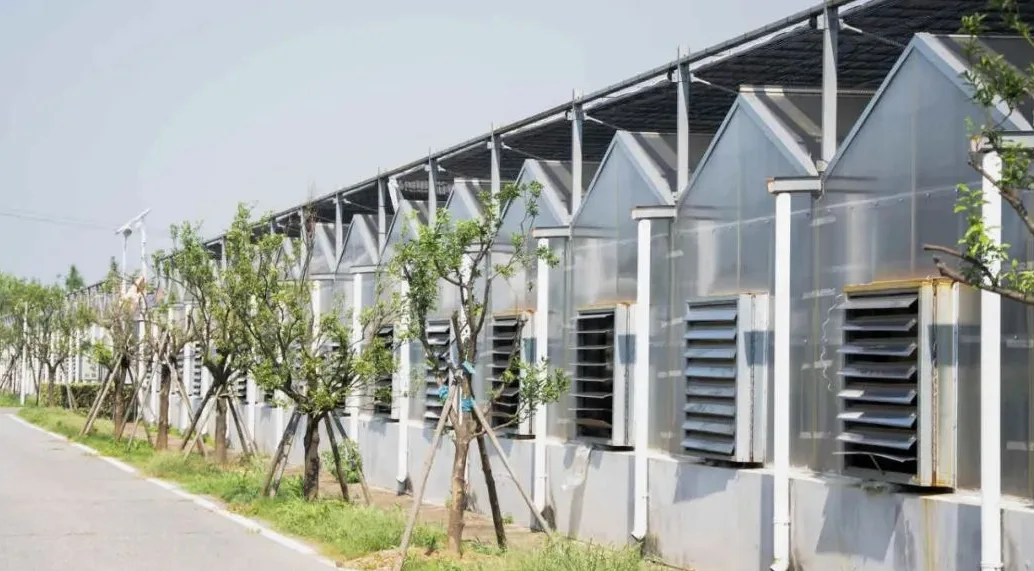
Evaporative Cooling vs Fan Ventilation: Which Is Better for Greenhouses?
Evaporative cooling and fan ventilation are two of the most widely used greenhouse climate-control methods. While both systems improve growing conditions, evaporative cooling generally provides greater temperature reduction in hot climates, whereas fan ventilation offers a simpler and more cost-effective solution for moderate environments.
Choosing the best greenhouse cooling strategy depends on local climate conditions, crop requirements, greenhouse design, and operating costs. Understanding the advantages and limitations of each system helps growers optimize crop productivity and energy efficiency.
Why Greenhouse Cooling Systems Matter
Effective greenhouse cooling systems are essential for maintaining stable crop-growing environments.
High temperatures can reduce photosynthesis, increase plant stress, and negatively affect crop quality. According to the Food and Agriculture Organization (FAO), environmental control is a critical component of modern protected agriculture.
Proper greenhouse cooling helps achieve:
- Consistent plant growth
- Improved crop quality
- Reduced heat stress
- Better humidity management
- Increased production efficiency
- Higher yield potential
Commercial greenhouse operations often combine multiple cooling and ventilation technologies to achieve optimal results.
What Is Evaporative Cooling in Greenhouses?
Evaporative cooling lowers greenhouse temperatures by using water evaporation to absorb heat from incoming air.
A typical evaporative cooling system includes:
- Cooling pads
- Water circulation pumps
- Exhaust fans
- Control systems
As warm outdoor air passes through wet cooling pads, water evaporates and reduces air temperature before the air enters the greenhouse.
Key Advantages of Evaporative Cooling
Evaporative cooling systems are highly effective in hot and dry climates.
Benefits include:
- Significant temperature reduction
- Lower energy consumption than refrigeration
- Uniform cooling performance
- Improved environmental control
- Better crop protection during heat waves
Limitations of Evaporative Cooling
Evaporative cooling performs less effectively in humid regions because air already contains high moisture levels.
Potential drawbacks include:
- Increased humidity
- Water consumption requirements
- Regular maintenance of cooling pads
- Reduced effectiveness during humid weather
What Is Fan Ventilation in Greenhouses?
Fan ventilation removes hot air and introduces fresh outdoor air through mechanical airflow.
Most greenhouse fan ventilation systems include:
- Exhaust fans
- Circulation fans
- Intake vents
- Automated controls
Fan ventilation primarily relies on air exchange rather than direct cooling.
Key Advantages of Fan Ventilation
Fan ventilation remains one of the most economical greenhouse cooling methods.
Benefits include:
- Lower installation cost
- Simpler maintenance
- Reduced water usage
- Effective air circulation
- Flexible greenhouse integration
Limitations of Fan Ventilation
Fan ventilation cannot reduce incoming air temperature below ambient outdoor conditions.
Challenges include:
- Limited cooling capacity during extreme heat
- Higher airflow requirements
- Potential temperature variation across large greenhouses
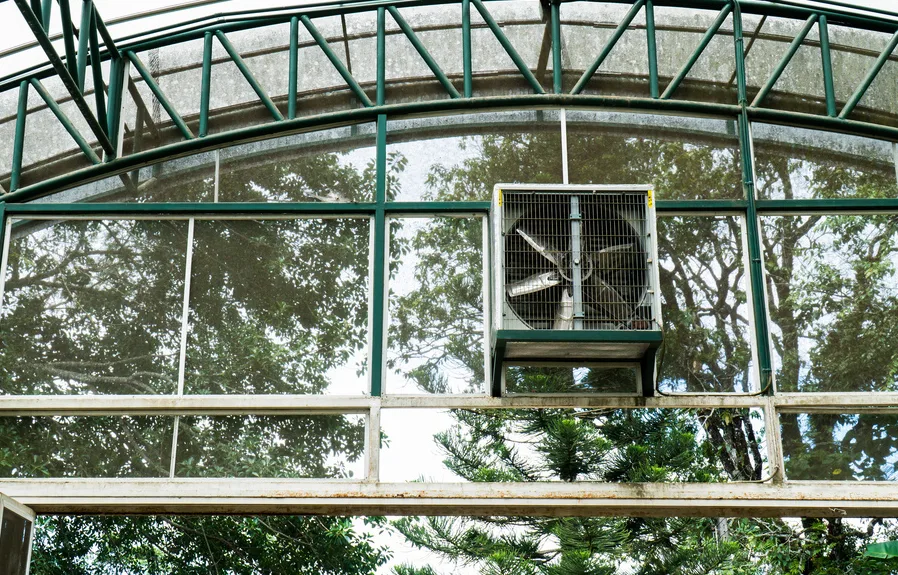
Evaporative Cooling vs Fan Ventilation: Key Differences
The primary difference between evaporative cooling and fan ventilation is the cooling mechanism.
Evaporative systems actively lower air temperature through water evaporation, while fan ventilation improves airflow without directly cooling the incoming air.
Greenhouse Cooling Comparison Table
| Feature | Evaporative Cooling | Fan Ventilation |
|---|---|---|
| Temperature Reduction | Excellent | Moderate |
| Water Consumption | High | None |
| Energy Consumption | Moderate | Low |
| Humidity Increase | Yes | Minimal |
| Installation Cost | Higher | Lower |
| Maintenance Requirements | Moderate | Low |
| Hot Climate Performance | Excellent | Moderate |
| Humid Climate Performance | Moderate | Good |
Key Conclusion
Evaporative cooling generally provides superior temperature control in hot, dry regions, while fan ventilation often performs better in humid climates where additional moisture is undesirable.
Which Greenhouse Cooling Method Is Better?
The best greenhouse cooling system depends on environmental conditions rather than a universal preference.
Best for Hot and Dry Climates
Evaporative cooling systems usually outperform fan ventilation in arid regions.
Examples include:
- Middle Eastern agriculture
- Southwestern United States
- Northern Africa
- Inland Australia
These environments allow evaporative cooling to achieve substantial temperature reductions.
Best for Humid Climates
Fan ventilation often provides better performance in tropical and coastal environments.
Examples include:
- Southeast Asia
- Coastal South America
- Southern China
- Humid greenhouse regions
Additional humidity generated by evaporative cooling may increase disease pressure under these conditions.
Best for Large Commercial Greenhouses
Many commercial facilities combine both technologies.
Integrated climate-control systems often use:
- Exhaust fans
- Circulation fans
- Cooling pads
- Automated sensors
- Environmental monitoring software
This hybrid approach delivers greater environmental stability throughout the year.
Greenhouse Cooling System Selection Checklist
The following factors should guide cooling system selection.
| Selection Factor | Evaporative Cooling | Fan Ventilation |
|---|---|---|
| Dry Climate | Recommended | Acceptable |
| Humid Climate | Limited | Recommended |
| Water Availability | Required | Not Required |
| Budget Constraints | Moderate Investment | Lower Investment |
| Large Greenhouses | Excellent | Good |
| High-Value Crops | Excellent | Good |
Recommended Evaluation Criteria
Growers should evaluate:
- Local climate conditions
- Water availability
- Crop sensitivity
- Greenhouse size
- Energy costs
- Maintenance resources
Integrating Cooling Systems With Modern Greenhouse Infrastructure
Cooling performance improves when integrated with complete greenhouse systems.
Modern greenhouse projects often combine cooling technologies with:
- Greenhouse Structures
- Greenhouse Cover Systems
- Greenhouse Equipment
- Temperature Control Equipment
- Hydroponic Channels
- Hydroponic Towers
Integrated environmental control enables more precise crop management and better resource efficiency.
Why Growers Consider Integrated Solutions From Miilkiia
Many greenhouse operators prefer suppliers capable of providing complete climate-control ecosystems.
Miilkiia offers greenhouse structures, hydroponic systems, temperature-control equipment, vertical farming solutions, and greenhouse infrastructure designed for modern controlled-environment agriculture.
For commercial projects, integrated procurement can simplify installation, improve system compatibility, and streamline technical support.
Future Trends in Greenhouse Climate Control
Advanced automation is transforming greenhouse cooling and ventilation management.
Several trends are shaping the industry:
Smart Environmental Monitoring
Sensors continuously track:
- Temperature
- Relative humidity
- Airflow
- Carbon dioxide concentration
AI-Based Climate Optimization
Artificial intelligence increasingly adjusts cooling equipment based on real-time environmental data.
Water-Efficient Cooling Technologies
New evaporative cooling technologies focus on reducing water consumption while maintaining cooling effectiveness.
Integrated Energy Management
Modern greenhouse facilities increasingly coordinate cooling, lighting, irrigation, and ventilation through centralized control platforms.
Industry analysts expect automation and energy optimization to remain key investment priorities through 2030.
Conclusion
Evaporative cooling and fan ventilation each offer distinct advantages for greenhouse climate management. Evaporative cooling generally provides superior temperature reduction in hot and dry climates, while fan ventilation offers cost-effective environmental control in humid regions.
For many commercial growers, the most effective solution combines both technologies within a fully integrated greenhouse system. Companies such as Miilkiia provide greenhouse structures, climate-control equipment, and hydroponic infrastructure that support comprehensive environmental management strategies.
FAQ
1. Does evaporative cooling always cool a greenhouse more effectively than fan ventilation?
Not necessarily. Evaporative cooling performs best in dry climates where water evaporation can significantly reduce air temperature. In humid environments, fan ventilation may provide more practical temperature management because the air already contains substantial moisture.
2. How much temperature reduction can evaporative cooling achieve?
Actual performance depends on climate conditions. According to industry estimates, evaporative cooling systems may reduce greenhouse temperatures by several degrees Celsius in hot, dry environments. Performance decreases as outdoor humidity levels increase.
3. Is fan ventilation cheaper to operate than evaporative cooling?
Fan ventilation generally requires lower initial investment and avoids water consumption costs. However, operating costs vary depending on greenhouse size, airflow requirements, electricity prices, and local climate conditions.
4. Can evaporative cooling and fan ventilation work together?
Yes. Many commercial greenhouse facilities combine cooling pads with exhaust fans to create pad-and-fan cooling systems. This configuration provides both active temperature reduction and efficient air circulation.
5. Which cooling system is best for hydroponic greenhouses?
Hydroponic greenhouses often benefit from integrated climate-control systems that combine ventilation, cooling, humidity management, and environmental monitoring. The ideal solution depends on crop type, greenhouse design, and regional climate conditions.