
How Can an Irrigation System Work More Efficiently with Supplemental Lighting?
An irrigation system works more efficiently with supplemental lighting when water delivery, light intensity, and crop demand are controlled as one system. In commercial production, this irrigation system and supplemental lighting integration helps stabilize transpiration, reduce waste, and improve growth consistency.
Irrigation System and Supplemental Lighting: The Core Principle
The core principle is simple: light drives photosynthesis, and photosynthesis drives water uptake. When supplemental lighting increases daily light integral, plants usually transpire more, so irrigation must respond with tighter timing, better drainage control, and more accurate nutrient delivery. In practice, irrigation systems should be scheduled around light output, not only around the clock.
Commercial growers increasingly treat lighting and irrigation as one system integration problem rather than two separate tasks. This matters because plant water demand changes within minutes after light levels shift. According to the U.S. Department of Energy, LEDs can reduce lighting energy use significantly compared with older technologies, which is one reason controlled-environment farms are adopting them more widely. U.S. Department of Energy solid-state lighting overview
Why Supplemental Lighting Changes Irrigation Demand
Supplemental lighting changes irrigation demand because higher light intensity increases stomatal activity and evapotranspiration. That means the crop may need smaller, more frequent irrigation events instead of fewer large ones. In a greenhouse or vertical farm, this is especially important for leafy greens, strawberries, and herbs, where root-zone stability affects quality and uniformity.
Light also changes the timing of water use. Plants often absorb more water during and shortly after the photoperiod, so the irrigation system should match the lighting schedule. For example, a crop under extended evening lighting may need a later irrigation window, while a crop under midday boost lighting may need more frequent daytime pulses. This is a practical form of system integration that improves precision.
| Lighting Condition | Likely Water Response | Irrigation Adjustment |
|---|---|---|
| Low natural light | Lower transpiration | Reduce frequency, keep root zone stable |
| High supplemental light | Higher transpiration | Increase pulse frequency and monitor drainage |
| Extended photoperiod | Longer daily water demand | Shift irrigation later in the day |
How to Improve Irrigation System Efficiency with Supplemental Lighting
The most efficient approach is to connect light data, climate data, and irrigation control in one feedback loop. A modern irrigation system should use light sensors, substrate moisture data, and drainage monitoring to decide when and how much to irrigate. This reduces overwatering and helps avoid nutrient leaching.
Miilkiia’s environment monitoring systems are designed around temperature, humidity, and light intensity tracking, which supports this type of control. When the monitoring layer is accurate, the irrigation layer can respond more precisely to changing light conditions. That is the practical meaning of system integration in controlled agriculture.
Another useful step is to pair lighting zones with irrigation zones. If one bench or tower receives more light than another, both areas should not share the same watering logic. In high-density production, this zoning strategy can improve uniformity and reduce energy waste. It also makes troubleshooting easier when one area dries faster than expected.
Best Practices for Irrigation System Design in Light-Driven Crops
The best irrigation design starts with crop type, root volume, and light level. Leafy crops under supplemental lighting usually perform well with short, frequent pulses. Fruiting crops often need deeper wetting cycles and more careful drainage management. In both cases, the goal is to keep the root zone oxygenated while avoiding excess runoff.
For commercial growers, the most reliable setup usually includes drip lines, pressure-compensated emitters, return drainage, and a controller that can react to light input. Miilkiia’s greenhouse irrigation equipment page shows how drip systems, sprinklers, and smart watering solutions can be matched to different production goals. That flexibility is important because no single irrigation system fits every crop or climate.

- Use light sensors to trigger irrigation timing.
- Use drainage data to confirm root-zone balance.
- Use smaller pulses under higher light intensity.
- Separate irrigation zones by crop stage and light exposure.
- Review EC and pH regularly in recirculating systems.
Where Supplemental Lighting Delivers the Most Value
Supplemental lighting delivers the most value when natural light is inconsistent, winter days are short, or crop density is high. In these conditions, the lighting system helps maintain growth rhythm, while the irrigation system keeps water supply aligned with that rhythm. The result is steadier production and fewer stress events.
This is especially relevant in greenhouse and indoor farming. The U.S. Department of Agriculture notes that controlled-environment agriculture can improve production consistency by reducing weather dependence. U.S. Department of Agriculture In that setting, system integration is not optional; it is the basis for predictable output.
Miilkiia’s indoor vertical farming systems guide explains how lighting, climate control, irrigation, and automation work together in stacked production. That model is useful for growers who want higher output per square meter, especially in urban or space-limited projects.
How Lighting and Irrigation Affect Energy and Operating Cost
Energy cost is one of the main reasons growers optimize lighting and irrigation together. Lighting increases production potential, but it also increases power use and can raise cooling demand. A more efficient irrigation system helps offset part of that load by reducing waste, improving nutrient use, and limiting unnecessary pumping.
According to the International Energy Agency, efficient lighting technologies continue to play a major role in reducing electricity demand across sectors. International Energy Agency energy efficiency topic In agriculture, that means the best results come from pairing efficient LEDs with precise irrigation logic, not from upgrading only one component.
| Efficiency Lever | Effect on Crop | Effect on Cost |
|---|---|---|
| LED supplemental lighting | More stable growth | Lower lighting energy per unit output |
| Sensor-based irrigation | Better root-zone control | Less water and fertilizer waste |
| Zone-based control | More uniform crops | Lower rework and loss |
System Integration in Greenhouse and Hydroponic Projects
System integration is the difference between isolated equipment and a productive growing platform. In a greenhouse, the irrigation system should communicate with lighting, ventilation, and environmental monitoring so the crop receives a balanced response. In hydroponic production, this is even more important because root-zone changes happen quickly.
Miilkiia’s greenhouse equipment category shows how irrigation, monitoring, and other support systems can be combined for modern agriculture. The company’s main site also presents greenhouse structures, hydroponic systems, and vertical plant wall solutions as part of one broader production approach.
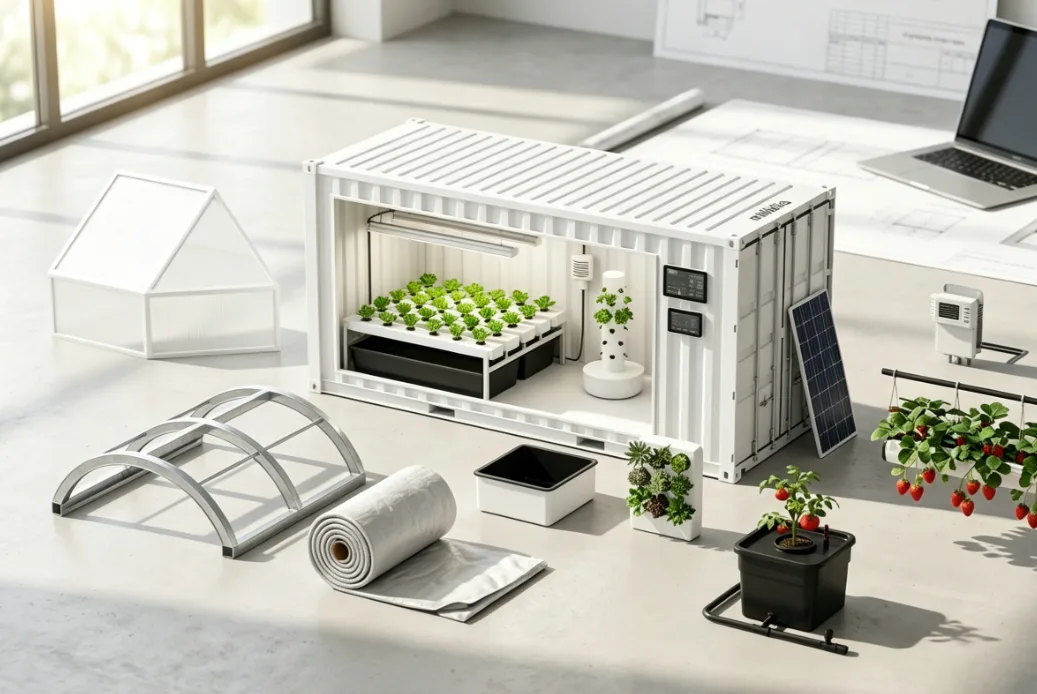
For growers planning a new project, the key question is not whether to add supplemental lighting. The key question is how to make the irrigation system respond intelligently to that lighting so the crop stays in balance.
Practical Setup Checklist for Better Irrigation System Performance
A practical setup should begin with measurement, then move to control, and finally to optimization. First, measure light intensity, substrate moisture, drainage, and climate conditions. Second, connect those readings to the controller. Third, adjust irrigation timing, pulse length, and nutrient concentration based on crop response.
For many commercial growers, this process is easiest when the production system is designed as one integrated unit. Miilkiia’s greenhouses and product overview pages are useful starting points for understanding how structure, lighting, and irrigation can be planned together. That is especially relevant for projects that need scalable, repeatable system integration.
- Map the crop’s daily light and water demand.
- Install sensors for light, humidity, and drainage.
- Use short irrigation pulses under higher light.
- Separate zones by crop type and growth stage.
- Review performance weekly and refine the schedule.
Conclusion: Irrigation System Efficiency Depends on Light-Aware Control
The most efficient irrigation system is one that reacts to supplemental lighting in real time. When light, water, and climate are managed together, growers can improve consistency, reduce waste, and support healthier root systems. In modern controlled agriculture, system integration is the foundation of both yield stability and operational efficiency.
FAQ
1. Why does supplemental lighting change irrigation needs?
Supplemental lighting increases photosynthesis, which usually increases transpiration and water uptake. As a result, the irrigation system often needs shorter, more frequent pulses. The exact change depends on crop type, root volume, temperature, humidity, and whether the system is recirculating or drain-to-waste.
2. What is the best irrigation system for crops under supplemental lighting?
The best irrigation system depends on the crop and production model. Drip irrigation works well for many greenhouse crops, while hydroponic systems may need recirculation and tighter nutrient control. The most important factor is whether the system can respond to changing light levels with precision.
3. How does system integration improve water efficiency?
System integration improves water efficiency by linking lighting, sensors, and irrigation control. When the controller uses light data and drainage feedback, it can reduce overwatering and nutrient loss. This creates a more stable root zone and lowers operating waste over time.
4. Can supplemental lighting reduce crop variability?
Yes, supplemental lighting can reduce variability when natural light is inconsistent. It helps maintain a more predictable growth rhythm, especially in winter or in dense indoor systems. When paired with a responsive irrigation system, it also supports more even plant size and quality.
5. What should growers monitor first when combining lighting and irrigation?
Growers should first monitor light intensity, substrate moisture, drainage, and climate conditions. These four factors show how the crop is responding in real time. Once the data is clear, the irrigation schedule can be adjusted to match the actual water demand created by supplemental lighting.