Is a Raft Hydroponic System Suitable for Large-Scale Leafy Green Production?
A raft hydroponic system can be a strong fit for large-scale leafy greens when the goal is uniform, repeatable output. For commercial growers, the raft hydroponic system is especially attractive because it supports batch production, stable root-zone conditions, and efficient labor planning.
Raft Hydroponic System Basics for Large-Scale Leafy Greens
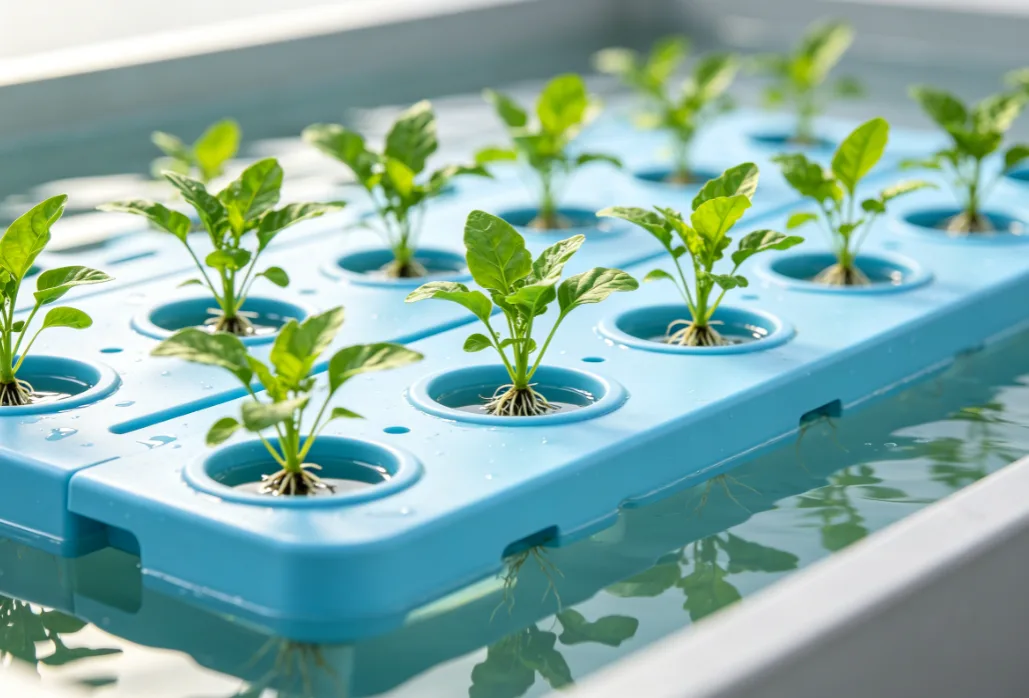
A raft hydroponic system, also called deep water culture or floating raft culture, keeps plants on floating boards above a nutrient solution. The roots stay in constant contact with water and dissolved nutrients, which makes the system simple to operate and easy to standardize. The USDA National Agricultural Library defines hydroponics as growing plants with a water-based nutrient solution rather than soil, and commercial enterprises are among its users. USDA National Agricultural Library hydroponics overview
A raft hydroponic system is most effective when the crop is fast-growing, compact, and harvested in cycles. Virginia Cooperative Extension notes that deep water culture has been adopted by commercial growers to produce leafy greens on floating rafts. That makes the method a practical option for lettuce, bok choy, spinach, arugula, and similar crops. Virginia Cooperative Extension on DWC systems
Why Raft Hydroponic System Works Well in Batch Production
Batch production is the main operational advantage of a raft hydroponic system. Because all plants sit in the same water body, growers can transplant, manage, and harvest by room, bay, or channel. This reduces scheduling complexity and supports predictable weekly output.
A raft hydroponic system also simplifies crop uniformity. When nutrient strength, water temperature, and aeration are controlled correctly, plants tend to develop at a similar pace. That consistency is valuable for packers, distributors, and foodservice buyers who expect standardized head size and appearance.
For commercial leafy greens, the raft hydroponic system can reduce some of the labor associated with individual pot handling. The tradeoff is that the system requires disciplined water management, sanitation, and oxygenation. Oregon State University Extension emphasizes that deep water culture depends on well-oxygenated water and floating support platforms. Oregon State University Extension on deep water culture
| Production Factor | Raft Hydroponic System | Commercial Impact |
|---|---|---|
| Crop uniformity | High | Supports standardized harvest batches |
| Labor planning | Moderate to low | Easy to organize by production zone |
| Root-zone stability | High | Helps maintain steady growth |
| Crop fit | Best for leafy greens | Ideal for lettuce and similar crops |
When a Raft Hydroponic System Is the Right Choice
A raft hydroponic system is best suited to operations that prioritize volume, consistency, and relatively low system complexity. FAO training materials describe floating raft and nutrient film technique as suitable hydroponic approaches for leafy vegetables, especially where water efficiency and climate resilience matter. FAO climate-smart hydroponics training material
A raft hydroponic system is also a good match for greenhouse projects with enough floor area to support shallow channels or tanks. In large facilities, the method can be integrated with greenhouse structure, irrigation, ventilation, shading, and monitoring systems to improve operational control. Miilkiia’s greenhouse systems, greenhouse equipment, and ventilation systems are relevant examples of the supporting infrastructure often needed in commercial leafy green projects.
A raft hydroponic system is less suitable when the crop mix is broad or the production model changes often. Fruiting crops, tall crops, and highly customized varieties usually need different root support and fertigation logic. In those cases, growers often compare raft culture with NFT, substrate systems, or vertical systems before deciding.
Operational Requirements That Decide Success
A raft hydroponic system succeeds only when water quality is managed as carefully as crop density. The most important variables are dissolved oxygen, nutrient balance, pH, water temperature, and sanitation. If any of these drift, root stress and disease pressure rise quickly.
A raft hydroponic system also needs strong disease prevention. USDA research notes that Pythium root rot is a common yield-limiting disease in hydroponic leafy greens and herbs. That means filtration, cleaning routines, and root-zone monitoring are not optional in commercial production. USDA ARS publication on Pythium root rot
A raft hydroponic system benefits from environmental monitoring as well. In commercial facilities, sensors for temperature, humidity, light, and CO2 help growers keep the crop in a narrow target range. Miilkiia’s greenhouse equipment and integrated climate control solutions reflect the type of support systems that improve reliability in large-scale production.
- Maintain strong aeration in every production channel.
- Keep nutrient solution clean and consistently mixed.
- Standardize transplant age and spacing.
- Use sanitation protocols between crop cycles.
- Track water temperature and dissolved oxygen daily.
Raft Hydroponic System vs Other Leafy Green Options
A raft hydroponic system is not the universal answer, but it is often one of the most efficient answers for leafy greens. Compared with NFT, raft culture is usually more forgiving of short interruptions and can be easier to manage at scale. Compared with substrate-based systems, it may offer simpler batch handling and less media logistics.
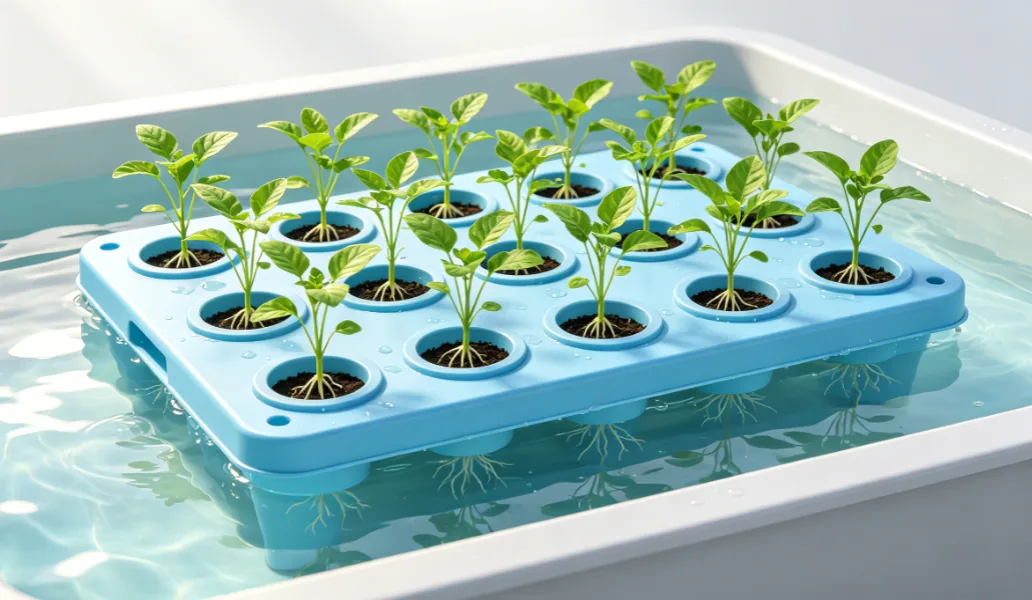
A raft hydroponic system is usually strongest in high-throughput lettuce programs. FAO materials and extension publications both point to leafy vegetables as a natural fit for floating raft production. For growers who want vertical density or modular deployment, however, systems such as hydroponic towers or container farms may be more suitable. Miilkiia’s hydroponic towers and container plant factory pages show how those alternatives serve different spatial and operational goals.
| System | Best Use Case | Main Limitation |
|---|---|---|
| Raft hydroponic system | Large-scale leafy greens | Needs careful water management |
| NFT | Leafy greens and herbs | Less buffer during flow interruptions |
| Substrate system | Fruit crops and mixed programs | More media and irrigation complexity |
| Hydroponic towers | High-density vertical growing | Crop and maintenance constraints |
How to Design a Raft Hydroponic System for Commercial Scale
A raft hydroponic system should be designed around workflow, not just plant count. The layout must support seeding, transplanting, crop inspection, harvest, and cleaning without unnecessary movement. That is why commercial projects often align the system with greenhouse structure, access aisles, and post-harvest handling space.
A raft hydroponic system also benefits from climate-appropriate greenhouse design. In hot regions, ventilation and shading reduce heat stress; in cold regions, insulation and heat retention matter more. Miilkiia’s greenhouse structure and insulation quilt content are useful references for projects that need year-round stability.
A raft hydroponic system can be scaled in phases. Many operators begin with one production block, validate crop performance, and then expand by adding identical blocks. That phased approach lowers risk and makes batch production easier to forecast.
Commercial Verdict on Raft Hydroponic System Suitability
A raft hydroponic system is suitable for large-scale leafy green production when the business model depends on uniform crops, repeatable harvests, and controlled-environment reliability. It is especially strong for lettuce-focused operations and other short-cycle leafy crops.
A raft hydroponic system is less attractive when the farm needs frequent crop switching, highly diverse product lines, or compact vertical deployment. In those cases, other hydroponic formats may deliver better flexibility. Still, for many commercial leafy green facilities, raft culture remains one of the most practical and proven production methods.
A raft hydroponic system becomes even more effective when paired with greenhouse automation, climate control, and disciplined sanitation. That combination is what turns a simple floating-bed concept into a scalable commercial production platform.
FAQ
Is a raft hydroponic system good for lettuce farms?
A raft hydroponic system is one of the most common choices for lettuce farms because it supports uniform growth and batch harvesting. The floating platform keeps roots in a stable nutrient environment, which helps commercial growers plan production by room or channel. It is especially useful when buyers expect consistent size and weekly supply.
What are the main risks in a raft hydroponic system?
The main risks in a raft hydroponic system are low dissolved oxygen, poor sanitation, nutrient imbalance, and root disease. Because plants share the same water body, problems can spread quickly if management is weak. Commercial operators should monitor water quality daily and use cleaning protocols between crop cycles.
How does a raft hydroponic system compare with NFT?
A raft hydroponic system usually offers more water buffering and simpler batch handling than NFT. NFT can be efficient, but it depends on continuous flow and may be less forgiving during interruptions. Raft culture is often preferred for large leafy green rooms where consistency and operational stability matter more than compact layout.
Can a raft hydroponic system work outside a greenhouse?
A raft hydroponic system can work outside a greenhouse in some climates, but commercial production is usually more stable under protected cultivation. Greenhouses help control temperature, humidity, pests, and water quality. For large-scale leafy greens, protected environments generally improve reliability and reduce weather-related losses.
What crops fit best in a raft hydroponic system?
A raft hydroponic system fits best with lettuce, bok choy, spinach, arugula, and similar leafy crops. These plants have relatively short cycles and respond well to stable root-zone conditions. Crops with larger canopies, longer cycles, or heavier fruit loads usually need different hydroponic formats.