
Tall containers are more than just elevated pots; they are architectural elements that can add dramatic height, structure, and visual interest to any garden, patio, or entryway. Their imposing presence makes them perfect for creating focal points, defining spaces, or adding privacy. However, successfully planting in tall containers requires a thoughtful approach, from selecting the right plants to understanding efficient filling techniques. This guide will explore the best plant choices and essential tips to transform your tall containers into breathtaking vertical displays.
The Allure and Practicality of Tall Containers
Tall containers offer a unique blend of aesthetic appeal and practical benefits. They can make small spaces feel larger by drawing the eye upwards, and their height can bring plants closer to eye level, making them more noticeable and easier to tend. Yet, their depth also presents considerations for drainage, weight, and efficient use of potting mix.
Advantages of Tall Containers
•Dramatic Visual Impact: Instantly adds height and a focal point to any landscape or hardscape.
•Ergonomic Gardening: Reduces bending and kneeling, making gardening more accessible and comfortable.
•Space Definition: Can be used to delineate areas, create privacy screens, or frame entrances.
•Improved Drainage: The increased depth can facilitate better drainage, provided proper techniques are used.
Considerations for Tall Containers
•Weight: When fully filled with soil, large tall containers can be extremely heavy and difficult to move.
•Soil Volume: Filling an entire tall container with potting mix can be expensive and unnecessary for many plants.
•Stability: Tall, narrow containers can be prone to tipping in windy conditions, especially with top-heavy plants.
•Watering: The deep soil column can lead to uneven drying, with the top drying out faster than the bottom.
Designing with the “Thriller, Filler, Spiller” Method
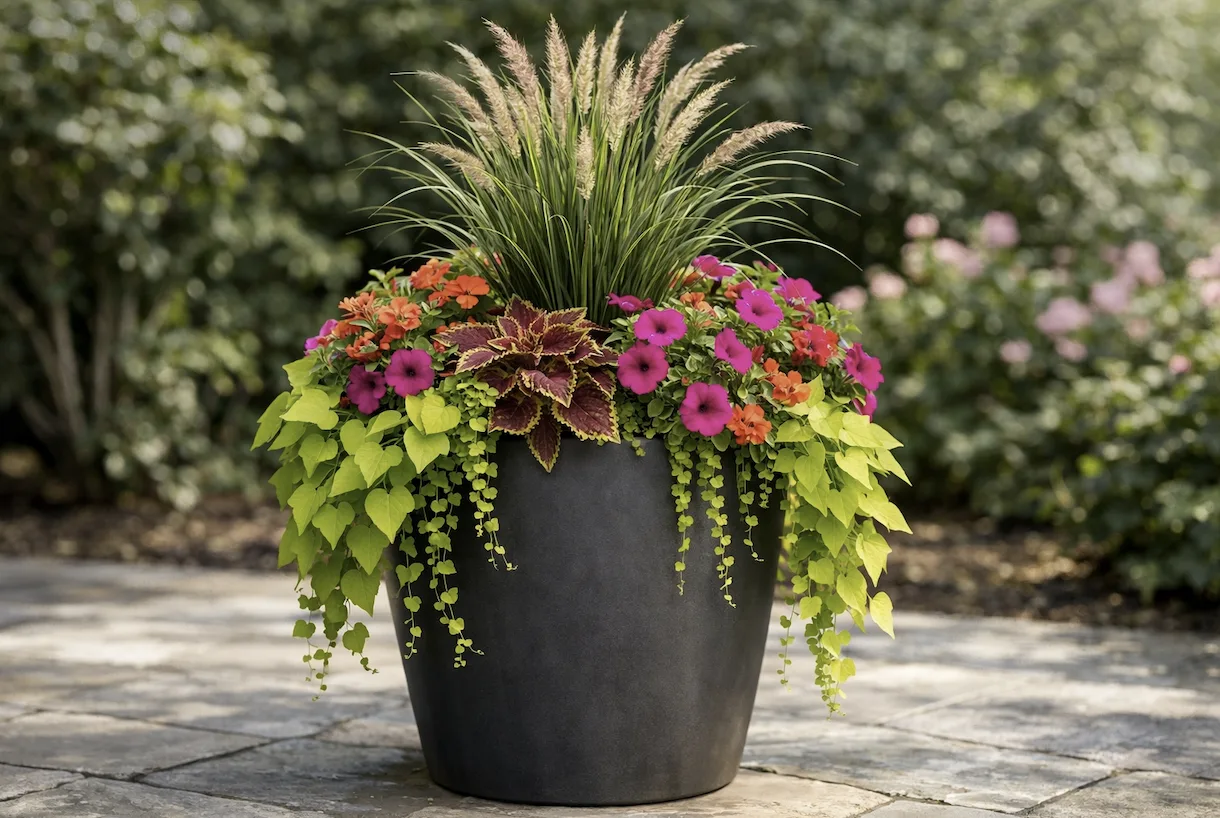
The “Thriller, Filler, Spiller” method is an incredibly effective design principle for creating dynamic and visually appealing container arrangements, especially in tall planters. This technique involves selecting three types of plants that play distinct roles:
Thrillers: The Vertical Statement
Thrillers are the star of your arrangement, providing height, drama, and a strong vertical element. They are typically placed in the center or back of the container.
•Trees/Shrubs: Dwarf Alberta Spruce, Japanese Maple (dwarf varieties), Boxwood, Sky Pencil Holly. These can provide year-round structure.
•Tropicals: Bird of Paradise, Bamboo (clumping varieties), upright Palm trees, Canna Lilies. These add an exotic touch.
•Grasses: Purple Fountain Grass, Blue Oat Grass, Miscanthus. Offer texture and movement.
•Tall Flowers: Angelonia, Cleome, Snapdragons. Provide continuous blooms and height.
Fillers: The Body and Volume
Fillers are medium-height plants that add mass, texture, and color, complementing the thriller and filling out the middle ground of the container. They are usually planted around the thriller.
•Foliage Plants: Coleus, Heuchera (Coral Bells), Caladiums. Offer vibrant leaf colors and patterns.
•Flowering Plants: Geraniums, Petunias, Lantana, Begonias. Provide continuous blooms and lushness.
Spillers: The Cascading Elegance
Spillers are plants that trail over the edge of the container, softening its lines and adding a graceful, flowing element. They are typically planted near the rim.
•Vines: Sweet Potato Vine, Creeping Jenny, Dichondra ‘Silver Falls’, Trailing Vinca.
•Trailing Flowers: Bacopa, Lobelia, Million Bells (Calibrachoa).
Smart Filling Techniques for Tall Planters
Filling a tall container entirely with potting mix can be costly and unnecessary, as most plant roots only require 12-18 inches of soil depth. Strategic filling techniques can save money, reduce weight, and improve drainage.
The Layering Method
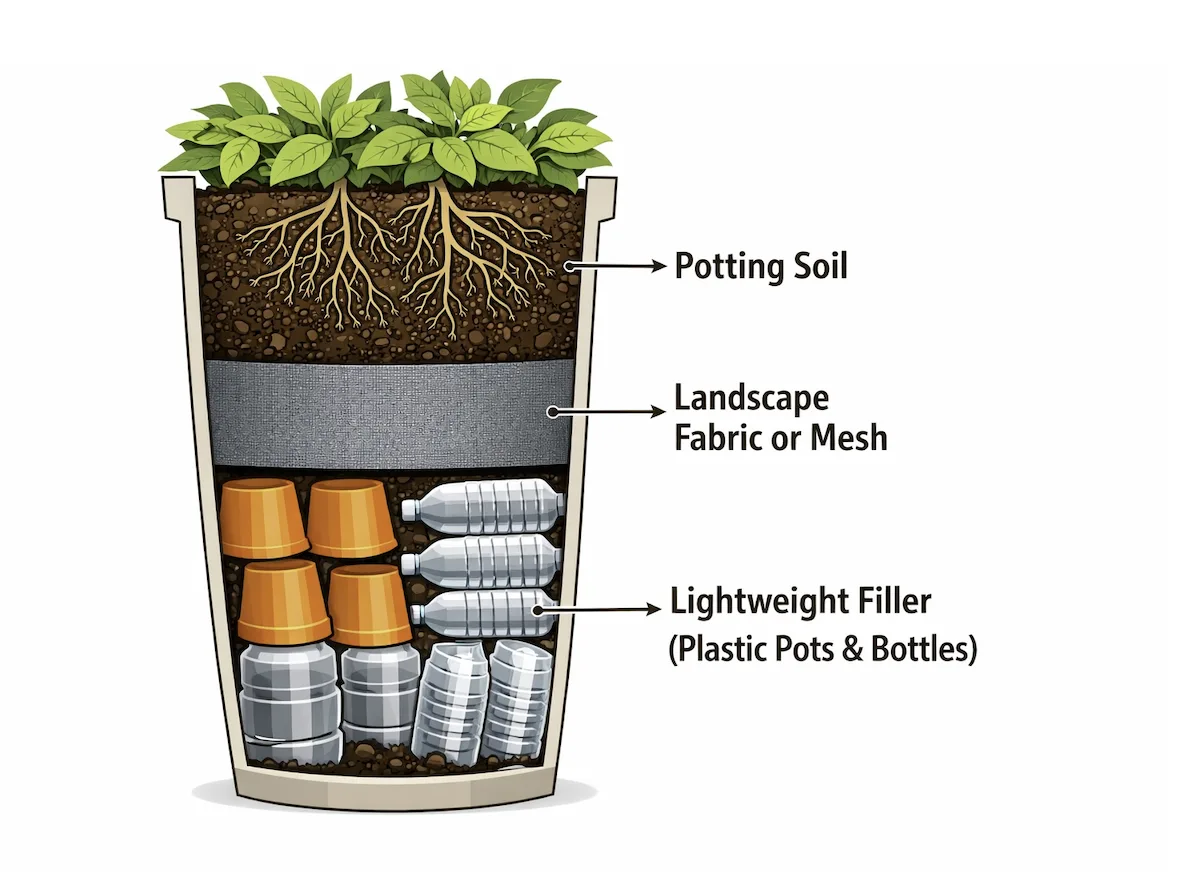
1.Bottom Layer (1/3 to 1/2 of the pot): Use lightweight, bulky materials to take up space. Options include:
•Upside-down plastic pots or buckets.
•Empty plastic milk jugs or soda bottles (with caps on).
•Packing peanuts (contained in a mesh bag to prevent mixing with soil).
•Crushed plastic bottles or aluminum cans.
•Pool noodles (cut into pieces).
•Avoid using rocks or gravel at the bottom, as this can create a perched water table, hindering drainage rather than improving it . Only use heavy materials if the planter needs additional weight for stability.
2.Middle Layer: Place a layer of landscape fabric, newspaper, or mesh over the filler material. This prevents the potting mix from sifting down into the filler and keeps the soil separate.
3.Top Layer (12-18 inches): Fill the remaining space with a high-quality, well-draining potting mix. This is where your plants will root and thrive.
Essential Maintenance Tips for Tall Container Gardens
•Watering: Tall containers can dry out unevenly. The top layer of soil will dry faster than the bottom. Check moisture levels regularly, possibly using a moisture meter, and water thoroughly until water drains from the bottom.
•Fertilization: With limited soil volume, nutrients can deplete quickly. Implement a regular feeding schedule with a balanced liquid fertilizer during the growing season.
•Stability: If your tall container is lightweight and placed in a windy area, consider adding some heavy material (like bricks or sandbags) to the very bottom before adding your lightweight filler to prevent tipping.
•Repotting/Refreshing: Over time, potting mix can compact and lose its structure. Refresh the top few inches of soil annually or repot plants every 1-2 years with fresh potting mix.
Frequently Asked Questions
How much soil do I need for a tall planter?
You typically only need 12-18 inches of actual potting mix for most plants to thrive. The rest of the tall container can be filled with lightweight, inert materials to save on soil costs and reduce weight.
Can I put rocks at the bottom of a tall planter for drainage?
Contrary to popular belief, adding a layer of rocks or gravel at the bottom of a planter does not improve drainage and can actually create a “perched water table,” which can lead to root rot. It’s best to use lightweight fillers and ensure proper drainage holes.
What are some good “thriller” plants for tall containers?
Good “thriller” plants include dwarf trees and shrubs like Alberta Spruce, tropical plants like Bird of Paradise or Canna Lilies, ornamental grasses such as Purple Fountain Grass, and tall flowering annuals like Angelonia or Cleome.
How do I prevent tall containers from tipping over?
Choose a container with a wide base, or if using a lightweight container, add some heavy material (like bricks or sandbags) to the very bottom before adding your lightweight fillers and soil. Placing them in a sheltered location can also help.
How often should I water plants in tall containers?
Watering frequency depends on the plant, weather, and container material. Check the soil moisture regularly, especially the top few inches. Water thoroughly when the top 2-3 inches of soil feel dry, ensuring water drains from the bottom.
About Miilkiia Plant Container
At Miilkiia, we are passionate about sustainable cultivation and innovative agricultural solutions. As a specialized manufacturer of hydroponic systems, greenhouse structures, and vertical plant wall solutions, we support growers, project developers, and green innovators worldwide. Our integrated systems are designed to boost yield with more harvest cycles, ensure all-weather thermal stability, and provide long-term energy and labor savings.Browse our product catalog to find what you need most, or you can visit our product blog for the latest product information.
Discover how Miilkiia can help you achieve consistent, year-round growth and succeed in modern farming and urban greening.